

Illustrative adult patient discussing tooth movement after earlier orthodontic care
Cosmetic Dentistry

Orthodontic Relapse Treatment in Erin

Night shifts, early starts, or a season of travel can quietly end a retainer habit, and teeth may follow. From Erin or Hillsburgh, a relapse review looks at what has moved and helps you design a retention routine that fits the way your days actually run.

Erin · Rebuilding a retention habit

The routine slipped. The next one can be built to last.

Most retainer routines do not end with a decision. They fade: a busy month, a lost case on a trip, a few uncomfortable nights. Months later a tooth looks rotated or a space has opened. That movement after earlier alignment is orthodontic relapse, and the place to start is an honest look at both your teeth and your routine.

Skipped wear is rarely the only factor, though. The mouth keeps changing over the years, appliances lose their fit, and dental or gum issues can contribute. A balanced assessment considers each of these and avoids making you feel blamed.

When booking from Erin village, Hillsburgh, or the surrounding countryside, bring your retainer and anything left from the original treatment, plus a frank account of what made wear difficult. Mention too if you would rather restore an earlier alignment or keep today's. After the examination, the team can say whether a specialist orthodontist ought to weigh in.

Book a relapse review
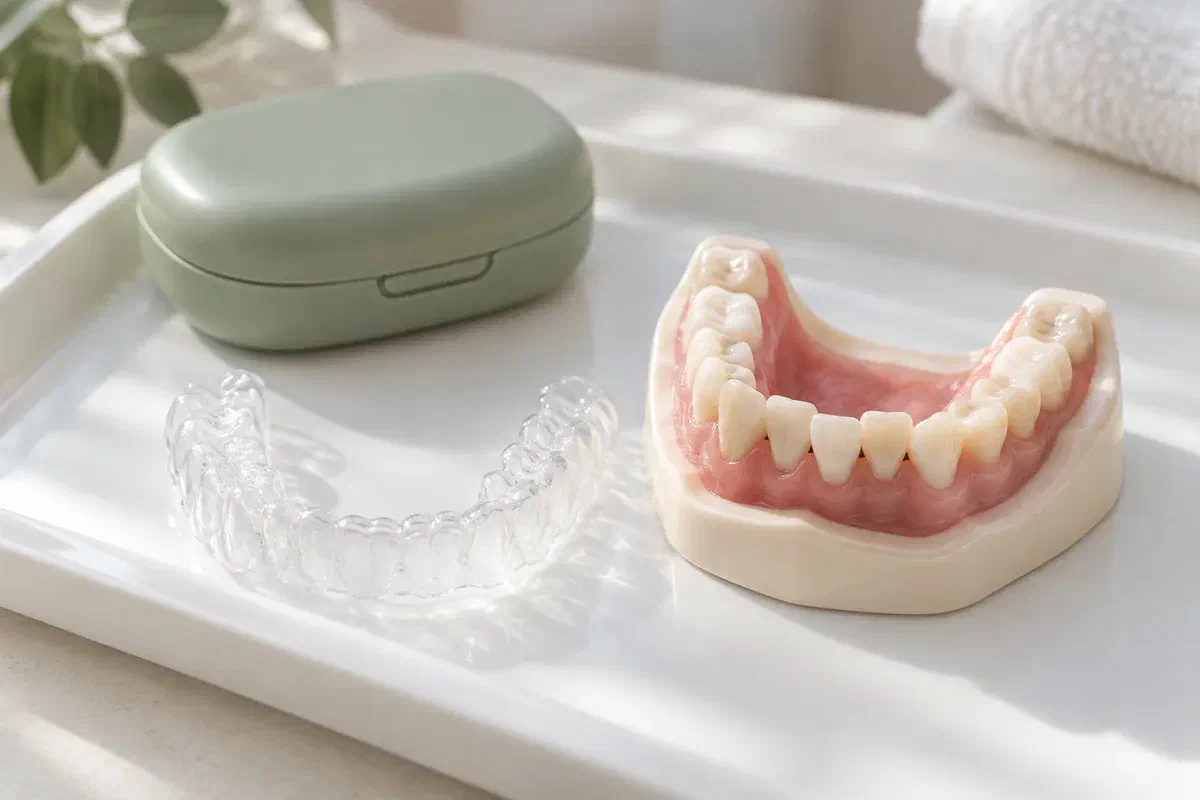
Illustrative lower-teeth model with mild crowding beside a removable retainer and case
Things to tell us

What moved, what changed in your life, and what happened to the appliance

Those three threads help the clinician decide whether the issue is mainly the appliance, the teeth, or the supporting tissues. Mention tenderness or bite changes alongside any cosmetic concern.

A removable retainer abandoned for a while

Explain roughly how long it went unworn and how it feels now: tight, loose, or not seating. Mention any cracks or warping. If putting it back in hurts, stop; bring it to the visit and ask what you should wear until a plan is agreed.

A bonded wire you rarely think about

Fixed retainers can lose a bond without obvious signs. Report a new gap, a rough patch, or a tooth that sits differently. Leave the wire untouched and ask for it and the neighbouring teeth to be examined.

A slow change over many years

Long-term drift is still worth reviewing. Describe dental work, gum treatment, or changes in how your teeth meet since treatment ended. Photographs may help piece together the history, though the present examination shapes our advice.

If teeth shift suddenly or you notice pain, swelling, bleeding, or a markedly loose tooth, call rather than assume it is relapse. The symptom may need different care.

What the review helps you decide

Hold your current smile, or change it, and plan the upkeep either way

Getting a new or repaired retainer and pursuing further tooth movement are separate decisions. The review should make clear whether the immediate aim is to maintain an acceptable position, solve an appliance issue, or consider realignment, and should do so before records are taken or appliances made.

Whatever you choose, retention will likely be part of it. That makes it worth asking early what is realistic, what other routes are available, and how much ongoing wear each would ask of you. A shift alone does not mean you have to start another course.

Patient information: American Association of Orthodontists — movement after orthodontic treatment

A clear picture of the change

Ask which teeth have moved and whether your gums or bite need care. Earlier records, if available, can be set alongside current findings. What has been observed should be kept separate from assumptions about why.

Goals matched to options

You may want the earlier alignment back, or you may be happy with the present look. Say which. Ask what each route would involve and whether maintaining the current position is clinically suitable before an appliance or treatment scope is chosen.

A routine designed around your schedule

Talk through shift work, travel, early mornings, or anything else that interrupted wear. Ask whether a different type of retainer or wear pattern might be more practical, how future problems would be handled, and who will review the appliance.

Inside the appointment

From your history to a routine you can keep

How much the review covers depends on the extent of change. Ask what the visit includes and whether further records or a specialist assessment may come before a recommendation.

  1. Talk through treatment and the routine since

    Share when active treatment ended, what retainer followed, how long you wore it, and when the change appeared. Bring appliances and records. Mention new dental work, health changes, or shifts in schedule that affected wear.

  2. Examine your teeth and appliance

    The clinician assesses alignment, gums, bite, and supporting tissues, and checks the fit and condition of any retainer. Images or scans may be suggested. Ask whether a dental or gum issue should be treated first.

  3. Compare maintaining with realigning

    Find out what a repaired or new retainer would aim to do and whether further movement suits your goals. For realignment, discuss its extent, risks, alternatives, monitoring, and estimate. A specialist's view may be helpful for complex changes.

  4. Agree on the routine and the interim plan

    Confirm what to wear now, when to wear it, and what to do if fit or comfort changes. Ask when the next appointment, records, or appliance will follow, so trips in from Erin can be grouped where possible.

Keeping it going

A plan is only as good as the habit behind it.

Retention, active treatment, or more assessment: keep the point of your next step in mind, and let us know when circumstances change.

Wear only what was prescribed

Old retainers or leftover aligners should not be used to try to reverse movement. Ask which appliance suits your teeth now. If a damaged one is retired, confirm its replacement and what to do while you wait.

Attend your follow-up

Bring your appliance and describe any changes. If active treatment is underway, follow its schedule rather than wearing it when convenient. Call promptly about lost attachments or poor fit.

Anchor the habit to something you already do

Link wearing and cleaning the retainer to an existing nightly step, and keep the case beside it. Ask for written instructions and review dates. If a new shift pattern, trip, or move is ahead, raise it now so the plan can account for it.

Choosing a direction

Three responses, each with its own routine

Ask what each option is designed to achieve and what daily commitment it carries. Appliances need a clear purpose, and further movement should rest on current findings.

When your present position is acceptable

Reset the retention

If your teeth sit acceptably and the routine or appliance was the problem, retention may be the focus. Ask whether repair, a new retainer, or a different type is reasonable, and what records are needed. A new appliance holds the present position rather than recreating an earlier one.

When further movement is wanted and appropriate

Realign, then retain

Depending on the change, limited or broader treatment may be discussed. Ask why the scope fits and what retention would follow afterward. Having had treatment before does not guarantee a short course will address every concern.

When the cause needs more explanation

Investigate or refer

Gum findings, bite changes, or complex movement may need further assessment before appliances change. Ask what a referral would answer and who handles any immediate problem while the longer plan is decided.

Retention routine questions

Getting back on track after the habit slipped

A review can tell whether the issue is the appliance, the routine, or a need for active treatment.

(905) 876-4488
I stopped wearing my retainer months ago. Can I just start again?
Check first. If it no longer fits comfortably, forcing it in is not advised. Bring it to a review so the fit and your tooth positions can be assessed.
Is there a retainer type that suits shift work or frequent travel better?
Fixed and removable retainers each have trade-offs, including cleaning, comfort, and what happens if one is lost far from home. Explain your schedule to the clinician, including nights away or rotating shifts, and ask which options might be practical for you.
How do I remember to wear my retainer every night?
Many people find it helps to tie it to an existing habit, like brushing, and to keep the case in the same place every time. A phone reminder can carry you through the first few weeks. Ask the team for written wear instructions so there is no doubt about how often.
Does relapse mean my original treatment failed?
Not necessarily. Teeth can move over time for several reasons, and retention is discussed as ongoing care for that reason. A review focuses on what is happening now.
Will a new retainer undo the movement that has already happened?
Think of it as a fresh starting line rather than a rewind. It keeps teeth where they are when it is made; shifting them back would mean planned treatment, discussed after an assessment.
Can I accept a small shift and focus on keeping things stable?
That is a reasonable option to discuss. The clinician can explain whether the present position is suitable to maintain and whether anything else needs attention, then help you plan retention.
Relapse reviews for Erin and Hillsburgh

Bring the retainer and the reasons it stopped working.

Book a review at our Bronte Street practice to look at teeth that have moved since earlier orthodontic care. We will explain the findings, help design a workable retention routine, and outline options for further review or treatment.

Advice follows examination and any needed records. If the retainer goes missing again, snaps, aches, or stops clicking into place, please call rather than waiting for the next visit.

Visit Milton Dental Clinic
Unit 1, 342 Bronte St. S, Milton, ON L9T 5B7
Get directions Clinic hours
Monday–Thursday
11am–7pm
Friday–Sunday
By appointment only

Areas we serve

  • Milton
  • Oakville
  • Mississauga
  • Georgetown
  • Halton Hills
  • Acton
  • Campbellville
  • Brampton
  • Burlington
  • Puslinch
  • Rockwood
  • Erin
  • Caledon
  • Etobicoke
  • Old Milton
  • Bronte Meadows
  • Timberlea
  • Dorset Park
  • Dempsey
  • Clarke
  • Beaty
  • Coates
  • Harrison
  • Scott
  • Willmott
  • Ford
  • Bowes
  • Cobden
  • Walker
  • Mountain View
  • Milton Heights
  • Hawthorne Village
  • Valley View
  • Fallingbrook
  • Nassagaweya
  • Trafalgar
  • Esquesing
  • Nelson
  • Brookville
  • Moffat
  • Glen Williams
  • Norval
  • Limehouse
  • Stewarttown
  • Ashgrove
  • Hornby
  • Silver Creek
  • Speyside
  • Scotch Block
  • North Oakville
  • River Oaks
  • Glen Abbey
  • West Oak Trails
  • Palermo
  • Bronte Creek
  • College Park
  • Joshua Creek
  • Uptown Core
  • Preserve
  • Iroquois Ridge
  • Lisgar
  • Meadowvale
  • Meadowvale Village
  • Churchill Meadows
  • Erin Mills
  • Central Erin Mills
  • Streetsville
  • East Credit
  • Creditview
  • Heartland
  • Sheridan
  • Mount Pleasant
  • Credit Valley
  • Huttonville
  • Churchville
  • Springbrook
  • Northwest Brampton
  • Bram West
  • Fletcher's Meadow
  • Fletcher's Creek South
  • Alton Village
  • Orchard
  • Millcroft
  • Headon Forest
  • Tansley
  • Brant Hills
  • Tyandaga
  • Kilbride
  • Lowville
  • Aberfoyle
  • Morriston
  • Arkell
  • Hillsburgh
  • Freelton
  • Carlisle
  • Waterdown
  • Flamborough
  • Mountsberg

How can we help?

Milton Dental Clinic

Have a question about your smile? Choose the option that works best for you.

For urgent dental concerns, please call.
Messages are reviewed during clinic hours.