

Illustrative adult patient discussing tooth movement after earlier orthodontic care
Cosmetic Dentistry

Orthodontic Relapse Treatment in Etobicoke

Making the trip from Etobicoke for shifting teeth is easier with a plan. Bring your retainer and history to one well-prepared assessment, learn what has moved, and leave knowing how many visits any next step is likely to need.

A planned relapse visit from Etobicoke

Make the first trip count.

When the clinic is not around the corner, preparation does a lot of work. Orthodontic relapse, meaning teeth drifting from the position earlier treatment created, rarely needs a rushed decision. Taking time to gather your retainer, dates, and any old records means a single visit can answer most first questions.

Expect the conversation to cover more than retainer wear. Teeth and gums change throughout life, appliances deteriorate, and dental work or gum problems can influence position. A good assessment tests each idea against the examination instead of settling on the easiest explanation.

On the phone, mention the length of your journey and what you hope to learn, so the appointment can be organised around it. Let us know whether you want to recover an earlier alignment or keep today's arrangement steady. If a specialist orthodontist would add value, we can discuss how to make that efficient as well.

Plan a relapse assessment
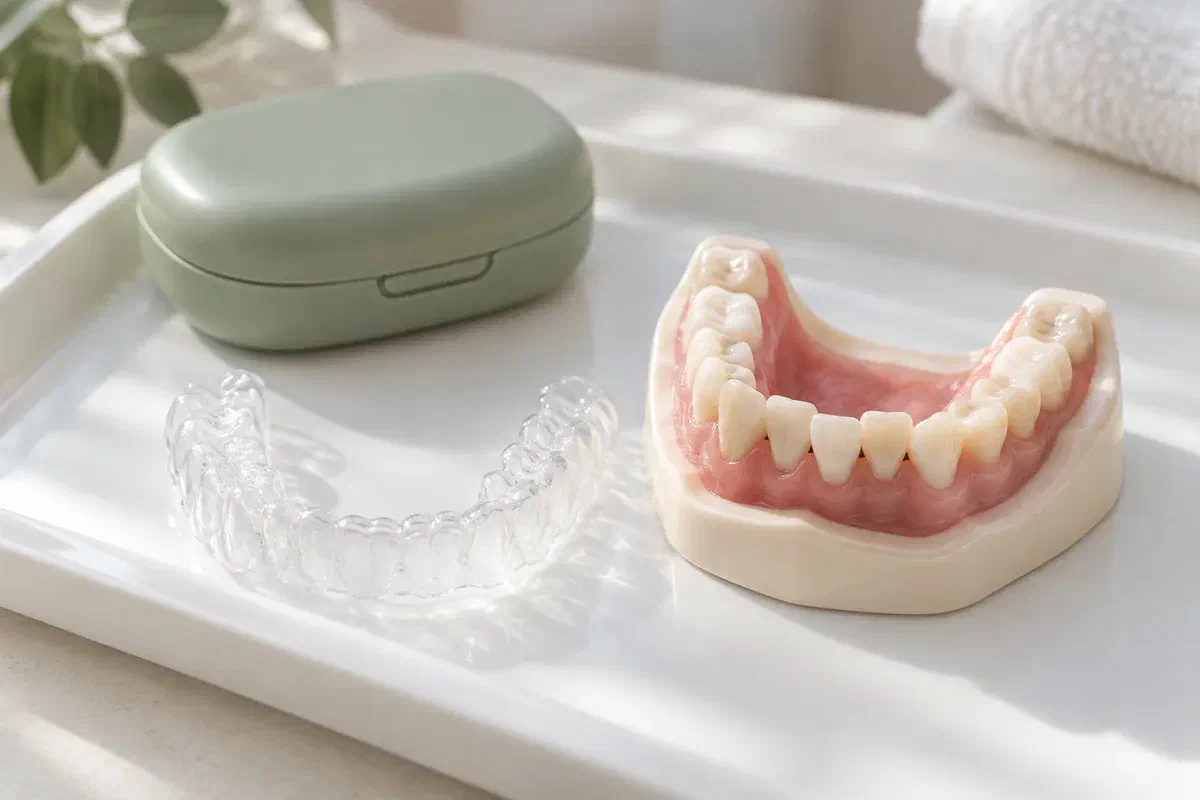
Illustrative lower-teeth model with mild crowding beside a removable retainer and case
Pack these details

Three situations, and what to bring for each

Knowing what shifted, when, and how the retainer has fared lets the clinician work out whether the appliance or the teeth themselves are the main story. Note symptoms as well as appearance.

Your removable retainer has stopped seating

Bring it, even if it seems useless. Note whether it is tight, loose, cracked, or warped, and how long it went unworn. Avoid forcing a painful appliance into place in the days before your visit; ask the team for interim advice when you book.

Your bonded wire is in, but a tooth has shifted

Describe any gap, roughness, or tooth that has moved. A wire can stay attached at most points yet have one failed bond. Leave it alone, and ask that each bond and the nearby teeth be examined during the appointment.

Treatment ended long ago, without follow-up since

Write down significant dental work, gum care, or bite changes since braces or aligners ended. Older photographs can help with the history. The examination on the day, though, is what shapes the advice you receive.

Rapid movement with pain, swelling, bleeding, or marked looseness should not be treated as routine relapse. Call us; if the trip is long and symptoms are severe, seeking prompt care closer to home may be the better first step.

Decisions the review makes clearer

Holding a position and changing it involve different commitments.

A new retainer is designed to keep teeth where they sit; further orthodontic movement sets out to change that. For someone travelling a longer distance, the difference also affects how many visits lie ahead. The review should state which path is being proposed and why before records or appliances are ordered.

Think about what you want now rather than what you wanted at the time of treatment. Ask what is reasonable, what the alternatives are, and what long-term wear each route would involve. Some movement alone does not mean you need to commit to more.

Patient information: American Association of Orthodontists — movement after orthodontic treatment

Findings explained in one sitting

You should come away knowing exactly which teeth have drifted and whether your bite, gums, or supporting bone need attention. Earlier records, if you bring them, can be compared with present findings. Keep what was observed apart from what is only a likely cause.

A goal-based plan, with visits mapped

Tell us if you want the earlier result back or just stability. Ask what each option involves, roughly how many appointments it may take, and whether keeping the current position is clinically appropriate before an appliance or scope is agreed.

Retention that suits a longer commute

Explain what made retention hard: a lost case, discomfort, or uncertainty about whom to call. Ask what can be handled by phone, how future fit problems would be managed, and who will review the appliance after any treatment.

The assessment, step by step

What one well-organised relapse visit can cover

Depending on the extent of change, more records or a specialist review may be needed. Ask about this when booking from Etobicoke, so you know whether to set aside time for a second visit.

  1. Walk through the earlier care

    Describe when treatment finished, what retention you received, and when the change began. Hand over appliances and records. Mention restorations, health changes, or routine changes since then, including any that affected wear.

  2. Examine teeth, gums, bite, and retainer

    The clinician assesses the current alignment and supporting tissues and checks the appliance. Images or scans may be suggested, sometimes during the same appointment if appropriate. Ask whether a dental or gum issue should come first.

  3. Compare retention with realignment

    Hear what a repaired or new retainer could achieve and whether further movement fits. For realignment, discuss scope, risks, alternatives, monitoring, and estimate, and ask how many visits it might involve. A specialist may be recommended for complex concerns.

  4. Leave with an interim plan and a schedule

    Confirm what to wear before the next appointment, what to do if fit changes, and which issues can be discussed by phone. Ask when records, appliances, or reviews are expected so you can plan the trips ahead.

Once you are home

Follow the plan between trips rather than improvising.

The next stage may be retention, active treatment, or further assessment. Keep its aim clear and call if anything changes before your next visit.

Wear only the appliance you were given

Old retainers and leftover aligners are not for moving teeth back on your own. Ask which appliance suits the present position. If something is retired as damaged, confirm what replaces it and what to wear until then.

Keep your scheduled review

Bring the appliance and describe changes since your last visit. Follow any active treatment schedule closely, since adjustments can be harder to arrange at short notice from a distance. Report fit problems or lost attachments promptly.

Plan retention around your week

Ask for clear wear and cleaning instructions and know when reviews will happen. Keep a case where you remove the appliance. Raise travel, moves, or busy work periods early so the arrangement can allow for them.

After your assessment

Pick the route that matches your findings and your goal.

Ask what each choice is meant to achieve and how many visits it may need. A new appliance should have a clear job, and realignment, if chosen, should be mapped out from up-to-date records.

When the present alignment is acceptable

Restore the retainer arrangement

When teeth sit acceptably and the appliance is at fault, retention may be all that is needed. Ask whether repair or replacement is reasonable and what records are required. A new retainer holds today's position; it is not built to recreate an earlier one.

When movement is wanted and suitable

Realign with further treatment

Limited or broader treatment may be considered depending on the changes. Ask why the scope fits, how often you would need to come in, and what retention would follow. Past treatment does not ensure a short course resolves every concern.

When the findings call for more explanation

Investigate further or see a specialist

When the gums, the way your teeth meet, or a complicated pattern of movement raise questions, it is sensible to pause before changing any appliance. Find out what a referral is supposed to settle, and who you should call about a pressing issue while the bigger decision waits.

Planning-focused questions

Relapse questions when you're travelling in

A well-planned assessment can tell whether you face an appliance issue, a maintenance choice, or a need for active treatment.

(905) 876-4488
Can most of a relapse assessment be done in one appointment?
Often the history and examination can be completed in one visit. Whether further records, appliances, or specialist input are needed depends on the findings, and the team can explain this before you leave.
What should I do if my retainer breaks between visits from Etobicoke?
Call to describe the damage and ask what to wear meanwhile. Keep the pieces. If the appliance is injuring you or you have significant pain or swelling, seek prompt care, closer to home if necessary.
Can a retainer fix teeth that have already shifted?
Rarely in the way people hope. Its purpose is to stop further change from the point at which it was made. Reversing a shift involves planned movement, which you would discuss after the examination, including how many trips it might mean.
Does relapse mean I'll need another long course of treatment?
Not necessarily. The amount of change, oral health, bite, and goals all inform the options, which may range from retention advice to limited or broader movement. Ask what any recommendation is aiming for.
Which questions can be handled by phone instead of a visit?
Some scheduling, records, and general instructions can be discussed by phone. Changes in fit, damage, or new symptoms usually need an examination, so ask the team which is which.
Can I simply keep my teeth as they are now?
You can raise that. The clinician can explain whether the current position is suitable to maintain and whether anything else needs attention, and then discuss a retention arrangement.
Relapse care, planned around the trip

Bring everything once, and leave with a clear plan.

Set up a visit to our Bronte Street practice and we will look at how your teeth have shifted since orthodontic treatment ended. Expect a plain account of the findings, answers on retention, and a sense of how many appointments any next step would take.

Nothing is decided until the examination and any needed records are done. A retainer that is lost, cracked, sore, or no longer seating is a reason to phone sooner rather than later.

Visit Milton Dental Clinic
Unit 1, 342 Bronte St. S, Milton, ON L9T 5B7
Get directions Clinic hours
Monday–Thursday
11am–7pm
Friday–Sunday
By appointment only

Areas we serve

  • Milton
  • Oakville
  • Mississauga
  • Georgetown
  • Halton Hills
  • Acton
  • Campbellville
  • Brampton
  • Burlington
  • Puslinch
  • Rockwood
  • Erin
  • Caledon
  • Etobicoke
  • Old Milton
  • Bronte Meadows
  • Timberlea
  • Dorset Park
  • Dempsey
  • Clarke
  • Beaty
  • Coates
  • Harrison
  • Scott
  • Willmott
  • Ford
  • Bowes
  • Cobden
  • Walker
  • Mountain View
  • Milton Heights
  • Hawthorne Village
  • Valley View
  • Fallingbrook
  • Nassagaweya
  • Trafalgar
  • Esquesing
  • Nelson
  • Brookville
  • Moffat
  • Glen Williams
  • Norval
  • Limehouse
  • Stewarttown
  • Ashgrove
  • Hornby
  • Silver Creek
  • Speyside
  • Scotch Block
  • North Oakville
  • River Oaks
  • Glen Abbey
  • West Oak Trails
  • Palermo
  • Bronte Creek
  • College Park
  • Joshua Creek
  • Uptown Core
  • Preserve
  • Iroquois Ridge
  • Lisgar
  • Meadowvale
  • Meadowvale Village
  • Churchill Meadows
  • Erin Mills
  • Central Erin Mills
  • Streetsville
  • East Credit
  • Creditview
  • Heartland
  • Sheridan
  • Mount Pleasant
  • Credit Valley
  • Huttonville
  • Churchville
  • Springbrook
  • Northwest Brampton
  • Bram West
  • Fletcher's Meadow
  • Fletcher's Creek South
  • Alton Village
  • Orchard
  • Millcroft
  • Headon Forest
  • Tansley
  • Brant Hills
  • Tyandaga
  • Kilbride
  • Lowville
  • Aberfoyle
  • Morriston
  • Arkell
  • Hillsburgh
  • Freelton
  • Carlisle
  • Waterdown
  • Flamborough
  • Mountsberg

How can we help?

Milton Dental Clinic

Have a question about your smile? Choose the option that works best for you.

For urgent dental concerns, please call.
Messages are reviewed during clinic hours.