

Illustrative adult patient discussing tooth movement after earlier orthodontic care
Cosmetic Dentistry

Orthodontic Relapse Treatment in Halton Hills

Tired of the nightly retainer, and unsure whether that small shift is worth more treatment? A relapse consultation for people across Halton Hills weighs what has moved, what keeping any result would ask of you, and whether doing less is a sound option.

Halton Hills · The long game of retention

How much effort do you want to put into keeping teeth straight?

It is a fair question, and one many adults quietly ask once teeth start to creep. Orthodontic relapse describes unwanted movement after a course of braces or aligners. Some people want every tooth back in its old place; others would trade a little imperfection for less upkeep. Knowing which camp you are in shapes the whole conversation.

Retention is generally discussed as an ongoing part of care, partly because the mouth keeps changing. Appliances also age, and gum or dental changes may contribute. A useful assessment looks at the actual causes in your case before anyone talks about the next appliance.

From Georgetown, Acton, Glen Williams, or one of the smaller hamlets, bring your retainer, old paperwork if it exists, and an honest sense of what upkeep you are willing to manage. We can discuss the assessment, realistic options, and whether a specialist orthodontist's view would help.

Book a relapse consultation
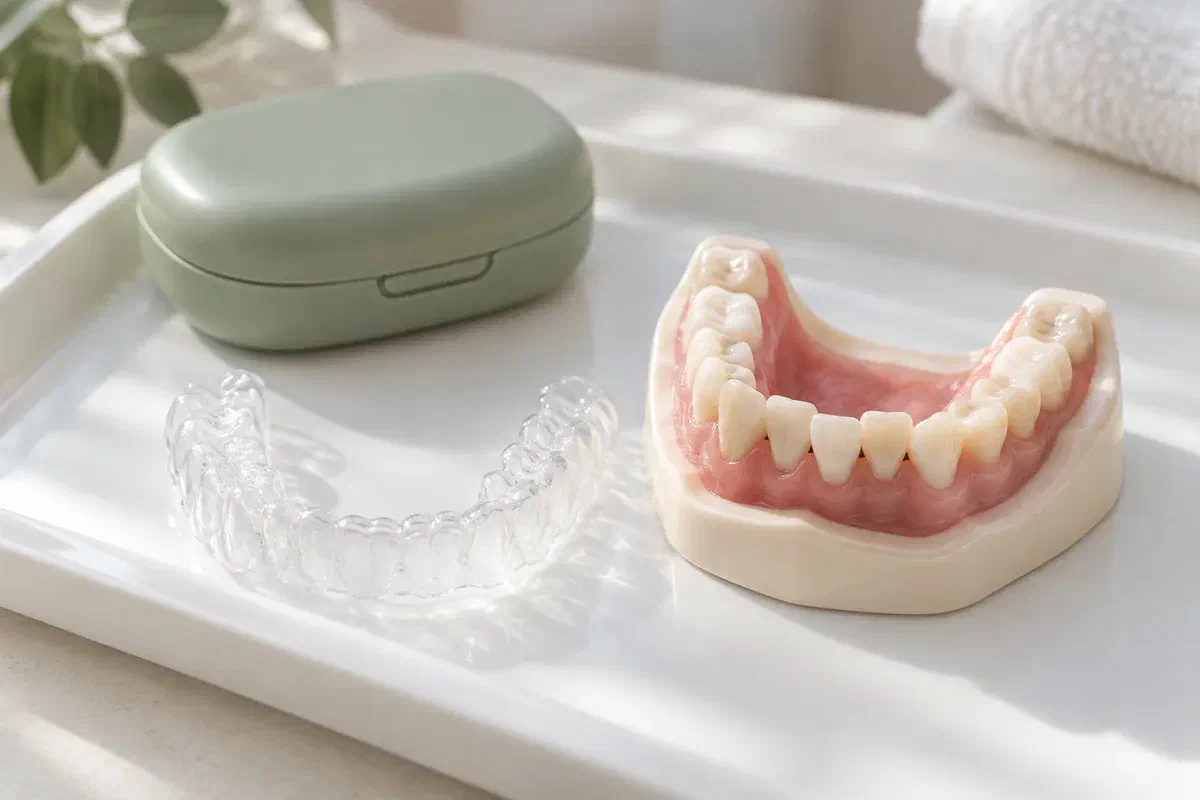
Illustrative lower-teeth model with mild crowding beside a removable retainer and case
Worth raising with us

Tell us what changed, and what you could live with.

Along with the movement itself and when you noticed it, describe what has been hard about retention. Mention any tenderness or bite changes, not just how your smile looks.

A removable retainer worn on and off

Explain how often it really gets worn and how it fits now. Tight, loose, cracked, or misshapen are all useful descriptions. A retainer that hurts should not be jammed into place; bring it so it can be checked, and ask what to do in the meantime.

A fixed wire you would rather not keep

Some people find bonded retainers hard to clean or simply dislike them. Mention that, along with any loose spot, gap, or tooth that has moved. Removing or changing a wire is a clinical decision, so leave it in place and ask for it and the surrounding teeth to be assessed.

Shifting that has crept along for years

Gradual change counts. Let us know about new restorations, gum treatment, or a different bite since your treatment ended. Old photos may help tell the story, but your present examination decides what we suggest.

If a tooth shifts suddenly or comes with pain, swelling, bleeding, or real looseness, that is a reason to call rather than wait. It may have nothing to do with retention.

Choosing with your eyes open

Each option carries its own upkeep

Keeping a position you are happy with usually means some form of retention. Moving teeth again means active treatment and then retention afterward. Those are separate commitments, and the review should be clear about which is being suggested, or whether the real issue is the appliance.

It is entirely reasonable to factor in how much wear and how many visits you are prepared for. Ask what is realistic, what alternatives exist, and what each would require over the years. A shift on its own is not a mandate for more treatment.

Patient information: American Association of Orthodontists — movement after orthodontic treatment

An exact account of the movement

Find out which teeth have changed and whether your bite or gums deserve attention. When older records exist, the clinician can set them against current findings. Observed facts and possible causes should be kept clearly apart.

Options measured against your priorities

Be open about whether appearance, convenience, or simple stability matters most. Ask what each route would demand and whether holding today's position is clinically acceptable. That conversation belongs before any appliance is chosen.

Retention you will genuinely keep up

Name what got in the way before: discomfort, loss, a hectic household, or not knowing how long to keep going. A plan built around those facts is more durable. Ask who will look after the appliance in future and how problems will be handled.

The consultation

Background, examination, a frank comparison, and next steps

The depth of the visit depends on how much has shifted. Ask what is included, and whether records or a specialist referral may be required before advice is final.

  1. Share what you know about the first treatment

    Dates can be approximate: when active treatment ended, what you wore afterward, and how long you kept it up. Bring appliances and any records. Mention dental, health, or routine changes since then.

  2. Have the teeth and appliance examined

    Alignment, gums, bite, and supporting tissues are assessed, and any retainer you bring is inspected. Scans or images may be advised to understand the change or plan movement. Ask if anything should be treated before deciding on orthodontics.

  3. Compare the upkeep of each route

    Find out what a new or repaired retainer would involve day to day, and whether further movement is reasonable. For realignment, talk through scope, risks, alternatives, monitoring, and the estimate. A specialist's opinion may suit more involved concerns.

  4. Agree what happens right now

    Know whether to wear anything before the next appointment and what to do if comfort or fit changes. Ask when records, appliances, or a review would follow. Leaving with a clear short-term instruction is part of the plan.

Living with the plan

Keep to what was agreed, and speak up if it isn't working.

Whether the plan is retention, treatment, or further assessment, keep its purpose in view. Tell us if your circumstances or preferences change.

No home corrections

Restarting old aligner trays or squeezing teeth into a retired retainer can do more harm than good. Ask which appliance matches your present position. If you are told to stop wearing a damaged one, clarify what replaces it.

Show up for the check

Bring the appliance and note any changes. If active treatment begins, wear it on schedule rather than when you remember. A lost attachment or new fit problem is worth a prompt call.

Adjust the routine before it breaks

Ask for wear and cleaning guidance in plain terms and an idea of how often reviews will be. Keep a case at your bedside or wherever the appliance comes out. If a move, a new job, or travel is coming, say so now.

Three possible paths

Maintain, move, or understand more first

For each route, ask what it is designed to do and what it will ask of you. Appliances need a defined purpose, and any movement should be planned from today's findings.

When today's alignment is acceptable to you

Keep things as they are, with suitable retention

If you are content with where your teeth sit, the focus may be an appliance that holds them there with manageable upkeep. Ask whether repairing or replacing what you have makes sense and what records it needs. This route preserves the present position rather than undoing past changes.

When realignment is worth it to you

Correct the movement with further treatment

The course might be short or more extensive, depending on what has shifted. Ask how the scope was decided and what retention would follow afterward. Previous braces or aligners do not guarantee a brief course will handle every concern.

When something doesn't quite add up

Get more answers before deciding

Gum concerns, a changing bite, or unusual movement can justify a closer look or a specialist's opinion before appliances change. Ask what the referral should clarify, and who is responsible for any immediate issue in the meantime.

Questions about upkeep

Retainers, effort, and what is really necessary

A consultation can separate an appliance issue from a maintenance decision or a need for active treatment.

(905) 876-4488
Will I have to wear a retainer for the rest of my life?
Because teeth can keep moving over the years, keeping a retainer in your routine is usually framed as long-term care. How and how often you wear one is something to settle with the clinician based on your teeth and goals.
Is it possible to wear a retainer less often once things settle?
Ask the clinician before changing your routine. Advice depends on your teeth, the appliance, and your history. Changing wear on your own can make it harder to tell what is happening.
Can a fixed wire be removed if I find it hard to keep clean?
That can be discussed. The clinician can explain the trade-offs and what retention might look like instead. Do not try to remove or loosen the wire yourself.
If my teeth have only shifted slightly, must I treat them?
Not necessarily. Your bite, oral health, the amount of change, and your wishes all shape the advice. Retention guidance, limited movement, or a broader plan may be options. Ask what each recommendation is for.
Does a new retainer reverse movement that has already happened?
That is not usually its job. An appliance shaped around your teeth today is there to keep them in place. Bringing them back to an older arrangement would call for its own assessment and planned treatment.
I live in a smaller Halton Hills community. Can visits be grouped?
Mention it when booking. Bringing appliances and records helps the first visit cover more, and the team can explain whether further appointments are likely and how they might be combined.
Relapse consultations for Halton Hills

Decide how much upkeep is right for you.

Book a consultation at our Bronte Street practice to look at teeth that have moved since your braces or aligners. We will walk you through the findings, talk honestly about retention, and set out any options for further review or treatment.

Recommendations follow an examination and any records that are needed. If a retainer goes missing, breaks, starts to hurt, or stops fitting, give us a call without waiting.

Visit Milton Dental Clinic
Unit 1, 342 Bronte St. S, Milton, ON L9T 5B7
Get directions Clinic hours
Monday–Thursday
11am–7pm
Friday–Sunday
By appointment only

Areas we serve

  • Milton
  • Oakville
  • Mississauga
  • Georgetown
  • Halton Hills
  • Acton
  • Campbellville
  • Brampton
  • Burlington
  • Puslinch
  • Rockwood
  • Erin
  • Caledon
  • Etobicoke
  • Old Milton
  • Bronte Meadows
  • Timberlea
  • Dorset Park
  • Dempsey
  • Clarke
  • Beaty
  • Coates
  • Harrison
  • Scott
  • Willmott
  • Ford
  • Bowes
  • Cobden
  • Walker
  • Mountain View
  • Milton Heights
  • Hawthorne Village
  • Valley View
  • Fallingbrook
  • Nassagaweya
  • Trafalgar
  • Esquesing
  • Nelson
  • Brookville
  • Moffat
  • Glen Williams
  • Norval
  • Limehouse
  • Stewarttown
  • Ashgrove
  • Hornby
  • Silver Creek
  • Speyside
  • Scotch Block
  • North Oakville
  • River Oaks
  • Glen Abbey
  • West Oak Trails
  • Palermo
  • Bronte Creek
  • College Park
  • Joshua Creek
  • Uptown Core
  • Preserve
  • Iroquois Ridge
  • Lisgar
  • Meadowvale
  • Meadowvale Village
  • Churchill Meadows
  • Erin Mills
  • Central Erin Mills
  • Streetsville
  • East Credit
  • Creditview
  • Heartland
  • Sheridan
  • Mount Pleasant
  • Credit Valley
  • Huttonville
  • Churchville
  • Springbrook
  • Northwest Brampton
  • Bram West
  • Fletcher's Meadow
  • Fletcher's Creek South
  • Alton Village
  • Orchard
  • Millcroft
  • Headon Forest
  • Tansley
  • Brant Hills
  • Tyandaga
  • Kilbride
  • Lowville
  • Aberfoyle
  • Morriston
  • Arkell
  • Hillsburgh
  • Freelton
  • Carlisle
  • Waterdown
  • Flamborough
  • Mountsberg

How can we help?

Milton Dental Clinic

Have a question about your smile? Choose the option that works best for you.

For urgent dental concerns, please call.
Messages are reviewed during clinic hours.