

Illustrative adult patient discussing tooth movement after earlier orthodontic care
Cosmetic Dentistry

Orthodontic Relapse Treatment in Oakville

A space has crept back between your front teeth, and now you see it in every photo. Coming from Oakville, you can book an appointment that measures what has actually moved, checks your retainer, and helps you decide whether the change is worth correcting.

For a smile that has started to drift

A gap you thought was closed for good

Seeing an old space reopen can be disheartening, especially after the time and effort that went into straightening your teeth. Orthodontic relapse is the term for teeth moving away from the position earlier treatment achieved. Before deciding anything, it helps to find out precisely what has changed and by how much.

Spaces, rotations, and crowding can return for different reasons. Natural changes in the mouth continue after treatment, retainers break down or fall out of use, and occasionally a gum or dental problem contributes. An assessment should look at each possibility instead of assuming the explanation is skipped wear.

If you are travelling up from Oakville, bring your retainer and any photos or records from the original treatment so one visit covers as much ground as possible. Let us know whether the goal is to close the gap again or keep it from widening. We can also discuss whether a specialist orthodontic opinion makes sense.

Request a relapse appointment
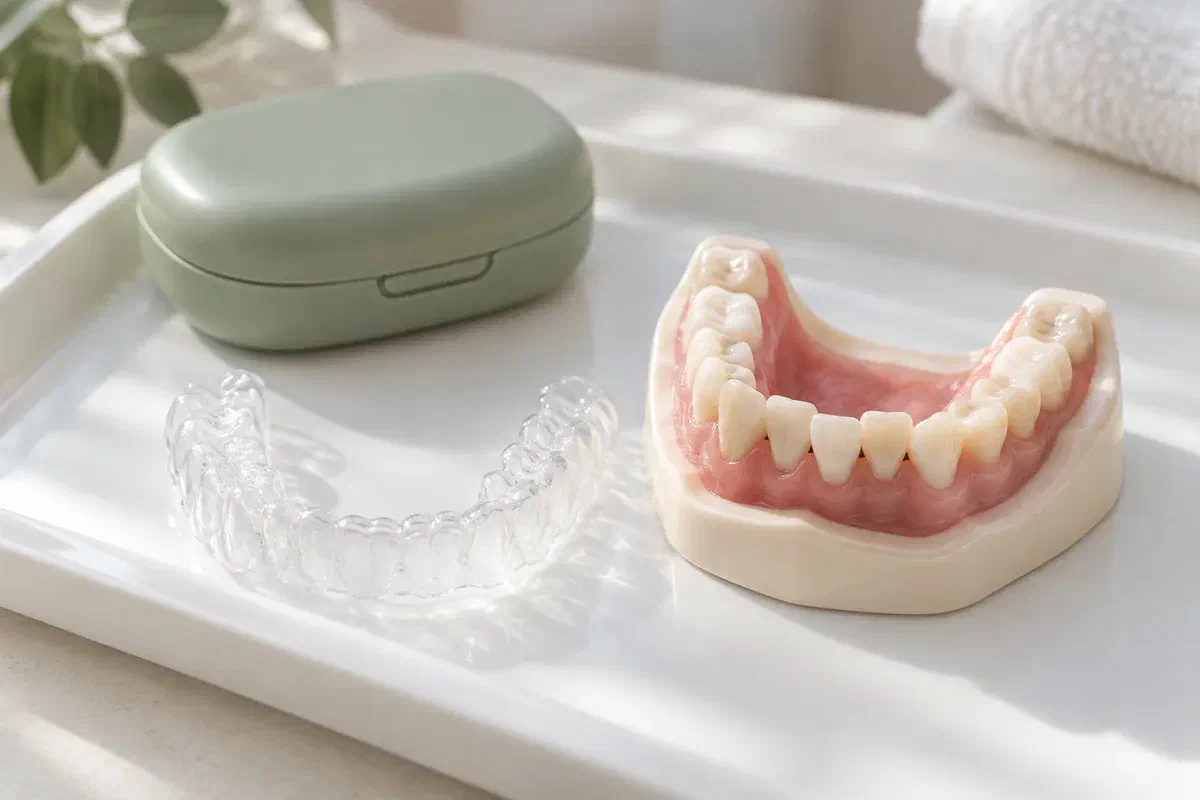
Illustrative lower-teeth model with mild crowding beside a removable retainer and case
Before you come in

Notes that make the appointment more useful

Jot down what moved, when you first saw it, and the story of your retainer since treatment. It helps the clinician tell an appliance issue from a change in the teeth or gums, so mention any discomfort as well.

A removable retainer that has stopped fitting

Note whether it feels tight, floats above the teeth, or won't go on. Mention cracks, warping, or a long stretch without wearing it. Rather than pressing a sore retainer into place, bring it to the visit and ask what to do until then.

Teeth shifting behind a bonded wire

A fixed retainer can remain in the mouth even after one of its bonds has failed. Tell us about a new space, a rough spot, or a tooth that has changed position. Don't try to bend the wire back, and ask for both the wire and nearby teeth to be checked.

A change after many years without review

Long-standing changes are worth discussing too. Share any dental work, gum treatment, or bite differences since your braces or aligners ended. Older photos can show how the result once looked, while the present examination determines what is advised.

Rapid movement together with pain, swelling, bleeding, or a markedly loose tooth needs prompt attention and should not be put down to ordinary relapse. Call the clinic so it can be assessed.

Clarity before commitment

Know whether you are protecting a position or changing it

Replacing a retainer and closing a space with further orthodontic movement are distinct choices with different aims. The review should spell out whether the immediate focus is maintaining what you have, sorting out an appliance, or exploring realignment, before new records are taken or appliances ordered.

You might feel differently about your smile now than you did during your first treatment. Ask what is realistic, what alternatives exist, and how much ongoing retainer wear each option would ask of you. A small amount of movement is not, on its own, a reason to begin another course.

Patient information: American Association of Orthodontists — movement after orthodontic treatment

Specific, observed findings

Ask which teeth have moved and whether your bite or gums need attention. Where earlier records exist, they can be compared with what is seen now. A good explanation keeps what was observed separate from theories about cause.

A recommendation tied to your goal

Some people want the gap closed; others are comfortable with it and want stability. Say which camp you are in. Then ask what each approach would require and whether keeping the present position is appropriate before an appliance or treatment scope is chosen.

A retention plan built around your habits

Be candid about what made retention hard before: a misplaced case, discomfort, travel, or vague instructions. Aim for an arrangement you understand and can sustain. Ask how future problems would be managed and who reviews the appliance after any treatment.

Four steps in a relapse review

How the assessment usually unfolds

What is needed depends on the amount and type of change. Ask what the first appointment includes and whether additional records or a specialist review might come before advice is given.

  1. Go over the treatment and retainer history

    Share when active treatment finished, the retention you were prescribed, and when the space or shift appeared. Bring appliances and records as requested. Mention any new restorations, health changes, or routine changes since then.

  2. Examine the teeth, bite, and appliance

    The clinician checks your present alignment, gums, and supporting tissues, and inspects the retainer if you have it. More records may be suggested to explain the movement or plan treatment. Ask whether a dental or gum issue should be handled first.

  3. Lay out holding and moving as distinct paths

    We explain what a new or repaired retainer would aim for and whether further movement suits your situation. If realignment is considered, review its scope, risks, alternatives, monitoring, and estimate. A specialist opinion may be useful for more involved concerns.

  4. Agree on what happens between now and next time

    Confirm what, if anything, to wear before the next visit and what to do if fit or comfort changes. Ask when to expect records, an appliance, or a review. Grouping these steps thoughtfully can reduce trips from Oakville without leaving the interval unclear.

Following your review

Let the plan guide you, not leftover trays

Your next step may involve retention, further treatment, or more assessment. Keep its purpose clear and reach out if circumstances change.

Use appliances exactly as directed

Old aligner sets and outgrown retainers are not meant for moving teeth back at home. Ask which appliance fits your teeth now. If a damaged item is retired, find out what replaces it and what to do in the gap.

Return for the review that checks progress

Bring the appliance and mention any changes since the assessment. Should new treatment begin, follow its schedule as prescribed rather than treating it as a quick touch-up. Report fit issues or lost attachments without delay.

Set up a routine that lasts

Ask for clear wear and cleaning directions and a sense of future check-ups. Keep a case wherever you usually take the appliance out. Raise foreseeable hurdles, such as work travel or a move, now rather than after the routine slips.

Choosing a response

Three directions, each with a different purpose

Ask what each option is meant to achieve. Any new appliance should have a stated job, and if teeth are to be moved again, that plan should come from fresh findings rather than the original case.

When the current position can reasonably be kept

Restore or update the retention arrangement

If your teeth sit acceptably and the retainer is the concern, retention may be the focus. Ask whether repair or a new appliance is sensible and what records it needs. Don't assume a new retainer will close a space that has already reopened.

When moving teeth again suits you and the findings

Realign the teeth with further treatment

A limited or more comprehensive course may be discussed depending on the changes. Ask why the suggested scope fits and how retention will follow. Earlier treatment does not promise that a short course will address every concern.

When the findings raise more questions

Investigate further or seek a specialist opinion

Gum findings, bite changes, or complex movement may need more assessment before appliances change. Ask what a referral is intended to clarify, and confirm who manages any immediate problem while the longer plan comes together.

Relapse and reopened spaces

What people ask when a gap comes back

A review can show whether you are dealing with an appliance problem, a retention choice, or a case for active treatment.

(905) 876-4488
Will closing a reopened gap require full braces again?
Not automatically. The amount of change, your bite, your oral health, and your goals all need assessment. Options range from retention advice or an appliance change to limited movement or a broader plan. Ask what the recommendation aims to accomplish.
Why did a space reopen when I wore my retainer most nights?
Tooth positions can change for several reasons, and a retainer that has worn or changed shape may not hold teeth as it once did. An examination looks at the teeth, gums, and appliance together instead of assuming a single cause.
Could my bonded retainer have loosened without my noticing?
It can. A wire may remain in place while a bond lets go. Ask for the appliance and neighbouring teeth to be examined, and do not bend or pull the wire yourself.
Is it worth tracking the gap with my own photos?
Photos taken in similar lighting can help you describe when a change began. They cannot show the condition of roots, gums, or bite, so they support the examination rather than replace it.
Can I arrange a single visit from Oakville that covers the essentials?
Mention when booking that you are coming from out of town and bring your appliances and any records. The first visit can cover history and examination, and the team can explain whether more records or appointments are likely.
What happens if I decide the gap doesn't bother me?
That is a valid choice to discuss. The clinician can explain whether your current position is suitable to keep and whether anything else needs care. You can then talk about retention without assuming treatment is required.
Oakville · Relapse assessment

See what changed, then decide what you want.

Arrange an appointment at our Bronte Street practice to review movement since your earlier orthodontic care. We will explain the findings, cover retention questions, and outline options for further review or treatment.

The right response depends on examination and relevant records. Should the retainer crack, go missing, or start to hurt while the gap is being reviewed, phone us promptly.

Visit Milton Dental Clinic
Unit 1, 342 Bronte St. S, Milton, ON L9T 5B7
Get directions Clinic hours
Monday–Thursday
11am–7pm
Friday–Sunday
By appointment only

Areas we serve

  • Milton
  • Oakville
  • Mississauga
  • Georgetown
  • Halton Hills
  • Acton
  • Campbellville
  • Brampton
  • Burlington
  • Puslinch
  • Rockwood
  • Erin
  • Caledon
  • Etobicoke
  • Old Milton
  • Bronte Meadows
  • Timberlea
  • Dorset Park
  • Dempsey
  • Clarke
  • Beaty
  • Coates
  • Harrison
  • Scott
  • Willmott
  • Ford
  • Bowes
  • Cobden
  • Walker
  • Mountain View
  • Milton Heights
  • Hawthorne Village
  • Valley View
  • Fallingbrook
  • Nassagaweya
  • Trafalgar
  • Esquesing
  • Nelson
  • Brookville
  • Moffat
  • Glen Williams
  • Norval
  • Limehouse
  • Stewarttown
  • Ashgrove
  • Hornby
  • Silver Creek
  • Speyside
  • Scotch Block
  • North Oakville
  • River Oaks
  • Glen Abbey
  • West Oak Trails
  • Palermo
  • Bronte Creek
  • College Park
  • Joshua Creek
  • Uptown Core
  • Preserve
  • Iroquois Ridge
  • Lisgar
  • Meadowvale
  • Meadowvale Village
  • Churchill Meadows
  • Erin Mills
  • Central Erin Mills
  • Streetsville
  • East Credit
  • Creditview
  • Heartland
  • Sheridan
  • Mount Pleasant
  • Credit Valley
  • Huttonville
  • Churchville
  • Springbrook
  • Northwest Brampton
  • Bram West
  • Fletcher's Meadow
  • Fletcher's Creek South
  • Alton Village
  • Orchard
  • Millcroft
  • Headon Forest
  • Tansley
  • Brant Hills
  • Tyandaga
  • Kilbride
  • Lowville
  • Aberfoyle
  • Morriston
  • Arkell
  • Hillsburgh
  • Freelton
  • Carlisle
  • Waterdown
  • Flamborough
  • Mountsberg

How can we help?

Milton Dental Clinic

Have a question about your smile? Choose the option that works best for you.

For urgent dental concerns, please call.
Messages are reviewed during clinic hours.