

Illustrative adult patient discussing tooth movement after earlier orthodontic care
Cosmetic Dentistry

Orthodontic Relapse Treatment in Puslinch

Teeth spreading apart while your gums bleed when you brush is a combination worth having examined. From Puslinch, a relapse assessment looks at gum health and alignment together, so any treatment plan starts from a sound foundation rather than a guess.

Gums, bone, and moving teeth

Look beneath the smile first.

When teeth that were once straightened begin to fan out or overlap, it is natural to think only about alignment. Orthodontic relapse, the drift away from an earlier treated position, is one explanation. Yet the gums and supporting bone hold teeth in place, and their condition belongs in the same conversation.

Several things can contribute at once. Tissues around the teeth change with time, retainers age or fall out of use, and gum problems may affect stability. A thorough review looks at the foundation as well as the teeth on top of it.

Puslinch is a spread-out rural township, and many people from there prefer to settle as much as possible at one appointment. Bring your retainer, any history of gum treatment, and records from earlier orthodontic care if you have them. Tell us whether you want an earlier result back or stability from here, and we can talk about whether specialist input would add clarity.

Book a gum and relapse assessment
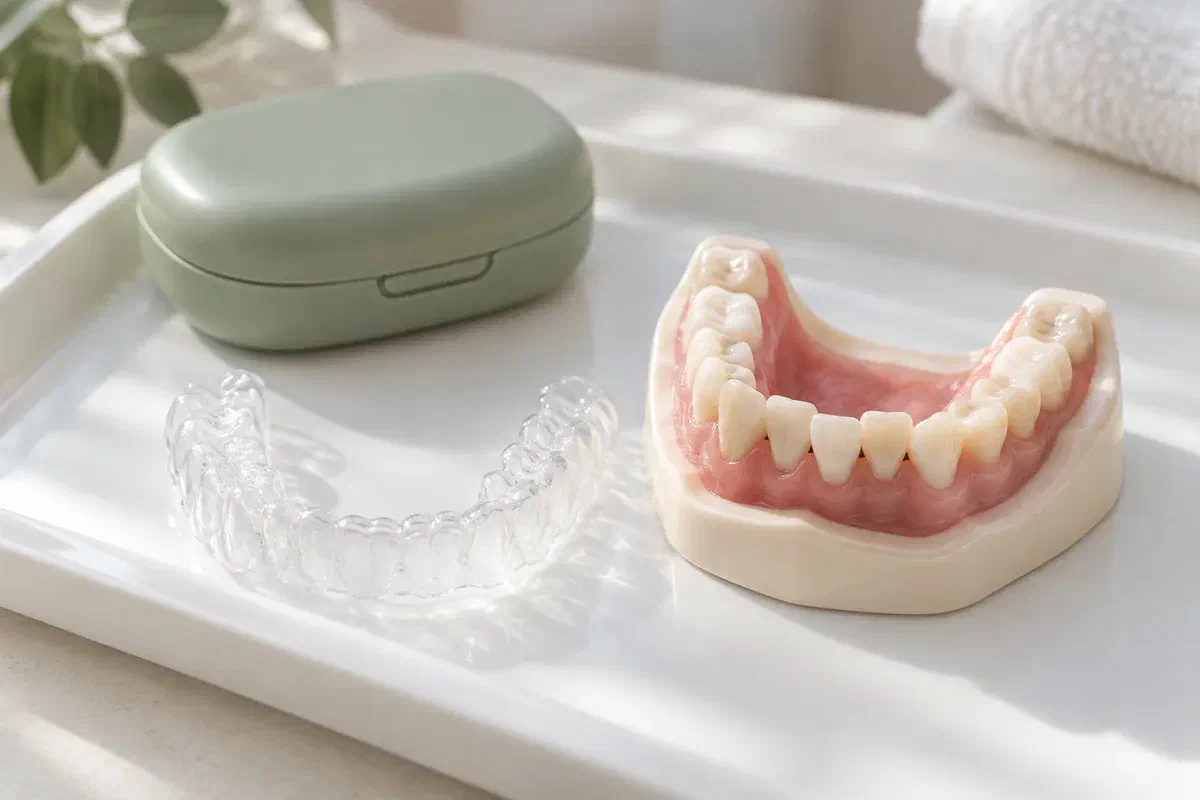
Illustrative lower-teeth model with mild crowding beside a removable retainer and case
Mention these

Bleeding, spacing, and a retainer that rocks can all be connected.

Sharing what moved, when, and how your gums have behaved helps the clinician weigh an appliance issue against changes in the teeth or tissues. Symptoms matter as much as appearance.

A removable retainer that has started to rock

Tell us how the fit has changed: tighter, looser, or not seating at all. Note heat damage, cracks, or breaks in wear. A retainer that hurts should stay out rather than be forced; bring it in so it can be examined, and ask what you should wear in the meantime.

A fixed wire with spacing or bleeding nearby

Plaque can collect around bonded retainers, and a bond can fail quietly. Describe gaps, roughness, or tender gums near the wire. Avoid bending it, and ask for the wire, the surrounding teeth, and the gum tissue to be checked together.

Gum changes since treatment ended

Recession, bleeding, or previous gum treatment are all worth mentioning, along with any bite changes or new restorations. Photographs from the end of treatment may help with the history, but the examination today, including the gums, guides the advice.

Rapid shifting, a tooth that feels distinctly loose, swelling, or pain may signal a problem beyond relapse. Please call so the cause can be assessed promptly.

Why the foundation matters

Steady gums before steady teeth

Maintaining a current position, fixing an appliance, and moving teeth again are three different aims. Where gum health is in question, the review may also recommend dealing with that before any orthodontic step. You should know which of these is proposed, and in what order, before records or appliances are arranged.

Take stock of what matters to you today. Ask how achievable different outcomes are, which other paths could work, and what keeping any result would demand over time. Spacing alone is not a reason to rush into another course.

Patient information: American Association of Orthodontists — movement after orthodontic treatment

A full account, including the gums

You should hear which teeth have moved and what the gums and supporting tissues look like. Earlier records can be compared with today's findings if available. The explanation should separate what is seen from what might be causing it.

Sequencing that makes sense

If a gum concern is found, ask whether it should be treated first and how that affects any alignment plan. Share whether your goal is realignment or stability, and ask whether keeping the current position is appropriate before an appliance is chosen.

Retention that supports gum health

Discuss cleaning around fixed wires and removable retainers, and what made retention hard before. Ask who will monitor both the appliance and your gums afterward, and what to do if bleeding or spacing returns.

How the assessment proceeds

History, a gum-aware exam, and an ordered plan

The extent of the visit depends on what has changed. Ask what is included and whether gum assessment, further records, or a specialist opinion should come before an orthodontic recommendation.

  1. Share the orthodontic and gum history

    Tell us when active treatment finished, what retention followed, and any gum treatment or symptoms since. Bring appliances and records you have. Mention health changes, medications, or routine changes that might be relevant.

  2. Examine teeth, gums, bite, and appliance

    Alignment, gum tissue, supporting structures, and the way your teeth meet are assessed, along with any retainer. X-rays or other records may be suggested to understand bone support or plan movement. Ask what needs attention first.

  3. Discuss the right order of steps

    The clinician explains whether gum care, retainer work, or tooth movement is the priority. If realignment is considered, talk about how much would be involved, the risks, other choices, follow-up, and the estimate. A specialist may be suggested.

  4. Leave with clear interim instructions

    Confirm what to wear, if anything, how to clean around it, and what to do if bleeding, fit, or comfort changes. Ask when the next visit, records, or appliance are expected, so the trip from Puslinch can be planned.

Looking after things afterward

Protect your gums and follow the plan.

Whether the next stage is gum care, retention, or treatment, keep its purpose clear and contact us if anything changes.

Use only the advised appliance

Old aligners and ill-fitting retainers should not be used to move teeth back, especially when the gums need attention. Ask which appliance suits your present position. If you are told to set one aside because it is damaged, find out what takes its place and what to do until it arrives.

Keep both gum and orthodontic reviews

Bring the appliance and report any bleeding, spacing, or fit changes. If active treatment begins, follow its schedule. Attachments that come off or a retainer that stops seating deserve a prompt call.

Clean around the appliance every day

Ask for practical cleaning instructions for your retainer and the teeth around it, and have someone show you the technique if a fixed wire is involved. Store the case wherever the appliance comes out at night. If travel or a busy farm or work season might disrupt your routine, plan for it now.

Possible next steps

Stabilize, realign, or treat the foundation first

Ask what each step is meant to accomplish. Appliances need a clear purpose, and any further movement should be based on current findings, including gum health.

When the present position is acceptable

Adjust or renew the retainer

If the teeth sit acceptably and the appliance is the issue, retention may be the focus. Ask whether repair or replacement is reasonable and how to keep it clean. A new retainer is designed to hold the present position, not to reverse past movement.

When realignment is suitable and wanted

Consider further orthodontic movement

After any necessary gum care, limited or broader movement may be discussed. Ask why the scope fits and what retention would follow. Previous treatment does not guarantee a short course will address everything.

When the supporting tissues need attention

Address the gums or seek specialist input

Gum findings or bone support questions may call for further assessment or a referral before appliances change. Ask what the referral is meant to answer and who manages any immediate concern in the meantime.

Gum and relapse questions

When spacing and gum health go together

An assessment can tell whether you face an appliance issue, a gum concern, a maintenance decision, or a need for active treatment.

(905) 876-4488
Can gum problems make my teeth move after orthodontic treatment?
Gum health can affect how teeth are supported, which is why it is part of a relapse assessment. The clinician can explain what the examination shows in your case and whether the gums, the appliance, ordinary age-related change, or a mix of these seems to be involved.
Should gum treatment come before realigning my teeth?
Where the examination turns up a gum problem, it is often dealt with before further orthodontic movement is planned. Ask the clinician what order makes sense for you.
Why do my gums bleed around my fixed retainer?
Plaque can build up around a bonded wire if cleaning there is difficult. Bleeding is worth having checked. Ask for help with a cleaning method that suits your mouth.
Will I need X-rays for a relapse assessment?
Depending on the findings, images may help assess bone support or plan movement. They are not automatic, so ask what is recommended, what question the images would answer, and whether recent ones taken elsewhere could be shared.
Can a new retainer close the spaces that have opened?
Usually it is built to hold whatever spacing exists when it is made. Closing gaps would be active treatment, planned once the gums and supporting bone have been assessed.
Is it fine to keep my current spacing if my gums are healthy?
Many people choose that. Once the gums have been checked, the clinician can tell you whether the spacing is a reasonable position to hold and suggest a retention approach that is easy to clean around.
Relapse assessments for Puslinch

Check the gums and the alignment together.

Book an assessment at our Bronte Street practice to look at teeth and gums after earlier orthodontic care. We will explain the findings, discuss retention, and set out options for gum care, further review, or treatment.

Recommendations depend on examination and any records needed. Call us soon if a retainer goes missing, breaks, causes pain, or stops fitting.

Visit Milton Dental Clinic
Unit 1, 342 Bronte St. S, Milton, ON L9T 5B7
Get directions Clinic hours
Monday–Thursday
11am–7pm
Friday–Sunday
By appointment only

Areas we serve

  • Milton
  • Oakville
  • Mississauga
  • Georgetown
  • Halton Hills
  • Acton
  • Campbellville
  • Brampton
  • Burlington
  • Puslinch
  • Rockwood
  • Erin
  • Caledon
  • Etobicoke
  • Old Milton
  • Bronte Meadows
  • Timberlea
  • Dorset Park
  • Dempsey
  • Clarke
  • Beaty
  • Coates
  • Harrison
  • Scott
  • Willmott
  • Ford
  • Bowes
  • Cobden
  • Walker
  • Mountain View
  • Milton Heights
  • Hawthorne Village
  • Valley View
  • Fallingbrook
  • Nassagaweya
  • Trafalgar
  • Esquesing
  • Nelson
  • Brookville
  • Moffat
  • Glen Williams
  • Norval
  • Limehouse
  • Stewarttown
  • Ashgrove
  • Hornby
  • Silver Creek
  • Speyside
  • Scotch Block
  • North Oakville
  • River Oaks
  • Glen Abbey
  • West Oak Trails
  • Palermo
  • Bronte Creek
  • College Park
  • Joshua Creek
  • Uptown Core
  • Preserve
  • Iroquois Ridge
  • Lisgar
  • Meadowvale
  • Meadowvale Village
  • Churchill Meadows
  • Erin Mills
  • Central Erin Mills
  • Streetsville
  • East Credit
  • Creditview
  • Heartland
  • Sheridan
  • Mount Pleasant
  • Credit Valley
  • Huttonville
  • Churchville
  • Springbrook
  • Northwest Brampton
  • Bram West
  • Fletcher's Meadow
  • Fletcher's Creek South
  • Alton Village
  • Orchard
  • Millcroft
  • Headon Forest
  • Tansley
  • Brant Hills
  • Tyandaga
  • Kilbride
  • Lowville
  • Aberfoyle
  • Morriston
  • Arkell
  • Hillsburgh
  • Freelton
  • Carlisle
  • Waterdown
  • Flamborough
  • Mountsberg

How can we help?

Milton Dental Clinic

Have a question about your smile? Choose the option that works best for you.

For urgent dental concerns, please call.
Messages are reviewed during clinic hours.