A removable retainer that is lost, cracked, or worn thin
Contact us soon rather than letting months pass. Explain whether the appliance is missing or available. Keep broken pieces for inspection, and do not glue, heat, or bend it back into shape.


“How long do I have to keep wearing this?” is one of the most common retainer questions, and the honest answer depends on your teeth. From Bolton or anywhere else in Caledon, arrange a review of fit and tooth position, discuss removable and bonded designs, and plan for the long term.
Teeth can keep responding to everyday forces long after braces or aligners finish, which is why retainers exist. They help hold teeth in their corrected positions. A retainer might be a removable tray or plate, or a thin wire bonded to the back of selected teeth. How long and how often you wear it is a clinical question about your mouth, so it should be answered at a review rather than guessed.
Over a long period, a retainer meets several checkpoints: the first fitting, the slow wear of daily use, and any moment the fit feels different. Each time, examining the appliance together with your teeth gives the clearest picture. If a replacement is needed, it is made for your teeth today, taking account of crowns, fillings, or changes in position.
When you get in touch, describe the retainer and your question, and bring it along. If an orthodontist still follows your retention, let us know so we can align our advice with theirs. We can then discuss assessment, sensible options for the years ahead, and whether that orthodontist or a specialist should be involved.
Share which appliance you have and what you have noticed. Mention when it started, any discomfort, and how your wear has changed over time.
Contact us soon rather than letting months pass. Explain whether the appliance is missing or available. Keep broken pieces for inspection, and do not glue, heat, or bend it back into shape.
Even after years without trouble, report looseness, a rough patch, difficulty cleaning, or a tooth that has moved. Fixed wires need ongoing checks. A partly detached wire may have stopped supporting some teeth.
Ask before cutting back on wear, or if you have been told to use a night guard or sports mouthguard as well. Bring the other appliances. They do different jobs, and combining or swapping them needs advice tailored to you.
Do not force a retainer that no longer seats or that hurts. Ask for an assessment and what to do with it until your visit.
Maintaining an orthodontic result is a long-term commitment, and the retainer is a central part of it. The recommended type depends on the positions being held, your bite, cleaning access, and other personal factors. Some people use a fixed wire and a removable retainer together, and each should have a stated purpose.
Understanding the routine makes it sustainable. You should feel confident handling the appliance, know how snug it should feel, and recognise a change that warrants a call. That understanding is what stops a small problem turning into a home repair attempt.
Patient information: British Orthodontic Society — types of orthodontic retainer
Ask what makes a removable, fixed, or combined plan suitable for you over time. Talk about your preferences and routine, and hear the clinical reasoning. A family member's experience cannot tell you what your own teeth need.
The appliance is checked and its use demonstrated. With a removable design, practise handling it before you leave. Raise any pressure, rough area, or doubt so the guidance matches your experience.
Find out who to call if the retainer is lost, damaged, or stops fitting, how often reviews are advised, and whether fees may apply for repairs or remakes. Knowing this ahead of time keeps a problem manageable.
A review may focus on fit and condition, records for a replacement, or the state of a bonded wire. Ask what will be covered and whether a second appointment is likely.
Tell the clinician when active treatment ended, who carried it out, what wear was prescribed, and how it has changed. Bring the appliance and any instructions. Mention fillings, crowns, injuries, or new fit sensations.
Tooth positions, the condition of the retainer, and any oral-health considerations are assessed. Where movement has occurred, talk about whether maintaining the present position is reasonable. A retention review should not turn into an unspoken plan for further alignment.
You may continue as you are, adjust the routine on the clinician's advice, or plan a new appliance. If a new one is appropriate, discuss its purpose, limits, care, and estimate, and the records it will need. Ask whether your orthodontist should be consulted.
When a replacement is provided, its seating is confirmed and use explained. Go over wear, cleaning, storage, and the timing of future reviews. With a bonded wire, ask how to clean around it and what warning signs look like. Confirm who to contact.
Care depends on the retainer's material and design. Advice intended for another appliance may not be right for yours, so ask before you change your routine.
Check that your brush, cleaner, and water temperature still suit the appliance. Heat and improvised soaks can warp or weaken it over time. Your own teeth still need daily brushing and flossing; a fixed wire may call for a floss threader or similar tool, which the team can show you.
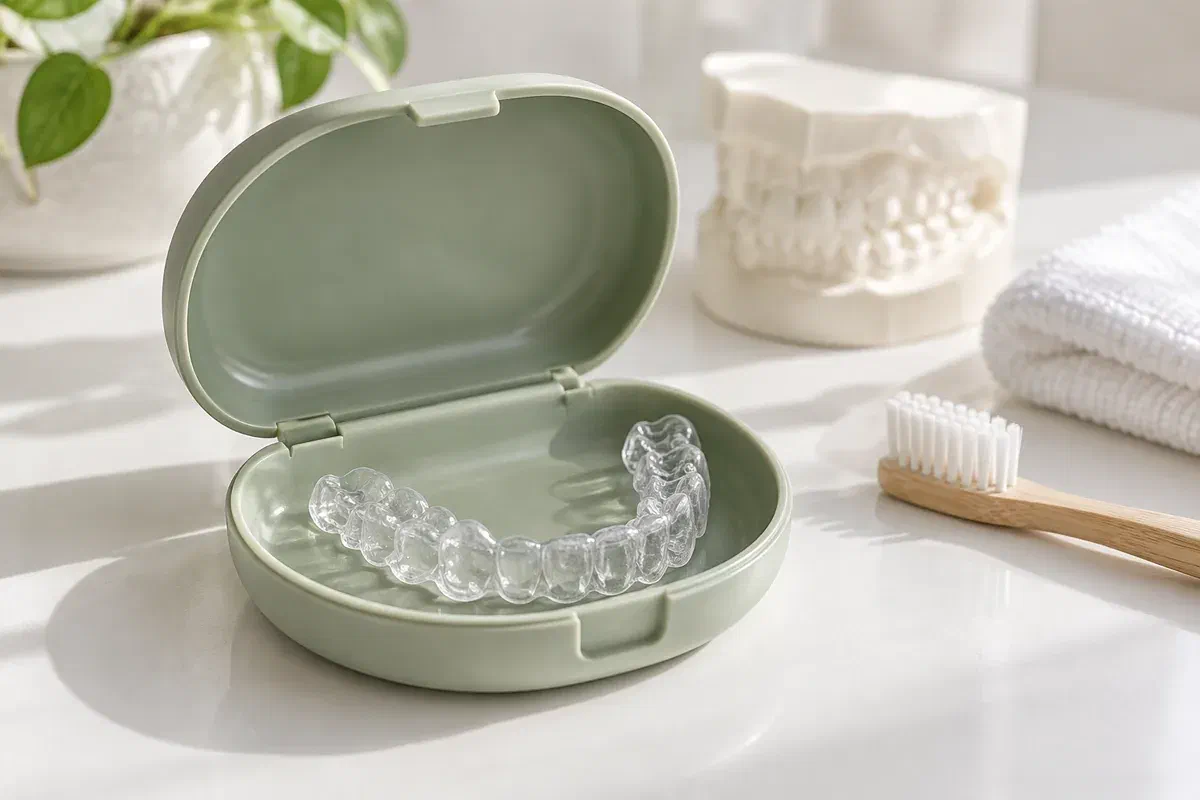
Out of the mouth means in the case, away from heat, pets, and children. Napkins and loose pockets are the usual places retainers go missing. Replace a worn case, and bring it to reviews.
Tell the clinic managing your retention if a removable retainer thins, cracks, feels different, or stops seating, or if a bonded wire loosens. Do not bend, trim, or glue it. Ask if it can still be worn and when to come in.
Patient information: British Orthodontic Society — retainer handling and patient instructions
Bring the appliance itself if you can. How it looks and fits after time is very informative.
Contact our Bronte Street practice about long-term retention, a fit concern, damage, or a replacement. If your original orthodontist is still part of the picture, tell us, so the plan for the coming years is shared.
Which design, whether repair is sensible, what records are needed, and fees are all settled at assessment. Reach out promptly about any retainer that has been lost, damaged, or stopped fitting.
