

Illustrative patient learning about a clear retainer during a dental consultation
Cosmetic Dentistry

Orthodontic Retainers in Georgetown

Heading off to college, university, or a first job with a retainer in your bag? Before you leave Georgetown, have the fit checked, ask about a spare or a sturdier design, sort out cleaning and storage, and know exactly what to do if it breaks while you are away.

Before you leave Georgetown

Your retainer is about to get a lot more independent.

Moving out often means nobody else is reminding you to put it in. A retainer helps keep your teeth where braces or aligners moved them, and that job does not end when you change address. Removable designs slip in and out; bonded ones are wires fixed behind a few teeth. Your design and schedule were chosen for your mouth, so it is worth understanding them before you are on your own.

Trouble tends to appear when an appliance is new, after a lot of handling, or when something suddenly feels off. An appointment before you leave lets the clinician check your teeth and the retainer together. If you have had a filling or crown since it was made, or your teeth have shifted, a replacement should be based on how things are now.

When you book, tell us which retainer you have and when you are leaving, and bring the appliance. If an orthodontist still oversees your retention, let us know so we stay in step with them. We can then go over assessment, suitable options, and who to contact once you have moved.

Book a pre-move retainer check
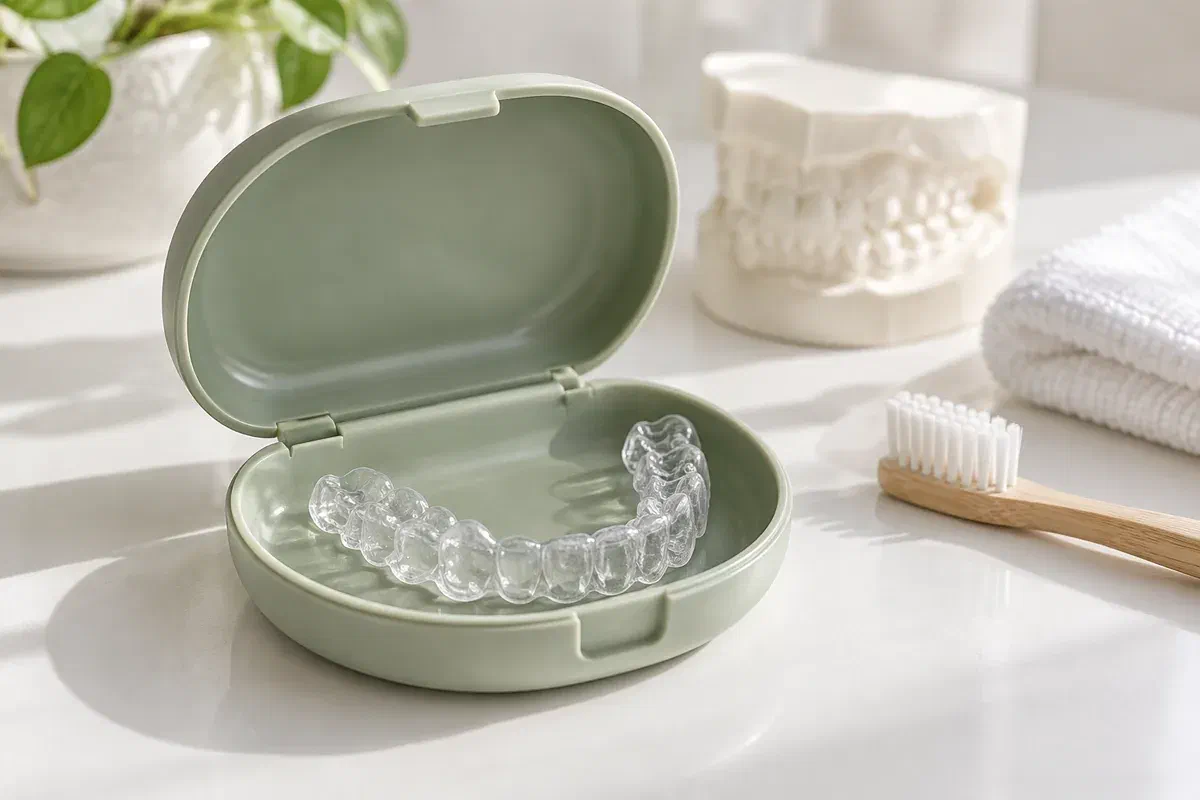
Illustrative clear orthodontic retainer in a protective case beside cleaning supplies
Things to sort out first

Fix small problems while you are still nearby.

Let us know your retainer type and anything that has changed. Mention how long it has been happening, any discomfort, and how regularly you have been wearing it.

A removable retainer that is cracked, warped, or already lost

Call well before your departure date. Explain whether the appliance is missing or damaged. Keep any broken parts to show the clinician, and do not glue, heat, or bend it into shape before you go.

A fixed wire that feels loose or rough

It is far easier to deal with now than from a residence room later. Report looseness, a sharp point, flossing trouble, or a tooth that seems to have moved. A partly attached wire may not be supporting every tooth.

Not sure about wear, sports, or night guards

If you are joining a team or have been told to wear a night guard, ask how that fits with your retainer. Bring every appliance. They have different jobs, and replacing one with another needs advice specific to you.

If a retainer will not seat or hurts, do not force it. Ask to be assessed, and ask what to do with it in the meantime.

Why it helps to be prepared

A design that suits you, and a routine you will keep without reminders

Protecting an orthodontic result takes more than one thing, and the retainer is a central piece. The design recommended for you depends on the positions being held, your bite, how easy it is to clean, and other factors. Some people have a bonded wire and a removable retainer, each with its own purpose.

The real test is whether the routine survives a new schedule. Make sure you can handle the appliance with confidence, recognise a normal fit, and know which changes mean you should call. That way you will not be tempted to try a repair in a dorm bathroom.

Patient information: British Orthodontic Society — types of orthodontic retainer

Knowing why you wear what you wear

Ask why your current design was chosen, and whether anything about your plans affects that. Share practical worries, like losing it in a dining hall, and hear the clinical reasoning. A roommate's retainer is no guide to yours.

A fit you can manage yourself

The clinician checks the retainer and shows you how to use it. Practise taking a removable appliance in and out before leaving the chair. Mention any pressure or sharp edges, so the advice reflects how it really feels.

A plan for when you are away

Find out who to call if the retainer is lost or damaged while you are out of town, how reviews will work, and what repair or replacement fees may apply. A plan made in advance takes the panic out of a broken appliance.

Your pre-departure visit

Check, decide, and leave prepared.

Depending on what you need, the appointment might be a fit check, records for a new appliance, or a bonded wire review. Ask what will happen and whether another visit is needed before you go.

  1. Share your background and your timeline

    Tell the clinician when treatment ended, who provided it, and what retention was prescribed, along with when you are leaving. Bring the appliance and instructions. Mention any fillings, crowns, or injuries since it was made.

  2. Assess your teeth and the retainer

    The clinician looks at your current tooth positions, the appliance, and anything about your oral health that matters here. If teeth have moved, you can discuss whether keeping them where they are is reasonable. A retainer check is not a hidden step toward more orthodontic treatment.

  3. Plan a replacement if one is needed

    If a new appliance makes sense, talk through its role, limits, care, and estimate. Records such as a scan or impressions may be taken. Ask how long it will take to be made, and whether it can be fitted before you leave.

  4. Fit it and practise the routine

    At the fitting, the clinician checks how it seats and talks you through using it. Ask about wear, cleaning, storage, and when to come back. For a bonded wire, learn how to clean around it and what a problem looks like. Save the clinic's number.

Retainer care on your own

Three habits to pack along with it

How you care for your retainer depends on what it is made of and how it is built. Advice for another appliance may not suit yours, so ask before you change anything.

Clean it the way you were shown

Ask what brush and cleaner to use and how warm the water can be. Heat and improvised chemical soaks can warp or weaken it. Keep brushing and flossing your own teeth, and ask for tips if a fixed wire is hard to clean around.

Keep it in its case, always

Whenever it is out, it goes in the case, away from heat, pets, and anyone's dinner tray. Napkins in a cafeteria and loose backpack pockets are where many retainers disappear. Bring the case to your appointments.

Speak up about cracks, wear, or fit changes

Contact the clinic overseeing your retention if a removable retainer cracks, feels different, or stops seating, or if a bonded wire loosens. Do not bend, trim, or glue it. Ask if it is safe to keep wearing and how soon you need to be seen.

Patient information: British Orthodontic Society — retainer handling and patient instructions

Retainer types

Which one travels best for you?

These are broad categories for discussion. You might use one design or a mix of two, and availability is confirmed once your teeth have been assessed.

Discreet and lightweight

A clear removable retainer

This tray comes out for the activities your instructions allow. It depends on a good fit and on you keeping up the hours on your instructions. Ask about cleaning, storage, how long it tends to last, and how to recognise cracks or warping.

Durable acrylic and wire

A removable wire-and-acrylic retainer

Sometimes called a Hawley retainer, this design combines an acrylic plate with metal wire. Talk with the clinician about whether it fits your treatment and how to look after it. Never bend the wire yourself; adjustments should come from the treating clinician.

Stays in, wherever you are

A bonded retainer or combination

There is no chance of leaving this one behind, but it needs careful cleaning and regular checks. It may be paired with a removable appliance. Ask which teeth it covers, how often it needs reviewing, and what to do if it comes loose far from home.

Retainer FAQ

Questions to ask before moving out

Bring your retainer to the appointment. Seeing it helps the clinician understand its condition and fit.

(905) 876-4488
Should I get a spare retainer before I move away?
Ask the clinician whether a spare makes sense for your design and situation. They can explain the options, fees, and how a backup should be stored and checked.
What do I do if my retainer breaks while I am away at school?
Keep the pieces and call the clinic to describe what happened. Ask what to do until you can be seen, and avoid home repairs. If there is pain or a sharp piece, find dental care near you.
Can I skip wearing my retainer during exam season?
Ask before changing your schedule. Your wear instructions are based on your teeth, and the clinician can explain what is advised for you.
How should I travel with a removable retainer?
Pack it in its case in your carry-on or day bag, away from heat. Do not wrap it in a napkin or leave it loose in luggage.
Can I have my bonded wire checked when I am home for the holidays?
Yes, ask about booking around your visits home. Regular reviews help catch looseness or build-up around the wire.
Is it normal for my retainer to feel tight after a few nights without it?
It can feel snug, but do not force it. If it will not seat or hurts, contact the clinic for advice.
Retainer visits for Georgetown

Get it checked now, and head off with a plan.

Contact our Bronte Street practice about a pre-move fit check, a damaged appliance, or a replacement. Mention who did your orthodontic treatment and whether they still manage your retention.

Design, repair options, records, and fees are confirmed after assessment. Leave time before your move in case a new appliance has to be made.

Visit Milton Dental Clinic
Unit 1, 342 Bronte St. S, Milton, ON L9T 5B7
Get directions Clinic hours
Monday–Thursday
11am–7pm
Friday–Sunday
By appointment only

Areas we serve

  • Milton
  • Oakville
  • Mississauga
  • Georgetown
  • Halton Hills
  • Acton
  • Campbellville
  • Brampton
  • Burlington
  • Puslinch
  • Rockwood
  • Erin
  • Caledon
  • Etobicoke
  • Old Milton
  • Bronte Meadows
  • Timberlea
  • Dorset Park
  • Dempsey
  • Clarke
  • Beaty
  • Coates
  • Harrison
  • Scott
  • Willmott
  • Ford
  • Bowes
  • Cobden
  • Walker
  • Mountain View
  • Milton Heights
  • Hawthorne Village
  • Valley View
  • Fallingbrook
  • Nassagaweya
  • Trafalgar
  • Esquesing
  • Nelson
  • Brookville
  • Moffat
  • Glen Williams
  • Norval
  • Limehouse
  • Stewarttown
  • Ashgrove
  • Hornby
  • Silver Creek
  • Speyside
  • Scotch Block
  • North Oakville
  • River Oaks
  • Glen Abbey
  • West Oak Trails
  • Palermo
  • Bronte Creek
  • College Park
  • Joshua Creek
  • Uptown Core
  • Preserve
  • Iroquois Ridge
  • Lisgar
  • Meadowvale
  • Meadowvale Village
  • Churchill Meadows
  • Erin Mills
  • Central Erin Mills
  • Streetsville
  • East Credit
  • Creditview
  • Heartland
  • Sheridan
  • Mount Pleasant
  • Credit Valley
  • Huttonville
  • Churchville
  • Springbrook
  • Northwest Brampton
  • Bram West
  • Fletcher's Meadow
  • Fletcher's Creek South
  • Alton Village
  • Orchard
  • Millcroft
  • Headon Forest
  • Tansley
  • Brant Hills
  • Tyandaga
  • Kilbride
  • Lowville
  • Aberfoyle
  • Morriston
  • Arkell
  • Hillsburgh
  • Freelton
  • Carlisle
  • Waterdown
  • Flamborough
  • Mountsberg

How can we help?

Milton Dental Clinic

Have a question about your smile? Choose the option that works best for you.

For urgent dental concerns, please call.
Messages are reviewed during clinic hours.