

Illustrative patient discussing follow-up and retention with a dental clinician
Cosmetic Dentistry

Post-Orthodontic Retention in Acton

The case is empty and the retainer is nowhere to be found. From Acton, the first step is a phone call, not a scramble for an old appliance. We can help you plan what to wear in the meantime, how replacement works and how to keep retention on track.

A missing retainer

An empty case on the counter

Retainers vanish in all sorts of ways: wrapped in a napkin at a restaurant, left in a hotel room, carried off by the family dog. Losing one is common, and it is exactly the kind of event a retention plan should anticipate. Retention covers the appliance, how you wear it, cleaning, reviews and the steps for loss or damage.

The reason a lost retainer matters is simple. After braces or aligners, teeth can move, both in the months that follow and gradually through life. Retention is generally long-term for that reason. When an appliance goes missing, the right response is guidance from the clinician managing your retention, not a guess about how long you can manage without it.

When you call from Acton, tell us which appliance is gone, whether you have any other prescribed retainer, and who did your orthodontic treatment. Bring what you still have, plus written instructions. We can discuss interim options, replacement and who is responsible, including whether your orthodontist or a specialist should handle it.

Get help with a lost retainer
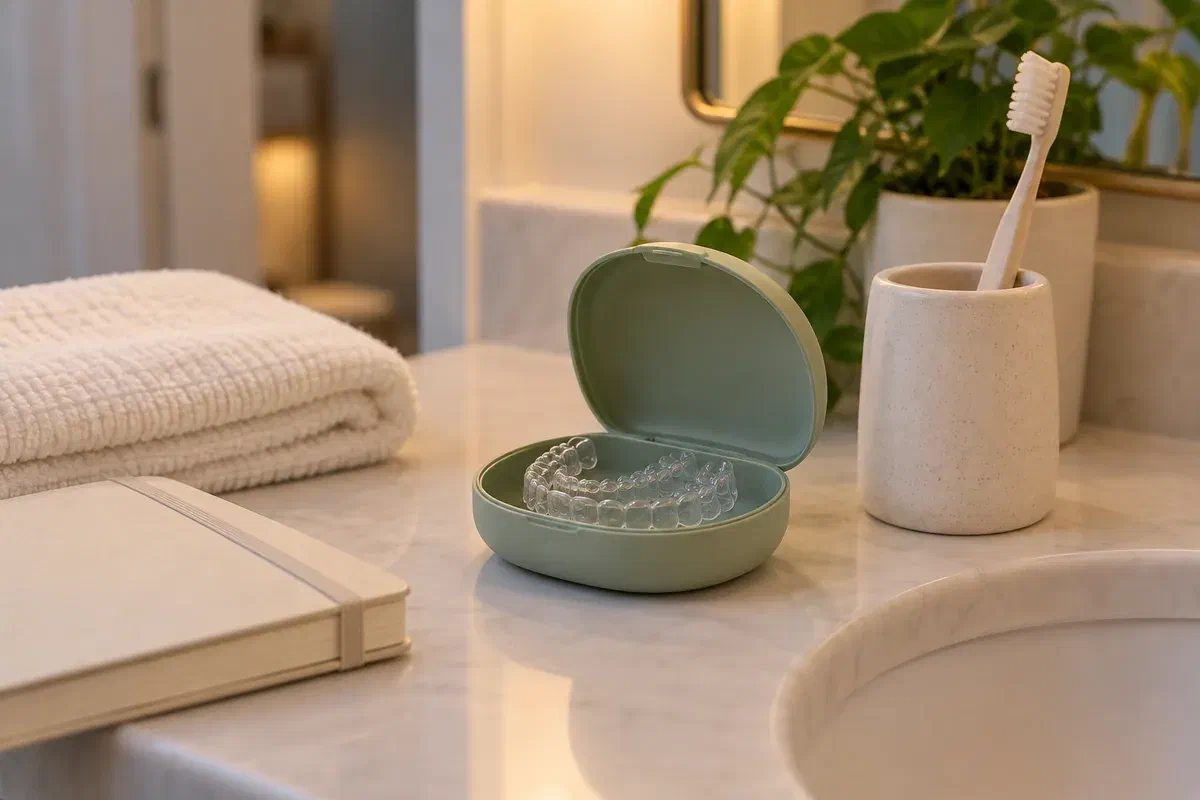
Illustrative evening retainer-care arrangement with a case, toothbrush, towel, and notebook
Why replacement gets delayed

What slows things down after a loss

Delays usually come from not knowing whom to call or what the plan was. These are worth settling while everything is fine, including whether there is a wait between finishing treatment and receiving your first retainer.

No written plan to refer to

If you cannot remember which retainer you were meant to wear, or for how long each day, replacement is harder to organise. At the end of treatment, ask for the schedule, the fitting date and your first review on paper, and keep a photo of it on your phone.

Waiting to see if it turns up

It is tempting to give a lost appliance a week or two to reappear. Meanwhile, the gap in wear grows. Call while you are still looking, explain the situation and ask what to do in the interim.

Calling around between offices

If your orthodontist and dentist are different practices, a lost retainer can bounce between them. Decide ahead of time which one handles replacements. Routine dental care and retention may not be managed by the same team.

Keep the number for whoever manages your retention saved where you can find it quickly. Report a missing, broken, loose or ill-fitting appliance the same week it happens.

The payoff of a plan for loss

A setback, not a crisis

When retention is clearly explained, a missing appliance becomes a known problem with known steps. You understand what the retainer is doing and why a long gap matters. That knowledge is still useful years down the line, when braces are a distant memory and the retainer has become easy to misplace.

Plans also have to adapt. A loss, a crack, a new crown or a move can all mean the original arrangement needs another look. A clear contact and a known process stop you from relying on an old tray or a friend's advice.

Patient information: American Association of Orthodontists — retention as part of orthodontic treatment

Knowing what was being maintained

From the outset, ask how your clinician judged that treatment had reached its goals and which retention followed. Discuss any limitation in the result you accepted. That record helps a clinician decide what a replacement needs to do.

A routine worth restarting

Be clear on the daily hours for a removable appliance and how any fixed wire is cared for. If you are unsure after a loss, ask again rather than restarting from memory. Purpose and clarity make a routine easier to pick back up.

A known path to replacement

Ask early whether replacements are included in your treatment agreement and what records are kept for making a new appliance. Store contact details with the case. That preparation shortens the time between losing a retainer and wearing a new one.

After a loss: the usual steps

From phone call to new retainer

Retention is best planned before treatment ends, so a loss is easier to handle. When one happens, these are the steps we typically talk through, adapted to your treatment and any appliances you still have.

  1. Describe what happened and what you still have

    Tell us which appliance is missing, when it was last worn and whether you have another prescribed retainer. Mention any concern about your teeth. The clinician can then explain what positions retention is holding and how urgent replacement is.

  2. Plan the interim and the replacement

    Discuss whether existing records can be used or new scans or impressions are needed. Ask what to wear until a new retainer arrives. If dental work is planned, ask how the replacement will be timed around it.

  3. Fit the new appliance and refresh the routine

    At fitting, ask to be shown how the new retainer seats, comes out and is cleaned. Confirm the daily hours and the signs that should prompt a call. Talk about how the loss happened so storage habits can be adjusted.

  4. Agree on reviews from here

    Settle who will check fit, any bonded wire and future tooth position, and when. Ask what happens if follow-up included in your original treatment has ended. If someone else is taking over, confirm they have accepted the role.

Keeping track of it

Habits that make a retainer harder to lose

Your clinician sets the wear schedule. Retention tends to hold up when the routine is understood and there is an agreed plan for anything that goes missing or breaks.

Case in, never napkin

Get into the habit of putting the retainer straight into its case whenever it comes out, especially at meals. Keep the case somewhere visible at home and in your bag when travelling. Ask before reducing wear, even after a period of steady results.

Bring it to every check

Fit is easiest to judge with the appliance present. Mention any change in comfort or how it seats, and keep up regular dental visits. Ask how any bonded wire is checked and cleaned.

Call quickly, improvise never

If the retainer goes missing or breaks, phone the office managing retention and say exactly which one is affected. They can advise on interim wear. Do not substitute old aligners, cut plastic or bend wire unless they specifically instruct you to.

Patient information: British Orthodontic Society — continuing care after braces

Possible next steps

A replacement is not always the whole story

Ask what the clinician is deciding and the reasoning behind it. Replacing a lost appliance to hold current positions is different from planning fresh movement, even if both start with an empty case.

When another prescribed retainer still fits

Continue with a remaining appliance

If you have a second prescribed appliance that fits, you may be told to carry on with it while replacement is arranged. Confirm the hours and when you should be seen. Having one working retainer does not mean the other is unnecessary.

When the lost or broken device is needed

Make a replacement

A new retainer may be made from existing records or new scans. Ask what the replacement is meant to address and how long it may take. Get interim instructions so the gap in maintenance is as short as possible.

When teeth have shifted during the gap

Assess any movement first

If the teeth, bite or gums have changed since the appliance went missing, assessment may be needed before a new retainer is made. Ask whether holding today's position is appropriate or whether a broader treatment conversation is warranted. A specialist may be involved.

Lost and broken retainer FAQs

What to do when the retainer is gone

These answers deal with losing or breaking an appliance and getting retention back on track.

(905) 876-4488
I lost my retainer yesterday. What should I do first?
Call the office managing your retention. Explain which appliance is missing, when you last wore it and whether you have another. Ask what to do in the meantime and how replacement works.
Can I wear an old set of aligners until a new retainer is made?
Only if the clinician managing retention advises it. Old aligners may no longer fit, and using one without advice could be uncomfortable or unhelpful. Ask for a specific interim plan.
How long can I go without my retainer?
There is no safe number to rely on. Teeth can move during a gap, and how much varies. The sensible step is to call promptly and follow the interim advice you are given.
My retainer cracked but still fits. Can I keep wearing it?
Ask before continuing. A crack can affect fit, create sharp edges or worsen over time. Bring it in or describe it on the phone so the clinician can advise whether to wear it until it is replaced.
Is replacement usually covered by my original orthodontic fee?
It depends on your agreement. Some arrangements include a replacement, others do not. Ask the office that provided treatment, and ask about fees before any new appliance is made.
What happens when I phone from Acton about a missing retainer?
Call as soon as you notice it is missing. We can talk about timing, what to bring and what to do in the interim, and arrange a visit at our Bronte Street practice if we are managing your retention.
Help for Acton

Turn a lost retainer into a short, planned fix

Contact our Bronte Street practice about a missing or broken retainer. Bring any appliances and instructions you still have, and we will discuss interim steps, replacement and which clinician looks after each part of your retention.

Each retention plan is individual. Call promptly about lost, damaged or poorly fitting appliances, and confirm any handover between providers clearly.

Visit Milton Dental Clinic
Unit 1, 342 Bronte St. S, Milton, ON L9T 5B7
Get directions Clinic hours
Monday–Thursday
11am–7pm
Friday–Sunday
By appointment only

Areas we serve

  • Milton
  • Oakville
  • Mississauga
  • Georgetown
  • Halton Hills
  • Acton
  • Campbellville
  • Brampton
  • Burlington
  • Puslinch
  • Rockwood
  • Erin
  • Caledon
  • Etobicoke
  • Old Milton
  • Bronte Meadows
  • Timberlea
  • Dorset Park
  • Dempsey
  • Clarke
  • Beaty
  • Coates
  • Harrison
  • Scott
  • Willmott
  • Ford
  • Bowes
  • Cobden
  • Walker
  • Mountain View
  • Milton Heights
  • Hawthorne Village
  • Valley View
  • Fallingbrook
  • Nassagaweya
  • Trafalgar
  • Esquesing
  • Nelson
  • Brookville
  • Moffat
  • Glen Williams
  • Norval
  • Limehouse
  • Stewarttown
  • Ashgrove
  • Hornby
  • Silver Creek
  • Speyside
  • Scotch Block
  • North Oakville
  • River Oaks
  • Glen Abbey
  • West Oak Trails
  • Palermo
  • Bronte Creek
  • College Park
  • Joshua Creek
  • Uptown Core
  • Preserve
  • Iroquois Ridge
  • Lisgar
  • Meadowvale
  • Meadowvale Village
  • Churchill Meadows
  • Erin Mills
  • Central Erin Mills
  • Streetsville
  • East Credit
  • Creditview
  • Heartland
  • Sheridan
  • Mount Pleasant
  • Credit Valley
  • Huttonville
  • Churchville
  • Springbrook
  • Northwest Brampton
  • Bram West
  • Fletcher's Meadow
  • Fletcher's Creek South
  • Alton Village
  • Orchard
  • Millcroft
  • Headon Forest
  • Tansley
  • Brant Hills
  • Tyandaga
  • Kilbride
  • Lowville
  • Aberfoyle
  • Morriston
  • Arkell
  • Hillsburgh
  • Freelton
  • Carlisle
  • Waterdown
  • Flamborough
  • Mountsberg

How can we help?

Milton Dental Clinic

Have a question about your smile? Choose the option that works best for you.

For urgent dental concerns, please call.
Messages are reviewed during clinic hours.