

Illustrative patient discussing follow-up and retention with a dental clinician
Cosmetic Dentistry

Post-Orthodontic Retention in Burlington

A thin wire bonded behind your front teeth is easy to forget, until floss snags or your tongue finds a rough edge. From Burlington, plan how a fixed or removable retainer is worn, cleaned and checked, and what to do when something feels different.

Fixed, removable, or both

The retainer you can't see still needs looking after

Many people leave orthodontic treatment with a bonded wire glued to the inside of their front teeth, a removable retainer for nights, or a combination. Retention is the whole arrangement around those devices: how they are worn and cleaned, how often they are examined, and what happens if one fails.

Because a fixed wire is out of sight, it can feel like a set-and-forget solution. It is not. Teeth can keep moving after treatment and over the years, and a wire can loosen or a bond can let go without much warning. That is part of why retention is generally long-term and reviewed, not left to run on its own.

When you book from Burlington, mention what kind of retainer you have and bring any removable appliance and its instructions. Let us know who completed your orthodontics and who still follows up. We can discuss what checks make sense, which parts we can look after, and when the original orthodontist or a specialist should be involved.

Have your retainer checked
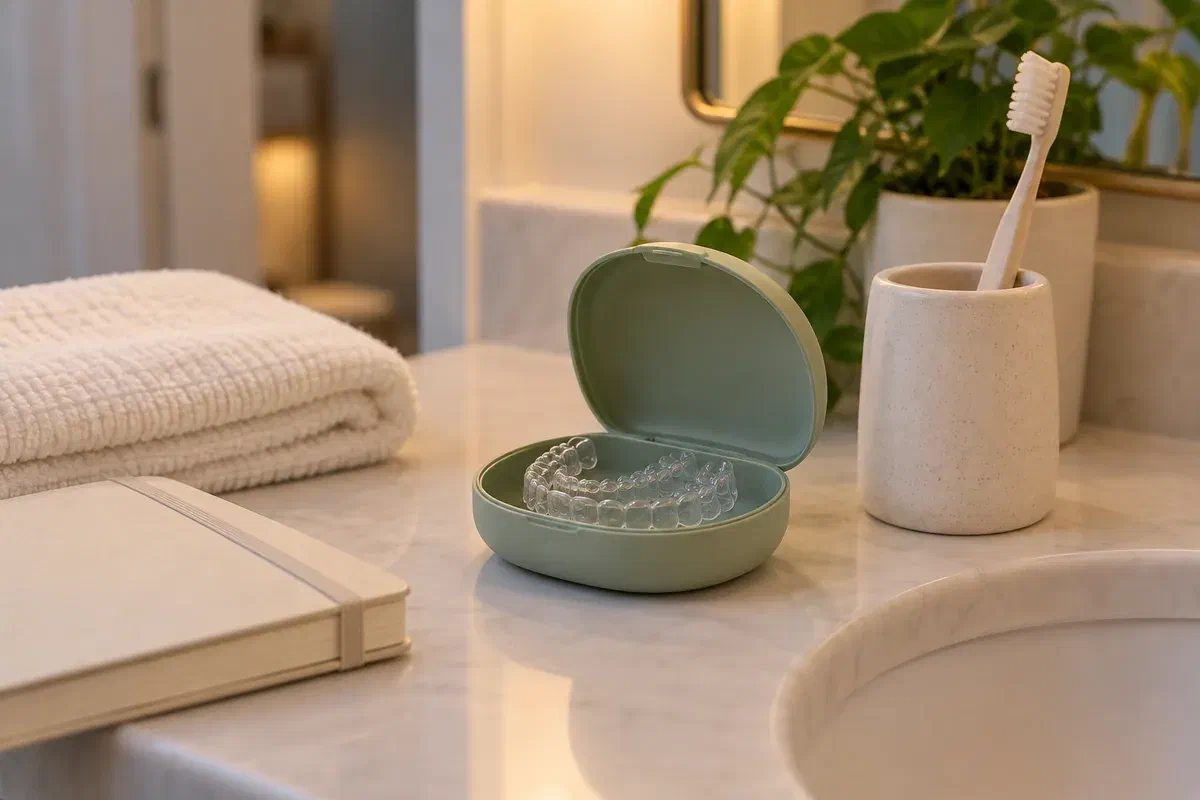
Illustrative evening retainer-care arrangement with a case, toothbrush, towel, and notebook
Signs a plan needs attention

Small changes that are worth a phone call

A loose bond, a habit that slips or confusion about who is in charge rarely announce themselves. Ask at the end of treatment whether there is any gap before the retainer is fitted, so you are not choosing wear on your own.

Not knowing what each appliance is for

If you have both a fixed wire and a removable retainer, ask what each one does and whether both are needed. Confirm the hours, the fitting and the first follow-up. Getting your braces off does not, on its own, tell you how to use what comes next.

Cleaning around the wire getting harder

Plaque and tartar can gather around a bonded retainer, and flossing takes extra steps. A busy stretch, a sore gum or simple frustration can make the routine slide. Say so at your visit and ask for a cleaning method that fits your hands and your day.

Unclear ownership of follow-up

If an orthodontist elsewhere fitted the wire, ask who now checks it and who repairs it. Hygiene visits and retention reviews might happen in different places. Confirm the arrangement directly instead of assuming each office has the full picture.

Keep a number to call if a wire feels loose, a bond breaks, or a removable retainer cracks or stops fitting. Ring when it happens instead of waiting for the next scheduled visit.

Why ongoing checks matter

Catching problems while they are still small

Talking through retention sets out what each appliance is meant to do and what is expected of you. That includes the parts nobody sees, such as cleaning around a fixed wire. It stays relevant years after treatment, when the teeth look settled and the details are easy to forget.

Your situation will change, and the plan should be able to change with it. A filling near the wire, a damaged removable retainer or a move to a new city might all need a review. A clear contact means you are not deciding alone how to work around the original instructions.

Patient information: American Association of Orthodontists — retention as part of orthodontic treatment

Knowing that movement is truly finished

Ask how the clinician determined that active treatment was complete and which retention begins next. Talk about any agreed limitation in the outcome. The holding phase should come with its own directions rather than leaving the final appliance in charge indefinitely.

Care steps that are clear for both appliances

Confirm the wear hours for a removable retainer and the cleaning method for a bonded one. If you were told something different before, ask about the change. A routine is easier to keep when you can see the reason for it and know where to take questions.

A plan for loose bonds and broken trays

Ask which reviews are recommended and whether repair or replacement costs were covered in your original agreement. Store the contact details with your instructions. A known process keeps a single loose bond from becoming a long gap in the care you intended.

Planning step by step

What we cover in a retention visit

These conversations work best before active treatment ends, and they can be revisited whenever things change. The outline below adapts to your treatment and the appliances you have.

  1. Confirm the treatment outcome

    Review whether the goals you agreed to have been assessed and whether any concern remains open. Ask whether anything needs separate care. The clinician can explain why active movement is ending and which tooth positions the retainers are there to hold.

  2. Settle on fixed, removable or a combination

    Talk through the proposed design and the scans or impressions it needs. Ask what to wear until it is ready. If a crown, veneer or bonding is planned elsewhere, find out how that work will be sequenced around the appliance.

  3. Get shown how to care for it

    Ask for a demonstration of flossing around a bonded wire or handling a removable tray. Confirm the hours, when it comes out and what signs should make you call. Describe any expected difficulty so it can be solved before you go home.

  4. Agree on check-ups going forward

    Ask who will inspect fit, the condition of the bonded wire and changes in tooth position over time. Note your next visit and what happens when included follow-up ends. If another clinic is taking over, make sure it has agreed to do so.

Everyday care

Clean around it, wear it, and speak up about changes

Follow the schedule your treating clinician set. Retention lasts best as a routine you understand, with an agreed response when an appliance or your circumstances change.

Build both retainers into your routine

Keep floss threaders or a small brush with your toothbrush, and the removable retainer's case where you sleep. Plan for travel instead of hoping you will remember. Ask before cutting back on wear, even if your teeth seem unchanged.

Let reviews include the wire

Bring any removable appliance to appointments and ask that the bonded wire be checked at hygiene visits. Describe changes in comfort, how a tray seats or how your teeth look. Keep up regular dental care alongside retention reviews.

Don't fix a wire yourself

If a bond breaks or a wire feels loose, contact whoever manages your retention and explain what you notice. Ask what to do in the meantime. Avoid pressing, bending or clipping the wire, and do not reshape a removable retainer without specific instruction.

Patient information: British Orthodontic Society — continuing care after braces

What a check can lead to

Holding steady, mending the appliance, or looking further

Ask which decision is being made and why. Keeping teeth where they are and moving them again are different goals, even if both begin with a wire that feels odd.

When the wire, tray and teeth look stable

Continue as planned

If everything checks out, you may simply carry on with scheduled follow-up. Confirm whether any detail of your routine changes and when you should return. A clear review is good news, but it is not a signal that retention can end.

When an appliance has failed or worn

Re-bond, repair or replace

Broken bonds, a cracked tray, new dental work or difficulty cleaning may lead to an appliance change. Ask what the change would solve and what records are needed. Get interim instructions so the repair does not leave your plan uncertain.

When teeth or gums have changed

Investigate movement or gum health

If teeth have shifted, the bite feels different or the gums around the wire are unhealthy, more assessment may be needed before any new retainer. Ask whether maintaining the present position is right or whether another option should be explored, perhaps with a specialist.

Fixed retainer questions

Living with a bonded wire

These answers cover the practical side of fixed and removable retainers, from cleaning to repairs to changing providers.

(905) 876-4488
How do I floss behind a bonded retainer?
Floss threaders, special floss with a stiff end, or small interdental brushes can help reach under the wire. Ask your hygienist to show you a method that suits your teeth, and to check those areas at each cleaning.
How would I know if my fixed wire has come loose?
You may feel a rough or sharp spot, notice the wire moving, or see a gap between the wire and a tooth. Floss may catch differently. Contact the clinic managing your retention and avoid pressing on the wire while you wait to be seen.
If I have a bonded wire, do I still need to wear my removable retainer?
That depends on what your clinician prescribed. Some plans use both on purpose. Ask what each appliance is for and keep following the full instructions until the responsible clinician tells you otherwise.
Can a bonded retainer stay on for good?
Some remain in place for many years, but they still need checking and cleaning. Whether yours stays, is replaced or is removed is a clinical decision. Ask your treating clinician how long it is intended to remain and how it will be monitored.
Does finishing my orthodontist's follow-up mean the wire no longer needs checks?
No. An included review period is administrative; maintaining tooth positions is ongoing. Ask who will look at the wire after that period ends and how to arrange it, then keep to your plan unless the responsible clinician changes it.
Can my retainer checks happen during hygiene visits if I come from Burlington?
Often a fit check can be planned alongside routine care, which may save an extra trip. Mention your retainer when booking, bring any removable appliance, and call first if a bond has broken so we can advise on timing.
Burlington retention visits

Keep the hidden part of your result in good shape

Arrange a retention visit at our Bronte Street practice. Bring any removable appliance and your instructions, and tell us about your bonded wire, so we can review your questions, suitable follow-up and who looks after each part of your care.

Every retention plan is individual. Contact us promptly about a loose wire, a broken bond or a retainer that no longer fits, and confirm any transfer of care clearly.

Visit Milton Dental Clinic
Unit 1, 342 Bronte St. S, Milton, ON L9T 5B7
Get directions Clinic hours
Monday–Thursday
11am–7pm
Friday–Sunday
By appointment only

Areas we serve

  • Milton
  • Oakville
  • Mississauga
  • Georgetown
  • Halton Hills
  • Acton
  • Campbellville
  • Brampton
  • Burlington
  • Puslinch
  • Rockwood
  • Erin
  • Caledon
  • Etobicoke
  • Old Milton
  • Bronte Meadows
  • Timberlea
  • Dorset Park
  • Dempsey
  • Clarke
  • Beaty
  • Coates
  • Harrison
  • Scott
  • Willmott
  • Ford
  • Bowes
  • Cobden
  • Walker
  • Mountain View
  • Milton Heights
  • Hawthorne Village
  • Valley View
  • Fallingbrook
  • Nassagaweya
  • Trafalgar
  • Esquesing
  • Nelson
  • Brookville
  • Moffat
  • Glen Williams
  • Norval
  • Limehouse
  • Stewarttown
  • Ashgrove
  • Hornby
  • Silver Creek
  • Speyside
  • Scotch Block
  • North Oakville
  • River Oaks
  • Glen Abbey
  • West Oak Trails
  • Palermo
  • Bronte Creek
  • College Park
  • Joshua Creek
  • Uptown Core
  • Preserve
  • Iroquois Ridge
  • Lisgar
  • Meadowvale
  • Meadowvale Village
  • Churchill Meadows
  • Erin Mills
  • Central Erin Mills
  • Streetsville
  • East Credit
  • Creditview
  • Heartland
  • Sheridan
  • Mount Pleasant
  • Credit Valley
  • Huttonville
  • Churchville
  • Springbrook
  • Northwest Brampton
  • Bram West
  • Fletcher's Meadow
  • Fletcher's Creek South
  • Alton Village
  • Orchard
  • Millcroft
  • Headon Forest
  • Tansley
  • Brant Hills
  • Tyandaga
  • Kilbride
  • Lowville
  • Aberfoyle
  • Morriston
  • Arkell
  • Hillsburgh
  • Freelton
  • Carlisle
  • Waterdown
  • Flamborough
  • Mountsberg

How can we help?

Milton Dental Clinic

Have a question about your smile? Choose the option that works best for you.

For urgent dental concerns, please call.
Messages are reviewed during clinic hours.