

Illustrative patient discussing follow-up and retention with a dental clinician
Cosmetic Dentistry

Post-Orthodontic Retention in Etobicoke

Retention lasts for years, so the visits around it should be worth making. Coming from Etobicoke, you can plan fewer, well-prepared appointments for fit checks and reviews, and know ahead of time which retainer problems can wait and which can't.

Planning around the distance

One well-prepared visit beats three rushed ones

Retention is what keeps orthodontic work from quietly unravelling. After braces or aligners stop moving teeth, you rely on a retainer, a wear routine, cleaning, periodic checks and a fallback for when something breaks. Each of those pieces is easier to manage when your appointments are planned rather than reactive.

Teeth do not settle permanently once treatment ends. They can move in the following months and keep changing over the years, which is why most retention plans are open-ended. The schedule you follow should come from the clinician treating you, and any change to it should be agreed with them first.

For anyone travelling in from Etobicoke, we suggest arriving with a full kit: every retainer you own, the case, written instructions and a list of questions. Let us know who completed your orthodontics and who follows up. That way a single visit can cover current needs, responsibilities, and whether a specialist should be part of the plan.

Plan an efficient retention visit
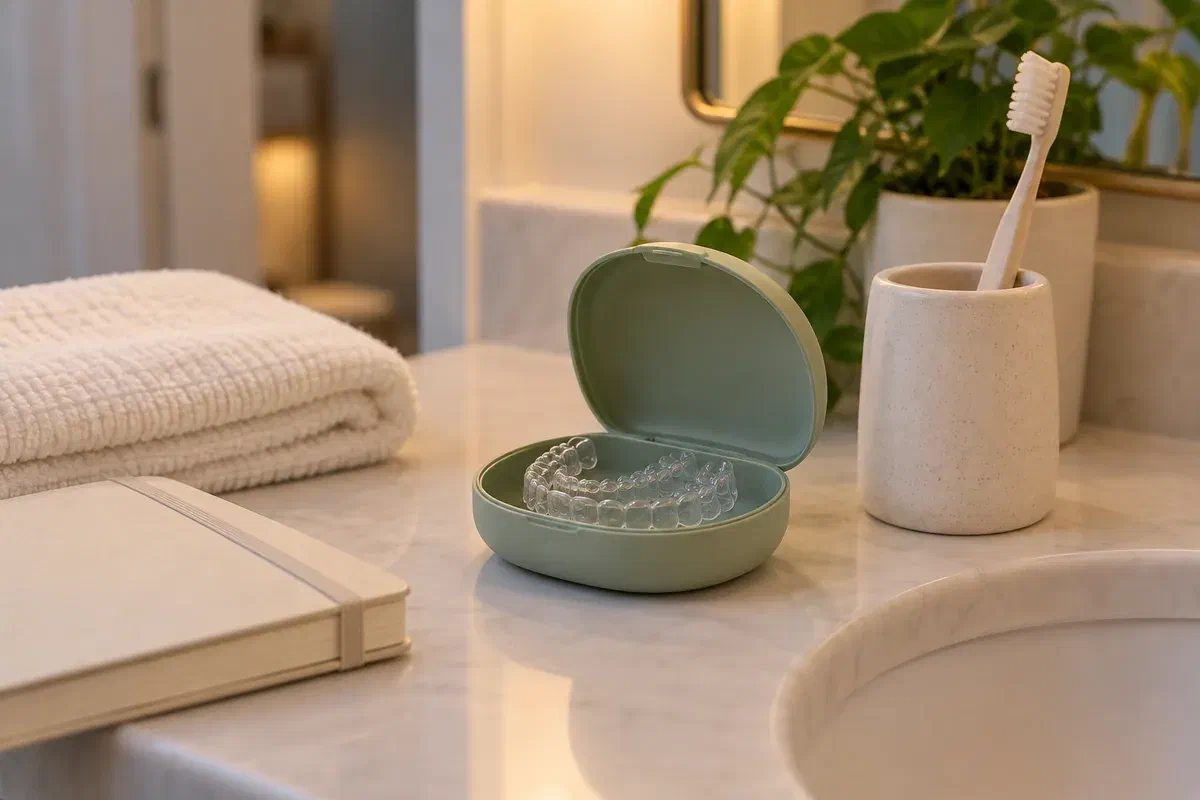
Illustrative evening retainer-care arrangement with a case, toothbrush, towel, and notebook
What tends to cost extra trips

Avoidable reasons to come back sooner

Uncertainty is the usual culprit. Before active treatment ends, find out whether there is a wait for the retainer and what you should wear in the meantime.

Arriving without the appliance

A fit check without the retainer is guesswork. Confirm before your visit what to bring, and ask at the end of treatment exactly which appliance comes next, the hours and the review dates. Debonding day should end with written directions, not just a mirror.

Wear fading between appointments

Long gaps between visits can make it easy to cut corners, especially with demanding work hours or frequent travel. Mention the obstacle at your next contact. Ask how to stay within the prescribed routine rather than drifting to fewer nights.

Calling the wrong office first

If your orthodontist and dentist are in different places, decide in advance who handles a broken retainer. Retention reviews and routine care may be split. Knowing the right number saves both a phone call and a wasted drive.

Ask the clinic managing retention which problems can wait for a booked visit and which need a call the same day. A cracked, lost, loose or ill-fitting retainer is always worth reporting promptly.

What organised retention saves

Less guessing, fewer unplanned trips

A good retention discussion tells you what the appliance is doing and what you need to do for it. Clear expectations make it easier to judge, from home, whether something can wait. That understanding stays valuable long after braces feel like ancient history.

Life also changes the picture. A new crown, a cracked tray or a change of address could each warrant a review. With a named contact and a sense of what counts as urgent, you can respond calmly rather than rearranging your week on a hunch.

Patient information: American Association of Orthodontists — retention as part of orthodontic treatment

Certainty that movement has finished

Ask how the clinician concluded that active treatment was complete and which retainer follows. Discuss any limitation in the result you accepted. Retention needs its own plan, not an unspoken assumption that the last appliance will keep working.

A routine that survives long weeks

Know when a removable appliance should be in and how a fixed wire is kept clean. If those instructions differ from what you expected, ask why. Habits hold up better when you understand their purpose and how to raise problems between visits.

Known steps for reviews and breakages

Find out which check-ups are recommended and whether repairs or replacements fall under your original agreement. Keep the contact details with your case. Knowing the process means a cracked retainer leads to one planned visit rather than a long gap.

Making the visit work

What we cover so you leave with everything

Retention should ideally be discussed before treatment ends and revisited later. We aim to cover these steps in as few appointments as your situation allows, adjusted to your history and appliances.

  1. Review how treatment ended

    Talk about whether the agreed alignment goals were checked and whether anything still concerns you. Ask which issues require separate care. The clinician can explain the decision to stop active movement and what positions retention is meant to protect.

  2. Choose the appliance and timing

    Discuss the retainer type or combination, plus any scans or impressions needed. Ask what to wear until it is ready and whether the fitting can be planned to reduce return trips. If another clinician is doing restorative work, ask how both will be coordinated.

  3. Practise before you head home

    At the fitting, ask for a hands-on demonstration of inserting, removing and cleaning your design. Confirm the hours, when it comes out and the signs that should prompt contact. Raise practical concerns now rather than discovering them at home.

  4. Map out future contact

    Agree on who checks fit, any bonded wire and changes in position over time. Note the next appointment and what happens after included follow-up ends. If care is being transferred, confirm the receiving clinician has formally accepted it.

Between visits

Good habits at home make the trips less frequent

The clinician treating you sets the schedule. Retention tends to work best as a well-understood routine, with an agreed plan for when an appliance or your circumstances change.

Protect the routine on travel days

Keep a travel case and cleaning supplies in your bag as well as at home. Plan ahead for work trips and nights away. Before wearing the retainer less, ask, even if your teeth look unchanged or a colleague follows a different schedule.

Arrive with everything

Bring all appliances to requested reviews so fit can be examined properly. Describe changes in comfort, seating or tooth position, and stay current with ordinary dental visits. Ask how any bonded wire is checked and cleaned.

Phone before you improvise or drive

If something breaks or goes missing, call the clinic managing retention first. Describe the affected device and ask what to do until it is assessed. Do not substitute an old tray, trim the plastic or adjust a wire without a specific instruction.

Patient information: British Orthodontic Society — continuing care after braces

Possible outcomes

Carry on, change the appliance, or reassess

Ask what is being decided and why. Maintaining positions and planning new movement are separate aims, even though both often begin with the same retainer complaint.

When everything still fits and looks right

Keep the current setup

You may be advised to continue with your routine and planned follow-up. Ask whether any detail changes and when the next review is due, so you can plan the trip. A reassuring check is not a green light to stop or reduce wear.

When the device or your needs have shifted

Change or replace the retainer

Damage, wear, dental work or handling trouble may lead to an appliance change. Ask what the new arrangement solves, which records are required and whether they can be taken in the same visit. Confirm interim instructions before leaving.

When positions or oral health have changed

Assess the teeth or gums further

If the teeth, bite or gums are no longer as they were, a fuller look may be needed before a new retainer is made. Ask whether keeping today's position is suitable or whether a different conversation is due. You may be referred to a specialist.

Etobicoke retention FAQs

Questions about planning retention visits

These answers focus on keeping retention manageable when appointments take some planning.

(905) 876-4488
What should I bring so one appointment covers everything?
Bring every retainer you use, including any older ones, the case, written instructions and the contact details of your orthodontist. A short list of questions and changes you have noticed also helps make the most of the time.
My bonded wire came loose on a weekend. Do I need to come in right away?
Call first. Depending on what you describe, it may be possible to assess it at a planned appointment, but the clinician will want to know what you feel and whether anything is sharp or moving. Avoid pushing or clipping the wire while you wait.
Is it worth having a backup retainer?
Some people are given a second appliance or ask about one. Whether it is appropriate depends on your treatment and the type of retainer. Ask the clinician managing retention, and keep any spare stored properly.
How often are retention reviews usually needed?
There is no single schedule. Review timing depends on your treatment, your appliances and any changes noticed. Ask your clinician how often they want to see you and what should prompt an earlier visit.
If I stop wearing my retainer for a few weeks, can I just start again?
Do not force it back on if it feels very tight or will not seat. Call for advice and bring it to be checked. Teeth may have moved, and the clinician can say whether it is still suitable or something else is needed.
When should I get urgent care closer to Etobicoke instead of driving in?
With significant pain, swelling, injury or bleeding that will not settle, seek prompt care nearby rather than waiting for a trip. A loose wire or cracked tray without those symptoms can usually be discussed by phone first.
Retention care for Etobicoke

Plan ahead, bring everything, and leave with answers

Book a retention discussion at our Bronte Street practice. Come prepared with your appliances and instructions, and we will work through your questions, the follow-up that suits you, and which clinician handles each part of care.

Wear schedules and review intervals are individual. Call promptly about a lost, broken or poorly fitting appliance, and confirm any transfer of care in writing.

Visit Milton Dental Clinic
Unit 1, 342 Bronte St. S, Milton, ON L9T 5B7
Get directions Clinic hours
Monday–Thursday
11am–7pm
Friday–Sunday
By appointment only

Areas we serve

  • Milton
  • Oakville
  • Mississauga
  • Georgetown
  • Halton Hills
  • Acton
  • Campbellville
  • Brampton
  • Burlington
  • Puslinch
  • Rockwood
  • Erin
  • Caledon
  • Etobicoke
  • Old Milton
  • Bronte Meadows
  • Timberlea
  • Dorset Park
  • Dempsey
  • Clarke
  • Beaty
  • Coates
  • Harrison
  • Scott
  • Willmott
  • Ford
  • Bowes
  • Cobden
  • Walker
  • Mountain View
  • Milton Heights
  • Hawthorne Village
  • Valley View
  • Fallingbrook
  • Nassagaweya
  • Trafalgar
  • Esquesing
  • Nelson
  • Brookville
  • Moffat
  • Glen Williams
  • Norval
  • Limehouse
  • Stewarttown
  • Ashgrove
  • Hornby
  • Silver Creek
  • Speyside
  • Scotch Block
  • North Oakville
  • River Oaks
  • Glen Abbey
  • West Oak Trails
  • Palermo
  • Bronte Creek
  • College Park
  • Joshua Creek
  • Uptown Core
  • Preserve
  • Iroquois Ridge
  • Lisgar
  • Meadowvale
  • Meadowvale Village
  • Churchill Meadows
  • Erin Mills
  • Central Erin Mills
  • Streetsville
  • East Credit
  • Creditview
  • Heartland
  • Sheridan
  • Mount Pleasant
  • Credit Valley
  • Huttonville
  • Churchville
  • Springbrook
  • Northwest Brampton
  • Bram West
  • Fletcher's Meadow
  • Fletcher's Creek South
  • Alton Village
  • Orchard
  • Millcroft
  • Headon Forest
  • Tansley
  • Brant Hills
  • Tyandaga
  • Kilbride
  • Lowville
  • Aberfoyle
  • Morriston
  • Arkell
  • Hillsburgh
  • Freelton
  • Carlisle
  • Waterdown
  • Flamborough
  • Mountsberg

How can we help?

Milton Dental Clinic

Have a question about your smile? Choose the option that works best for you.

For urgent dental concerns, please call.
Messages are reviewed during clinic hours.