

Illustrative patient discussing follow-up and retention with a dental clinician
Cosmetic Dentistry

Post-Orthodontic Retention in Milton

The day braces come off or the last aligner is finished, a new stage begins. Talk with our Milton team about what you will wear, how often, who checks it, and what to do if the fit or your teeth start to change.

The first day without brackets

Debond day is a beginning, not a finish line

Running your tongue over smooth teeth for the first time in months is a good feeling. It is also the moment the work changes shape. Active tooth movement has stopped, and retention takes over: the appliances, habits and check-ups meant to help your teeth hold the positions they reached.

That second stage tends to last far longer than the first. Teeth keep shifting a little throughout life, so a retainer is usually treated as a long-term companion rather than a few months of homework. You should leave knowing the schedule your clinician prescribed and that changes to it are a conversation, not a solo decision.

For people here in Milton, it helps to come in with whatever you were given at the end of treatment: written instructions, the retainer itself and the case. If an orthodontist elsewhere finished your care, tell us who handles follow-up so we can sort out who looks after what, and when a specialist should weigh in.

Talk about your retainer plan
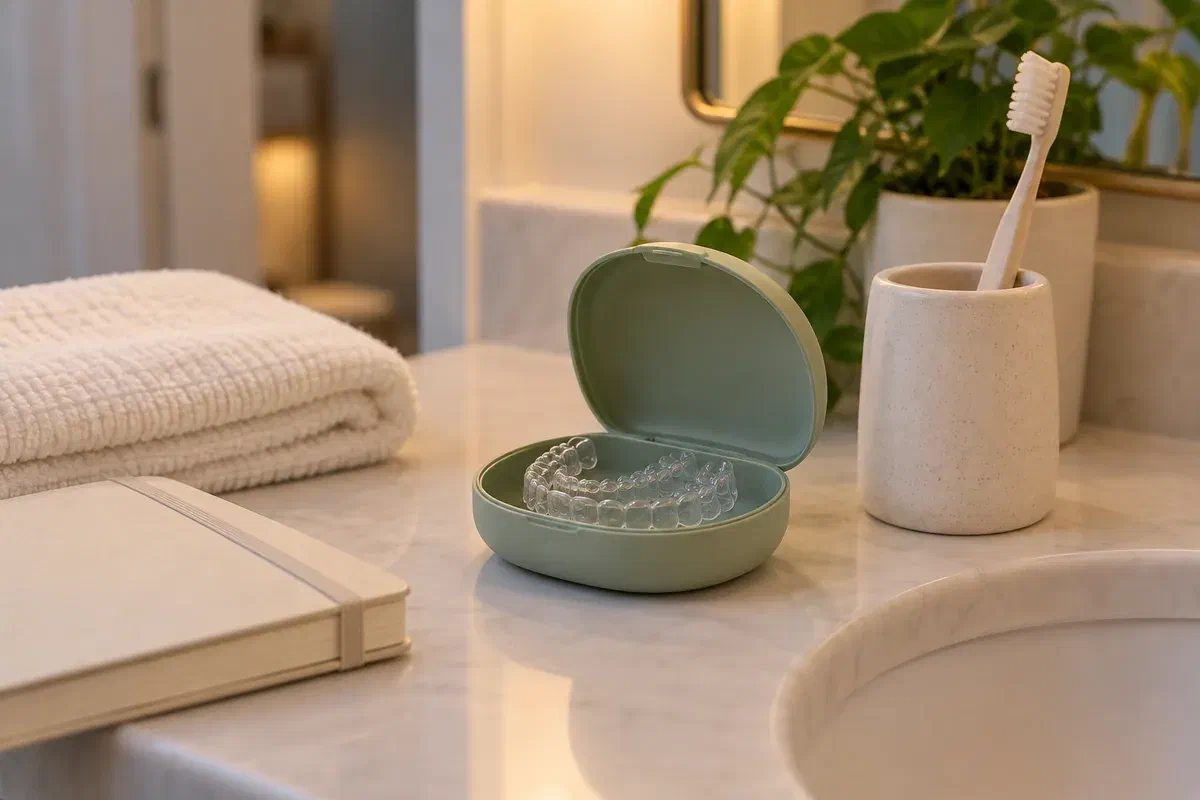
Illustrative evening retainer-care arrangement with a case, toothbrush, towel, and notebook
Gaps that show up after treatment

Where retention plans tend to come loose

Most problems are not dramatic. They start with an unclear handover between the last active appliance and the retainer, which leaves you deciding on your own how much to wear it.

Walking out without a clear next step

Before the final appointment ends, ask whether movement is complete and what you should wear next. Get the wear schedule, the fitting date and the first review in writing. Removing brackets is a clinical step; the instructions that follow are a separate one.

Life slowly pushing the routine aside

A new job, a late hockey practice, a sore spot or a retainer left on a lunch tray can all chip away at wear. Mention the obstacle as soon as it appears, and ask how to work around it within your plan instead of quietly wearing it less.

Two offices, nobody quite in charge

When orthodontic care happened somewhere else, or you are about to move, it can be unclear who checks the retainer. Routine dental visits and retention reviews are not always handled by the same person. Ask directly and confirm the answer rather than assuming the offices talk.

Your plan should say who to call if an appliance is lost, cracked, loose or no longer seats properly. Reach out when it happens rather than holding on until the next booked review.

Why a written plan helps

Retention you understand is retention you can keep up

A good retention conversation tells you what the appliance is for and what part of the job is yours. Wearing it, cleaning it and noticing changes are easier when the purpose is clear. That clarity still matters years later, long after the teeth feel settled and braces are a distant memory.

Circumstances change, and the plan has to keep up. A new filling or crown, a retainer that cracks, or a move across town or further can all call for a review. When you know who to contact, you are not left guessing how to bend the original instructions to fit a new situation.

Patient information: American Association of Orthodontists — retention as part of orthodontic treatment

A clean handover from moving teeth to holding them

Ask how your clinician judged that active treatment was done and which retainer comes next. Talk about any compromise in the final result you agreed to. Retention deserves its own instructions rather than an assumption that the last aligner will do indefinitely.

Habits that make sense to you

Confirm the hours for any removable retainer and how to look after a bonded wire, if you have one. Speak up if the instructions are not what you expected. A routine sticks more easily when you know why it exists and how to flag a problem.

A known path when something goes wrong

Find out which reviews are recommended and whether repairs or replacements were part of the original agreement. Keep contact details with your instructions. Knowing the process in advance stops a small appliance problem from turning into weeks without the care that was intended.

How the planning visit runs

From the last adjustment to the first review

Retention is best raised before active treatment wraps up and revisited when needs change. These are the main steps in that conversation, adjusted to your treatment history and the appliances you have.

  1. Look at where treatment ended

    Go over whether the alignment goals you agreed on have been checked and whether anything is still unresolved. Ask which concerns, if any, need separate care. The clinician can explain why active movement is finishing and which positions the retainer is meant to hold.

  2. Choose the appliance and the bridge to it

    Discuss the retainer type, or combination of types, and the impressions or scans needed. Confirm what you should wear until it is ready. If someone else will be doing restorative work, ask how the timing and the fit of the appliance will be coordinated.

  3. Practise at the fitting and take notes home

    Ask to be shown how to put the retainer in, take it out and clean it for your particular design. Confirm the hours, when it should come out and what signs mean you should call. Mention any likely difficulty before you leave so it is addressed in the chair.

  4. Agree who checks what, and for how long

    Ask who will assess fit, the condition of any bonded wire and changes in tooth position over time. Note the next appointment and what happens once the original follow-up period ends. If care is moving to another office, confirm that office has accepted the responsibility.

Living with a retainer

Steady habits, and a call when something shifts

Your wear schedule comes from the clinician who prescribed the retainer. Long-term retention tends to go best as a routine you understand, with a known response when the appliance or your situation changes.

Keep wearing it on the hectic days

Store the case and cleaning supplies where your routine actually happens, perhaps beside the toothbrush. Pack it for sleepovers, trips and late shifts rather than trusting memory. Check before cutting back, even if your teeth look the same or a friend wears theirs less.

Bring the retainer when asked

Fit is much easier to judge when the appliance is in the room. Describe any change in comfort, how it seats or how your teeth look, and keep up regular dental visits. Ask how a bonded wire is being checked and kept clean during those appointments.

Report damage instead of patching it yourself

Call the clinic responsible for your retention and say which appliance is affected. Ask what to wear while you wait for an assessment or replacement. Avoid swapping in old aligners, trimming plastic or bending a wire unless the treating clinician has told you to.

Patient information: British Orthodontic Society — continuing care after braces

When a review changes the plan

Three directions a retention check can take

Ask what is being decided and why. Holding teeth where they are and planning fresh movement are different goals, even when both begin with a question about a retainer.

When the fit and findings still look right

Carry on as you are

Your clinician may suggest keeping the current routine with follow-up visits. Ask whether anything about the schedule is changing and when you should be seen next. A good result at one check does not by itself mean you can stop or wear the retainer less.

When the device or daily life needs attention

Fix, replace or rethink the appliance

Wear and tear, breakage, new dental work or trouble handling the retainer can lead to an appliance discussion. Ask what the change would solve and what records are needed. Confirm what to do in the meantime so a replacement does not leave the plan in limbo.

When teeth or gums have changed

Look more closely at movement or oral health

If tooth positions, your bite or gum health have shifted, more assessment may come before any new retainer. Ask whether holding the current position makes sense or whether another treatment conversation is worth having. Referral to a specialist may be suggested.

Retainer questions from Milton

What people ask once the braces are gone

These answers cover the long middle of retention: everyday wear, cleaning, providers and what to do when something changes.

(905) 876-4488
How long does a new retainer usually feel strange?
A fresh appliance can feel snug, and speech may sound slightly different for a short while as your tongue adjusts. Follow your wear schedule rather than taking it out to get used to it gradually. If soreness persists or the retainer does not seat, ask for a fit check.
What is the safest way to clean a removable retainer at home?
Rinse it after removal and brush it gently using the method your clinician recommends. Avoid hot water, which can distort some plastics, and keep it in its case rather than wrapped in a napkin. Ask before using any soaking product not mentioned in your instructions.
Should I eat or drink with my retainer in?
Most removable retainers come out for meals, and many clinicians suggest plain water only while they are in. Brush or rinse before putting the appliance back so food is not held against the teeth. Your own instructions take priority if they differ.
Is it worth raising retention before I even start braces?
Yes. Asking early tells you what appliances, reviews and fees may follow. Raise it again as treatment nears completion, and before the final active stage ends, confirm the exact instructions and any appointment needed to receive the retainer.
My teeth have looked the same for ages. Can I stop wearing the retainer?
Stable appearance over a stretch of time does not by itself show that retention is no longer needed, and long-term wear is common. Ask the clinician responsible for your retention to review the schedule and explain any change before you make one.
Which retainer appointments can I book close to home in Milton?
Fit checks, reviews and routine dental visits can be arranged at our Bronte Street practice when we have accepted that part of your care. If your orthodontist is still managing retention, tell us so the two offices can agree who sees you for what.
Retention care in Milton

Give the years after treatment the same attention as the treatment itself

Book a retention conversation at our Bronte Street practice. Bring your appliances and any instructions you were given, and we will go over your questions, sensible follow-up and who is responsible for each part of ongoing care.

Wear schedules and review intervals vary from person to person. Get in touch promptly about a lost, broken or poorly fitting retainer, and confirm any transfer of care in writing.

Visit Milton Dental Clinic
Unit 1, 342 Bronte St. S, Milton, ON L9T 5B7
Get directions Clinic hours
Monday–Thursday
11am–7pm
Friday–Sunday
By appointment only

Areas we serve

  • Milton
  • Oakville
  • Mississauga
  • Georgetown
  • Halton Hills
  • Acton
  • Campbellville
  • Brampton
  • Burlington
  • Puslinch
  • Rockwood
  • Erin
  • Caledon
  • Etobicoke
  • Old Milton
  • Bronte Meadows
  • Timberlea
  • Dorset Park
  • Dempsey
  • Clarke
  • Beaty
  • Coates
  • Harrison
  • Scott
  • Willmott
  • Ford
  • Bowes
  • Cobden
  • Walker
  • Mountain View
  • Milton Heights
  • Hawthorne Village
  • Valley View
  • Fallingbrook
  • Nassagaweya
  • Trafalgar
  • Esquesing
  • Nelson
  • Brookville
  • Moffat
  • Glen Williams
  • Norval
  • Limehouse
  • Stewarttown
  • Ashgrove
  • Hornby
  • Silver Creek
  • Speyside
  • Scotch Block
  • North Oakville
  • River Oaks
  • Glen Abbey
  • West Oak Trails
  • Palermo
  • Bronte Creek
  • College Park
  • Joshua Creek
  • Uptown Core
  • Preserve
  • Iroquois Ridge
  • Lisgar
  • Meadowvale
  • Meadowvale Village
  • Churchill Meadows
  • Erin Mills
  • Central Erin Mills
  • Streetsville
  • East Credit
  • Creditview
  • Heartland
  • Sheridan
  • Mount Pleasant
  • Credit Valley
  • Huttonville
  • Churchville
  • Springbrook
  • Northwest Brampton
  • Bram West
  • Fletcher's Meadow
  • Fletcher's Creek South
  • Alton Village
  • Orchard
  • Millcroft
  • Headon Forest
  • Tansley
  • Brant Hills
  • Tyandaga
  • Kilbride
  • Lowville
  • Aberfoyle
  • Morriston
  • Arkell
  • Hillsburgh
  • Freelton
  • Carlisle
  • Waterdown
  • Flamborough
  • Mountsberg

How can we help?

Milton Dental Clinic

Have a question about your smile? Choose the option that works best for you.

For urgent dental concerns, please call.
Messages are reviewed during clinic hours.