

Illustrative patient and clinician discussing a tooth model before restorative planning
Cosmetic Dentistry

Pre-Restorative Tooth Alignment in Acton

The handover between moving teeth and restoring them is where staged plans most often wobble. For people in Acton weighing alignment before a crown, bridge, implant crown or bonding, we can explain why the in-between stage matters and how the whole plan would be held together.

The stage between stages

Teeth have moved. The crown is not ready yet. What now?

That moment is worth thinking about before treatment even starts. Pre-restorative tooth alignment means repositioning selected teeth so a planned crown, bridge, implant crown or bonding has a better foundation. Its success depends not only on the movement itself, but on keeping the new positions stable until the restoration is in place.

First, though, comes the question of whether movement is needed at all. Most restorations go ahead with teeth exactly where they are. A recommendation to move teeth should describe what it would change about the restoration, what it would ask of you, and how the tooth would be treated otherwise.

From Acton, you might prefer to plan a clear run of appointments rather than open-ended visits. Bring whatever records and proposals you have. Our team can explain the assessment still needed, how the handover would be managed and whether input from an orthodontist or other specialist would help.

Understand the handover before you start
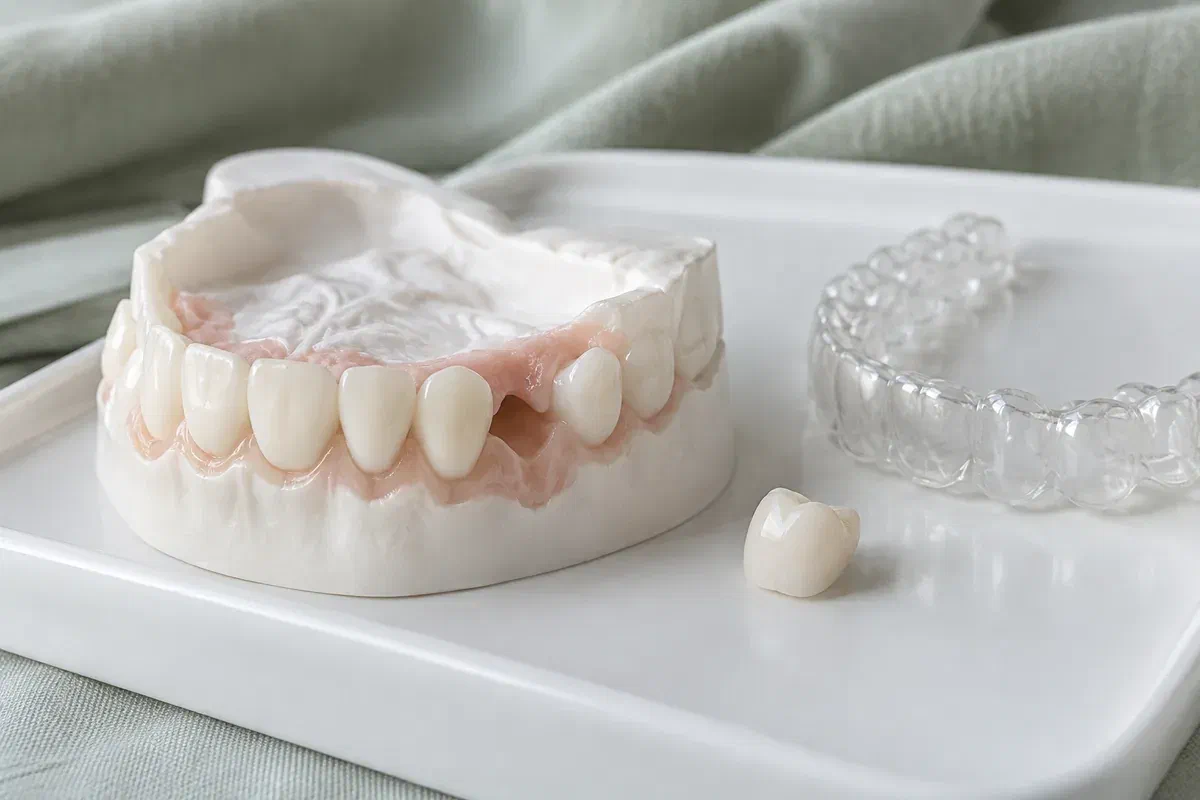
Illustrative tooth model, ceramic crown sample, and clear aligner on a consultation tray
Reasons movement is sometimes raised

When the current position stands in the restoration’s way

Movement is only relevant if a different tooth position would change what can be done. Examination and records help the clinicians judge that for you.

A gap no longer the right shape

Teeth beside a long-standing space can lean inward, leaving an opening that is uneven from top to bottom. A bridge or implant crown depends on the roots and neighbouring teeth as well, so those need to be evaluated before a replacement is designed.

A tooth angled awkwardly for its new crown

A lean, a twist or uneven wear can restrict how a crown or bonded restoration takes shape. Moving the tooth and contouring it are separate tools. Your clinician should be able to say whether using both would make a meaningful difference.

Steps that depend on each other

Gum treatment, orthodontics and restorations may each have been recommended. Find out how they fit into one sequence and who is in charge of it. An appointment planned without reference to the others can cause delays or unexpected changes.

Implants cannot be repositioned by orthodontic appliances, since they are fixed in bone. Let the team know about implants and every restoration you are planning before movement is proposed.

Holding the plan together

Good coordination protects the result at every handover.

The worth of alignment is measured by what it gives the restoration. Your clinician should explain whether repositioning would create more suitable space, change how teeth meet, or open up a better restorative design. Vague benefits are a reason to keep asking questions.

Then think about what you would be signing up for: more visits, appliance care, some risk, added expense and a retention phase that runs through and beyond the restorative stage. Compare that with a plan that keeps teeth in place, and decide what suits your priorities.

Patient information: British Dental Journal — principles of interdisciplinary orthodontic and restorative treatment

A target both stages work toward

Clinicians should define the positions the restoration needs before movement starts, so the orthodontic phase has a clear finish line. That line is drawn by restorative needs, not by straightness alone. Know what will be confirmed before the crown or bridge is started.

Fair comparison with the simpler route

Find out what the tooth would need if it were restored where it sits now, including advantages, limits and maintenance. A combined plan should be backed by findings in your mouth, not offered as an automatic upgrade.

A named contact for the in-between period

Know which clinician provides each stage, who oversees the handover and whom you call if a retainer breaks or a date changes. When different practices are involved, ask how notes and scans will move between them.

The route through treatment

Plan the handover at the beginning, not the end.

Several clinicians and checkpoints may be involved. Understand what information is still needed and which parts of the plan might change later.

  1. Explain what you want restored

    Tell us about the tooth or space, past recommendations, any symptoms and what you care about most. Bring copies of records or estimates. If you know of times when appointments would be difficult, say so now so the sequence can be planned around them.

  2. Assess health, space and bite

    The clinicians look at your teeth and gums and the relationships that affect the restoration. X-rays, scans or models may help them understand roots and available room. Active decay or gum disease is generally treated before movement is considered.

  3. Map movement, retention and restoration together

    Go over which teeth would move, the appliance, the alternatives and the limits and risks. Ask now how positions will be retained between stages and for how long. If a specialist is consulted, confirm their question and who will coordinate their advice.

  4. Check stability before restoring

    When movement ends, positions are compared with the agreed target and checked for stability. Find out what will hold them while the restoration is made. New records or another planning conversation may come first, before any tooth is permanently prepared.

Inside the handover

Three habits that keep the plan on track

The weeks or months between movement and restoration have their own rules. Leave each appointment knowing the retainer routine, your next review and how a change in dates would be handled.

Wear the retainer every time you are told to

Follow the schedule exactly and report cracks, warping or a looser fit straight away. Teeth that appear settled can still creep back. Ask what will happen to retention if the restoration is delayed or another clinician needs to review the result.

Flag any other treatment early

A filling, extraction or crown arranged elsewhere may affect timing or the fit of an appliance. Tell every clinician involved before it happens. If you change one appointment, check whether it alters the timing of the next stage.

Get a combined care routine at the end

Retention may need adjusting to fit the shape of the new restoration, so learn who will review it. Make sure cleaning and check-ups cover the restoration and the aligned teeth together, and know when each will next be seen.

Which sequence suits you

A handover, no handover, or a pause

Depending on what is found, alignment followed by restoration, restoration alone or a further opinion may be appropriate. Think through how each affects the tooth, your schedule and your long-term oral health.

When position is central to the restorative goal

Alignment followed by restoration

A movement stage may be proposed where repositioning offers a clear restorative benefit. Agree on the finishing positions, how they will be confirmed and exactly how retention will carry them through to the restoration.

When existing positions can be restored well

Restoration with no movement beforehand

This route avoids the handover entirely and is often appropriate. Learn what preparation, appearance, function and upkeep it would involve, and compare it with the combined plan on equal terms rather than assuming extra steps are better.

When the findings raise further questions

Another opinion before deciding

Specialist advice or other oral-health treatment might be needed before the sequence is fixed. Clarify what is unresolved and what can wait. An elective combined plan can be considered at your own pace before you agree.

Acton questions about staged care

What happens between moving teeth and restoring them

These answers focus on the link between stages, where questions most often arise.

(905) 876-4488
How soon after alignment can the restoration be done?
Timing depends on the movement, how stable the teeth are and the restoration being made. Some plans move straight on, while others include a period of retention and review first. Ask what is planned for your case and why.
Can a temporary restoration be placed during the handover?
In some situations a temporary crown or replacement tooth is used while the final restoration is made. Ask whether it would affect your retainer and how both should be cared for in the meantime.
What happens if my retainer stops fitting before the crown is ready?
Contact the clinician who provided it promptly. A change in fit can mean teeth are moving or the retainer is damaged. Avoid forcing it into place, and ask whether a replacement or review is needed.
Do I need a new retainer once the restoration is fitted?
Possibly. A new crown or bonding can change a tooth’s shape, which may affect retainer fit. Ask who will check this after the restoration and how retention will continue afterwards.
Who decides when the teeth are ready to be restored?
The clinicians handling the orthodontic and restorative stages should agree on readiness against the original target. Ask who makes that call and what they will check before work begins.
Is every implant plan preceded by orthodontic movement?
No. Whether movement helps depends on the space, neighbouring teeth and roots, and many implant restorations proceed without it. Ask what your findings suggest and what each option would involve.
Planning care from Acton

Talk through the full plan, including the part in the middle.

Book a visit at our Bronte Street practice to discuss whether alignment should come before your restoration. We can walk you through assessment, coordination, retention between stages and when a specialist may be useful.

The need for tooth movement and the order of treatment depend on individual assessment. No specific appliance, specialist or outcome is assumed.

Visit Milton Dental Clinic
Unit 1, 342 Bronte St. S, Milton, ON L9T 5B7
Get directions Clinic hours
Monday–Thursday
11am–7pm
Friday–Sunday
By appointment only

Areas we serve

  • Milton
  • Oakville
  • Mississauga
  • Georgetown
  • Halton Hills
  • Acton
  • Campbellville
  • Brampton
  • Burlington
  • Puslinch
  • Rockwood
  • Erin
  • Caledon
  • Etobicoke
  • Old Milton
  • Bronte Meadows
  • Timberlea
  • Dorset Park
  • Dempsey
  • Clarke
  • Beaty
  • Coates
  • Harrison
  • Scott
  • Willmott
  • Ford
  • Bowes
  • Cobden
  • Walker
  • Mountain View
  • Milton Heights
  • Hawthorne Village
  • Valley View
  • Fallingbrook
  • Nassagaweya
  • Trafalgar
  • Esquesing
  • Nelson
  • Brookville
  • Moffat
  • Glen Williams
  • Norval
  • Limehouse
  • Stewarttown
  • Ashgrove
  • Hornby
  • Silver Creek
  • Speyside
  • Scotch Block
  • North Oakville
  • River Oaks
  • Glen Abbey
  • West Oak Trails
  • Palermo
  • Bronte Creek
  • College Park
  • Joshua Creek
  • Uptown Core
  • Preserve
  • Iroquois Ridge
  • Lisgar
  • Meadowvale
  • Meadowvale Village
  • Churchill Meadows
  • Erin Mills
  • Central Erin Mills
  • Streetsville
  • East Credit
  • Creditview
  • Heartland
  • Sheridan
  • Mount Pleasant
  • Credit Valley
  • Huttonville
  • Churchville
  • Springbrook
  • Northwest Brampton
  • Bram West
  • Fletcher's Meadow
  • Fletcher's Creek South
  • Alton Village
  • Orchard
  • Millcroft
  • Headon Forest
  • Tansley
  • Brant Hills
  • Tyandaga
  • Kilbride
  • Lowville
  • Aberfoyle
  • Morriston
  • Arkell
  • Hillsburgh
  • Freelton
  • Carlisle
  • Waterdown
  • Flamborough
  • Mountsberg

How can we help?

Milton Dental Clinic

Have a question about your smile? Choose the option that works best for you.

For urgent dental concerns, please call.
Messages are reviewed during clinic hours.