

Illustrative patient discussing surface staining with a dental hygiene clinician
Cosmetic Dentistry

Professional Stain Removal

Surface marks from everyday habits may respond to professional cleaning, while other colour changes need a different assessment. Discuss professional stain removal in Milton to understand what is on the tooth, what is within it, and what a suitable cleaning approach can realistically address.

A closer look at professional stain removal

Find out what cleaning can change before deciding you need a whiter shade.

Professional stain removal addresses suitable discolouration on the outside of teeth. The dental team assesses the surfaces and selects an appropriate cleaning or polishing approach. Removing an external deposit is different from bleaching the natural tooth colour or treating a problem inside the tooth.

Coffee, tea, tobacco, and other exposures can contribute to surface staining, but not every dark area is a removable stain. A filling, decay, a developmental colour difference, or a change within one tooth can have a different explanation. The first step is understanding what you are seeing.

At Milton Dental Clinic, point out the areas that concern you and tell us about sensitivity or recent changes. We can explain what cleaning may address and whether a separate dental assessment is needed. The aim is a considered response to the finding, with realistic expectations about appearance.

Discuss surface staining
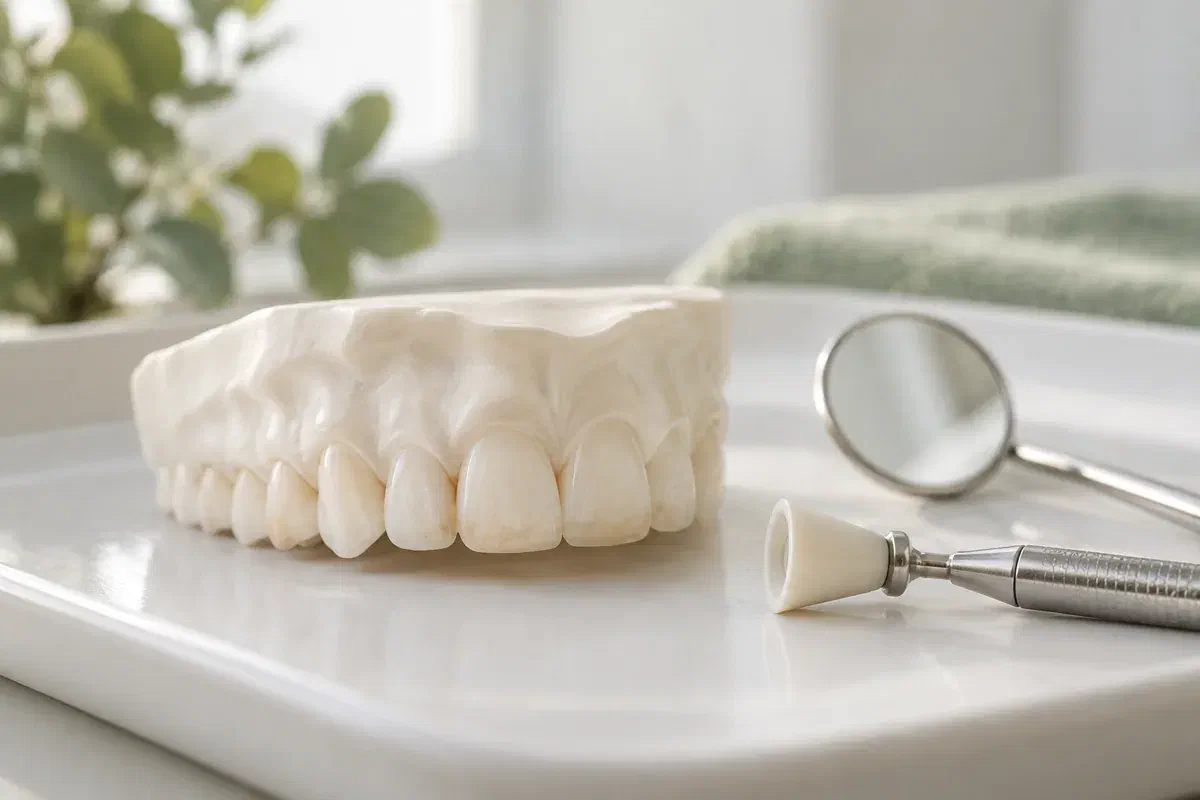
Illustrative teaching model with subtle surface marks beside dental cleaning instruments
Understanding a colour change

The location and history of the mark help guide the next step.

Tell the team whether the concern affects several surfaces, one tooth, or an existing restoration. Mention changes in habits, oral-care products, and symptoms.

Marks that build up with everyday exposures

Describe the foods, drinks, or tobacco use that may be relevant without worrying about being judged. Ask whether the pattern looks like surface staining and what cleaning can achieve. The discussion can also identify realistic ways to reduce recurrence.

Colour around a filling, crown, or gumline

A dark line or patch near a restoration or gum margin needs interpretation before polishing is chosen. Tell the clinician if the area catches food, feels rough, or has become sensitive. Cleaning may help some surface marks, while another finding may need dental review.

A single tooth that appears darker

Mention earlier injury, root canal treatment, or a recent change in that tooth. A colour difference within the tooth may not respond to external stain removal. Ask what assessment is needed rather than repeatedly trying stronger cleaning products at home.

If staining appeared while using a prescribed mouthrinse or medicine, tell the clinician. Do not stop a prescribed product on your own; ask how its purpose and any staining concern should be managed.

What professional stain removal can offer

Address the surface finding while respecting the tooth and its restorations.

When the concern is an accessible external stain, appropriate cleaning can improve the appearance of that surface. It does not promise a lighter underlying tooth shade or removal of every mark. Ask which part of your concern is likely to respond before treatment starts.

The appointment can also help separate appearance goals from oral-health needs. A polished surface does not, by itself, establish that the gums are healthy or that decay is absent. Ask whether additional hygiene care or a dental examination is recommended for other findings.

Patient information: American Dental Association — external and internal tooth discolouration

A clearer explanation of the source of discolouration

Knowing whether a mark is external, within a tooth, or associated with a restoration makes the choices easier to understand. Ask the team to identify any area that needs another assessment. A colour concern should not lead automatically to bleaching or replacement work.

A cleaning approach selected for the surfaces present

Tell the team about exposed roots, sensitive areas, implants, crowns, or bonding. Ask how those details affect the method used. The aim is appropriate surface care, not simply the strongest polish or the most intensive treatment available.

Practical guidance for recurring stains

Discuss which habits or products may contribute and which changes are realistic for you. Ask for advice on your brushing technique and cleaning between teeth. Maintenance should support oral health as well as appearance rather than encourage aggressive scrubbing.

What a stain-removal visit can involve

Assess the marks, explain the scope, and review the result together.

The appointment may form part of hygiene care or require a separate examination first. Ask what the booked visit includes and whether other treatment is recommended.

  1. Discuss the appearance concern and relevant history

    Point out the surfaces you want reviewed and explain how long the staining has been present. Mention sensitivity, oral-care products, tobacco use, and recent dental work. Tell the clinician if you have already tried whitening or abrasive products.

  2. Identify suitable cleaning and any separate concern

    The team assesses the teeth, restorations, and tissues relevant to the visit. Ask which marks appear suitable for removal and which need further investigation. Deposits, gum findings, or suspected decay may change the recommended scope of care.

  3. Use an appropriate professional cleaning approach

    The clinician selects instruments and polishing materials suitable for the surfaces and findings. Tell the team if an area is uncomfortable or you need a pause. No particular air-polishing system, device, or technique should be assumed before the assessment.

  4. Review the appearance and next steps

    Discuss which stains were addressed and what remains. Ask whether remaining colour is a natural shade, an internal change, or another finding. Agree on maintenance advice and any further assessment rather than assuming more polishing will resolve every difference.

After professional stain removal

Keep the surfaces clean without trying to scrub away natural colour.

Follow any specific instructions given for your visit. A steady oral-care routine and attention to contributing habits are more useful than repeated abrasive experiments.

Use the cleaning routine recommended for your mouth

Continue brushing with fluoride toothpaste and cleaning between teeth as advised. Ask for a demonstration if an area is difficult to reach. Do not increase pressure or use sharp tools to remove a mark that remains after treatment.

Discuss the habits that bring staining back

Ask whether reducing particular staining exposures would help and which changes are practical. If tobacco is involved, the team can discuss support for reducing its oral-health impact. There is no need to assume all future staining can be prevented completely.

Review persistent colour or sensitivity appropriately

If a tooth remains noticeably darker or symptoms persist, ask for assessment rather than booking repeated polishing without an explanation. Tell the team about pain, changes in the surface, or a restoration that feels different. The next step should follow the finding.

Patient information: NHS — everyday tooth and interdental cleaning

Choosing the right response to discolouration

Surface cleaning, bleaching, and restorative care answer different questions.

Ask what type of colour change is present and what each proposed option can reasonably achieve. Some concerns need more information before a cosmetic decision.

For suitable external stains and deposits

Professional cleaning or polishing

A surface-care approach may be appropriate when the finding can be addressed by cleaning. Discuss its limits and whether broader hygiene treatment is also recommended. The result should be assessed against your natural tooth colour rather than an artificial whitening target.

When the underlying natural shade is the concern

A separate teeth-whitening discussion

If you want to lighten natural teeth beyond what cleaning achieves, ask about suitability for bleaching. Existing restorations, sensitivity, and the cause of discolouration matter. Stain removal and whitening should not be presented as interchangeable procedures.

When the mark has another explanation

Assessment of a tooth or restoration

A single dark tooth, a changing filling margin, or a symptom may need dental investigation. Ask what the examination shows and whether monitoring, repair, or another treatment is appropriate. A visible mark alone does not establish which procedure is needed.

Patient information: Canadian Dental Association — surface whiteners and bleaching

Professional stain-removal questions

Know what can be cleaned and what needs a different discussion.

These questions help set expectations before a visit focused on tooth colour and surface marks.

(905) 876-4488
Will stain removal make my teeth lighter than their natural colour?
It addresses suitable external staining rather than bleaching the underlying shade. The teeth may look cleaner or brighter when surface deposits are removed. Ask whether the colour you want changed is on the surface or part of the tooth itself.
Can a coffee stain be removed from a tooth-coloured filling?
Some surface staining may be suitable for professional cleaning or polishing, but the restoration needs assessment. Ask whether the colour is superficial, within the material, or related to another finding. Do not assume the entire filling must be replaced.
Should I book stain removal for a tooth that suddenly turned grey?
Tell the clinic about the sudden change when booking, especially if there was an injury or there are symptoms. A darker single tooth may need dental assessment before cosmetic cleaning. External polishing cannot address every cause of tooth discolouration.
Can I use a metal scraper at home to remove a stubborn tooth stain?
Do not use improvised sharp tools on your teeth or gums. Ask the dental team to assess the mark and show you an appropriate home-care routine. A stain that does not brush away may need professional care or a different explanation.
Does professional stain removal replace treatment for gum disease?
No. Appearance-focused surface cleaning and periodontal treatment have different purposes. Ask whether the examination identifies gum-care needs beyond the stains. A surface that looks cleaner does not establish that an underlying gum problem has been treated.
How often should I arrange professional stain removal if marks keep returning?
Ask for an interval based on the findings and your broader hygiene needs. Discuss contributing habits and whether the same marks are truly surface stains. Repeated polishing should have a reason, rather than being scheduled solely to chase a particular shade.
Professional stain removal in Milton

Bring your colour concern and find out what cleaning can address.

Contact our Bronte Street practice to discuss surface staining and appropriate hygiene care. We can explain the likely scope of the visit and whether a separate dental assessment should come first.

The method and result depend on the surfaces and cause of discolouration. No particular shade change or device is promised.

Visit Milton Dental Clinic
Unit 1, 342 Bronte St. S, Milton, ON L9T 5B7
Get directions Clinic hours
Monday–Thursday
11am–7pm
Friday–Sunday
By appointment only

How can we help?

Milton Dental Clinic

Have a question about your smile? Choose the option that works best for you.

For urgent dental concerns, please call.
Messages are reviewed during clinic hours.