

Illustrative patient discussing surface staining with a dental hygiene clinician
Cosmetic Dentistry

Professional Stain Removal in Brampton

In a busy household, one person's chai habit and another's cola can show up as very different marks. For families travelling from Brampton, professional stain removal starts with sorting what sits on the surface from what does not, so each person's visit is planned around what a cleaning can genuinely change.

Family stain care from Brampton

Different habits, different marks, one sensible plan

A teenager worried about school photos and a parent who has had the same morning tea for twenty years may ask the same question for different reasons: can this be cleaned off? Often, part of the answer is yes. Professional stain removal clears suitable external marks. Bleaching is a separate treatment, and so is care for anything going on inside a tooth.

Each mouth needs its own look, because what appears to be a stain may be something else entirely. A filling can show through enamel, a cavity can start as a dark spot, some teeth are simply a deeper natural shade, and one tooth can darken after a knock. The colour alone does not tell the story.

Bring everyone's concerns, and let us know about sensitivity or anything that has recently changed. The team can explain, person by person, what a cleaning is likely to do and whether any tooth should be examined first. Nobody is promised a result their teeth cannot deliver.

Plan stain removal for the family
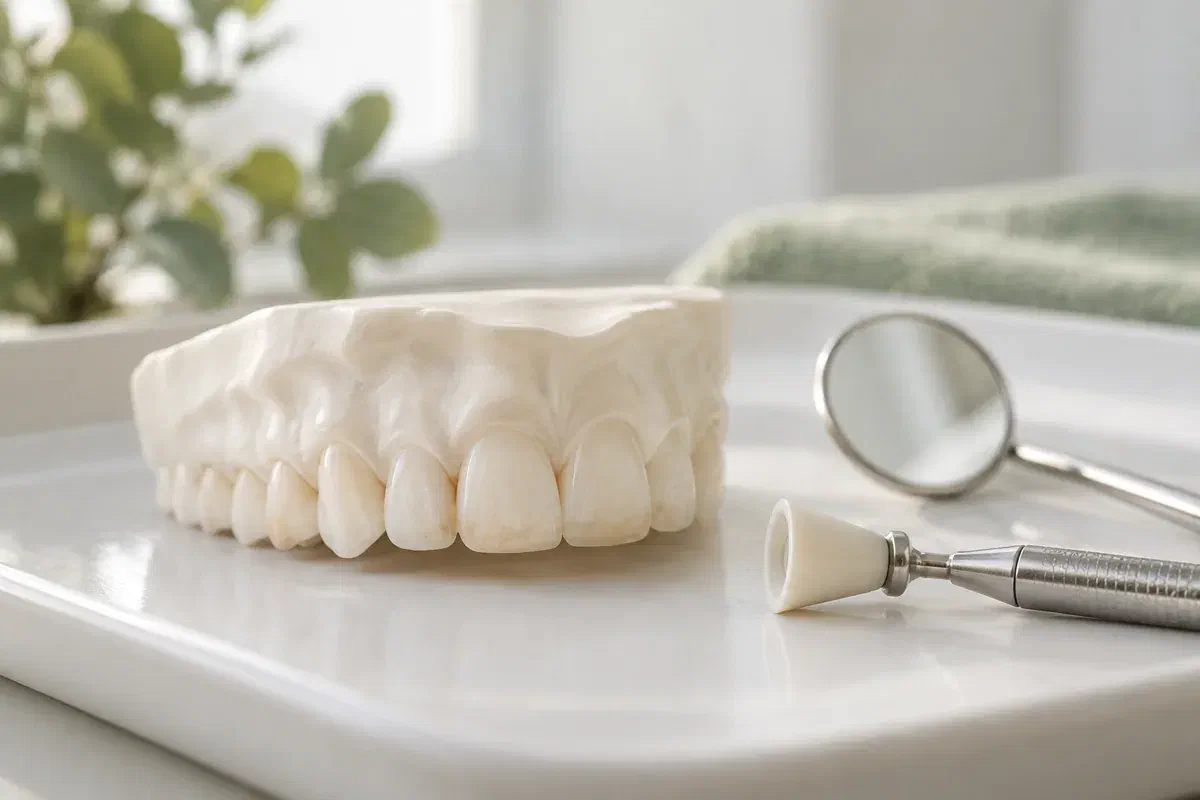
Illustrative teaching model with subtle surface marks beside dental cleaning instruments
Telling marks apart

What the pattern can reveal

It is useful to say whether staining is widespread, on one tooth, or around fillings and the gums. For each person, mention recent changes in diet, products, medication or comfort.

Everyday staining from food, drinks or tobacco

Tea, coffee, pop, spiced dishes and smoking or vaping can all contribute. Mentioning them simply helps the clinician read the pattern. They can say whether it looks like surface staining, roughly what cleaning may remove, and which small changes might slow it.

Marks beside fillings, crowns or gums

Colour at a restoration edge or along the gumline needs interpreting before any polishing. Say if the area feels rough, collects food, or has become sore with cold. A surface stain there may clean up, while other findings need the dentist.

A darker tooth after a bump or fall

Children and adults alike can knock a tooth during sport or play. Mention any injury, past root canal treatment or a recent colour change. Colour inside a tooth generally will not lift with outside cleaning, so ask about an examination.

If someone's teeth began staining during a course of prescribed rinse or medicine, mention it. Keep the prescription going unless the doctor or dentist who prescribed it says otherwise, and let them help weigh its purpose against the staining.

What stain removal can do for each person

Fresher surfaces without overpromising

When the problem is a reachable outer stain, a well-chosen cleaning can improve how it looks. The natural tooth shade stays as it is, and some marks may persist. It helps each person to hear, before starting, which parts of their concern are likely to change.

A cosmetic visit is also a chance to catch health needs. Teeth can look cleaner and still have inflamed gums or an early cavity. Ask whether an examination or additional hygiene care is recommended for anything else the team notices.

Patient information: American Dental Association — external and internal tooth discolouration

Clarity for every family member

Knowing whether a mark sits on the outside, comes from within, or relates to a filling makes decisions easier for parents and teens alike. The team can flag anything needing a second look. Colour worries should not slide automatically into bleaching or new restorations.

Care adjusted to each mouth

Let the clinician know about braces history, exposed roots, sensitivity, crowns, bonding or implants. These change which instruments and polishing materials are suitable. Appropriate care matters more than the most intensive polish.

Habits the whole household can keep

Talk about the drinks and snacks that seem to matter and the changes that would actually stick at home. Ask the team to check brushing and flossing technique for each person. Good routines protect gums and enamel, not just colour.

How a visit unfolds

Talk, assess, clean and review

Stain removal can be part of a hygiene appointment, or an examination may come first. When booking more than one person, ask what each visit will cover.

  1. Explain the concern and any history

    Point out the teeth in question and roughly when the colour appeared. Mention sensitivity, rinses, toothpaste, smoking or vaping, and recent dental work. Note any home whitening or gritty products someone has tried.

  2. Identify what can be cleaned

    The clinician checks teeth, fillings and gums relevant to the visit. Ask which marks look removable and which need investigation. Tartar, gum findings or suspected decay can change what the appointment should include.

  3. Clean with methods suited to the person

    Instruments and polishing materials are chosen for that person's surfaces and findings. Anyone can ask for a pause if something feels uncomfortable. Air polishing or any other specific technique is decided after the assessment.

  4. Look at the result and agree on next steps

    See which stains came away and what remains. Ask whether the leftover colour is natural, internal or something else. Agree on home-care advice and any further review rather than expecting more polishing to even everything out.

At home afterward

Small, shared habits do the heavy lifting.

Follow any specific instructions given at the visit. A steady routine and attention to staining habits beat any abrasive shortcut.

Keep the brushing and flossing routine going

Fluoride toothpaste twice a day and cleaning between teeth are the basics for every age. Ask for a demonstration if someone struggles with a tricky area. No one should pick at a remaining mark with pins or hard objects.

Watch the drinks that stain most

Ask whether rinsing with water after tea or pop, or cutting back a little, would help. Where a family member smokes or vapes, the clinician can explain how it affects the mouth and where help is available. Some staining coming back is normal.

Have persistent colour or tenderness checked

If a tooth stays darker or sensitivity lingers, book an assessment rather than another polish. Mention pain, a rough surface or a filling that feels different. Next steps should follow the finding.

Patient information: NHS — everyday tooth and interdental cleaning

Options for different needs

Not every colour concern calls for the same treatment.

Ask what kind of discolouration each person has and what every suggested option can reasonably achieve. Some concerns need more information first.

For outer stains and deposits

Professional cleaning and polishing

Surface care may be enough when the marks can be cleaned away. Discuss its limits and whether wider hygiene treatment would help. The outcome is best compared with that person's natural colour.

When the natural shade is the concern

Whitening, for adults who are suitable

Lightening natural teeth is a separate conversation about suitability for bleaching. Restorations, sensitivity and the cause of the colour all matter. Whitening and stain removal should not be treated as the same thing.

When the mark has another cause

Dental assessment of a tooth or filling

A single darker tooth, a changing filling edge or a symptom may need investigation. The dentist can explain what was found and whether monitoring, repair or other care is appropriate. How a mark looks is not enough to choose a procedure.

Patient information: Canadian Dental Association — surface whiteners and bleaching

Brampton family questions

What households ask about stains

Answers that may help when more than one person in the family is thinking about stain removal.

(905) 876-4488
Can children have professional stain removal?
Children can have surface stains cleaned as part of suitable hygiene care. The team will look at the child’s teeth and explain what is appropriate. Mention any injuries, sensitivity or recent changes.
Is whitening an option for my teenager after their stains are cleaned?
Whitening suitability depends on age, the teeth and the cause of the colour, and it is a separate discussion. Start with cleaning and an assessment, then ask the team what they recommend.
Why does one family member stain faster than the others?
Diet, habits, tooth surface texture and oral-care routines all differ. The clinician can look at each person’s pattern and suggest practical changes that fit their routine.
Can several family members be seen on the same day?
Mention it when you call and the team can try to arrange appointments close together. Each person’s visit will still depend on their own findings.
Does tea with milk stain less than black tea?
Habits vary a lot from person to person, so ask the clinician about your own pattern. Rinsing with water afterward and keeping up good daily cleaning usually matter more than the exact drink.
My child's front tooth turned darker after a fall at school. What should I do?
Call the clinic and describe the injury and any pain or swelling. A tooth that changes colour after a knock needs dental assessment rather than cosmetic cleaning.
Visiting from Brampton

Book for one person, or for the whole family.

One call to our Bronte Street practice can cover everyone's staining questions and the hygiene care each person needs. The team can explain what each visit is likely to include and whether anyone should have a dental examination first.

Results depend on each person's tooth surfaces and the cause of the colour. No particular shade or device is promised.

Visit Milton Dental Clinic
Unit 1, 342 Bronte St. S, Milton, ON L9T 5B7
Get directions Clinic hours
Monday–Thursday
11am–7pm
Friday–Sunday
By appointment only

Areas we serve

  • Milton
  • Oakville
  • Mississauga
  • Georgetown
  • Halton Hills
  • Acton
  • Campbellville
  • Brampton
  • Burlington
  • Puslinch
  • Rockwood
  • Erin
  • Caledon
  • Etobicoke
  • Old Milton
  • Bronte Meadows
  • Timberlea
  • Dorset Park
  • Dempsey
  • Clarke
  • Beaty
  • Coates
  • Harrison
  • Scott
  • Willmott
  • Ford
  • Bowes
  • Cobden
  • Walker
  • Mountain View
  • Milton Heights
  • Hawthorne Village
  • Valley View
  • Fallingbrook
  • Nassagaweya
  • Trafalgar
  • Esquesing
  • Nelson
  • Brookville
  • Moffat
  • Glen Williams
  • Norval
  • Limehouse
  • Stewarttown
  • Ashgrove
  • Hornby
  • Silver Creek
  • Speyside
  • Scotch Block
  • North Oakville
  • River Oaks
  • Glen Abbey
  • West Oak Trails
  • Palermo
  • Bronte Creek
  • College Park
  • Joshua Creek
  • Uptown Core
  • Preserve
  • Iroquois Ridge
  • Lisgar
  • Meadowvale
  • Meadowvale Village
  • Churchill Meadows
  • Erin Mills
  • Central Erin Mills
  • Streetsville
  • East Credit
  • Creditview
  • Heartland
  • Sheridan
  • Mount Pleasant
  • Credit Valley
  • Huttonville
  • Churchville
  • Springbrook
  • Northwest Brampton
  • Bram West
  • Fletcher's Meadow
  • Fletcher's Creek South
  • Alton Village
  • Orchard
  • Millcroft
  • Headon Forest
  • Tansley
  • Brant Hills
  • Tyandaga
  • Kilbride
  • Lowville
  • Aberfoyle
  • Morriston
  • Arkell
  • Hillsburgh
  • Freelton
  • Carlisle
  • Waterdown
  • Flamborough
  • Mountsberg

How can we help?

Milton Dental Clinic

Have a question about your smile? Choose the option that works best for you.

For urgent dental concerns, please call.
Messages are reviewed during clinic hours.