

Illustrative patient discussing surface staining with a dental hygiene clinician
Cosmetic Dentistry

Professional Stain Removal in Campbellville

Teeth that twinge with cold water can make anyone wary of a cleaning, even when the stains bother them. For households around Campbellville, a stain-removal visit can be planned around that sensitivity, starting with what the marks are and how gently the surfaces can be treated.

Campbellville stain care

Sensitive teeth deserve a gentler plan.

A sip of cold water that makes you wince, gums that have pulled back a little, and brown marks you would rather not see: these often turn up together. The stains may be external deposits that a hygiene clinician can lift with care. That is the job of professional stain removal, which cleans outer surfaces only and is separate from bleaching or from treating anything inside a tooth.

Sensitivity is a reason to look closely, not a reason to skip care. Exposed root surfaces stain differently from enamel, and a dark spot could be decay, an ageing filling or a natural colour variation. A single tooth that has darkened may have its own cause. Knowing what is there shapes how it is handled.

Tell us which teeth react and to what, and show us the stains you would like improved. We can explain what a cleaning should achieve, how it can be adapted for comfort, and whether the dentist should examine a sensitive tooth first. Nothing is rushed, and you can pause at any time.

Plan a gentle stain removal
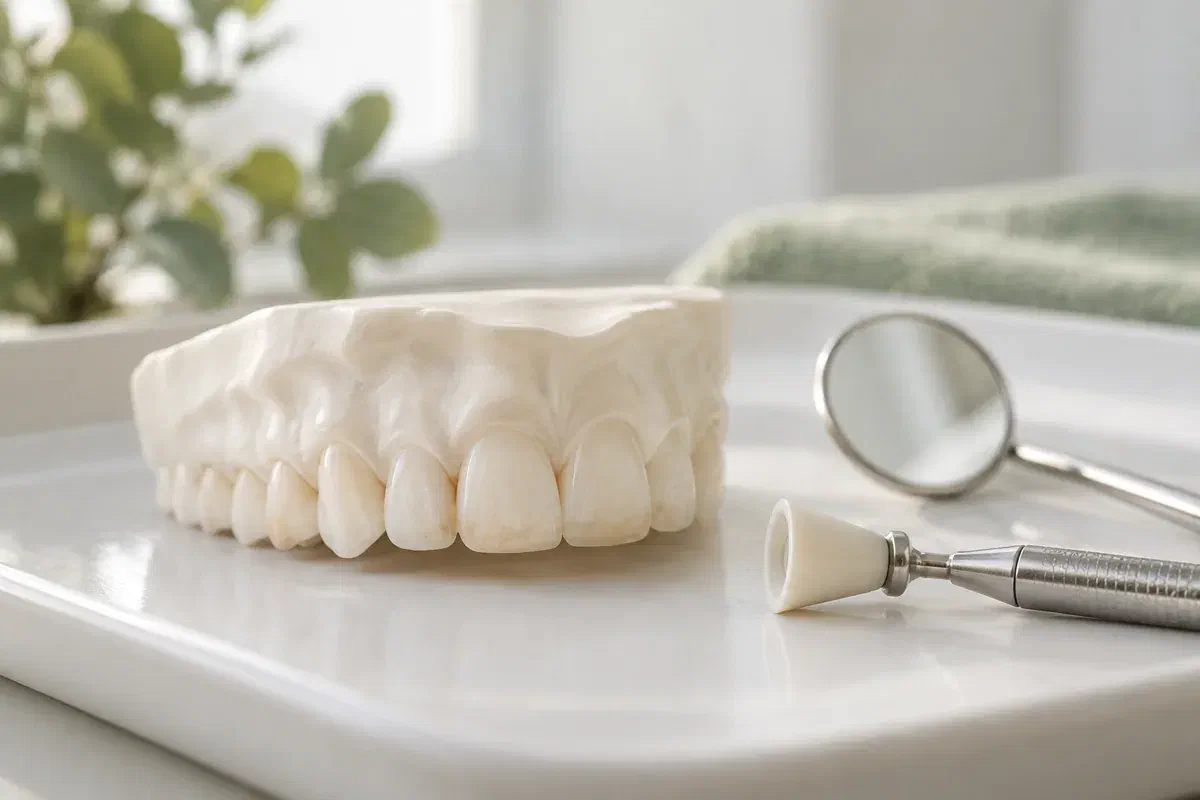
Illustrative teaching model with subtle surface marks beside dental cleaning instruments
Where sensitivity and staining meet

Mark by mark, tooth by tooth

It helps to share which teeth are sensitive, whether staining is broad or on one tooth, and whether it collects at fillings or gums. Recent changes in products, medicines or comfort matter too.

Stain on enamel from daily habits

Coffee at the kitchen table, tea through the afternoon, or tobacco can all leave external marks. The clinician can tell you whether yours look like surface staining and how much a careful cleaning might take away. Ways to slow the build-up can come up too.

Colour on exposed roots or near fillings

Root surfaces showing above the gums are often both darker and more sensitive. Point out spots that ache, feel rough or trap food. Some can be cleaned gently; others, such as a worn margin or early decay, need the dentist's opinion.

A single tooth that is darker and tender

Mention any injury, root canal treatment or a tooth that has recently changed colour or started aching. Internal colour does not respond to outside cleaning, and tenderness in one tooth deserves an examination first.

Some prescribed rinses and medicines contribute to staining, and some affect how your mouth feels. Share what you take, and stay on any prescription until the prescriber or the dental team has talked through alternatives.

What a careful cleaning can do

Comfort and appearance, handled together

When the marks are external and reachable, a suitable cleaning can improve how the teeth look, and the approach can be adapted for sensitive areas. The natural shade underneath stays as it is, and some marks may remain. Ask before starting which parts of your concern should change.

This visit can also shed light on the sensitivity itself. Receding gums, worn enamel or a cavity may be contributing, and a polished surface does not rule these out. Ask whether an examination or other hygiene care is suggested for what the team finds.

Patient information: American Dental Association — external and internal tooth discolouration

A clearer picture of each mark

Knowing whether colour is surface stain, internal or linked to a restoration helps you decide on next steps without guesswork. The team can flag areas needing a closer look. Neither bleaching nor replacement should follow automatically.

An approach shaped by your sensitivity

Let the clinician know which teeth are tender and about any implants, crowns or bonded work. They can choose instruments and polishing materials accordingly, and adjust as they go. Gentle, appropriate care is the priority.

Home care that eases rather than irritates

Discuss which habits feed the staining and which toothpaste may suit sensitive teeth. Ask for tips on brushing gently along the gums and cleaning between teeth. A comfortable routine is one you can keep.

Step by step

Go at a comfortable pace.

Stain removal may be part of hygiene care, or an examination may be advised first, especially for a sensitive tooth. Ask when booking what the appointment includes.

  1. Describe the stains and the sensitivity

    Show the teeth you would like improved and say what triggers any discomfort, such as cold, sweets or brushing. Mention your toothpaste, rinses, tobacco and recent dental work, plus any whitening products tried.

  2. Assess the surfaces and the cause

    The clinician checks enamel, exposed roots, fillings and gums. Ask which marks are removable and which need investigation. Tartar, gum recession or suspected decay may change what the visit covers.

  3. Clean gently with suitable methods

    Tools and polishing products are chosen with your comfort in mind. Raise a hand at any point for a pause. The clinician will choose a technique after the assessment rather than committing to a device in advance.

  4. Check comfort and the result

    Review which stains came away and how the teeth feel. Ask whether remaining colour is natural, internal or another finding. Agree on home care for sensitivity and any follow-up, rather than planning more polishing.

In the days that follow

Soft brush, steady habits.

Follow any advice specific to your appointment. Gentle daily cleaning and some attention to staining habits help both comfort and appearance.

Use the toothpaste and brush that suit you

Brush with a fluoride toothpaste, possibly one for sensitive teeth if the team recommends it, and clean between teeth as shown. Use light pressure. Picking at a leftover mark can irritate gums and roots.

Notice what triggers stains and twinges

Ask whether certain drinks or habits are worth adjusting, and what is realistic for you. If tobacco plays a part, ask where support is available. Some staining will gradually return; that is expected.

Report sensitivity that does not settle

If a tooth stays sore, becomes more sensitive or looks darker, call for an assessment instead of booking more polishing. Mention any change in a filling or the gum around it. Care should follow what is found.

Patient information: NHS — everyday tooth and interdental cleaning

Options to talk through

Clean it, lighten it, or look more closely

The right choice depends on what is causing the colour and how your teeth feel. Some concerns, particularly a sensitive single tooth, need investigation before any cosmetic step.

For outer stain on enamel or roots

Gentle professional cleaning

If the marks sit on the outside and can be lifted carefully, this is often the first thing to try. Talk with the clinician about how your sensitivity changes the approach, and whether a fuller hygiene appointment would also be useful. Afterward, judge the outcome against your own natural colour rather than a bright ideal.

When the natural shade is the concern

Whitening, if suitable

Bleaching can increase sensitivity for some people, so it needs a careful conversation. Fillings and crowns will not lighten. Stain removal and whitening are separate treatments with different considerations.

When the mark or symptom has another cause

Examination of a sensitive or darker tooth

A tender tooth, a darkened one or a filling margin that has changed may need investigation. The dentist can explain the findings and options such as monitoring or repair. Appearance alone does not settle the procedure.

Patient information: Canadian Dental Association — surface whiteners and bleaching

Campbellville questions

Sensitivity, stains and gentle cleaning

Answers that may help if sensitive teeth have made you hesitant about a cleaning.

(905) 876-4488
Will professional stain removal make my sensitive teeth worse?
Tell the team about the sensitivity before they start, so the approach can be adapted. Some people notice brief sensitivity afterward; mention anything that lasts or worries you.
Why are the stains worse on the parts of my teeth near the gums?
Exposed root surfaces and the gumline tend to collect stain and deposits, and roots are naturally a different colour. The clinician can show you what is stain and what is the root itself.
Can a toothpaste for sensitive teeth also help with stains?
Some products target both, but abrasive pastes may not suit sensitive teeth. Ask the team which toothpaste fits your situation.
Is it normal for one tooth to be sensitive and darker at the same time?
It is something to have checked. A single tooth that is both tender and discoloured may need dental assessment, rather than cosmetic cleaning, as a first step.
Can I ask for breaks during the cleaning?
Yes. Let the clinician know at the start that you may need pauses, and agree on a simple signal, such as raising a hand. Working at a comfortable pace is always fine, even if it means the appointment takes a little longer.
Can our household book visits from Campbellville back to back?
Mention it when you call, and the team will try to arrange appointments close together so one trip covers more than one person. Each visit still depends on that person’s findings.
Visiting from Campbellville

Tell us what hurts, and what you'd like to see change.

Call our Bronte Street practice and mention both the staining and any sensitivity. The team can explain how a hygiene visit might be adapted for you and whether an examination should come first.

Results vary with your tooth surfaces, sensitivity and the source of the colour. We do not guarantee a particular shade or device.

Visit Milton Dental Clinic
Unit 1, 342 Bronte St. S, Milton, ON L9T 5B7
Get directions Clinic hours
Monday–Thursday
11am–7pm
Friday–Sunday
By appointment only

Areas we serve

  • Milton
  • Oakville
  • Mississauga
  • Georgetown
  • Halton Hills
  • Acton
  • Campbellville
  • Brampton
  • Burlington
  • Puslinch
  • Rockwood
  • Erin
  • Caledon
  • Etobicoke
  • Old Milton
  • Bronte Meadows
  • Timberlea
  • Dorset Park
  • Dempsey
  • Clarke
  • Beaty
  • Coates
  • Harrison
  • Scott
  • Willmott
  • Ford
  • Bowes
  • Cobden
  • Walker
  • Mountain View
  • Milton Heights
  • Hawthorne Village
  • Valley View
  • Fallingbrook
  • Nassagaweya
  • Trafalgar
  • Esquesing
  • Nelson
  • Brookville
  • Moffat
  • Glen Williams
  • Norval
  • Limehouse
  • Stewarttown
  • Ashgrove
  • Hornby
  • Silver Creek
  • Speyside
  • Scotch Block
  • North Oakville
  • River Oaks
  • Glen Abbey
  • West Oak Trails
  • Palermo
  • Bronte Creek
  • College Park
  • Joshua Creek
  • Uptown Core
  • Preserve
  • Iroquois Ridge
  • Lisgar
  • Meadowvale
  • Meadowvale Village
  • Churchill Meadows
  • Erin Mills
  • Central Erin Mills
  • Streetsville
  • East Credit
  • Creditview
  • Heartland
  • Sheridan
  • Mount Pleasant
  • Credit Valley
  • Huttonville
  • Churchville
  • Springbrook
  • Northwest Brampton
  • Bram West
  • Fletcher's Meadow
  • Fletcher's Creek South
  • Alton Village
  • Orchard
  • Millcroft
  • Headon Forest
  • Tansley
  • Brant Hills
  • Tyandaga
  • Kilbride
  • Lowville
  • Aberfoyle
  • Morriston
  • Arkell
  • Hillsburgh
  • Freelton
  • Carlisle
  • Waterdown
  • Flamborough
  • Mountsberg

How can we help?

Milton Dental Clinic

Have a question about your smile? Choose the option that works best for you.

For urgent dental concerns, please call.
Messages are reviewed during clinic hours.