

Illustrative patient discussing surface staining with a dental hygiene clinician
Cosmetic Dentistry

Professional Stain Removal in Halton Hills

Cutting back on smoking often prompts a fresh look in the mirror, and the yellow-brown film that tobacco leaves behind becomes harder to ignore. From anywhere in Halton Hills, a professional stain-removal visit can show how much of that colour is on the surface, how much is not, and how to keep it from building up again.

Halton Hills stain removal

Quitting smoking? Your teeth may show it next.

People who have just stopped smoking, or are trying to, often want a visible sign of progress. Tobacco staining is frequently external, clinging to enamel near the gums and on the backs of the front teeth, so a hygiene clinician may be able to remove much of it. That is where professional stain removal begins and ends: outer surfaces, not bleaching and not problems inside a tooth.

Smoking also affects the gums, and dark areas are not always tobacco. A deep brown spot could be decay; colour at an edge could be an old filling; a single grey tooth could reflect a change within it. Some teeth are simply a richer natural shade. Telling these apart guides everything else.

Let us know about your tobacco or vaping history without worrying how it sounds, and mention sensitivity, bleeding gums or recent changes. We can explain what a cleaning should lift, what may stay, and whether the dentist should examine your gums or a tooth. Either way, you get an honest account of the outcome.

Ask about tobacco staining
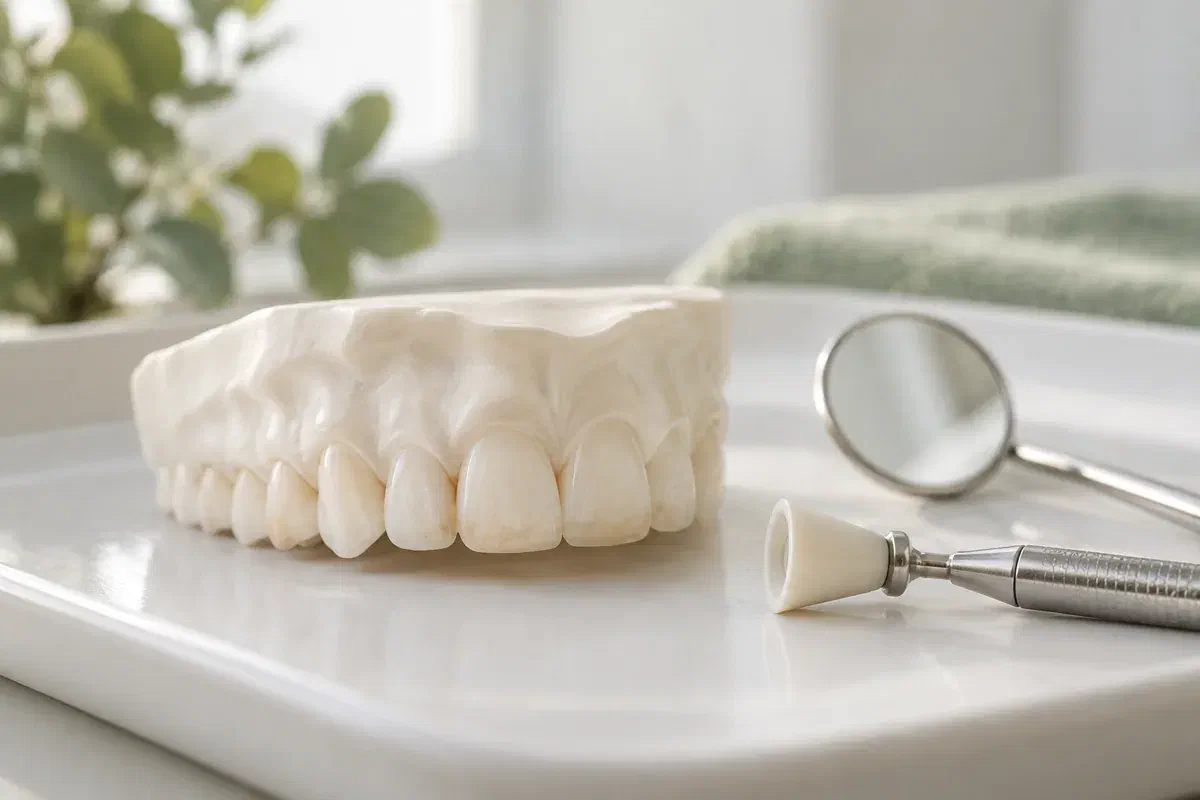
Illustrative teaching model with subtle surface marks beside dental cleaning instruments
Sorting out the colour

Tobacco, tea, or something else?

It helps to say whether the staining is broad, on one tooth, or along dental work and the gums. Any change in smoking, vaping, drinks, products or symptoms is useful to mention.

Film from smoking, vaping or dark drinks

Cigarettes, cigars, pipes, chewing tobacco, coffee and tea all leave their own patterns. The clinician can tell you whether yours looks like surface stain and how much a cleaning could reasonably take off. You can also talk about ways to slow its return.

Colour along the gums or around fillings

Staining tends to collect at the gumline, but so do tartar and gum problems, which smoking can make worse. Point out bleeding, roughness or tender areas. Surface marks may clean away; other findings call for the dentist's assessment.

A tooth darker than its neighbours

If one tooth stands out, think back to any knock, root canal treatment or recent change and share it. Colour that starts inside a tooth will not come off with surface cleaning. An examination is the better route than ever-stronger home whitening.

Some prescribed mouthrinses and medicines can also cause staining. Bring a list of anything you take, including nicotine replacement products, and keep using prescribed items until the prescriber or dental team has advised you.

What stain removal can offer

A visible step forward, with your gums in mind.

Where tobacco or drink stain sits on the outside of the teeth, a suitable cleaning can make a real difference to how the surfaces look. The tooth's own shade is not changed, and stubborn spots may linger. Ask which parts of your concern are likely to respond before you begin.

Because smoking is linked to gum disease, this visit is a good moment to check gum health too. A brighter surface on its own does not show that the gums are in good shape. Ask whether a full examination or periodontal care is suggested for what the team finds.

Patient information: American Dental Association — external and internal tooth discolouration

Knowing what the staining really is

Understanding whether a mark is surface stain, internal colour or linked to a restoration makes your next decisions clearer. The team can flag anything that needs a further look. Discolouration should not automatically point to whitening or replacement work.

A cleaning approach that respects your gums

Mention bleeding, receding gums, exposed roots, sensitivity, implants, crowns or bonding before treatment starts. These guide the choice of instruments and polishing products. Suitable care matters more than intensity.

Support for keeping stain from returning

Discuss realistic changes, from cutting down to quitting, and how they may affect staining over time. Ask for feedback on brushing and between-teeth cleaning. Good daily habits protect gum health while keeping surfaces cleaner.

Your visit, in order

From history to a cleaner surface

Stain removal may be included in hygiene care, or an examination may be recommended first. Ask when booking what the appointment covers and whether gum care is suggested.

  1. Share your history openly

    Point to the stained teeth and say how long the colour has been building. Include smoking or vaping habits, attempts to quit, sensitivity, mouthwash and recent dental work. Mention any whitening kits or abrasive products tried.

  2. Check stain, tartar and gum health

    The clinician looks at enamel, fillings and gums together. You can ask which marks seem removable and which need investigation. Heavy deposits, gum inflammation or possible decay may shift what the visit should include.

  3. Professional cleaning suited to your mouth

    Tools and polishing pastes are selected for your surfaces and what the assessment found. Say so if anything is uncomfortable or you need a moment. Whether air polishing or another technique is used is decided at the visit, not beforehand.

  4. Compare before and after

    Look together at which stains came away and what remains. Ask whether the leftover colour is your natural tooth shade, an internal change or a separate finding. Agree on home care and any gum follow-up rather than more polishing.

Keeping the progress

Protect the change you can see.

Follow any specific advice from your appointment. Regular, gentle cleaning and steady progress with tobacco habits help far more than scrubbing.

Keep a gentle daily routine

Brush with fluoride toothpaste twice a day and clean between teeth the way the team recommended. If your gums are tender, ask about a softer approach. Hard pressure or sharp tools can damage enamel and gum tissue.

Work on the habit at your own pace

Ask how cutting down or quitting tobacco may affect future staining, and where to find support if you want it. Coffee and tea can matter too. Some new staining over time is normal, even with good habits.

Have ongoing colour or gum changes checked

If a tooth stays darker, gums keep bleeding or sensitivity lingers, ask for an assessment instead of another polish. Describe any pain or a filling that now feels different. Follow-up should match the finding.

Patient information: NHS — everyday tooth and interdental cleaning

Three different answers

The right response depends on what caused the colour.

Ask what type of discolouration you have and what each suggestion can realistically accomplish. Some concerns need more information first.

For tobacco film and other outer stains

Cleaning or polishing by a clinician

Surface care may be suitable when the stain sits on the outside of the tooth. Talk about its limits and whether gum treatment is also needed. Measure the outcome against your natural colour.

When the underlying shade bothers you

Whitening, as its own decision

Lightening natural teeth beyond a cleaning involves a separate discussion about bleaching. Fillings, crowns, sensitivity and gum health are part of that conversation. Stain removal and whitening are not the same procedure.

When the mark may mean something else

A dental examination

One darker tooth, a changing filling edge, gum changes or a symptom may need investigation. The dentist can explain the findings and whether monitoring, repair or other treatment is appropriate. Appearance alone does not determine the procedure.

Patient information: Canadian Dental Association — surface whiteners and bleaching

Halton Hills FAQ

Questions about tobacco stain and cleaning

Answers that may help if smoking, vaping or other habits have left marks on your teeth.

(905) 876-4488
Can tobacco stains be removed with a professional cleaning?
Many tobacco stains are on the outer surface and may respond well to professional cleaning. Some colour may remain, especially if it is part of the tooth. The clinician can show you which areas are likely to improve.
Does vaping stain teeth the way cigarettes do?
Vaping can still affect the mouth, and some people notice staining or dryness. Mention what you use so the team can look at your teeth and gums and give advice that fits.
Will my teeth stay cleaner if I quit smoking?
Stopping smoking removes one major source of staining, so new tobacco stain should be less of an issue. Other habits such as coffee or tea can still contribute, and good daily cleaning still matters.
Why do my gums bleed more since I stopped smoking?
Some people notice changes in their gums after quitting. Bleeding is worth having checked, because it can be a sign of gum inflammation. Mention it when booking so the team can assess your gums.
Is it worth getting stain removal before I've fully quit?
It can be, as long as expectations are realistic. Staining may return if smoking continues. Some people find a cleaner smile helps their motivation. Ask the team what makes sense for you.
Can someone from Glen Williams or Georgetown book the same type of visit?
Yes. Anyone in Halton Hills can call to arrange stain removal or a hygiene visit. Mention your concerns and the team will suggest what the appointment should include.
Book from Halton Hills

Show us the stain, and how far you have come.

Contact our Bronte Street practice to talk about tobacco or other surface staining and the hygiene care that suits you. We can explain what the visit should cover and whether an examination or gum assessment should come first.

Results depend on your tooth surfaces, gum health and the cause of discolouration. No particular shade or device is promised.

Visit Milton Dental Clinic
Unit 1, 342 Bronte St. S, Milton, ON L9T 5B7
Get directions Clinic hours
Monday–Thursday
11am–7pm
Friday–Sunday
By appointment only

Areas we serve

  • Milton
  • Oakville
  • Mississauga
  • Georgetown
  • Halton Hills
  • Acton
  • Campbellville
  • Brampton
  • Burlington
  • Puslinch
  • Rockwood
  • Erin
  • Caledon
  • Etobicoke
  • Old Milton
  • Bronte Meadows
  • Timberlea
  • Dorset Park
  • Dempsey
  • Clarke
  • Beaty
  • Coates
  • Harrison
  • Scott
  • Willmott
  • Ford
  • Bowes
  • Cobden
  • Walker
  • Mountain View
  • Milton Heights
  • Hawthorne Village
  • Valley View
  • Fallingbrook
  • Nassagaweya
  • Trafalgar
  • Esquesing
  • Nelson
  • Brookville
  • Moffat
  • Glen Williams
  • Norval
  • Limehouse
  • Stewarttown
  • Ashgrove
  • Hornby
  • Silver Creek
  • Speyside
  • Scotch Block
  • North Oakville
  • River Oaks
  • Glen Abbey
  • West Oak Trails
  • Palermo
  • Bronte Creek
  • College Park
  • Joshua Creek
  • Uptown Core
  • Preserve
  • Iroquois Ridge
  • Lisgar
  • Meadowvale
  • Meadowvale Village
  • Churchill Meadows
  • Erin Mills
  • Central Erin Mills
  • Streetsville
  • East Credit
  • Creditview
  • Heartland
  • Sheridan
  • Mount Pleasant
  • Credit Valley
  • Huttonville
  • Churchville
  • Springbrook
  • Northwest Brampton
  • Bram West
  • Fletcher's Meadow
  • Fletcher's Creek South
  • Alton Village
  • Orchard
  • Millcroft
  • Headon Forest
  • Tansley
  • Brant Hills
  • Tyandaga
  • Kilbride
  • Lowville
  • Aberfoyle
  • Morriston
  • Arkell
  • Hillsburgh
  • Freelton
  • Carlisle
  • Waterdown
  • Flamborough
  • Mountsberg

How can we help?

Milton Dental Clinic

Have a question about your smile? Choose the option that works best for you.

For urgent dental concerns, please call.
Messages are reviewed during clinic hours.