

Illustrative patient discussing surface staining with a dental hygiene clinician
Cosmetic Dentistry

Professional Stain Removal in Milton

That brownish edge you notice in the bathroom mirror may sit on the enamel, or it may be part of the tooth itself. A stain-removal visit in Milton starts by telling the two apart, then explains which marks a professional cleaning can realistically lift and which ones call for a different conversation.

Stain removal, explained for Milton

On the tooth, or in it?

Most people first wonder about stain removal on an ordinary morning, holding a mug and catching a glimpse of a yellow or brown edge near the gums. That question, on the tooth or in it, shapes everything after. Professional stain removal deals with suitable deposits on the outer surface; it is not bleaching, and it does not treat a problem deeper inside a tooth.

Daily coffee, black tea, red wine and tobacco can all leave external marks. Still, a dark patch can also be an old filling showing through, early decay, a colour difference a tooth developed with, or a change confined to one tooth. Sorting out which one you have comes before choosing any polish.

During your visit, show us the exact spots that bother you and mention anything that has felt sensitive or looked different lately. The team can then describe what cleaning is likely to change, and flag anything that deserves a dental examination first. You leave with an honest picture of the likely result.

Ask about a surface stain
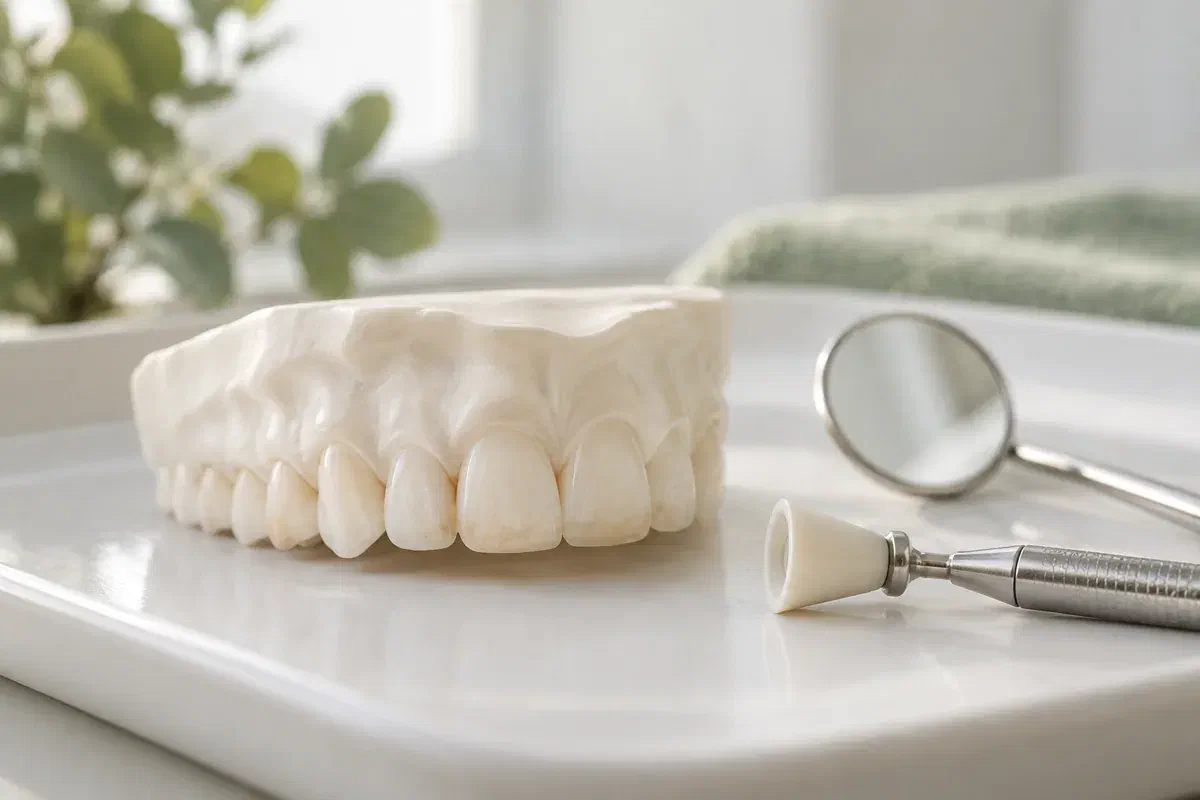
Illustrative teaching model with subtle surface marks beside dental cleaning instruments
Reading the mark

Where the colour sits, and when it showed up, both matter.

It helps to say whether the change is spread across many teeth, limited to one, or clustered around dental work. Recent shifts in diet, toothpaste, rinses or symptoms are worth mentioning too.

Staining that builds from daily habits

Share what you drink and whether you smoke or vape, plainly and without embarrassment. The clinician can say whether the pattern fits surface staining and how much a cleaning is likely to remove. You can also talk through small, realistic ways to slow its return.

A shadow along a filling, crown or the gums

Dark edges beside a restoration or at the gum margin need a careful look before anyone polishes them. Mention if the spot traps food, feels rough to your tongue, or has started to twinge. Some of these are simple surface marks; others point to something the dentist should review.

One tooth that has turned darker

Let the team know about any knock to that tooth, past root canal treatment, or a change you noticed recently. Colour coming from inside a tooth usually will not respond to outer cleaning. Asking what examination is needed works better than buying stronger whitening products.

Staining sometimes shows up while you are using a prescribed rinse or medication. Mention it at your visit, and keep taking the product as directed until the prescriber or dental team has talked through the options with you.

What a cleaning can and cannot do

A fresher surface, with care for enamel and dental work.

If the concern really is an external stain the clinician can reach, a suitable cleaning can improve how that surface looks. It cannot make the natural shade underneath lighter, and some marks may stay. Before starting, it is worth asking which parts of your concern are likely to change.

A stain-focused appointment also separates cosmetic goals from health questions. Teeth that look polished can still have gum inflammation or a cavity. Ask whether further hygiene treatment or an examination makes sense for anything else the team notices.

Patient information: American Dental Association — external and internal tooth discolouration

Knowing where the colour comes from

Once you know whether a mark is external, internal or tied to a restoration, the choices become much clearer. The team can point out any spot that deserves a second look. A colour worry should never slide straight into bleaching or replacing work by default.

A method matched to your teeth and restorations

Mention exposed root surfaces, tender areas, implants, crowns or bonding before cleaning begins. Each of these can change which instruments and polishing materials suit you. The goal is gentle, appropriate care rather than the harshest polish available.

Realistic advice for stains that return

Talk about which drinks, habits or products may play a part, and which changes you can actually keep up. Ask the team to check your brushing and flossing technique. Good upkeep supports healthy gums as well as appearance, without pushing you toward harder scrubbing.

How the appointment usually runs

Look first, agree on the scope, then clean.

Stain removal may be part of a hygiene visit, or an examination may need to come first. When booking, ask what the appointment covers and whether anything else is advised.

  1. Talk through what you see and your history

    Point to the teeth you want checked and say roughly how long the marks have been there. Mention sensitivity, the toothpaste or rinse you use, smoking, and any recent dental work. If you have tried whitening strips or gritty pastes, say so.

  2. Sort removable stain from other findings

    The clinician examines the teeth, restorations and gums involved. You can ask which marks look removable and which need more investigation. Hard deposits, gum changes or possible decay can shift what the visit should include.

  3. Clean with suitable professional methods

    Instruments and polishing materials are chosen to suit your surfaces and what was found. Raise a hand if anything feels uncomfortable or you would like a break. Nobody should promise a specific air-polishing device or technique before the teeth have been assessed.

  4. Compare the result and plan ahead

    Go over which stains lifted and which colour remains. Ask whether what is left is your natural shade, an internal change or something else. Settle on home-care advice and any further review instead of assuming extra polishing will even everything out.

In the weeks after your visit

Clean thoroughly, not harder.

Follow any instructions the team gives you for your particular visit. A dependable daily routine and some attention to staining habits do more than experimenting with abrasive products.

Stick with the routine suggested for you

Brush with a fluoride toothpaste and clean between your teeth the way you were shown. If one area is awkward to reach, ask for a quick demonstration. Pressing harder or picking at a leftover mark with a sharp object can damage enamel and gums.

Look at what brings the marks back

Ask whether cutting back on a particular drink or habit would help, and which changes feel manageable. If smoking is part of the picture, the team can talk about support with its effects on your mouth. Some new staining over time is normal.

Get lingering colour or tenderness checked

When a tooth stays noticeably darker or a symptom hangs on, ask for an assessment rather than another polish. Let the team know about pain, a surface that feels different, or a filling that seems changed. The next step should depend on what is found.

Patient information: NHS — everyday tooth and interdental cleaning

Matching the option to the mark

Cleaning, whitening and restorative care each solve a different problem.

Ask what kind of discolouration you have and what each suggested option can reasonably do. Some concerns need more information before any cosmetic choice is made.

For reachable outer stains and deposits

Professional cleaning or polishing

Surface care may suit you when the mark can be lifted by cleaning. Ask about its limits and whether broader hygiene care is also advised. Judge the result against your own natural tooth colour, not a bright whitening ideal.

When the natural shade itself bothers you

A conversation about teeth whitening

If you want teeth lighter than cleaning can make them, ask whether bleaching suits you. Fillings and crowns, sensitivity and the cause of the colour all play a part. Stain removal and whitening are separate treatments and should be discussed that way.

When something else explains the mark

Examining a tooth or restoration

A lone darker tooth, a filling edge that keeps changing, or a symptom may need dental investigation. Ask what the examination shows and whether watching, repairing or another treatment fits. How a mark looks does not decide the procedure on its own.

Patient information: Canadian Dental Association — surface whiteners and bleaching

Questions from Milton

Common questions about cleaning away stains.

A few answers that may help you know what to expect before a visit about surface marks and tooth colour.

(905) 876-4488
Is professional stain removal the same thing as teeth whitening?
No. Stain removal works on suitable deposits sitting on the outside of the tooth, while whitening uses bleaching to change the natural shade. Teeth can look brighter after surface marks come off, but the underlying colour stays the same.
Why does my coffee staining come back within a few months?
Regular exposure to dark drinks can gradually rebuild surface marks, and some tooth surfaces pick up stain more easily than others. Ask the team about your routine and whether small changes could slow it. Some return is common.
Can whitening toothpaste do the same job as a professional cleaning?
Some toothpastes help with light surface staining, but they cannot reach every area the way professional instruments can, and some are quite abrasive. Ask which product suits your teeth, especially if you have exposed roots or sensitivity.
Does stain removal take care of tartar and gum health too?
A cosmetic polish is not the same as treatment for gum disease. If hardened deposits or gum inflammation are found, the team may recommend broader hygiene care. Clean-looking teeth do not by themselves mean the gums are healthy.
My front tooth has gone grey since a fall. Will polishing help?
Probably not on its own. A tooth that darkens after an injury needs dental assessment, because the colour may come from inside it. Mention the fall when you book, along with any pain or tenderness.
I live in Milton. Can I combine stain removal with my regular check-up?
Often, yes. When you call, ask whether the stain concern can be reviewed during your hygiene visit, or whether a separate examination should come first. The team can suggest an order that makes sense for your findings.
Book in Milton

Show us the marks that bother you.

Call or book with our Bronte Street practice to talk about surface stains and suitable hygiene care. We can outline what the visit is likely to include, and whether a dental examination should happen first.

Results and methods depend on your tooth surfaces and the cause of the colour. No specific shade or device is promised.

Visit Milton Dental Clinic
Unit 1, 342 Bronte St. S, Milton, ON L9T 5B7
Get directions Clinic hours
Monday–Thursday
11am–7pm
Friday–Sunday
By appointment only

Areas we serve

  • Milton
  • Oakville
  • Mississauga
  • Georgetown
  • Halton Hills
  • Acton
  • Campbellville
  • Brampton
  • Burlington
  • Puslinch
  • Rockwood
  • Erin
  • Caledon
  • Etobicoke
  • Old Milton
  • Bronte Meadows
  • Timberlea
  • Dorset Park
  • Dempsey
  • Clarke
  • Beaty
  • Coates
  • Harrison
  • Scott
  • Willmott
  • Ford
  • Bowes
  • Cobden
  • Walker
  • Mountain View
  • Milton Heights
  • Hawthorne Village
  • Valley View
  • Fallingbrook
  • Nassagaweya
  • Trafalgar
  • Esquesing
  • Nelson
  • Brookville
  • Moffat
  • Glen Williams
  • Norval
  • Limehouse
  • Stewarttown
  • Ashgrove
  • Hornby
  • Silver Creek
  • Speyside
  • Scotch Block
  • North Oakville
  • River Oaks
  • Glen Abbey
  • West Oak Trails
  • Palermo
  • Bronte Creek
  • College Park
  • Joshua Creek
  • Uptown Core
  • Preserve
  • Iroquois Ridge
  • Lisgar
  • Meadowvale
  • Meadowvale Village
  • Churchill Meadows
  • Erin Mills
  • Central Erin Mills
  • Streetsville
  • East Credit
  • Creditview
  • Heartland
  • Sheridan
  • Mount Pleasant
  • Credit Valley
  • Huttonville
  • Churchville
  • Springbrook
  • Northwest Brampton
  • Bram West
  • Fletcher's Meadow
  • Fletcher's Creek South
  • Alton Village
  • Orchard
  • Millcroft
  • Headon Forest
  • Tansley
  • Brant Hills
  • Tyandaga
  • Kilbride
  • Lowville
  • Aberfoyle
  • Morriston
  • Arkell
  • Hillsburgh
  • Freelton
  • Carlisle
  • Waterdown
  • Flamborough
  • Mountsberg

How can we help?

Milton Dental Clinic

Have a question about your smile? Choose the option that works best for you.

For urgent dental concerns, please call.
Messages are reviewed during clinic hours.