

Illustrative patient discussing surface staining with a dental hygiene clinician
Cosmetic Dentistry

Professional Stain Removal in Mississauga

Charcoal powders, whitening pastes and strips promise a lot, and stubborn marks often stay put anyway. For anyone travelling from Mississauga, a professional stain-removal visit looks at why those marks have resisted, what a clinician can safely clean, and when the colour has a cause that home products were never going to reach.

Mississauga stain removal

When the bathroom-cabinet fixes stop working

Plenty of people arrive having already tried three or four products. Some marks are external stains packed into grooves and between teeth, where a toothbrush cannot get much grip, and a hygiene clinician has better tools for those. Professional stain removal is limited to that outer layer: it is not a bleaching treatment, and it does not address trouble inside a tooth.

Repeated scrubbing with gritty products can also wear enamel or irritate gums, and some marks were never surface stains at all. An old filling, early decay, a natural colour variation or a change within one tooth can all resist every paste on the shelf. Identifying the cause saves effort and protects your teeth.

Bring the names of what you have tried, and point out the spots that will not budge. We can tell you which ones a cleaning is likely to handle, whether any sensitivity is linked to those products, and whether a dentist should examine something first. The aim is a realistic result and a gentler routine.

Discuss stubborn stains
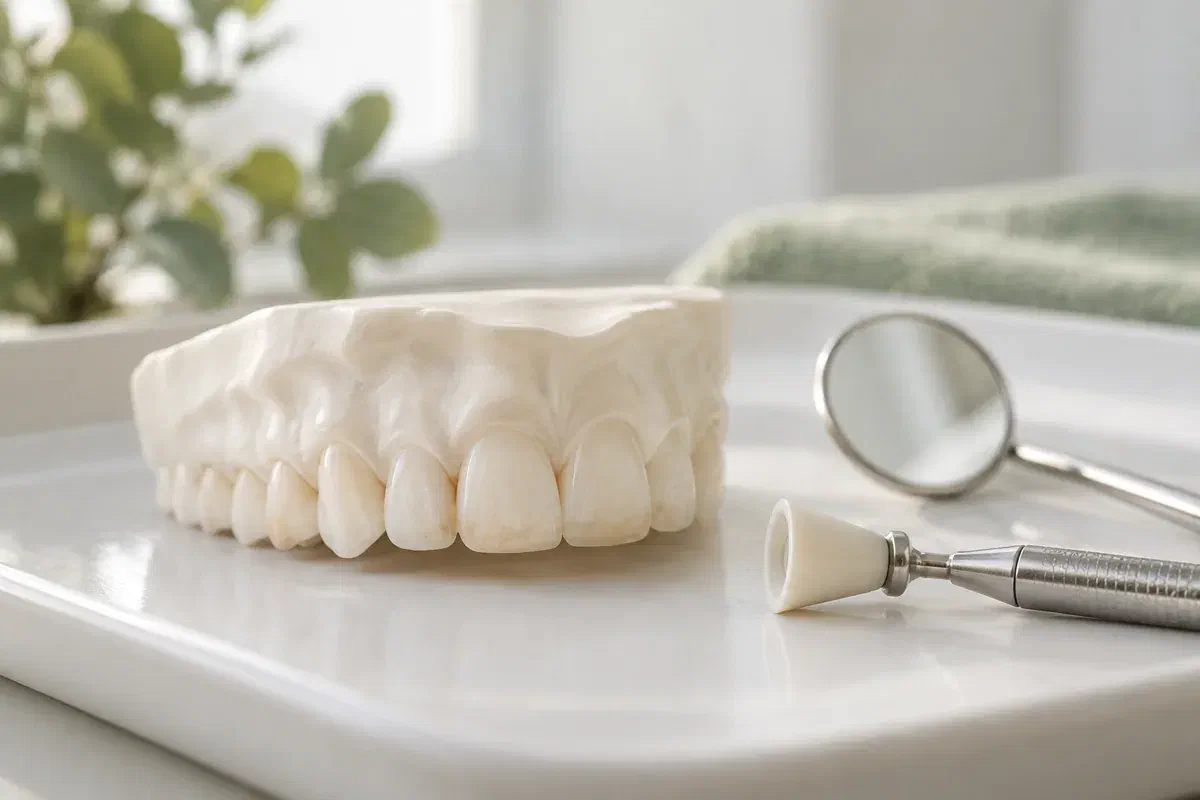
Illustrative teaching model with subtle surface marks beside dental cleaning instruments
Why some marks resist

Not every stubborn spot is a stain.

Note whether the colour is widespread, on one tooth, or around dental work. Share every product you have used recently, along with diet changes and any new sensitivity.

Build-up in grooves and between teeth

Coffee, tea, cola, spices and tobacco can settle where brushing reaches poorly. Talk about these habits freely; the information is useful, not a judgment. The clinician can say how much cleaning is likely to remove and how to keep those spots clearer.

Darker edges at fillings or the gums

Home whitening rarely changes the colour along a restoration or the gumline, and a mark there needs interpreting first. Mention roughness, trapped food or sensitivity in that spot. Cleaning may help a surface stain; a different finding may need the dentist.

One tooth that no product touches

If a single tooth stays darker despite every attempt, mention injuries, a past root canal or a recent change. Colour coming from inside a tooth will not lift from the outside. An examination is a better next step than a stronger kit.

Staining linked to a prescribed rinse or medicine is worth raising with the team. Keep using what was prescribed, and ask the prescriber or the clinic how the treatment and the staining can both be managed.

How professional cleaning differs

Better reach, less guesswork.

A clinician can reach external stains that a brush and paste miss, and a suitable cleaning may improve those surfaces noticeably. Your natural shade does not change, and a few marks may remain. Ask beforehand which spots are likely to respond, especially if you have spent a while trying.

It also gives you a health check on the side effects of your efforts. Gums irritated by scrubbing or enamel worn by abrasive products deserve attention of their own. Ask whether more hygiene care or an examination would be useful for anything noticed.

Patient information: American Dental Association — external and internal tooth discolouration

An end to guessing about the cause

Once you know which marks sit on the enamel, which come from within, and which belong to a filling, the failed products start to make sense. The team can highlight what needs another look. Stubborn colour should not lead straight to bleaching or replacing dental work.

Methods kinder than abrasive home powders

Mention exposed roots, sensitivity, implants, crowns or bonding before the cleaning starts. These shape which instruments and polishing materials are chosen. Suitable care, rather than maximum abrasion, is the goal.

A simpler routine that works

Discuss which habits contribute to staining and which home products are worth keeping. Ask the team to review your brushing and cleaning between teeth. A gentle, steady routine helps gums and enamel as well as appearance.

What happens at the appointment

A clear plan, then a careful clean

This may fit into a hygiene appointment, or an examination may need to happen first. Ask when booking what the visit covers and whether other care is suggested.

  1. Go over the products and the problem

    Show the teeth that concern you and say when they first appeared. List the whitening pastes, charcoal, strips or rinses you have used, and mention sensitivity, smoking and recent dental work.

  2. Work out which marks are removable

    Each stubborn spot gets a proper look, along with nearby fillings and gum tissue. Feel free to ask which ones seem cleanable and which deserve more investigation. Tartar, inflamed gums or signs of a cavity can widen or narrow the plan for the day.

  3. Clean with professional tools and materials

    Instruments and polishing products are matched to your surfaces and findings. Let the clinician know if anything is uncomfortable or you need a short break. Whether air polishing or another method is used depends on the assessment.

  4. Check the result and retire the experiments

    Look at which stains came off and what colour remains. Whatever is left may be your true shade, colour inside a tooth, or a separate finding, so ask which. Agree on a home-care plan and any follow-up, instead of returning to stronger products.

Back to your routine

Fewer products, gentler hands

Follow any specific advice from your visit. Plain, consistent cleaning and a little awareness of what stains your teeth will do more than the next new powder.

Keep only what the team recommends

Twice-daily brushing with fluoride toothpaste, plus the floss or interdental brush you were shown, covers most of the work. Ask whether any whitening product you own is suitable to keep using. Do not attack a remaining mark with harder pressure or a sharp object.

Rethink the habits behind the stain

Ask which changes to drinks, snacks or tobacco would make a difference and which you can sustain. If smoking is part of it, the team can talk about support for its effects on your mouth. Expect some staining to come back over time.

Speak up about lasting colour or sensitivity

If a tooth stays darker or sensitivity does not ease, ask for an assessment instead of another polish. Mention pain, a change in the surface or a filling that feels different. What happens next should depend on the finding.

Patient information: NHS — everyday tooth and interdental cleaning

Beyond the store shelf

What each professional option is for

A shelf product treats every mark the same way; a clinician first asks what kind of colour change it is. From there, each option has a specific job, and sometimes the right first move is simply more information.

For reachable outer stains and deposits

In-clinic cleaning and polishing

This may be all you need when the marks sit on the surface. The clinician can explain what it will not change and whether a fuller hygiene appointment makes sense too. Compare the outcome with your own natural colour, not an advertisement.

When the natural shade is what bothers you

Supervised whitening, discussed separately

If you want lighter teeth than cleaning can give, ask whether bleaching is suitable for you. Crowns and fillings won't lighten with it, and sensitive teeth need extra thought. Whitening and stain removal are different procedures.

When something else is behind the mark

A closer look at a tooth or filling

A lone darker tooth, a changing filling edge or a symptom may need dental investigation. The dentist can explain the findings and whether monitoring, repair or another treatment is appropriate. A mark's appearance alone does not determine the procedure.

Patient information: Canadian Dental Association — surface whiteners and bleaching

Mississauga questions

About home products and stubborn marks

Answers that may help if you have already tried to remove stains yourself.

(905) 876-4488
Is charcoal toothpaste safe for removing stains?
Some charcoal products are quite abrasive and their benefits are not well established. Ask the team before relying on one, especially if you have sensitivity, exposed roots or cosmetic dental work.
Why didn't whitening strips remove the brown spots on my teeth?
Strips are designed to lighten tooth shade, and some spots are deposits, stained fillings, decay or natural features that respond differently. The clinician can identify what the spots are and which approach fits.
Could my sensitivity be caused by the products I have been using?
It is possible, though sensitivity has many causes. Mention every product you have used so the team can check for wear, gum recession or other findings and suggest a gentler routine.
Can stains get stuck between teeth where I can't brush?
Yes, stain and deposits often collect between teeth and in grooves. Professional instruments can reach many of these areas. Ask for advice on floss or interdental brushes to keep them clearer.
Once my teeth are cleaned, should I go back to whitening paste?
Ask the team first. Some whitening toothpastes may be fine for you, while others may be too abrasive for your enamel or restorations. A fluoride toothpaste and good technique are the main priorities.
How do I plan a stain-removal visit from Mississauga around work?
Mention your schedule when you call. The clinic is open Monday to Thursday from 11 a.m. to 7 p.m., with Friday to Sunday by appointment only, and the team can suggest whether one visit is likely to cover it.
Book from Mississauga

Bring the products, and the questions.

Get in touch with our Bronte Street team about the marks that home products have not shifted. We will explain what a hygiene appointment can cover for you, and say so plainly if the dentist ought to see a tooth before any cleaning.

How much changes depends on the cause of each mark and the surfaces involved. We do not promise a set shade, method or device.

Visit Milton Dental Clinic
Unit 1, 342 Bronte St. S, Milton, ON L9T 5B7
Get directions Clinic hours
Monday–Thursday
11am–7pm
Friday–Sunday
By appointment only

Areas we serve

  • Milton
  • Oakville
  • Mississauga
  • Georgetown
  • Halton Hills
  • Acton
  • Campbellville
  • Brampton
  • Burlington
  • Puslinch
  • Rockwood
  • Erin
  • Caledon
  • Etobicoke
  • Old Milton
  • Bronte Meadows
  • Timberlea
  • Dorset Park
  • Dempsey
  • Clarke
  • Beaty
  • Coates
  • Harrison
  • Scott
  • Willmott
  • Ford
  • Bowes
  • Cobden
  • Walker
  • Mountain View
  • Milton Heights
  • Hawthorne Village
  • Valley View
  • Fallingbrook
  • Nassagaweya
  • Trafalgar
  • Esquesing
  • Nelson
  • Brookville
  • Moffat
  • Glen Williams
  • Norval
  • Limehouse
  • Stewarttown
  • Ashgrove
  • Hornby
  • Silver Creek
  • Speyside
  • Scotch Block
  • North Oakville
  • River Oaks
  • Glen Abbey
  • West Oak Trails
  • Palermo
  • Bronte Creek
  • College Park
  • Joshua Creek
  • Uptown Core
  • Preserve
  • Iroquois Ridge
  • Lisgar
  • Meadowvale
  • Meadowvale Village
  • Churchill Meadows
  • Erin Mills
  • Central Erin Mills
  • Streetsville
  • East Credit
  • Creditview
  • Heartland
  • Sheridan
  • Mount Pleasant
  • Credit Valley
  • Huttonville
  • Churchville
  • Springbrook
  • Northwest Brampton
  • Bram West
  • Fletcher's Meadow
  • Fletcher's Creek South
  • Alton Village
  • Orchard
  • Millcroft
  • Headon Forest
  • Tansley
  • Brant Hills
  • Tyandaga
  • Kilbride
  • Lowville
  • Aberfoyle
  • Morriston
  • Arkell
  • Hillsburgh
  • Freelton
  • Carlisle
  • Waterdown
  • Flamborough
  • Mountsberg

How can we help?

Milton Dental Clinic

Have a question about your smile? Choose the option that works best for you.

For urgent dental concerns, please call.
Messages are reviewed during clinic hours.