

Illustrative patient discussing surface staining with a dental hygiene clinician
Cosmetic Dentistry

Professional Stain Removal in Rockwood

Natural teeth are rarely pure white, and a cleaning is not meant to make them so. Before travelling from Rockwood for professional stain removal, it helps to know the difference between removing surface marks and changing your tooth's own shade, so the result you see matches the one you were hoping for.

Rockwood stain removal

Clean is not the same as white.

Advertising has taught most of us to picture teeth as bright, even white. Real teeth come in a range of ivory, cream and grey tones, and many have slightly darker edges or necks. Professional stain removal clears suitable marks from the outer surface so your own shade shows through. It does not bleach that shade, and it does not treat a concern within a tooth.

So the useful question is: how much of what you dislike is stain? Coffee, tea, red wine and tobacco often leave external film that cleans up. A deeper tone could simply be your natural colour; a dark spot could be decay or an older filling; one greying tooth may reflect a change inside it.

It is perfectly fine to bring a photo or simply say how you would like your smile to look, and then point to the areas that bother you. From there, we can talk through which marks should come away, roughly what your natural shade may look like underneath, and whether whitening or a dental examination is worth discussing. Clear expectations make for a more satisfying visit.

Find out what cleaning can show
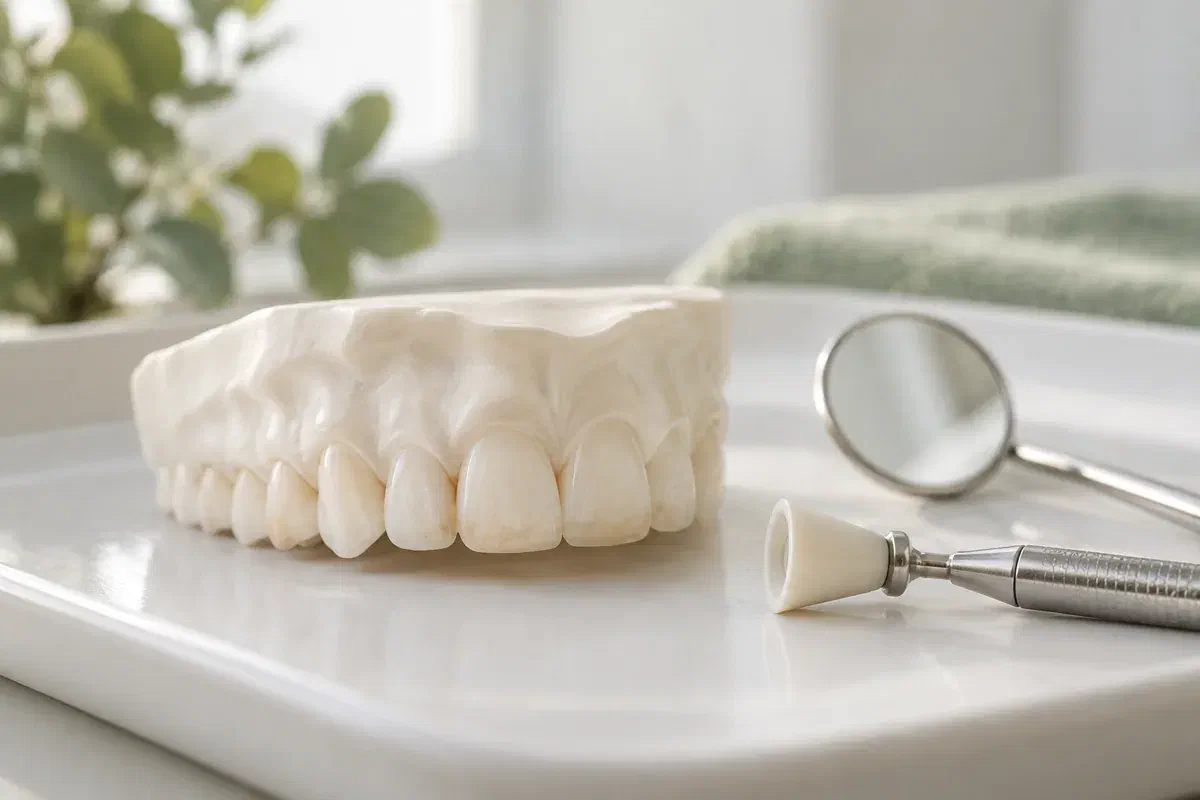
Illustrative teaching model with subtle surface marks beside dental cleaning instruments
Stain or shade?

A few patterns help answer the question.

Mention whether the colour is even across the teeth, limited to one, or clustered near fillings and the gums. Any new products, medicines or symptoms are worth noting too.

Film or spots from what you drink

Surface staining often looks patchy, collects between teeth, or sits near the gumline. Tell the clinician about tea, coffee, wine or tobacco without hesitation. They can confirm whether this looks external and how much may come off.

Colour clustered at fillings or gums

Darker areas at a restoration or along the gums can be stain, an exposed root, a worn margin or early decay. Mention roughness, sensitivity or food trapping there. The clinician will decide whether polishing is suitable or the dentist should look first.

A tooth noticeably darker than the rest

One tooth standing out is less likely to be general staining. Share any injury, root canal treatment or recent change. Internal colour will not lift with surface cleaning, so ask what examination is needed.

Some prescribed rinses and medicines can leave surface stain. Mention any you use. Please carry on with a prescription and ask the prescriber or dental team for guidance, rather than stopping it yourself.

What the visit can realistically offer

Your own colour, without the film

When external stain is the issue, a suitable cleaning can make surfaces look noticeably fresher. Your natural shade, whatever it is, will be what shows afterward. Ask beforehand which parts of your concern are stain and which are shade, so the result is not a surprise.

Looking cleaner is not the same as being healthy, either. Gum inflammation or a small cavity can sit beside a bright surface. Ask whether an examination or more hygiene care would help with anything else the team notices.

Patient information: American Dental Association — external and internal tooth discolouration

An honest read on your natural shade

Once surface stain is gone, it is easier to see what colour your teeth really are. The team can explain what is stain, what is internal and what relates to restorations. That understanding makes any whitening decision a calmer one.

A gentle, suitable cleaning

Let the clinician know about tender areas, root surfaces showing above the gums, implants, crowns or bonding. These guide which tools and polishing products are used. The aim is appropriate care rather than force.

Habits that keep your shade looking its best

Talk about which drinks or habits seem to matter and which adjustments you are willing to make. Ask for a quick check of your brushing and between-teeth cleaning. A steady routine supports gums and appearance.

During your appointment

Expectations first, polishing second

For many people this happens within a routine hygiene appointment; for others the dentist will want to examine first. When you book, ask which applies and what the time will cover.

  1. Describe the result you hope for

    Tell the clinician what you would like to change and how long the colour has bothered you. Mention sensitivity, rinses, toothpaste, tobacco and recent dental work. Say if you have tried whitening or gritty products.

  2. Separate stain from natural shade

    The clinician looks at the teeth, restorations and gums relevant to your concern. Ask which marks seem removable and which are part of the tooth. Tartar, gum changes or possible decay can alter the plan.

  3. Remove what can be removed

    Instruments and polishing materials are chosen to suit your surfaces. You can ask for a break at any time. The clinician decides on a technique, such as air polishing, after the assessment.

  4. See your natural colour and decide

    Review which stains lifted and what you now see. Ask whether the remaining tone is natural, internal or related to dental work. Agree on maintenance, and on whether a whitening conversation makes sense, rather than more polishing.

Afterward

Keep the film from coming back.

Follow any instructions from your visit. A good daily routine and attention to staining habits work better than abrasive products or harder scrubbing.

Stay with the recommended routine

Brush with a fluoride toothpaste and clean between teeth as advised. Ask for help with any hard-to-reach spot. Pressing harder or scraping won't change your natural shade and may harm enamel or gums.

Rethink a staining habit or two

Ask whether rinsing after coffee or tea, or reducing tobacco, would help, and which change you could keep up. Support is available if you want to cut back on smoking. Expect a little staining to return over time.

Ask about colour that bothers you later

If a tooth looks darker over time or sensitivity develops, ask for an assessment instead of more polishing. Mention pain, roughness or a filling that feels different. Next steps should depend on what is found.

Patient information: NHS — everyday tooth and interdental cleaning

If you want more than clean

Three paths, depending on what you see

Ask whether your concern is stain, shade or something else, and what each option can reasonably achieve. Some situations need more information before choosing.

To remove outer stain

Professional cleaning or polishing

A cleaning may be enough if the colour you dislike is mostly surface stain. Ask what it will not change and whether broader hygiene care is recommended. Expect your natural shade, not a bleached one.

If your natural shade is still the concern

Whitening after the cleaning

Once stain is removed, you may decide your shade is fine, or you may want it lighter. Ask about bleaching suitability, including how existing fillings or crowns and any sensitivity would be affected. It is a separate procedure.

When something else explains the colour

Examining a tooth or restoration

One darker tooth, a changing filling margin or a symptom may need investigation. The dentist can describe what is found and suggest monitoring, repair or another option. A mark's appearance alone does not choose the treatment.

Patient information: Canadian Dental Association — surface whiteners and bleaching

Rockwood questions

Shade, stain and realistic results

Answers that may help you set expectations before a visit about tooth colour.

(905) 876-4488
What colour are natural teeth supposed to be?
There is no single correct shade. Healthy natural teeth range from light ivory to deeper cream or grey tones, and colour can vary between teeth and along each one.
Why do my teeth look more yellow as I get older?
Teeth can gradually look darker or more yellow with age, and stain can build up too. A cleaning can show how much is surface stain. The rest is usually part of the tooth’s natural shade.
How will I know if I need whitening after stain removal?
See how you feel about your teeth once surface stain is gone. If you would still like them lighter, ask whether whitening suits you. For some people, the cleaning turns out to be enough.
Can the hygienist show me my natural shade before and after?
Ask the team. They can point out what has changed and discuss the colour that remains. Some clinics use a shade guide to help with that conversation.
Do the edges of my front teeth look grey because of stain?
Not usually. Biting edges are often more translucent than the rest of the tooth and can look slightly grey or bluish, especially against a dark background. The clinician can tell you whether there is also some stain present and what a cleaning would change.
Is it worth the trip from Rockwood if I mostly want whiter teeth?
A stain-removal visit can show how much of the colour is surface stain, which helps you decide whether whitening is needed. Mention your goal when you call so the team can plan accordingly.
Booking from Rockwood

Start with clean, then decide about white.

Give our Bronte Street practice a call and tell us what you would like your teeth to look like. We can explain what a hygiene visit can lift, and whether whitening or an examination should be part of the conversation.

The outcome rests on your natural shade, your tooth surfaces and what caused the colour, so we cannot guarantee a target shade or commit to a specific device.

Visit Milton Dental Clinic
Unit 1, 342 Bronte St. S, Milton, ON L9T 5B7
Get directions Clinic hours
Monday–Thursday
11am–7pm
Friday–Sunday
By appointment only

Areas we serve

  • Milton
  • Oakville
  • Mississauga
  • Georgetown
  • Halton Hills
  • Acton
  • Campbellville
  • Brampton
  • Burlington
  • Puslinch
  • Rockwood
  • Erin
  • Caledon
  • Etobicoke
  • Old Milton
  • Bronte Meadows
  • Timberlea
  • Dorset Park
  • Dempsey
  • Clarke
  • Beaty
  • Coates
  • Harrison
  • Scott
  • Willmott
  • Ford
  • Bowes
  • Cobden
  • Walker
  • Mountain View
  • Milton Heights
  • Hawthorne Village
  • Valley View
  • Fallingbrook
  • Nassagaweya
  • Trafalgar
  • Esquesing
  • Nelson
  • Brookville
  • Moffat
  • Glen Williams
  • Norval
  • Limehouse
  • Stewarttown
  • Ashgrove
  • Hornby
  • Silver Creek
  • Speyside
  • Scotch Block
  • North Oakville
  • River Oaks
  • Glen Abbey
  • West Oak Trails
  • Palermo
  • Bronte Creek
  • College Park
  • Joshua Creek
  • Uptown Core
  • Preserve
  • Iroquois Ridge
  • Lisgar
  • Meadowvale
  • Meadowvale Village
  • Churchill Meadows
  • Erin Mills
  • Central Erin Mills
  • Streetsville
  • East Credit
  • Creditview
  • Heartland
  • Sheridan
  • Mount Pleasant
  • Credit Valley
  • Huttonville
  • Churchville
  • Springbrook
  • Northwest Brampton
  • Bram West
  • Fletcher's Meadow
  • Fletcher's Creek South
  • Alton Village
  • Orchard
  • Millcroft
  • Headon Forest
  • Tansley
  • Brant Hills
  • Tyandaga
  • Kilbride
  • Lowville
  • Aberfoyle
  • Morriston
  • Arkell
  • Hillsburgh
  • Freelton
  • Carlisle
  • Waterdown
  • Flamborough
  • Mountsberg

How can we help?

Milton Dental Clinic

Have a question about your smile? Choose the option that works best for you.

For urgent dental concerns, please call.
Messages are reviewed during clinic hours.