

Illustrative patient and clinician discussing a tooth shade guide
Cosmetic Dentistry

Professional Teeth Whitening

A brighter smile begins with understanding the colour of your teeth and what treatment can change. Discuss professional teeth whitening in Milton to review suitability, sensitivity, existing restorations, realistic expectations, and the instructions for a supervised approach.

A closer look at professional teeth whitening

Understand your starting shade before choosing how to change it.

Professional teeth whitening involves a dental assessment and a suitable bleaching approach intended to lighten natural teeth. It is different from polishing external stains away. The cause of the colour change, oral-health findings, and the result you hope for all matter when considering whether bleaching is appropriate.

Natural teeth vary in shade, and whitening does not produce the same change for everyone. Fillings, crowns, and veneers do not lighten in the same way as natural teeth. A plan should consider those restorations and any existing sensitivity before you begin.

At Milton Dental Clinic, bring your questions about colour and any products you have already used. We can discuss the assessment, available approaches, and limits of a proposed treatment. You should understand the instructions and possible side effects before choosing an elective change.

Discuss professional whitening
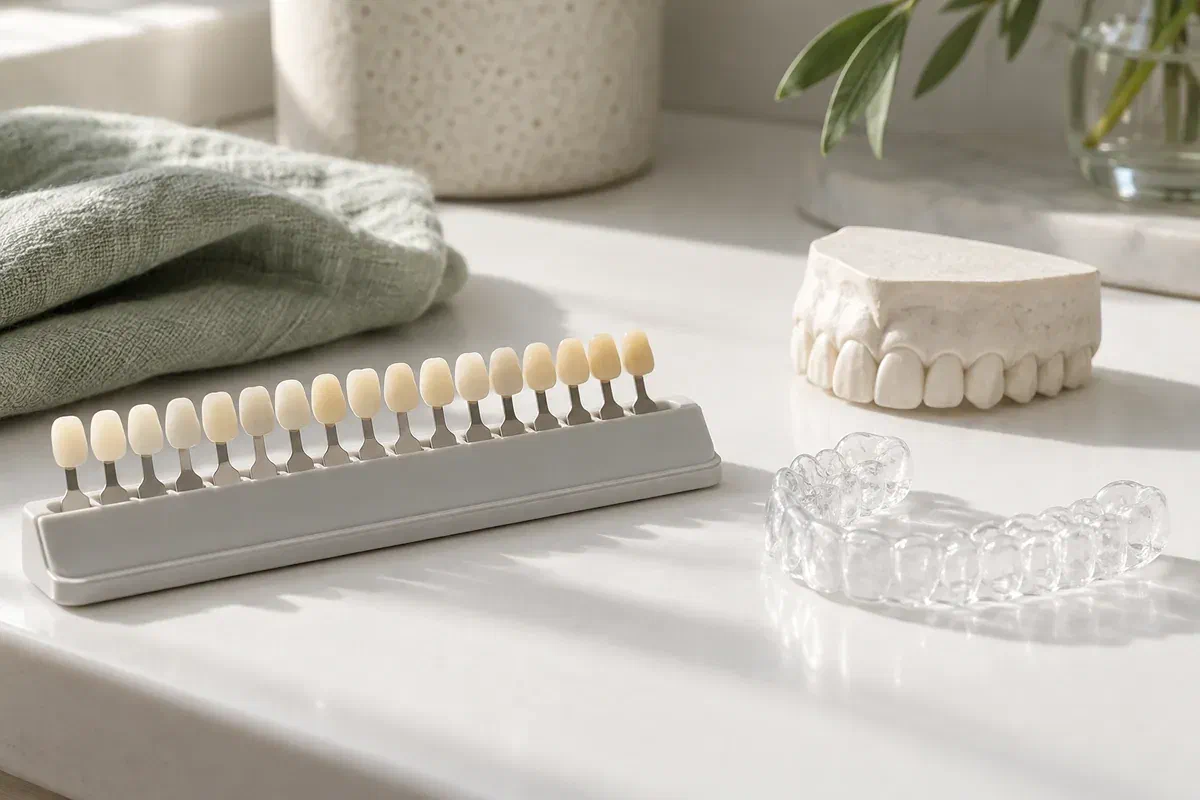
Illustrative natural tooth shade samples, a clear dental tray, and tooth model
What to review before bleaching

Tooth colour is only one part of the assessment.

Tell the clinician what you want changed and what you have noticed about comfort, restorations, or earlier whitening. These details help guide the suitability discussion.

Sensitivity or an untreated dental concern

Mention cold sensitivity, pain, exposed root areas, or a tooth that feels different. The cause should be considered before whitening is chosen. Ask whether another dental issue needs attention first and what the proposed plan would do to manage sensitivity.

Visible fillings, crowns, or veneers

Point out existing dental work, particularly in the visible smile. Ask how its colour relates to the natural teeth and whether whitening could make a difference more noticeable. Any later restorative work should be discussed separately rather than assumed to be necessary.

A specific shade or deadline in mind

Explain the event, photograph, or example behind your expectations. Ask what is realistic for your starting colour and proposed method. A treatment plan should not promise an exact number of shades or a result by a fixed date without acknowledging uncertainty.

A single tooth that has darkened after an injury or root canal treatment may need a different assessment from general smile whitening. Mention that history before using a whole-mouth bleaching product.

What a supervised whitening discussion provides

Make an appearance decision with the limits and responsibilities understood.

The benefit of a professional discussion is not just access to a whitening product. It is the opportunity to understand the cause of discolouration, whether the teeth and gums are suitable for treatment, and what the selected approach can reasonably address.

Supervision also gives you a clear route for questions during care. Ask what to do if sensitivity, irritation, or an uneven appearance concerns you. The response should follow the product and your findings rather than an improvised change in strength or wear time.

A baseline and an achievable goal

Discuss the current colour and the change you would consider worthwhile. Ask how progress will be reviewed and when the result should be assessed. A natural variation between teeth may remain even when the treatment has produced a noticeable improvement.

Instructions matched to the proposed method

Ask which approach is being recommended, why it suits your situation, and what appointments are involved. Confirm that you understand application, timing, storage, and follow-up where relevant. Do not infer the instructions from a product you used previously.

An opportunity to coordinate other cosmetic care

If you are also considering bonding or a replacement restoration, discuss the sequence before either treatment starts. Ask when shade selection should occur and whether the plan may change after whitening. Coordination can help avoid making separate decisions without considering their relationship.

How professional whitening can be planned

Assess suitability, explain the method, and review the response.

The steps depend on the approach actually offered and your dental findings. Ask about appointment scope, fees, and what is included before treatment is arranged.

  1. Discuss the colour concern and relevant history

    Explain what you want to change, previous whitening attempts, and any reactions. Review relevant health information, medicines, and dental work. Mention pregnancy or breastfeeding and ask whether elective whitening should be deferred rather than assuming a product is appropriate.

  2. Examine the teeth, gums, and existing restorations

    The clinician assesses the cause of discolouration and whether other care is needed first. Discuss sensitivity and any limitations from visible restorations. Ask whether cleaning alone may address the concern or whether a separate tooth requires further investigation.

  3. Agree on a suitable approach and its instructions

    Review the proposed treatment, expected range of response, possible side effects, and alternatives. If take-home trays are recommended, ask about fit and demonstration. If an in-office method is proposed, confirm what it involves; no laser or particular system should be assumed.

  4. Review progress and decide whether any further step is needed

    Report concerns during the agreed course and attend the review recommended for you. Discuss the result before adding more treatment. If a restoration now contrasts with the teeth, assess its condition and the options rather than automatically replacing it.

During and after whitening

Follow the prescribed course and ask before doing more.

Whitening is not improved simply by using more product or repeating applications more often. Keep the specific instructions and contact details available throughout the course.

Stay within the instructions for your product

Use only the amount, schedule, and handling method you were given. Do not combine systems or extend treatment to chase a particular shade without advice. If trays or supplies are damaged or instructions are unclear, contact the team before continuing.

Report sensitivity or tissue irritation

Temporary sensitivity or gum irritation can occur. Ask what response is appropriate for your product and symptoms, including whether to pause and seek review. Significant or persistent pain should not be treated as a necessary price of whitening.

Discuss maintenance rather than assuming permanence

Colour can change again over time. Keep routine dental care and ask about factors that may affect the appearance. Any repeat course should be considered with current dental findings and the product instructions, not simply copied from the original schedule indefinitely.

Patient information: American Dental Association — whitening effects and adverse reactions

Choosing a response to tooth colour

Whitening is one option within a wider assessment.

The suitable approach depends on the cause of the colour change and your oral health. Ask why the recommendation fits your findings and what alternatives would mean.

When natural tooth colour can appropriately be lightened

A suitable supervised bleaching approach

A dentist-supervised take-home or in-office option may be discussed, depending on suitability and availability. Review its instructions, limits, and side effects. The method should be selected for your situation rather than on a promise of the whitest possible result.

When external staining contributes to the concern

Surface cleaning before a bleaching decision

Professional cleaning may address suitable surface marks without changing the underlying tooth shade. Ask whether it is sensible to review the appearance afterward before deciding on bleaching. Cleaning and whitening have different purposes.

When bleaching does not address the main issue

Another assessment, restorative discussion, or no elective change

A restoration, a dark single tooth, or a developmental colour difference may need a different discussion. Ask about the implications and maintenance of any alternative. You may also decide to keep a healthy natural shade after understanding what treatment would involve.

Professional teeth-whitening questions

Ask about your teeth rather than a promised shade.

A consultation can help you compare the result you hope for with the findings and practical limits of a proposed course.

(905) 876-4488
Can professional whitening make my existing crowns match lighter natural teeth?
Crowns do not bleach in the same way as natural teeth. Discuss visible restorations before starting so you understand the possible contrast afterward. Any proposal to change a crown should consider its condition and the implications separately.
Should I whiten before choosing the shade of new cosmetic bonding?
Ask the clinician to coordinate the sequence. Bleaching natural teeth can affect the shade being matched, while existing composite does not lighten in the same way. The timing of shade assessment and bonding should be part of your individual plan.
Does professional teeth whitening always require a laser?
No. Different supervised approaches exist, including dentist-supplied take-home treatment. Ask which method is actually offered and appropriate, what it involves, and why it is recommended. Do not assume a particular device is necessary or available.
Can I continue whitening longer if the first change is less than I hoped?
Do not extend the course or increase product use independently. Arrange the review recommended for you and discuss the response, sensitivity, and limits. Further whitening may not be the right way to address the remaining colour concern.
What should I mention if whitening strips made my teeth hurt before?
Tell the clinician which product you used, how you used it, and what the symptoms were. Existing sensitivity needs consideration before another course. Ask what assessment and precautions are appropriate rather than assuming a professional product cannot cause discomfort.
Can professional whitening guarantee every tooth reaches the same shade?
No. Starting colour, the cause of discolouration, natural variations, and restorations can affect the appearance. Ask what change is realistic and how the result will be reviewed. An exact uniform shade should not be assumed.
Professional teeth whitening in Milton

Bring your expectations and make the colour decision with clear information.

Arrange a whitening discussion at our Bronte Street practice to review suitability, existing dental work, sensitivity, and available approaches. We can explain what needs assessment before you begin.

Results vary and are not permanent. Suitability, method, fees, and any need to defer treatment require individual assessment.

Visit Milton Dental Clinic
Unit 1, 342 Bronte St. S, Milton, ON L9T 5B7
Get directions Clinic hours
Monday–Thursday
11am–7pm
Friday–Sunday
By appointment only

How can we help?

Milton Dental Clinic

Have a question about your smile? Choose the option that works best for you.

For urgent dental concerns, please call.
Messages are reviewed during clinic hours.