

Illustrative patient and clinician discussing a tooth shade guide
Cosmetic Dentistry

Professional Teeth Whitening in Milton

Years of morning coffee can leave teeth looking duller than you remember. Talk with our Milton team about whether that change is surface stain or deeper shade, and whether a supervised whitening course suits your teeth, gums and existing dental work.

Stain or shade?

Start by finding out what kind of colour change you have.

Most people notice it slowly: an old photo shows a brighter smile than the mirror does today. Part of that change may be surface stain from coffee or tea, and part may be the colour of the tooth itself. Professional whitening means a dentist-supervised bleaching approach aimed at lightening natural teeth, which is not the same as polishing stain away.

Teeth start from different shades and respond differently, so two people using the same method can end up with different results. Crowns, veneers and fillings keep their own colour while natural teeth change around them. Any sensitivity you already have also needs to be part of the plan.

For your appointment in Milton, mention the products you have tried and what you hope to see. We can talk through the assessment, the approaches available and where their limits lie, so the instructions and possible side effects are clear before you decide.

Ask whether whitening suits you
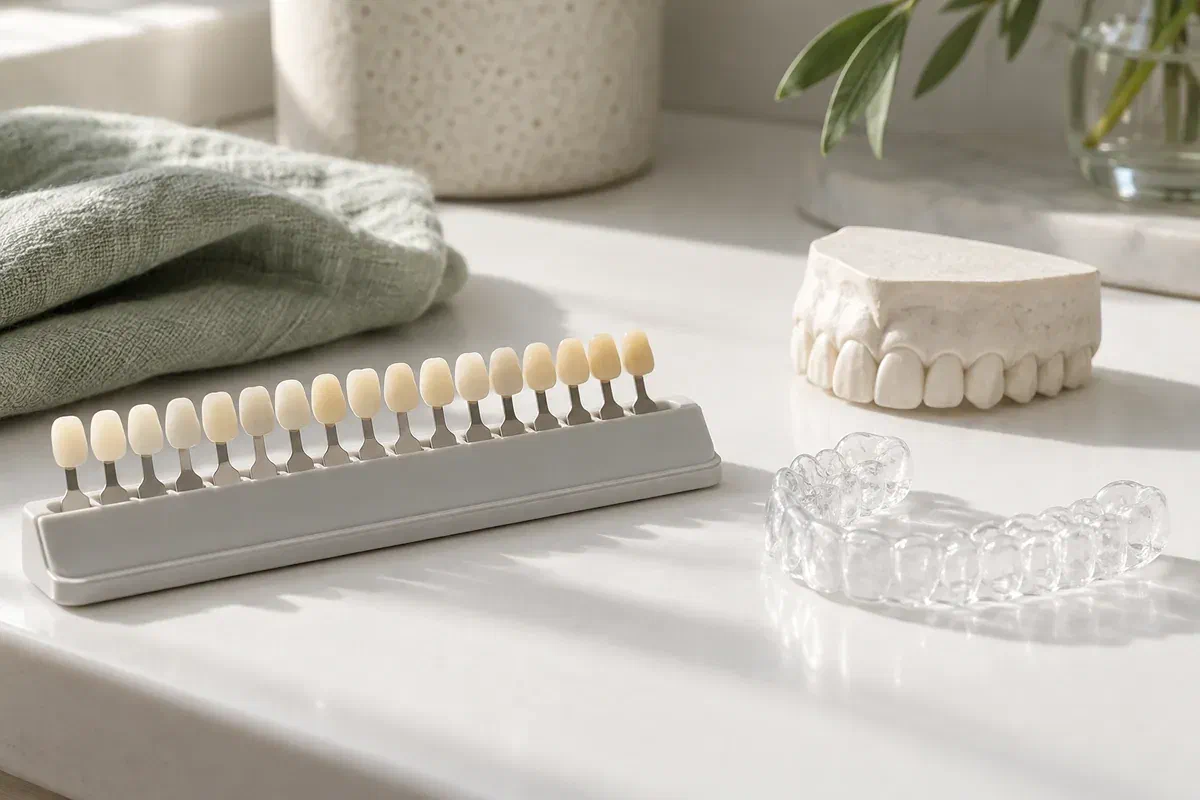
Illustrative natural tooth shade samples, a clear dental tray, and tooth model
Before any bleaching starts

A colour goal is the beginning of the conversation, not the whole of it.

Share what bothers you about the colour, how your teeth feel day to day, and any earlier whitening. Those details shape whether bleaching is a sensible next step.

Teeth that already feel sensitive

Cold twinges, aching, a tooth that feels different or gums that have pulled back from the roots are worth raising early. Their cause should be understood before whitening is considered. Ask whether something else needs treatment first and how the plan would handle sensitivity.

Dental work in the front of your smile

Fillings, crowns and veneers that show when you smile matter here. Ask how their colour compares with your natural teeth now and how that might look after bleaching. Replacing any of them is a separate decision and should not be assumed.

A picture of the result you want

If a wedding, a photo or a particular shade is driving the request, say so. Ask what change is realistic from your starting colour with the method proposed. No honest plan can promise a set number of shades or a finished result by a fixed date.

One tooth that turned darker after a knock or a root canal is usually assessed differently from a whole-smile concern. Tell us about that history before trying a general whitening product.

Why supervision matters

You get more than a product. You get the reasons behind it.

A professional route gives you an explanation as well as a whitening agent. It looks at what caused the discolouration, whether your teeth and gums are ready for treatment, and what the chosen method can realistically change in your case.

It also gives you someone to call while the course is underway. If sensitivity, gum irritation or patchy-looking results worry you, ask what to do. The answer should come from your product’s instructions and your findings, not from guessing at a stronger gel or longer wear.

A clear starting point

Record today’s shade and agree on what change would feel worthwhile to you. Ask how progress will be checked and when to judge the outcome. Some natural variation from tooth to tooth often remains, even after a visible improvement.

Instructions written for your method

Find out which approach is recommended, why it fits, and how many appointments it involves. Make sure you understand how to apply it, for how long, how to store it and when to follow up. Directions from a product you used before may not apply.

Room to plan other cosmetic work

Thinking about bonding or replacing a visible crown as well? Talk about the order before starting either. Ask when the shade should be chosen and whether plans could shift once whitening is done, so the decisions support each other.

From first visit to follow-up

Four steps, each with room for your questions.

What happens depends on the method we actually offer and what we find. Ask about appointment scope, fees and what is included before anything is booked.

  1. Talk through your colour history

    Describe the change you want, past whitening and any reaction you had. Share relevant health information, medicines and dental treatment. If you are pregnant or breastfeeding, raise it and ask whether an elective cosmetic course should wait.

  2. Check teeth, gums and restorations

    The clinician looks for the cause of the colour change and anything that should be treated first. Sensitivity and visible dental work are discussed. Ask whether a cleaning on its own might be enough, or whether one tooth needs a closer look.

  3. Choose an approach and learn how it works

    Go over the proposed treatment, the likely range of response, possible side effects and alternatives. For take-home trays, ask about fit and a demonstration. For an in-office option, confirm exactly what it involves rather than assuming a laser or special system.

  4. Review the result before doing more

    Raise concerns during the course and keep the review appointment suggested for you. Talk about the outcome before adding treatment. If a crown or filling now stands out, have its condition assessed and the options explained instead of replacing it automatically.

While the course runs

More gel is not the same as a better result.

Whitening does not improve because you use extra product or apply it more often. Keep your instructions and our contact details handy for the whole course.

Use only what you were given

Follow the amount, timing and handling you were shown. Avoid mixing systems or stretching the course to chase a shade without advice. If a tray cracks, supplies run short or a step is unclear, check with the team before you carry on.

Speak up about sensitivity or sore gums

Short-lived sensitivity or gum irritation can happen. Ask what to do for your product and symptoms, including when to pause and come in for review. Strong or lasting pain is not something you should simply put up with to get whiter teeth.

Plan for colour to shift again

Teeth can gradually pick up colour again, so whitening is not permanent. Keep up routine dental care and ask what affects the appearance of your teeth. A repeat course should rest on current findings and instructions, not a rerun of the first one.

Patient information: American Dental Association — whitening effects and adverse reactions

Other ways to respond to colour

Bleaching sits alongside a few other choices.

The right response depends on why the colour has changed and on your oral health. Ask how a recommendation fits your findings and what the alternatives would involve.

When natural colour can sensibly be lightened

Supervised bleaching, at home or in the chair

Depending on suitability and what is available, a dentist-supervised take-home or in-office method may be suggested. Go over its instructions, limits and side effects. It should be chosen to fit you, not because it promises the brightest finish.

When surface stain is part of the picture

A professional cleaning first

Cleaning can lift suitable surface marks without changing the tooth’s underlying shade. Ask whether it makes sense to see how your teeth look afterwards before deciding on bleaching. The two treatments do different jobs.

When bleaching is not the answer

A different path, or leaving things as they are

A visible restoration, one dark tooth or a colour difference present since the teeth developed may call for another conversation. Ask what each alternative involves and how it is maintained. Keeping your healthy natural shade is a reasonable choice too.

Questions we hear about whitening

Straight answers about colour, comfort and timing.

These answers are general. A consultation compares what you hope for with what your teeth show and what a course can realistically do.

(905) 876-4488
Will cutting back on coffee keep my teeth whiter after treatment?
Coffee, tea and similar drinks can add surface stain over time, so habits do play a part. Ask which factors matter most for your teeth. Routine dental care and regular cleanings help, though colour may still change gradually.
Is whitening toothpaste the same as professional whitening?
No. Whitening toothpastes mainly work on surface stain, while professional whitening uses a bleaching product to lighten the tooth itself under a dentist’s supervision. Ask which approach fits the type of discolouration you have.
Should I have a cleaning before deciding on whitening?
It is often worth asking. If surface stain is part of the concern, a cleaning may change the appearance enough to help you decide. The clinician can tell you whether reviewing your teeth afterwards makes sense.
My front crown is already lighter than my teeth. Could whitening help with that?
Bleaching lightens natural teeth, not crowns. Whitening the teeth around a lighter crown may change how the two compare, but the outcome varies. Ask the clinician to look at the crown’s condition and shade before you decide.
How long does a whitening result usually last?
It varies from person to person and is not permanent. Diet, habits and your natural tooth colour all play a role. Ask about maintenance at your review, and base any future course on fresh findings rather than a fixed schedule.
Can you promise how many shades lighter I will get?
No one can promise an exact number. Your starting colour, the cause of discolouration and any restorations affect the result. Ask what range is realistic for your teeth and how the outcome will be reviewed.
Whitening consultations in Milton

Find out what your teeth can do before you commit.

Book a whitening discussion at our Bronte Street practice in Milton. We will look at suitability, existing dental work and sensitivity, explain the approaches available, and tell you what needs checking before you begin.

Whitening results vary and fade over time. Suitability, method, fees and any reason to wait are decided after an individual assessment.

Visit Milton Dental Clinic
Unit 1, 342 Bronte St. S, Milton, ON L9T 5B7
Get directions Clinic hours
Monday–Thursday
11am–7pm
Friday–Sunday
By appointment only

Areas we serve

  • Milton
  • Oakville
  • Mississauga
  • Georgetown
  • Halton Hills
  • Acton
  • Campbellville
  • Brampton
  • Burlington
  • Puslinch
  • Rockwood
  • Erin
  • Caledon
  • Etobicoke
  • Old Milton
  • Bronte Meadows
  • Timberlea
  • Dorset Park
  • Dempsey
  • Clarke
  • Beaty
  • Coates
  • Harrison
  • Scott
  • Willmott
  • Ford
  • Bowes
  • Cobden
  • Walker
  • Mountain View
  • Milton Heights
  • Hawthorne Village
  • Valley View
  • Fallingbrook
  • Nassagaweya
  • Trafalgar
  • Esquesing
  • Nelson
  • Brookville
  • Moffat
  • Glen Williams
  • Norval
  • Limehouse
  • Stewarttown
  • Ashgrove
  • Hornby
  • Silver Creek
  • Speyside
  • Scotch Block
  • North Oakville
  • River Oaks
  • Glen Abbey
  • West Oak Trails
  • Palermo
  • Bronte Creek
  • College Park
  • Joshua Creek
  • Uptown Core
  • Preserve
  • Iroquois Ridge
  • Lisgar
  • Meadowvale
  • Meadowvale Village
  • Churchill Meadows
  • Erin Mills
  • Central Erin Mills
  • Streetsville
  • East Credit
  • Creditview
  • Heartland
  • Sheridan
  • Mount Pleasant
  • Credit Valley
  • Huttonville
  • Churchville
  • Springbrook
  • Northwest Brampton
  • Bram West
  • Fletcher's Meadow
  • Fletcher's Creek South
  • Alton Village
  • Orchard
  • Millcroft
  • Headon Forest
  • Tansley
  • Brant Hills
  • Tyandaga
  • Kilbride
  • Lowville
  • Aberfoyle
  • Morriston
  • Arkell
  • Hillsburgh
  • Freelton
  • Carlisle
  • Waterdown
  • Flamborough
  • Mountsberg

How can we help?

Milton Dental Clinic

Have a question about your smile? Choose the option that works best for you.

For urgent dental concerns, please call.
Messages are reviewed during clinic hours.