

Illustrative patient and clinician discussing a tooth shade guide
Cosmetic Dentistry

Professional Teeth Whitening in Puslinch

Wanting whiter teeth is one question. Whether this is a good moment for it is another. If you are coming from Puslinch, a whitening assessment can look at your health, any dental care in progress and your routine before a supervised course is planned.

Timing matters

Is this the right moment to whiten?

Because whitening is elective, there is rarely a reason to rush it. Professional whitening is a bleaching approach supervised by a dentist, intended to lighten natural teeth after an assessment of whether that is appropriate. It is not the same as a polish, which deals only with stain on the surface. Sometimes the assessment shows that waiting is the better plan.

Several things can tip that balance. A tooth that needs treatment, existing sensitivity, pregnancy or a change in health may all suggest holding off. Teeth also respond differently from person to person, and crowns or fillings keep their colour regardless.

If you are travelling from Puslinch, bring a list of medicines and any dental work you are part-way through, along with products you have used. We can explain the assessment, the approaches we offer and their limits, so the instructions and side effects are clear before you decide when, or whether, to start.

Ask whether now is a good time
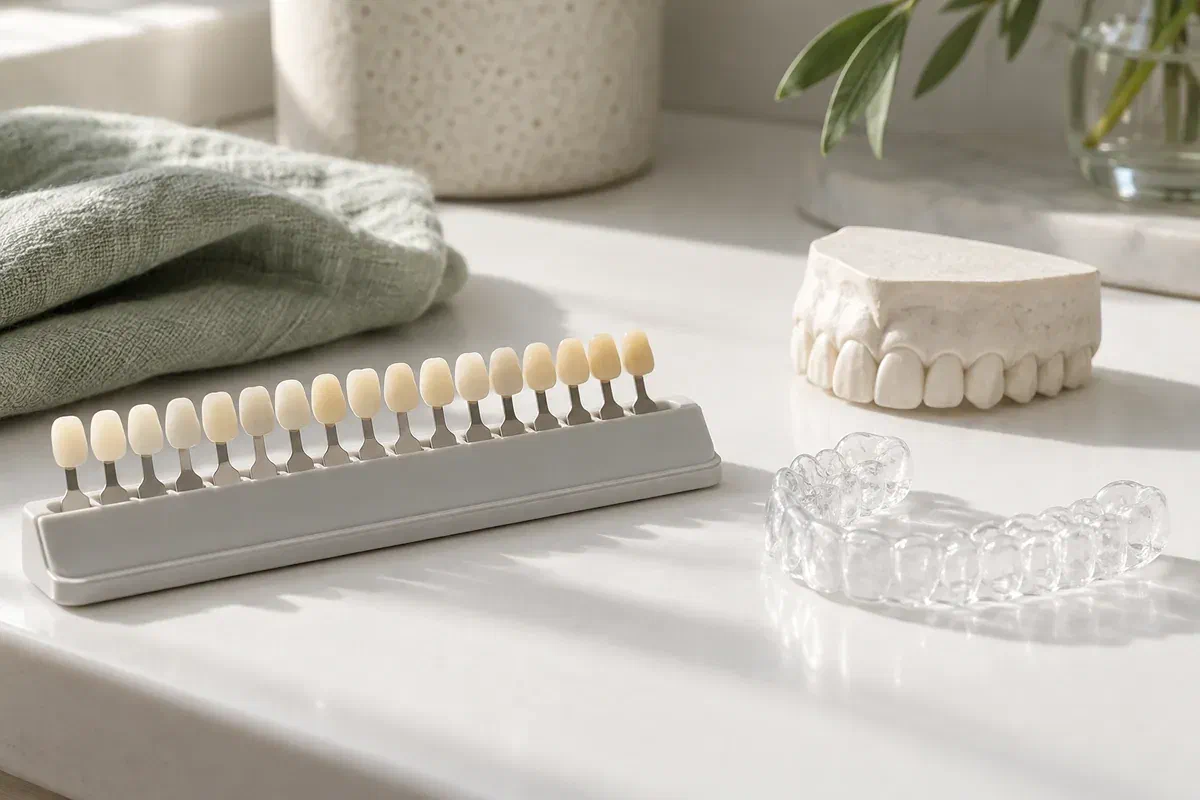
Illustrative natural tooth shade samples, a clear dental tray, and tooth model
Reasons to pause and check

Some things should be sorted out before whitening.

Share what you want to change and anything about comfort, health, restorations or earlier whitening. The answers help decide not only whether to whiten but when.

Sensitivity or dental care still underway

Cold sensitivity, pain, exposed roots or a tooth waiting for treatment are worth raising first. The underlying cause should be dealt with before a cosmetic course. Ask whether anything needs finishing and how sensitivity would be managed later.

Restorations you may replace soon

If a visible crown or filling is already due for attention, the timing of whitening affects how it is matched. Ask how your restorations compare with your teeth now. Replacement is a separate decision that should not be presumed.

An event that makes you want to hurry

A deadline can push people to start before they are ready. Share it anyway, and ask what is realistic from your starting colour. A plan should not promise a certain number of shades or a result by a fixed date.

A single tooth that has darkened after an injury or root canal treatment may need investigating before any cosmetic step. Mention it before using a whitening product on your whole smile.

What a careful start offers

Permission to wait, and a plan for when you’re ready

A supervised approach includes the option of not starting yet. An assessment considers the cause of your discolouration, whether teeth and gums are in a suitable state for bleaching, and what the proposed method could realistically do once other care is complete.

When you do begin, you will know who to contact. If teeth start to ache, gums feel tender or the colour looks blotchy, a quick call gets you advice. That advice is tied to the product you were given and what your exam showed, never to a home experiment with more gel or longer wear.

A shade on record for later

Your colour can be noted now, even if whitening is postponed. Agree on a change that would feel worthwhile and ask when results would be judged. Some natural variation usually stays after an improvement.

Instructions given when you start

Ask which method is advised, why it suits you and how many appointments are involved. Make sure application, timing, storage and follow-up are clear at the point you begin. Older product directions should not be relied on.

Whitening slotted into a bigger plan

If bonding, a crown or other dental care is coming up, agree on the order first. Find out at what point a shade would be picked for that work, and how a whitening course might alter it. Timing the steps together keeps them consistent.

Deciding when to begin

First readiness, then the method

How this unfolds varies with the methods available here and with what your exam shows. Before committing to a course, find out what each visit includes and what the fees are.

  1. A full health and dental picture

    Describe your goal, earlier whitening and any reactions. Share health conditions, medications and recent or planned dental work. If you are pregnant or breastfeeding, say so; it is common to defer elective whitening, and the clinician can advise.

  2. An exam focused on readiness

    Teeth, gums and restorations are checked to find the reason for discolouration and anything needing care first. Sensitivity is discussed. A cleaning may be enough for now, or one tooth may need its own investigation.

  3. A method, and a start date that makes sense

    The proposed approach is explained with its likely range, side effects and alternatives. Trays need fitting and a demonstration; chairside methods should be explained in full, without assuming a laser. Choose a start when you can follow the instructions properly.

  4. A review before going further

    Let us know about concerns during treatment and attend your follow-up. The result is discussed before anything else is added. If a filling or crown now stands out, its condition and options are considered rather than replacement assumed.

Once the course is underway

Stopping is always an option.

Using more gel or applying it more often won’t improve your result. Keep your directions and our contact details close, and remember you can pause and ask.

Use the product as instructed

Stick to the amount, schedule and handling you were given. Don’t mix systems or carry on past the plan without advice. If a tray is damaged or something is unclear, call the team before continuing.

Pause and call if something feels wrong

Short-term sensitivity or gum irritation can happen. The team can tell you how to respond to what you are feeling with the product you have, including whether to stop for a while. Persistent or significant pain should be assessed rather than worked through.

Results that ease with time

Colour can slowly change again, so whitening is not permanent. Regular checkups carry on as usual, and you can ask which habits influence how your teeth look. A future course should reflect your health and findings at that point.

Patient information: American Dental Association — whitening effects and adverse reactions

Now, later or not at all

Several reasonable paths

Which fits depends on what has caused the colour change, your oral health and your timing. The clinician should be able to explain the reasoning behind any suggestion, and what choosing otherwise would involve.

When natural teeth can appropriately be lightened

Supervised whitening when you’re ready

Once suitable, a dentist-supervised method at home or in the clinic may be discussed, depending on availability. Review its directions, limits and side effects. It should suit your circumstances rather than promise a dazzling result.

When surface stain is part of the picture

A cleaning in the meantime

A hygiene appointment may take care of some surface staining while the tooth’s own colour stays as it is. That can be a sensible step while whitening is on hold. Cleaning and bleaching have separate purposes.

When bleaching isn’t the priority

Other care first, or no cosmetic change

Sometimes the colour that bothers you belongs to a filling, one darkened tooth or the way the enamel formed, and that needs another discussion. Ask what alternatives involve and how they are maintained. Choosing to keep your healthy natural colour is a sound decision.

Timing questions from Puslinch

When to whiten, and when to wait

These are general answers. A consultation weighs your goals against your health, your findings and the practical limits of treatment.

(905) 876-4488
Why does pregnancy matter for an elective whitening course?
Elective cosmetic treatment is commonly postponed during pregnancy and breastfeeding. Mention it at your consultation so the clinician can advise on timing and on any dental care you do need.
Do my medications matter at a whitening consultation?
Yes, share them. Health information and medicines are part of the assessment, and they help the clinician decide whether whitening is suitable and what precautions may apply.
Should whitening wait until other dental treatment is finished?
Often it makes sense to complete needed care first. Ask the clinician how your treatment plan and any whitening should be ordered, including when shades for restorations will be chosen.
Is there any downside to simply putting whitening off?
Whitening is elective, so waiting is usually a reasonable choice. Routine dental care should continue in the meantime. You can revisit the idea whenever it suits you.
Is it wise to start a take-home course right before a hectic stretch?
Think about whether you can follow the instructions consistently and attend your review. If not, it may be better to choose a calmer time. The clinician can help you plan.
Can I stop partway through if I change my mind?
Yes. Let the clinic know so the result and any symptoms can be reviewed. Stopping is always an option, and you can discuss whether to resume later.
Whitening advice for Puslinch

Choose the right time, not just the right shade.

Arrange a consultation at our Bronte Street practice. Suitability, your health information, sensitivity and dental work are all considered, and you will hear what should happen before whitening and when it would make sense to begin.

Whitening results vary and gradually fade. Suitability, method, fees and any reason to postpone are confirmed through an individual assessment.

Visit Milton Dental Clinic
Unit 1, 342 Bronte St. S, Milton, ON L9T 5B7
Get directions Clinic hours
Monday–Thursday
11am–7pm
Friday–Sunday
By appointment only

Areas we serve

  • Milton
  • Oakville
  • Mississauga
  • Georgetown
  • Halton Hills
  • Acton
  • Campbellville
  • Brampton
  • Burlington
  • Puslinch
  • Rockwood
  • Erin
  • Caledon
  • Etobicoke
  • Old Milton
  • Bronte Meadows
  • Timberlea
  • Dorset Park
  • Dempsey
  • Clarke
  • Beaty
  • Coates
  • Harrison
  • Scott
  • Willmott
  • Ford
  • Bowes
  • Cobden
  • Walker
  • Mountain View
  • Milton Heights
  • Hawthorne Village
  • Valley View
  • Fallingbrook
  • Nassagaweya
  • Trafalgar
  • Esquesing
  • Nelson
  • Brookville
  • Moffat
  • Glen Williams
  • Norval
  • Limehouse
  • Stewarttown
  • Ashgrove
  • Hornby
  • Silver Creek
  • Speyside
  • Scotch Block
  • North Oakville
  • River Oaks
  • Glen Abbey
  • West Oak Trails
  • Palermo
  • Bronte Creek
  • College Park
  • Joshua Creek
  • Uptown Core
  • Preserve
  • Iroquois Ridge
  • Lisgar
  • Meadowvale
  • Meadowvale Village
  • Churchill Meadows
  • Erin Mills
  • Central Erin Mills
  • Streetsville
  • East Credit
  • Creditview
  • Heartland
  • Sheridan
  • Mount Pleasant
  • Credit Valley
  • Huttonville
  • Churchville
  • Springbrook
  • Northwest Brampton
  • Bram West
  • Fletcher's Meadow
  • Fletcher's Creek South
  • Alton Village
  • Orchard
  • Millcroft
  • Headon Forest
  • Tansley
  • Brant Hills
  • Tyandaga
  • Kilbride
  • Lowville
  • Aberfoyle
  • Morriston
  • Arkell
  • Hillsburgh
  • Freelton
  • Carlisle
  • Waterdown
  • Flamborough
  • Mountsberg

How can we help?

Milton Dental Clinic

Have a question about your smile? Choose the option that works best for you.

For urgent dental concerns, please call.
Messages are reviewed during clinic hours.