Comfort and dental health
Sensitivity to cold, aching, exposed roots or a tooth that feels different should be mentioned first. A health issue may need care before whitening. Ask how any proposed course would take sensitivity into account.


Edited photos and filtered smiles make it hard to know what real teeth can look like. From Rockwood, a professional whitening consultation sets a realistic target against a shade guide, based on your own starting colour and dental work.
Holding a shade guide next to your teeth is often eye-opening. Natural teeth come in a range of colours, and a bright, healthy smile rarely matches the flat white seen in advertising. Professional whitening is a bleaching approach a dentist oversees to lighten natural teeth, which is not the same as removing surface stain with a polish.
Where you end up depends on where you begin. Some teeth lighten noticeably, others change less, and the same method can give different people different outcomes. Fillings, crowns and veneers stay as they are, and any sensitivity must be considered beforehand.
Coming from Rockwood, feel free to bring a photo of a look you like, along with notes on products you have used. We will explain the assessment, the methods available and where their limits are, so you understand side effects and instructions before settling on a goal.
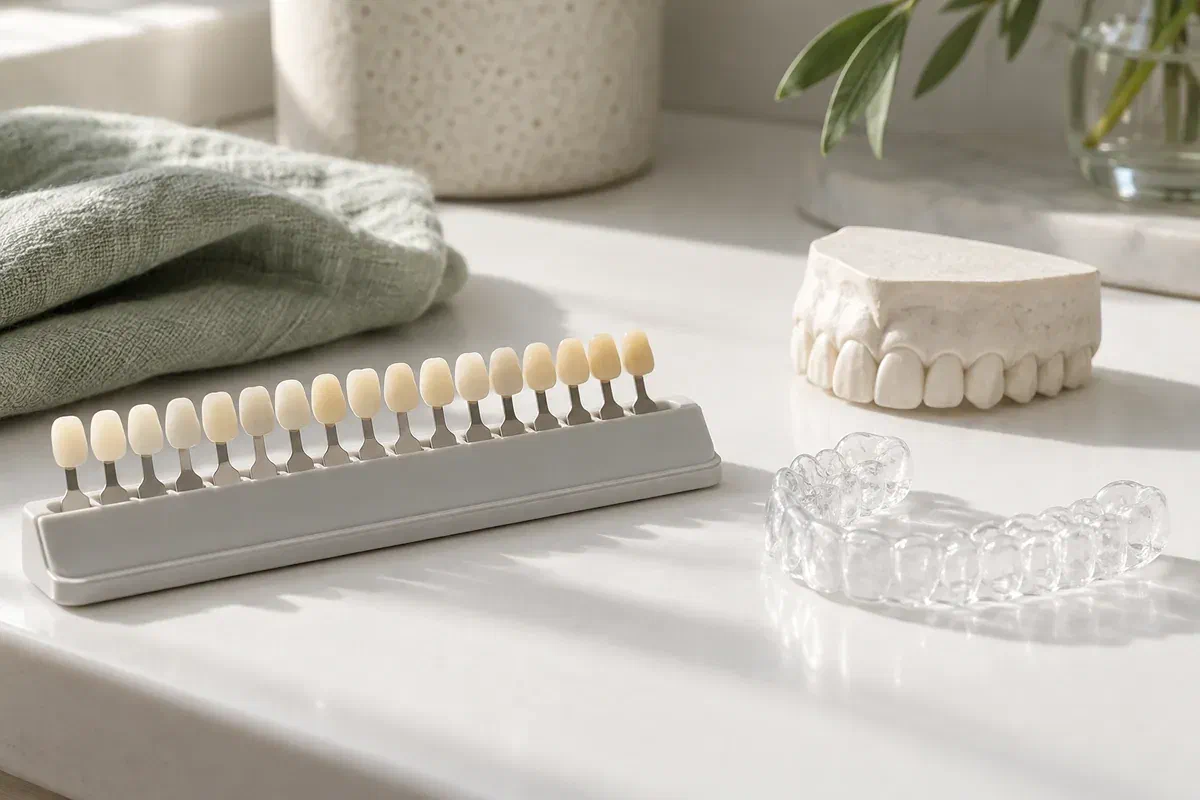
Tell the clinician what you would like to see and anything about sensitivity, dental work or previous whitening. Those factors affect what target is sensible.
Sensitivity to cold, aching, exposed roots or a tooth that feels different should be mentioned first. A health issue may need care before whitening. Ask how any proposed course would take sensitivity into account.
Front crowns, veneers and fillings will not lighten, so they can limit how far it makes sense to whiten the teeth beside them. Ask how they compare now and how they might look afterwards. Changing them is a separate matter.
Share the image or shade you have in mind and ask how it compares with what is realistic for you. Be wary of anyone promising an exact shade count or a result by a particular date, since both depend on how your teeth respond.
A single tooth that has become darker after injury or root canal treatment may not respond like the rest, and may need its own assessment. Point it out before trying a general product.
The point of supervision is a goal grounded in your own mouth. The clinician can identify what has caused your discolouration, decide whether teeth and gums are suitable for bleaching, and estimate a reasonable range of change for the method chosen.
As the course goes on, you have someone to check with. Sensitivity, gum irritation or colour that looks patchy can be discussed. Guidance should follow your product and findings rather than a push to reach a brighter shade with extra gel or longer wear.
Record your shade under the same conditions before and after. Agree on a change that would satisfy you, and on when it should be judged. Natural variation between teeth may remain even after a clear improvement.
Find out which approach is proposed, the reasoning behind it and the appointments involved. Make sure you know how to apply, time and store it, and when to return. Don’t borrow directions from an earlier kit.
If bonding or a new crown is on your list, decide the order first. Ask when the shade for that work should be chosen and whether your target might change after whitening. Planning both together avoids a mismatch.
The steps vary with the method we provide and your findings. Before booking, ask what each appointment includes, what it costs and what is covered.
Show the look you like, and explain past whitening and any reactions. Health information, medicines and dental work are reviewed. If you are pregnant or breastfeeding, say so and ask whether elective whitening should be delayed.
The clinician examines teeth, gums and restorations to find the reason for the colour and anything to treat first. Your shade is noted. A cleaning may change the starting point, or one tooth may need separate attention.
The proposed approach is described with its likely range of change, side effects and alternatives. Trays should fit comfortably and be demonstrated. Chairside options should be explained fully; a laser or special light is not a given.
Raise concerns during treatment and come to your review. The result is compared with your starting shade before anything else is added. If dental work now looks different, its condition and options are discussed without assuming replacement.
Extra applications won’t push past your teeth’s natural limits. Keep your instructions and our details handy until the course and review are complete.
Use the amount and schedule you were given, handled as shown. Don’t add products or extend the course to reach a shade from a photo. If supplies are damaged or something is unclear, contact the team before carrying on.
Both can occur for a time. Ask how to respond for your product and symptoms, including whether to take a break and be reviewed. Pain that is marked or lasting deserves attention, not patience.
Whitening is not permanent, and teeth can gradually pick up colour again. Keep regular dental care and ask what affects the look of your teeth. A later course should be based on fresh findings and instructions.
Patient information: American Dental Association — whitening effects and adverse reactions
These are general answers. A consultation compares your goal with your starting shade, your findings and what a course can achieve.
Book a consultation at our Bronte Street practice. Together we can record your shade, review suitability, sensitivity and dental work, and explain the approaches available before you settle on a target.
Outcomes differ from person to person and fade with time. Whether you are suitable, which method, the cost and any need to wait follow an individual assessment.
