

Illustrative patient and clinician reviewing a tooth model and shade samples
Cosmetic Dentistry

Replacement of Discoloured Fillings in Burlington

A thin dark line where a filling meets the tooth can be harmless stain or a sign the seal has opened. For people coming from Burlington, an assessment sorts out which it is, then weighs a polish, a repair, monitoring, or a new restoration against your goals.

The line at the edge

A dark margin raises a question worth answering properly.

The border between a filling and enamel is where colour change often shows first. Pigment from food and drinks can settle into a tiny surface groove there. Occasionally that shadow marks a gap where the material has pulled away, or decay starting underneath. From the outside, the two can look surprisingly alike.

That uncertainty is the reason not to rush into drilling. Taking a filling out removes the restoration and, often, a little sound tooth with it. A superficial stain might respond to polishing, a limited flaw might be repaired, and a stable margin can sometimes simply be watched. Examination decides which of these fits.

Coming in from Burlington, you can expect a careful look at that edge and a plain explanation of what it means. Tell us when you first noticed the line, whether floss catches there, and whether the tooth ever feels sensitive. Any recommendation will come with its reasoning before you agree to it.

Have a filling edge checked
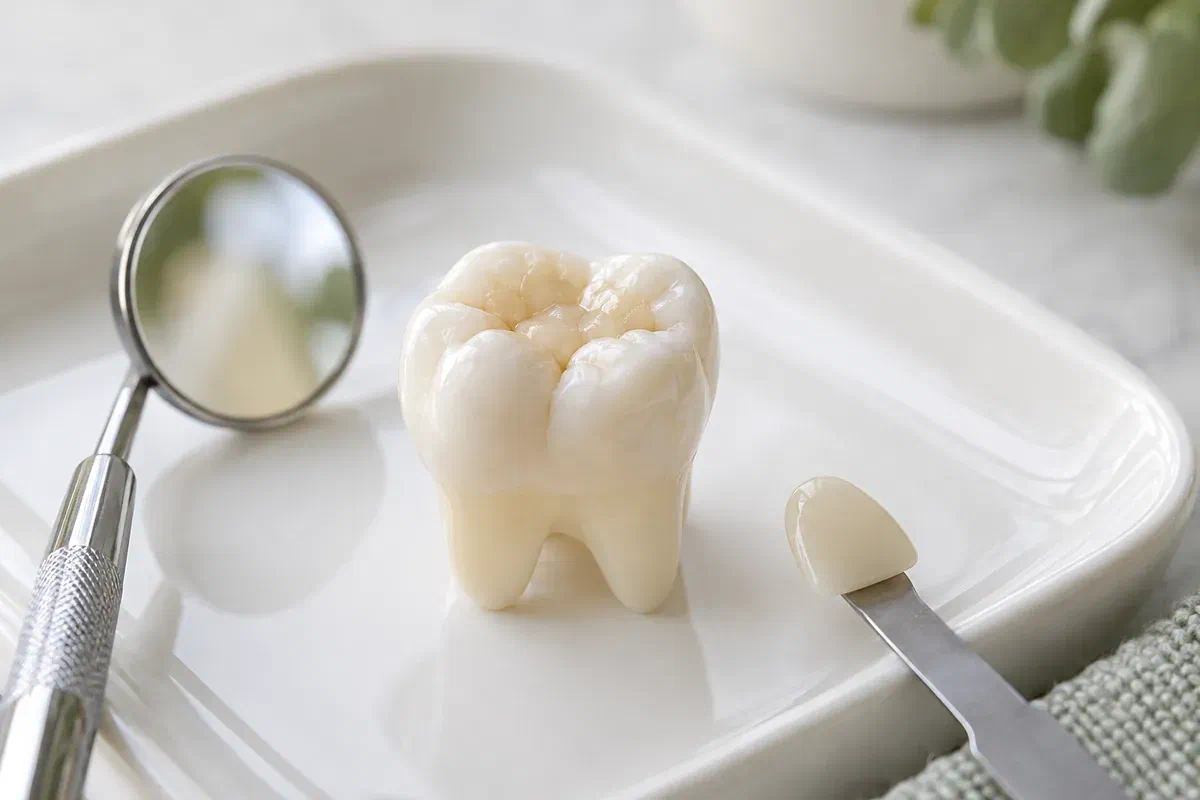
Illustrative molar teaching model with a slightly contrasting composite filling
Clues you can share

Help us read the margin.

What you have felt and noticed helps separate a cosmetic stain from a restoration problem. Please report symptoms even if the colour is what prompted the booking.

The filling looks out of step with the tooth

Let us know roughly when the mismatch started and whether any whitening happened after the filling was placed. Show which surfaces appear when you smile. That helps us place the change on the surface, inside the filling, or in the enamel around it.

A shadowed border or a catch under floss

Floss that frays, a ledge you can feel, or food that keeps packing in are all worth mentioning. The line is judged together with how snugly the filling sits and the state of the tooth. Pigment is not proof of decay, and comfort is not proof of a good seal.

Sore spots, sensitivity, or a fracture

Describe what brings on discomfort, how long it lasts, and whether chewing is affected. Mention chips and any deep filling you remember. These points can redirect the plan away from cosmetics, so they come first.

Amalgam fillings are grey by nature and often show a dark border. That alone does not mean the filling is leaking or harmful, so ask about its condition and what removal would involve.

Why the margin gets a proper look

Treat the problem you have, not the one you fear.

Our approach is to match the size of the treatment to what is really there. If replacement is on the table, it is reasonable to ask what it offers beyond polishing or a repair. If the filling can stay, you will hear how it looks now and how we plan to keep watch.

Colour planning should also consider your natural teeth and any later cosmetic work. A restoration may not be invisible in every light, and shades change over the years. Material, the tooth that remains, and your home care all influence what you see.

Patient information: FDI World Dental Federation — assessing repair and replacement of restorations

An explanation you can follow

You will learn whether the margin shows surface pigment, a small local defect, a broader breakdown, or decay. That finding should link clearly to what we propose. A filling’s age, on its own, is not a convincing reason to remove it.

Room to keep sound material

Where a margin defect is limited, a repair may keep most of the existing filling. It does not suit every case, and we will say so when it does not. If repair is chosen, we explain what to expect and how the edge will be checked later.

Colour decisions made in context

Tell us about whitening, bonding, or other visible work you might want. Those plans shape timing and the material we choose. We also talk about upkeep and the chance of future touch-ups, not only the improvement on the day.

What to expect in the chair

Four steps from first look to final check

Polishing, repair, and replacement each follow a slightly different path. Ask which applies to you, and what could change if the margin looks different once work starts.

  1. Examine the border closely

    The dentist inspects the filling margin, the surrounding enamel and gum, and your bite as relevant. An X-ray may be suggested if decay under the edge is a concern. Share any history of sensitivity, cracks, whitening, or the filling’s age.

  2. Talk through the findings and choices

    We explain whether monitoring, polishing, repair, or replacement suits the tooth. Ask about materials, how close the shade can get, risks, and cost. If the tooth is badly weakened, a different restoration may be worth discussing.

  3. Treat the area as agreed

    The margin or filling is prepared for the chosen approach and material, with freezing when it is needed. Signal if you need a pause. If removing material reveals more than expected, we stop and explain how that changes the plan.

  4. Seal, smooth, and test

    The new edge is finished so floss slides cleanly and your bite feels even. Ask what the treated margin will look like up close and which cleaning aids suit it. Before you go, check which sensations are expected, which to report, and whether a recheck is advised.

Caring for a treated margin

Keep the new edge clean and notice how it feels.

Advice depends on what was done and the material used. Follow your own instructions rather than assuming all fillings need the same care.

Go easy while numb

If freezing was used, avoid chewing until feeling returns and follow the eating advice from your visit. Ask when the material can handle normal use. A high or uncomfortable bite should be adjusted by us, not worked in with hard food.

Floss the edge every day

Clean along the filling border the way you were shown, and ask for help if the area is hard to reach. Food trapping that continues is worth reporting. A treated tooth can still decay at the margin, so daily cleaning stays important.

Report anything that does not settle

Contact the clinic if sensitivity lasts, increases, or makes eating hard. If the colour still concerns you, book a review. Please avoid scraping the edge or applying bleaching products to change it at home.

Possible responses to a dark edge

Polish it, patch it, or replace it?

Every approach has strengths and drawbacks. Your choice should reflect how the tooth looks under examination, the type of filling, and what you want cosmetically.

When the line is surface pigment and the seal is intact

Cleaning, polishing, or monitoring

Polishing may lift stain sitting in the outer layer, leaving the filling in place. If the margin is sound and the look does not bother you, monitoring is also reasonable. We will tell you what to watch for and when to come back sooner.

When one section of the edge has a small defect

Margin repair

A small section can sometimes be rebuilt while keeping the rest of the filling. Its success depends on where the flaw is and what the material is. We describe how the repair will look and how long-term checks work, without overselling or dismissing it.

When the breakdown is too wide to fix locally

Full replacement or a different restoration

A new filling or another restoration type may be advised if decay or breakdown extends beyond a small area. Ask how much tooth would remain and what sensitivity is possible. There should be a clear clinical reason, not just the filling’s age.

Patient information: FDA — considerations before removing an existing amalgam filling

Questions about filling edges

What does that dark line actually mean?

Answers about filling margins, staining, and when changing a restoration is worth considering.

(905) 876-4488
Can a stained filling edge be cleaned without replacing the filling?
Sometimes. Pigment sitting in the outer layer may improve with professional polishing. If the line goes deeper or the seal is broken, another approach may be needed. Ask what the examination found before deciding.
How does a dentist tell staining apart from decay at a margin?
The edge is examined directly, the fit of the filling is checked, and an X-ray may be used when it helps. Ask which signs pointed toward stain or decay in your case. Colour seen in a mirror cannot answer that on its own.
Why does floss keep shredding on one of my fillings?
A rough edge, a small ledge, or a chip can catch floss. It is worth having checked because it can also trap food. Mention it at your visit so the margin can be assessed and smoothed or repaired if appropriate.
Is an amalgam filling with a dark rim leaking?
Not necessarily. Metal fillings often look dark at the border. Ask about the filling’s actual condition and the effects of removal. A recommendation should be based on your tooth, not on the general appearance of silver fillings.
Does fixing just the margin last as long as a new filling?
It depends on the defect, the material, and the tooth. A repair keeps more of your tooth and existing filling, but it has limits. Ask what follow-up is planned and what signs would suggest further work later.
If I whitened my teeth, will the margin look worse?
It may look more obvious, since bleaching lightens enamel but not filling material. Talk to us before whitening so any filling work can be timed sensibly. A sharper contrast does not mean the filling has failed.
Burlington filling assessments

Get a clear answer about that edge.

Book a visit at our Bronte Street practice to have a dark or rough filling margin examined. We will tell you whether the line is stain, a defect, or decay, and what that means for the filling.

A dark line does not automatically lead to replacement. The right step and the shade we can expect depend on the examination, the existing material, and how much tooth remains.

Visit Milton Dental Clinic
Unit 1, 342 Bronte St. S, Milton, ON L9T 5B7
Get directions Clinic hours
Monday–Thursday
11am–7pm
Friday–Sunday
By appointment only

Areas we serve

  • Milton
  • Oakville
  • Mississauga
  • Georgetown
  • Halton Hills
  • Acton
  • Campbellville
  • Brampton
  • Burlington
  • Puslinch
  • Rockwood
  • Erin
  • Caledon
  • Etobicoke
  • Old Milton
  • Bronte Meadows
  • Timberlea
  • Dorset Park
  • Dempsey
  • Clarke
  • Beaty
  • Coates
  • Harrison
  • Scott
  • Willmott
  • Ford
  • Bowes
  • Cobden
  • Walker
  • Mountain View
  • Milton Heights
  • Hawthorne Village
  • Valley View
  • Fallingbrook
  • Nassagaweya
  • Trafalgar
  • Esquesing
  • Nelson
  • Brookville
  • Moffat
  • Glen Williams
  • Norval
  • Limehouse
  • Stewarttown
  • Ashgrove
  • Hornby
  • Silver Creek
  • Speyside
  • Scotch Block
  • North Oakville
  • River Oaks
  • Glen Abbey
  • West Oak Trails
  • Palermo
  • Bronte Creek
  • College Park
  • Joshua Creek
  • Uptown Core
  • Preserve
  • Iroquois Ridge
  • Lisgar
  • Meadowvale
  • Meadowvale Village
  • Churchill Meadows
  • Erin Mills
  • Central Erin Mills
  • Streetsville
  • East Credit
  • Creditview
  • Heartland
  • Sheridan
  • Mount Pleasant
  • Credit Valley
  • Huttonville
  • Churchville
  • Springbrook
  • Northwest Brampton
  • Bram West
  • Fletcher's Meadow
  • Fletcher's Creek South
  • Alton Village
  • Orchard
  • Millcroft
  • Headon Forest
  • Tansley
  • Brant Hills
  • Tyandaga
  • Kilbride
  • Lowville
  • Aberfoyle
  • Morriston
  • Arkell
  • Hillsburgh
  • Freelton
  • Carlisle
  • Waterdown
  • Flamborough
  • Mountsberg

How can we help?

Milton Dental Clinic

Have a question about your smile? Choose the option that works best for you.

For urgent dental concerns, please call.
Messages are reviewed during clinic hours.