

Illustrative patient and clinician reviewing a tooth model and shade samples
Cosmetic Dentistry

Replacement of Discoloured Fillings in Rockwood

A filling that has darkened and also twinges with cold is telling you two things at once. From Rockwood, an assessment looks at the health of the tooth first, then at whether polishing, repair, monitoring, or a new restoration best answers both the symptom and the look.

Colour plus sensitivity

Health first, then the shade

Plenty of discoloured fillings are purely cosmetic: a stained surface, an older material that has shifted tone, or enamel that has changed colour next to it. When the same tooth is also sensitive, sore to bite on, or catching food, the colour may be a clue to something else, such as a gap at the border, a crack, or decay underneath.

That does not mean the filling must come out. Removing it takes the old material and can cost some sound tooth, so the response should match what is actually happening. Sometimes a repair or a polish is enough; sometimes the tooth needs more. Monitoring may also be reasonable if the findings are reassuring.

Rockwood is a village northwest of Milton, and coming in is easier when you know what to expect. Describe the sensitivity as precisely as you can, show us which tooth has changed colour, and let us examine it. We will explain the findings and the purpose of any treatment before you decide.

Get a sensitive filling checked
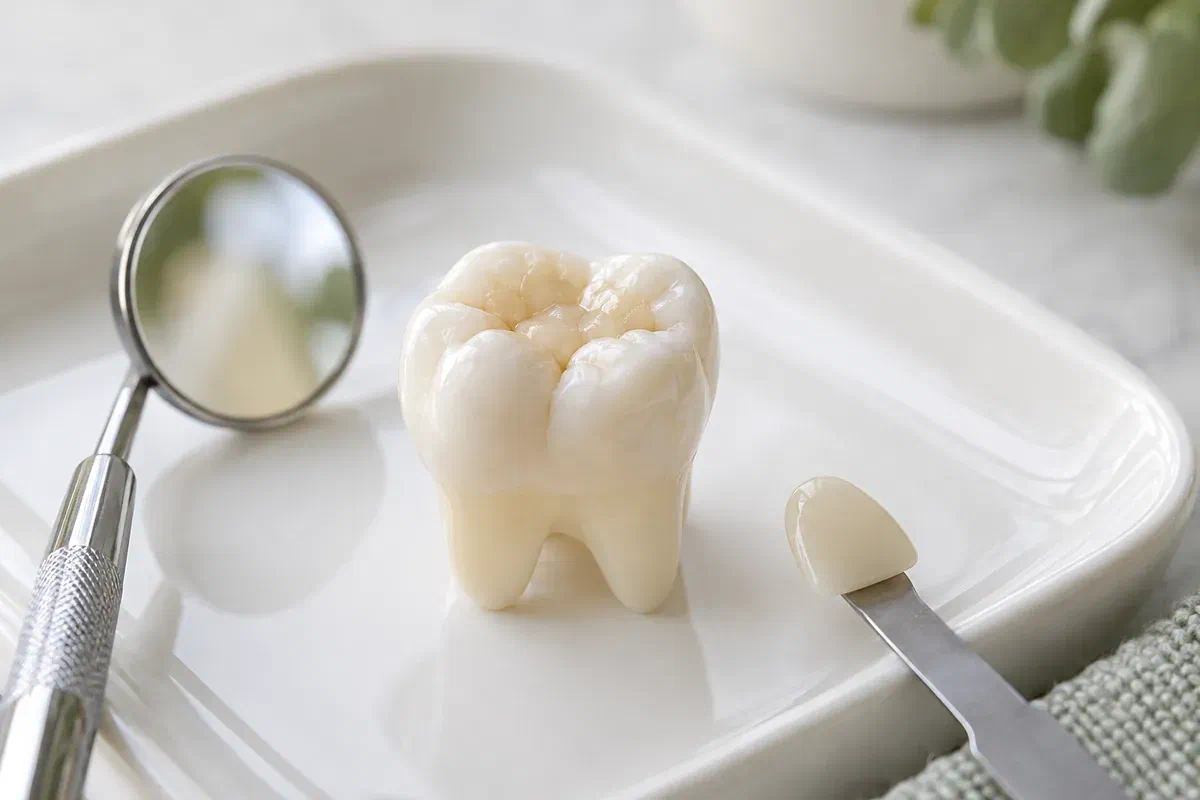
Illustrative molar teaching model with a slightly contrasting composite filling
Symptoms to describe

The more specific you are, the clearer the picture.

Precise details help us decide whether the colour change is cosmetic or linked to a problem in the restoration or tooth. Every symptom is worth mentioning, even if it seems small.

A colour change on a tooth that also feels different

Tell us which came first, the discolouration or the discomfort, and whether you have whitened since the filling was placed. Show us how visible the tooth is. This helps us judge whether the shade change is surface, within the material, or connected to the tooth.

A dark seam where food or floss catches

Point out any edge that collects food or roughens floss. We assess the seam alongside the filling’s seal and the tooth’s condition. A dark line can be stain alone, but combined with symptoms it deserves a careful look.

Cold sensitivity, biting pain, or a crack

Describe what sets it off, whether it fades in seconds or lingers, and whether biting hurts. Mention any chip, crack, or deep filling. These findings take priority and may change the treatment completely.

A silver filling’s dark colour is not, by itself, a sign of the sensitivity’s cause. Ask about its condition and the implications of removing it before assuming the metal is the problem.

What a careful diagnosis offers

Two concerns, one sensible plan.

We look for the least invasive response that properly addresses what we find. If replacement is proposed, ask what it will do for the symptom and the appearance that polishing or a repair would not. If the filling can stay, we discuss the look and how it will be checked.

Colour planning still matters once the tooth is healthy. A restoration cannot be promised to look invisible in every light or keep its shade forever. The material, the remaining tooth, and your home care all affect how it looks in the long run.

Patient information: FDI World Dental Federation — assessing repair and replacement of restorations

A link between symptom, finding, and treatment

We explain whether the issue is surface appearance, a small defect, a wider restoration problem, a crack, or decay. The recommendation should follow logically. A filling’s age is not, by itself, a satisfying explanation.

A fair look at repair

If the problem is limited to one area, repairing it may keep sound material. That depends on the cause of the sensitivity and the type of filling, and we will be clear when repair is not suitable. We also explain future checks.

Cosmetic goals kept in view

Tell us about whitening, bonding, or other visible plans. Once the health concern is addressed, those plans can guide timing and material. We also discuss maintenance and the possibility of later touch-ups.

How we approach it

Diagnose, discuss, treat, review.

The steps differ depending on whether the tooth needs a polish, a repair, or a full replacement. Ask what is planned and how it may change if more becomes visible.

  1. Find the source of the sensitivity

    The dentist examines the tooth, the filling margins, the gums, and your bite. Tests or X-rays may be suggested to answer a specific question. Share when sensitivity started, what triggers it, any whitening, and the filling’s age.

  2. Explain what the findings mean

    We tell you which approach suits the tooth and why: keeping watch, polishing, repairing, or replacing. Ask about materials, shade expectations, risks, and fees. A cracked or weakened tooth may need another kind of restoration.

  3. Treat comfortably

    The tooth is prepared for the chosen approach and material, with freezing used where needed. Tell us if you want to pause. If treatment reveals something new, such as deeper decay, we explain it and how it affects the plan.

  4. Test the bite and comfort

    We finish the surface and check fit, contacts, and how you bite. Ask how the restoration will look and what care it needs. Before leaving, clarify which sensations should settle, how long that may take, and when to call.

As the tooth settles

Some sensitivity can fade; some needs a second look.

Aftercare depends on what was done and the material used. Follow the advice from your visit, since different fillings carry different instructions.

Be careful until feeling returns

If freezing was used, avoid chewing on that side and follow the eating guidance. Ask when normal use is fine. If the bite feels high or sore, contact us; an uneven bite can itself cause sensitivity and is often simple to adjust.

Clean gently but thoroughly

Continue brushing and cleaning between teeth as recommended. A softer brush may feel better for a few days if the area is tender. Restored teeth still need daily prevention to keep new decay away.

Track how sensitivity changes

Note whether discomfort is easing, steady, or getting worse. Tell the clinic if it persists, increases, or interferes with eating. If the colour concerns you once things settle, book a review, and avoid bleaching or abrasive products.

Treatment choices

What might the tooth need?

Each option has benefits and tradeoffs. Consider the health of the tooth, the existing filling, and how important its appearance is to you.

Reassuring findings with a cosmetic concern

Polishing, cleaning, or monitoring

If the tooth is healthy and the colour change is superficial, polishing may help without removing anything. Monitoring is sensible when the filling is sound. We will explain which symptoms should bring you back early.

A limited defect causing or near the symptom

Repair of one area

A repair can address one section while keeping suitable existing material. Whether it suits depends on where the problem sits and what the filling is made of. We discuss the expected result, its limits, and the follow-up involved.

Decay, a crack, or wider breakdown

Replacement or a different restoration

When the problem extends beyond a small area, replacing the filling or choosing another restoration may be advised. Ask how much natural tooth would be left, what sensitivity to expect, and the alternatives. The reason should be clinical, not just age.

Patient information: FDA — considerations before removing an existing amalgam filling

Rockwood questions on colour and comfort

When a stained filling also feels sensitive

Answers to help you understand how symptoms shape the decision about a discoloured filling.

(905) 876-4488
Can a discoloured filling cause sensitivity to cold?
The colour itself does not cause sensitivity, but the same issue behind it, such as a gap or decay, sometimes can. An examination helps identify the cause. Tell us what triggers the sensitivity and how long it lasts.
Should I get a sensitive filling checked before thinking about cosmetics?
Yes. Symptoms should be assessed first, since they may need treatment for health reasons. Once the tooth is stable, we can discuss appearance options and timing.
Is lingering sensitivity after a new filling normal?
Mild sensitivity can occur for a short time. If it lasts, worsens, or affects eating, contact the clinic. The bite or another issue may need checking.
Could my bite be causing discomfort on a filled tooth?
It can. When a restoration sits slightly high, the tooth may feel tender when chewing. Mention it so the dentist can check and adjust if appropriate. Do not keep testing it with hard foods.
Does a stained edge on a sensitive tooth mean decay?
It might, but staining and decay can look similar. The edge and the tooth need assessing, sometimes with an X-ray. Ask what was found and why a particular response is suggested.
Can whitening make a sensitive filled tooth feel worse?
Whitening can cause temporary sensitivity in some people, and it will not lighten the filling. Discuss it with us before starting, especially if a tooth is already sensitive.
Sensitive-filling checks for Rockwood

Tell us what you feel, and we will look at why.

Arrange a visit at our Bronte Street practice for a filling that has changed colour or become sensitive. We will explain the cause and which approach fits the tooth.

Not every sensitive or stained filling needs replacing. The best approach and how closely a shade can match follow from the examination, the existing restoration, and the tooth that remains.

Visit Milton Dental Clinic
Unit 1, 342 Bronte St. S, Milton, ON L9T 5B7
Get directions Clinic hours
Monday–Thursday
11am–7pm
Friday–Sunday
By appointment only

Areas we serve

  • Milton
  • Oakville
  • Mississauga
  • Georgetown
  • Halton Hills
  • Acton
  • Campbellville
  • Brampton
  • Burlington
  • Puslinch
  • Rockwood
  • Erin
  • Caledon
  • Etobicoke
  • Old Milton
  • Bronte Meadows
  • Timberlea
  • Dorset Park
  • Dempsey
  • Clarke
  • Beaty
  • Coates
  • Harrison
  • Scott
  • Willmott
  • Ford
  • Bowes
  • Cobden
  • Walker
  • Mountain View
  • Milton Heights
  • Hawthorne Village
  • Valley View
  • Fallingbrook
  • Nassagaweya
  • Trafalgar
  • Esquesing
  • Nelson
  • Brookville
  • Moffat
  • Glen Williams
  • Norval
  • Limehouse
  • Stewarttown
  • Ashgrove
  • Hornby
  • Silver Creek
  • Speyside
  • Scotch Block
  • North Oakville
  • River Oaks
  • Glen Abbey
  • West Oak Trails
  • Palermo
  • Bronte Creek
  • College Park
  • Joshua Creek
  • Uptown Core
  • Preserve
  • Iroquois Ridge
  • Lisgar
  • Meadowvale
  • Meadowvale Village
  • Churchill Meadows
  • Erin Mills
  • Central Erin Mills
  • Streetsville
  • East Credit
  • Creditview
  • Heartland
  • Sheridan
  • Mount Pleasant
  • Credit Valley
  • Huttonville
  • Churchville
  • Springbrook
  • Northwest Brampton
  • Bram West
  • Fletcher's Meadow
  • Fletcher's Creek South
  • Alton Village
  • Orchard
  • Millcroft
  • Headon Forest
  • Tansley
  • Brant Hills
  • Tyandaga
  • Kilbride
  • Lowville
  • Aberfoyle
  • Morriston
  • Arkell
  • Hillsburgh
  • Freelton
  • Carlisle
  • Waterdown
  • Flamborough
  • Mountsberg

How can we help?

Milton Dental Clinic

Have a question about your smile? Choose the option that works best for you.

For urgent dental concerns, please call.
Messages are reviewed during clinic hours.