

Illustrative patient and clinician discussing a removable retainer and its protective case
Cosmetic Dentistry

Replacement Retainers

A lost or damaged retainer deserves a clear next step. Discuss replacement retainers in Milton so your current tooth positions, appliance fit, and retention plan can be assessed before a new retainer is made.

A closer look at replacement retainers

Get back to a retention routine that fits your teeth today.

Replacing a retainer starts with understanding what happened to the previous one. It may have disappeared during a trip, cracked with wear, or stopped fitting after time away from your routine. These situations need a little different information, even when the immediate request is the same: a replacement you can use confidently.

A retainer is intended to help maintain tooth positions. Making another appliance does not automatically reverse movement that has already occurred. Before choosing a replacement, discuss whether you are comfortable with the current alignment or want an assessment of changes since orthodontic treatment.

At Milton Dental Clinic, tell us when you last wore your retainer successfully and whether you still have it. We can explain the assessment needed and discuss the next step. You do not need to know the appliance name or have a perfect account of your wear history to ask for help.

Ask about a replacement retainer
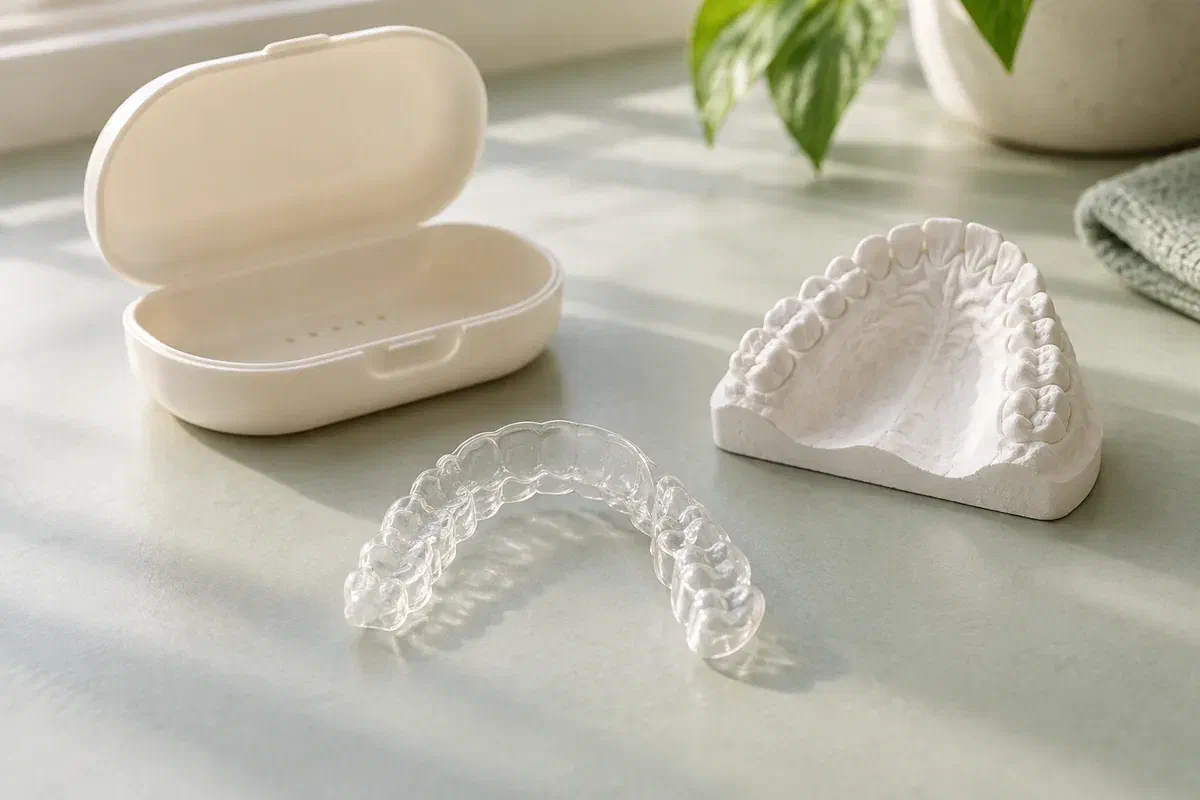
Illustrative clear upper retainer beside a protective case and dental cast
What happened to your retainer?

The reason for replacement helps guide the appointment.

When contacting the team, explain whether the appliance is missing, damaged, uncomfortable, or simply due for a review. Mention any recent dental work and whether one or both arches are involved.

Lost, left behind, or accidentally discarded

Contact the clinic or your orthodontic provider promptly rather than waiting for the next routine visit. Ask what information to bring and what to do while an appointment is arranged. A delivery date or same-day replacement should not be assumed before the requirements are checked.

Cracked plastic, a damaged wire, or a changed shape

Keep the appliance and bring it in its case if you still have it. Describe where the problem is and whether an edge is uncomfortable. Ask for advice about wearing it; household glue, heating, trimming, or bending can make assessment and safe use more difficult.

An appliance that no longer seats properly

Explain when the fit changed and whether there has been a break in wear. Do not force a painful or poorly fitting retainer onto the teeth. The clinician needs to distinguish an appliance problem from a change in tooth position before recommending what comes next.

If you have a bonded wire behind your teeth as well as a removable retainer, mention both. A loose bonded retainer needs its own assessment; ordering a removable replacement does not automatically resolve that problem.

What a replacement review can clarify

An appliance decision and a retention plan belong together.

The useful outcome is more than receiving another piece of plastic or wire. You should know what positions the retainer is intended to maintain, how to use it, and who will review it if the fit changes. That makes the replacement part of an ongoing plan.

This is also a chance to explain what made the old routine difficult. Storage, travel, cleaning, comfort, or uncertainty about instructions may have contributed. Discuss practical changes that suit your circumstances without assuming that a different appliance will remove every responsibility.

A decision based on your present teeth

Ask whether earlier records still represent the mouth accurately and whether new records are needed. Mention fillings, crowns, bonding, or other treatment since the appliance was made. Those details help the clinician decide how the replacement should be planned and checked.

A clear distinction between holding and moving

Discuss any alignment change that concerns you before agreeing to a new retainer. Ask what a replacement would maintain and whether a separate orthodontic assessment would be useful. You can then make an informed decision about retaining the current position or exploring further treatment.

Instructions you can actually follow

Ask for the wear schedule, cleaning method, storage advice, and review arrangements for the chosen appliance. If you work shifts or divide time between homes, explain that during planning. Leave with a routine you understand and a contact route if something does not feel right.

Planning your replacement

Check the situation, confirm the fit, and restart with clear instructions.

The appointment sequence depends on the appliance and findings. Confirm the expected visits, fees, and arrangements for making and fitting the retainer before proceeding.

  1. Share the original treatment and recent history

    Bring any available orthodontic details, existing appliances, and information about the last successful wear. If another practice provided the original treatment, discuss whether records should be requested. Explain what you hope to preserve and any movement you have noticed since.

  2. Assess the teeth, bite, and remaining appliance

    The clinician reviews the current situation and whether replacement alone addresses your concern. Ask about any finding that changes the plan. This is the time to discuss a loose fixed wire, a new restoration, discomfort, or the wish to reconsider alignment.

  3. Agree on the appliance and required records

    Discuss a suitable retainer type and whether new impressions or a scan are needed. Do not assume a particular recording system or an old digital file can be used. Confirm the expected process, collection arrangements, and advice for the period before fitting.

  4. Check fit and practise the routine

    At the fitting visit, ask to practise inserting and removing the appliance and explain any pressure or difficulty. Confirm the wear and care instructions, follow-up plan, and what warrants a call. Ask who to contact if the replacement does not seat as demonstrated at home.

Looking after the replacement

Make the case, the care, and the checks part of daily life.

Follow the instructions supplied for your particular retainer. Different designs and materials can need different care, and your wear schedule should come from the clinician responsible for your retention.

Choose a consistent place for storage

Keep the protective case available when the retainer is removed. Avoid wrapping the appliance in a napkin or leaving it loose where it can be discarded or damaged. A simple storage habit is especially helpful when eating away from home or travelling.

Use the recommended cleaning method

Confirm which cleaning products and water temperature suit the material. Keep the appliance away from excessive heat and ask before using a cleaner that was recommended for something else. Bring questions about odour, deposits, or surface changes to a review.

Keep the retention plan under review

Bring the retainer to appointments when requested and report a change in fit or condition. If you miss wear, ask how to proceed rather than inventing a catch-up schedule. Future dental treatment should include a discussion about whether the appliance will still fit afterward.

Patient information: British Orthodontic Society — continuing retention and appliance types

Choosing the right response

A replacement is one route; the findings decide which route fits.

Discuss what can be achieved with the existing appliance, a new retainer, or a separate alignment plan. The recommendation should make sense for your current teeth and your priorities.

When replacement matches the retention goal

A new removable retainer

A clear or wire-and-acrylic design may be discussed where suitable. Ask why the proposed type fits your circumstances, what is included in the fee, and how it will be reviewed. The new appliance should be checked rather than assumed to fit because its design is familiar.

When a professional check may change the next step

Assessment of the appliance you still have

Some concerns require evaluation before deciding whether adjustment, repair, or replacement is appropriate. Ask what is feasible for that particular material and damage. A repair is not suitable for every appliance, and an attempted home repair should be disclosed during the assessment.

When the desired alignment has changed

A separate discussion about tooth movement

If you want to correct movement, ask about an orthodontic assessment before committing to a retainer made for the current position. Discuss the scope, responsibilities, and possible referral. Ordering a replacement and choosing active tooth movement are different decisions.

Replacement-retainer questions

Bring the practical questions that come with a missing or damaged appliance.

Your earlier treatment, present tooth positions, and available records help determine the answer. Contact the team with what you know, even if some details are missing.

(905) 876-4488
Can you replace my retainer if another clinic did the orthodontic treatment?
Ask the team about an assessment and any records needed from the original provider. Bring the old appliance if available and describe the treatment history. Acceptance, appliance choice, and the replacement process need confirmation after your circumstances are reviewed.
Will a replacement retainer be made from my original scan automatically?
Not necessarily. The clinician needs to consider whether those records are available and still suitable for your current teeth. Ask whether fresh records are needed, especially after movement or dental work, rather than assuming the previous file can simply be reused.
Should I order a replacement before deciding whether to correct relapse?
Explain the alignment concern first. Ask whether the immediate aim is to maintain the present position or assess possible movement. The timing of a replacement should fit that decision, with clear advice about retention while further planning takes place.
Can I request a spare when my replacement retainer is made?
You can ask whether a spare is appropriate and available, what it would cost, and how it should be stored and checked. Having an extra appliance does not remove the need to review a changed fit or follow the prescribed wear schedule.
Does replacing one retainer mean I must replace the other arch too?
That depends on the condition and fit of both appliances and the retention plan. Bring the remaining retainer for review. Ask which appliance needs attention and why, rather than assuming that every replacement request requires a new pair.
What should I tell the clinic if my replacement is needed before travel?
Give the departure date, appliance problem, and last successful wear when you call. Ask about realistic assessment and fitting arrangements and interim advice. A deadline helps planning, but it does not guarantee that a suitable replacement can be supplied before departure.
Replacement retainers in Milton

Tell us what happened. We can help clarify the next step.

Contact our Bronte Street practice about a lost, worn, or damaged retainer. Bring the appliance and earlier treatment information where available so the discussion can focus on fit, current alignment, and a workable retention routine.

Replacement type, records, timing, fees, and any need for orthodontic review depend on assessment. Same-day supply is not guaranteed.

Visit Milton Dental Clinic
Unit 1, 342 Bronte St. S, Milton, ON L9T 5B7
Get directions Clinic hours
Monday–Thursday
11am–7pm
Friday–Sunday
By appointment only

How can we help?

Milton Dental Clinic

Have a question about your smile? Choose the option that works best for you.

For urgent dental concerns, please call.
Messages are reviewed during clinic hours.