

Illustrative patient and clinician discussing a removable retainer and its protective case
Cosmetic Dentistry

Replacement Retainers in Erin

Cloudy plastic, a stubborn smell or a tray that went wavy after a hot rinse: home care problems often end with a replacement. From Erin, have us look at the appliance and your teeth, then leave with a cleaning routine suited to the new one.

Erin homes, everyday retainer care

It warped in the dishwasher. Now what?

Good intentions cause a lot of retainer damage. A boiling-water rinse to kill germs, a run through the dishwasher, a scrub with whitening toothpaste or an overnight soak in mouthwash can all leave plastic cloudy, rough or slightly out of shape. Once that happens, the appliance may not hold teeth the way it should.

Keep in mind what a replacement can achieve. It's shaped to hold your teeth in the positions captured by fresh moulds or a scan, so it won't undo any shifting that happened while the damaged one was in use or set aside. If you've noticed a change in your smile, you can ask for that to be assessed before choosing a new appliance.

When you call from Erin or Hillsburgh, describe how the retainer has changed and how you've been cleaning it. Let us know when it last fit comfortably. You don't need to know the material or brand; describing your routine honestly is more useful and helps prevent the same problem with the next one.

Ask about a damaged or cloudy retainer
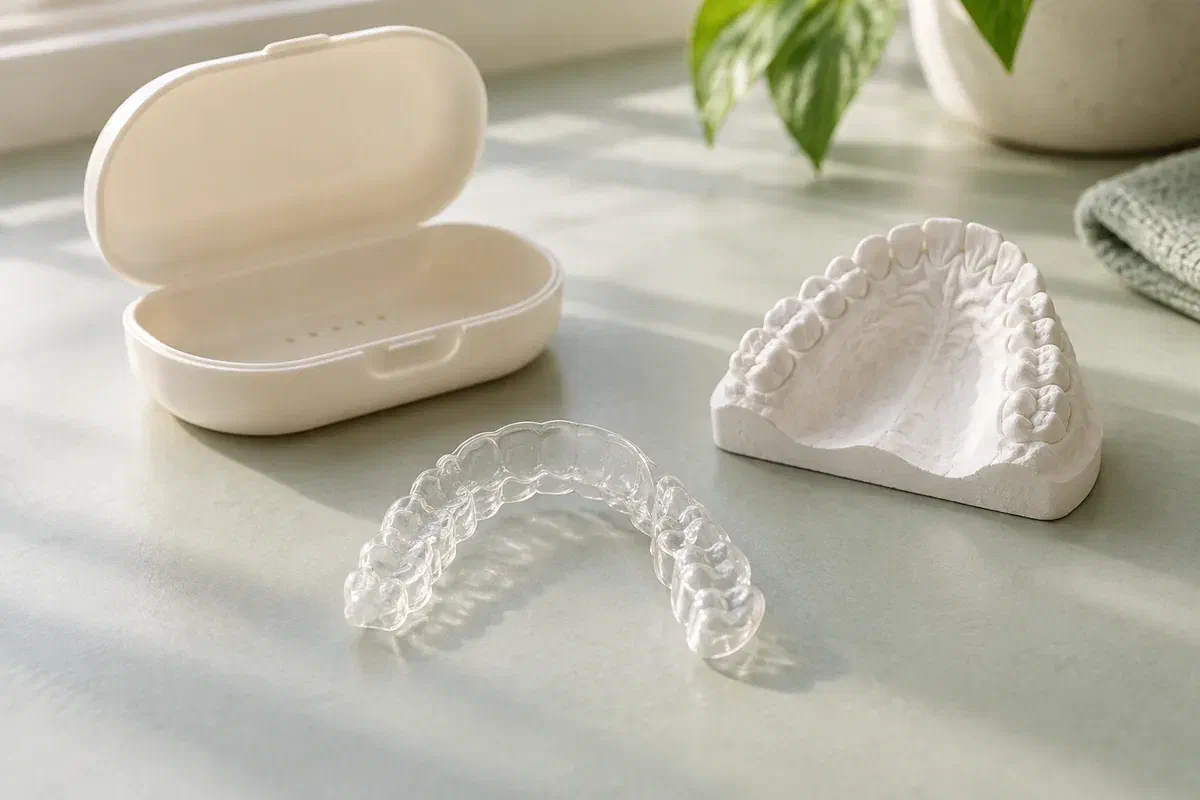
Illustrative clear upper retainer beside a protective case and dental cast
What you're seeing

Missing, misshapen or no longer pleasant to wear

Let us know whether the retainer is lost, visibly damaged, or fitting differently, and which arch. Say whether a fixed wire sits behind your front teeth, and list any dental work done since the retainer was made.

Thrown out or misplaced

A retainer left soaking in a cup can end up poured down the sink or tossed by someone tidying. If it's gone, call soon rather than waiting for a routine visit. We'll explain what's helpful to have with you and how to look after your alignment until the appointment. Same-day supply shouldn't be assumed.

Warped, cloudy or rough

Bring the retainer in its case, along with the cleaning products you've been using if that's easy. Show where it looks or feels different. Don't try to reshape it with more heat or sand it smooth, since that can make things worse.

Seating differently since it changed

A slightly distorted retainer may still go in but press unevenly or feel loose. Describe when you noticed. Don't force it. The clinician needs to work out whether the appliance or your teeth have changed before suggesting a next step.

If a thin wire is bonded behind your front teeth, mention its condition too. Plaque around a fixed wire, or a loose one, needs its own attention, and a new removable retainer won't address it.

Why it's worth reviewing

A replacement, plus a cleaning routine that won't ruin it

The visit gives you clear answers about what your new retainer should hold, how many hours to wear it and how to look after it without damaging it. A routine tailored to the material you receive helps the replacement stay clear, comfortable and well fitting for longer.

Talk through what you were doing before. Many common products seem logical but are too harsh, too hot or simply untested for retainers. We can suggest gentler habits that suit your household, while acknowledging that every appliance needs regular care and checks.

Records that suit your teeth now

Ask whether older records still match your mouth or whether new moulds or a scan are needed. Mention fillings, crowns or bonding placed since the original retainer, so the new one can be planned and checked accurately.

A clear choice about alignment

If a warped retainer let teeth drift, or you've noticed changes, raise them before a replacement is agreed. Ask what the new appliance would hold and whether an orthodontic opinion might help. Then decide what you want.

Cleaning steps that match the material

Ask exactly what to use, what to avoid and how warm the water can be. If several people share a bathroom or you're often away, mention that. Leave knowing how to care for the retainer and who to call if it changes.

What happens

From a damaged retainer to a cleaner routine

The number of visits depends on your appliance and the exam. Ask about appointments, fees and fitting, and whether you can combine steps to reduce trips.

  1. Share how it was cleaned and worn

    A list or photo of the products you've been using is surprisingly helpful, along with the retainer itself and any orthodontic paperwork. If your treatment was done elsewhere, we can talk about records. Mention any changes you've noticed in your teeth.

  2. Examine the appliance and your teeth

    The clinician compares the retainer with your teeth and bite to see whether it's still serviceable or whether replacement is the sensible route. This is also the moment to mention a fixed wire coming loose, a recent filling or gum irritation.

  3. Agree on a design and records

    Discuss which retainer type suits you and whether records need to be retaken. Older files may not match. Confirm the next steps and how to protect your teeth and the damaged appliance until fitting.

  4. Fit it and learn the care routine

    The new appliance is tried in, and you'll seat and remove it a few times yourself, saying if anything presses. Have the cleaning method demonstrated or explained for your specific material, including what to do on days you're away from your usual sink. Confirm wear hours and your next check before you head home.

Gentle, consistent care

Cool water, soft brush, a closed case

Follow the specific care instructions for your new retainer, since materials differ. The clinician who manages your retention will set the wear hours.

Skip the heat

No boiling water, no dishwasher, no microwave, no hot car. Rinse in cool or lukewarm water unless you've been told otherwise. If heat damage happens again, bring it in rather than trying to bend it back.

Use only what's been recommended

Ask before using whitening toothpaste, mouthwash, denture tablets or household cleaners on the retainer. Some can scratch, cloud or weaken certain materials. A soft brush and the method you're shown are usually the safest starting point.

Dry, cased and checked

Store the retainer in a clean, ventilated case, not loose on the counter or wrapped in tissue. Bring it to reviews when asked. If wear lapses or the fit changes, call for advice rather than guessing at extra hours.

Patient information: British Orthodontic Society — continuing retention and appliance types

Depending on the damage

Clean it, replace it, or look at alignment

The findings might point to keeping your existing retainer, making a new one, or discussing tooth movement separately. The recommendation should reflect your teeth and goals today.

When the old one is past saving

A newly made removable retainer

If distortion or wear is significant, a replacement may be advised. Ask about the design proposed and why, the fee, and how fit will be reviewed. A new retainer should be checked carefully at fitting, not assumed to be right.

When the problem is mainly on the surface

Keeping the retainer you have

Some build-up or staining may be manageable with better cleaning, provided the shape and fit are sound. The clinician can judge that in person. Distorted plastic usually can't be restored, and any home remedy you tried should be mentioned.

When teeth drifted while the retainer was compromised

Talking about tooth movement

If you'd like shifting corrected, discuss an orthodontic assessment before a new retainer holds your current position. Ask about scope and referral. Maintaining teeth where they are and moving them are different decisions.

Care and cleaning

Home-care questions about retainers

Answers depend on your retainer's material, your treatment history and your teeth now. Get in touch with what you've noticed.

(905) 876-4488
Can I clean my retainer with toothpaste?
Some toothpastes are abrasive and can scratch certain retainer materials, and those fine scratches tend to collect deposits and look cloudier over time. Ask the clinician what to use for your specific appliance, and whether plain water and a soft brush are enough for daily cleaning.
Why does my retainer smell even after brushing it?
Odour can come from bacteria and deposits that build up on the surface, especially if the retainer isn’t cleaned thoroughly or is stored damp. Bring it in so the clinician can check it and suggest a better routine.
Is it safe to soak my retainer in mouthwash?
Some mouthwashes contain alcohol or colours that may affect certain materials. Ask before using one, and follow the cleaning method recommended for your retainer.
What causes the white, chalky build-up on my retainer?
It’s often mineral deposits from saliva, sometimes combined with plaque. The clinician can confirm and advise how to manage it, or whether the appliance should be replaced.
Can a slightly warped retainer still work?
It might hold teeth less effectively or put pressure in the wrong places, and you can’t easily judge that by feel. Don’t keep wearing it without advice. Have the fit assessed, and ask whether you should wear it at all until a decision is made.
Can I combine a visit from Erin with my family's cleanings?
Ask when booking. Grouping appointments for your household may be possible, depending on availability and what each person needs, which can make the trip more efficient.
Retainer care help for Erin

Your retainer, your cleaning shelf, and a fresh plan

Warped, cloudy, smelly, lost or no longer fitting: whatever has happened to your retainer, our Bronte Street practice can help you work out the next step. Bring the appliance and any treatment notes, and we'll check fit and alignment and build a cleaning routine suited to what you're given.

Whether the retainer can be kept or must be replaced, plus design, records, fees and any orthodontic review, depends on assessment. Same-day supply isn't guaranteed.

Visit Milton Dental Clinic
Unit 1, 342 Bronte St. S, Milton, ON L9T 5B7
Get directions Clinic hours
Monday–Thursday
11am–7pm
Friday–Sunday
By appointment only

Areas we serve

  • Milton
  • Oakville
  • Mississauga
  • Georgetown
  • Halton Hills
  • Acton
  • Campbellville
  • Brampton
  • Burlington
  • Puslinch
  • Rockwood
  • Erin
  • Caledon
  • Etobicoke
  • Old Milton
  • Bronte Meadows
  • Timberlea
  • Dorset Park
  • Dempsey
  • Clarke
  • Beaty
  • Coates
  • Harrison
  • Scott
  • Willmott
  • Ford
  • Bowes
  • Cobden
  • Walker
  • Mountain View
  • Milton Heights
  • Hawthorne Village
  • Valley View
  • Fallingbrook
  • Nassagaweya
  • Trafalgar
  • Esquesing
  • Nelson
  • Brookville
  • Moffat
  • Glen Williams
  • Norval
  • Limehouse
  • Stewarttown
  • Ashgrove
  • Hornby
  • Silver Creek
  • Speyside
  • Scotch Block
  • North Oakville
  • River Oaks
  • Glen Abbey
  • West Oak Trails
  • Palermo
  • Bronte Creek
  • College Park
  • Joshua Creek
  • Uptown Core
  • Preserve
  • Iroquois Ridge
  • Lisgar
  • Meadowvale
  • Meadowvale Village
  • Churchill Meadows
  • Erin Mills
  • Central Erin Mills
  • Streetsville
  • East Credit
  • Creditview
  • Heartland
  • Sheridan
  • Mount Pleasant
  • Credit Valley
  • Huttonville
  • Churchville
  • Springbrook
  • Northwest Brampton
  • Bram West
  • Fletcher's Meadow
  • Fletcher's Creek South
  • Alton Village
  • Orchard
  • Millcroft
  • Headon Forest
  • Tansley
  • Brant Hills
  • Tyandaga
  • Kilbride
  • Lowville
  • Aberfoyle
  • Morriston
  • Arkell
  • Hillsburgh
  • Freelton
  • Carlisle
  • Waterdown
  • Flamborough
  • Mountsberg

How can we help?

Milton Dental Clinic

Have a question about your smile? Choose the option that works best for you.

For urgent dental concerns, please call.
Messages are reviewed during clinic hours.