

Illustrative patient and clinician discussing a removable retainer and its protective case
Cosmetic Dentistry

Replacement Retainers in Georgetown

Months without a retainer can leave a front tooth slightly turned or a small gap reopened. Before a new one is made from Georgetown, decide with us whether you want today's smile held in place or the shifting looked at first.

Georgetown: hold it or fix it?

Something moved while the retainer was gone.

You notice it in a photo or in the mirror while brushing: a lower incisor overlapping its neighbour, or a sliver of space where there wasn't one. The retainer has been missing for a while, or sitting cracked in a drawer, and now there's a real choice to make about what the next one should do.

That choice matters because retainers only maintain. A new appliance is made to the teeth as they sit on the day of the records and will hold that position, small changes included. It cannot pull a tooth back. If the shift bothers you, an orthodontic opinion before ordering may save you from locking in something you'd rather correct.

When you call from Georgetown, describe what has changed and roughly how long it's been since your retainer fit comfortably. Mention whether you still have it, even in pieces. You don't need to know its proper name or have your old treatment notes; those details can be filled in together.

Talk about shifting and a new retainer
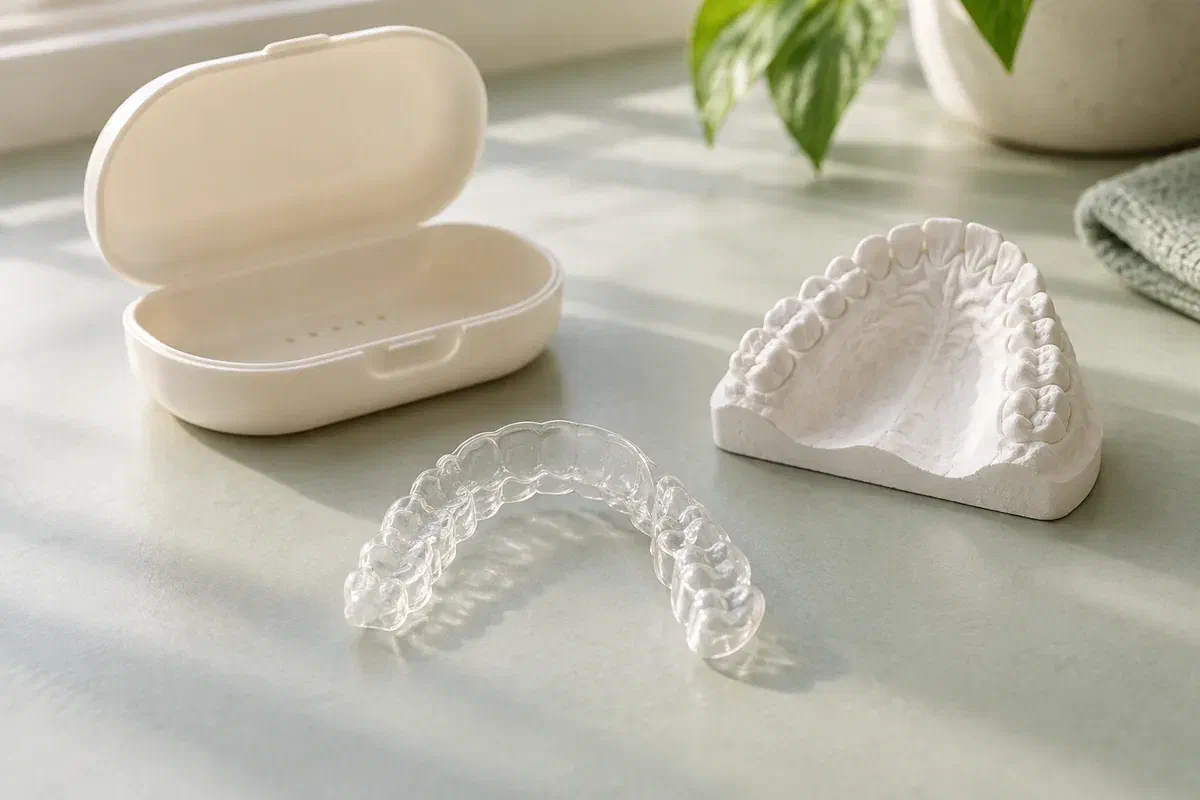
Illustrative clear upper retainer beside a protective case and dental cast
How it got here

The story behind the gap in wear shapes the next step.

Let us know whether the retainer went missing, broke or stopped fitting, and which arch is affected. A bonded wire, recent fillings or other dental treatment are all worth mentioning.

It went missing a while back

Many people mean to replace a lost retainer and then months pass. Call now rather than waiting longer. We'll explain which items are useful for the visit and how to protect your current position until you're seen. Don't count on a new appliance the same day.

It broke and was set aside

A cracked retainer in a drawer still tells the clinician something, so bring it in its case. Describe how it broke. If you patched it with glue or reshaped it with heat, mention that, and avoid any further home repairs.

It no longer goes in

After a long break, an old retainer may not fit teeth that have shifted. Please don't press it on through pain. The clinician needs to work out how much the teeth or the appliance have changed before any recommendation is made.

A bonded wire behind the front teeth can loosen without much warning, and that alone can allow movement. If you have one, mention its condition. It's assessed on its own and isn't fixed by a new removable retainer.

Why decide first

Know what you're keeping before you keep it.

The real benefit of a review is a decision you understand. You'll know whether a replacement would hold your teeth as they are now, what it would look like day to day, and who would follow up. If you choose to address the shift instead, you'll know that path, too.

It's also worth reflecting on why wear stopped. Maybe the retainer was uncomfortable, maybe life got busy, maybe the instructions faded. Talking about that openly helps plan something more sustainable, without pretending any appliance will do its job unless it's worn.

Records that capture where you are

If a replacement is chosen, ask whether earlier records still apply or whether new moulds or a scan will be taken. Because teeth may have moved, older files are less likely to match. Mention any dental work done in the meantime.

A clear line between holding and correcting

Describe exactly what bothers you about the change. Ask what a new retainer would preserve and what an orthodontic assessment might offer. With both explained, you can choose based on how much the shift matters to you.

A routine that holds up this time

Whatever you decide, ask for wear hours, cleaning steps and review timing in plain language. If your schedule is irregular or you travel, say so. Leave knowing who to contact if the new appliance feels wrong.

The order of things

Talk, examine, choose a path, then fit.

The visits involved depend on what the exam shows and which route you choose. Ask what appointments, fees and fitting arrangements to expect before committing.

  1. Start with what you've noticed

    Bring photos from after treatment if you have them, along with any old retainer and orthodontic paperwork. If another office treated you, we can discuss asking for records. Point out the changes that bother you most.

  2. Measure the change

    The clinician looks at your teeth, bite and any remaining appliance to understand how much has moved and why. This is the time to bring up a loose bonded wire, a recent filling or any tenderness, since each can affect the plan.

  3. Pick hold or correct

    If you're happy to retain the current position, you'll discuss a suitable retainer and the records needed. If you'd prefer correction, an orthodontic assessment or referral may come first. Ask what to do in the meantime either way.

  4. Fit whatever you choose

    When a retainer is ready, practise placing and removing it and mention any pressure. Confirm how many hours to wear it, how to clean it and when you'll be seen. Ask who to call if it feels different once you're home.

Holding steady

Small daily habits prevent the next drift.

Follow the specific instructions for your new appliance. Care differs between materials, and the hours you wear it should be set by the clinician looking after your retention.

A home for the retainer

Choose one spot for the case at night and carry it when you're out. Wrapping a retainer in a napkin or slipping it into a pocket is how many end up lost. A spare case in the car or a work bag can help.

Cleaning without damage

A soft brush and cool or lukewarm water are typical, but confirm what suits your material. Keep the appliance away from heat, including hot water and sunny dashboards. Check before using any soaking tablet, and mention cloudiness or roughness at your next visit.

Speak up before it slips again

If you miss nights or the fit changes, call to ask how to get back on track rather than improvising extra hours. Bring the retainer to reviews. Planned dental work should include a conversation about fit afterward.

Patient information: British Orthodontic Society — continuing retention and appliance types

Three ways forward

Accept the shift, check the old retainer, or address the movement

There's no single right answer after a period without retention. The choice depends on what the exam shows and how you feel about your smile now.

When the change is small or doesn't bother you

A new retainer for today's position

Holding your teeth where they are now is a reasonable choice for many people. Ask which retainer type is suggested and why, what the fee covers, and how fit will be reviewed. The new appliance still needs to be checked carefully.

When the old retainer may still be relevant

Assessment of the appliance you kept

If you held on to a damaged or unused retainer, the clinician may want to evaluate it before recommending adjustment, repair or replacement. Ask what's realistic. Many appliances can't be repaired, and any home attempt should be mentioned.

When you want the earlier result back

Correcting the movement

If the shift matters to you, discuss an orthodontic assessment before any retainer is made. Ask about scope, responsibilities and referral. A retainer comes after correction in that case, not before.

Shifting and replacement

Questions people ask when teeth have moved

Answers depend on how much has changed, your earlier treatment and the records available. Bring what you know and we'll go from there.

(905) 876-4488
Can an old retainer push my teeth back if I wear it harder?
Don’t try. Forcing a retainer that no longer fits can cause discomfort and may not move teeth as you hope. Bring it in so the clinician can assess the fit and advise you on the options.
How much shifting is too much to just hold?
That’s a personal decision as much as a clinical one. The clinician can describe what has changed, show you where, and explain whether it might affect your bite or how easily you can clean between teeth. You can then decide whether you’re comfortable retaining the current position or prefer to explore correction.
Will my teeth keep moving while I decide?
They may. Ask the clinician what to do in the meantime, which might involve wearing an existing appliance if it still fits, or arranging records promptly. Don’t create your own plan without advice.
Is the shift a sign that my original treatment failed?
Not necessarily. Teeth can move over time, which is why retention is usually ongoing. The clinician can discuss what may have contributed in your case.
If I get the teeth corrected, will I need a new retainer afterward anyway?
Usually, yes. A retainer would normally be made once correction is complete, to hold the new position. Ask how that would be planned if you go that route.
Can I book from Georgetown to discuss both options in one appointment?
Yes, you can ask for a visit that covers the shift and the replacement together. Mention both concerns when booking so enough time is set aside. Any referral or further visits would depend on what’s found.
Retainer decisions for Georgetown

Show us what moved. Then choose your next step.

Get in touch with our Bronte Street practice if your retainer is lost, broken or no longer fits and your teeth have shifted. Bring any appliance, photos and treatment notes so we can talk honestly about holding, correcting and a routine you can maintain.

Whether a retainer, an orthodontic assessment or both are advised, along with records, fees and timing, depends on the exam. Same-day supply is never assumed.

Visit Milton Dental Clinic
Unit 1, 342 Bronte St. S, Milton, ON L9T 5B7
Get directions Clinic hours
Monday–Thursday
11am–7pm
Friday–Sunday
By appointment only

Areas we serve

  • Milton
  • Oakville
  • Mississauga
  • Georgetown
  • Halton Hills
  • Acton
  • Campbellville
  • Brampton
  • Burlington
  • Puslinch
  • Rockwood
  • Erin
  • Caledon
  • Etobicoke
  • Old Milton
  • Bronte Meadows
  • Timberlea
  • Dorset Park
  • Dempsey
  • Clarke
  • Beaty
  • Coates
  • Harrison
  • Scott
  • Willmott
  • Ford
  • Bowes
  • Cobden
  • Walker
  • Mountain View
  • Milton Heights
  • Hawthorne Village
  • Valley View
  • Fallingbrook
  • Nassagaweya
  • Trafalgar
  • Esquesing
  • Nelson
  • Brookville
  • Moffat
  • Glen Williams
  • Norval
  • Limehouse
  • Stewarttown
  • Ashgrove
  • Hornby
  • Silver Creek
  • Speyside
  • Scotch Block
  • North Oakville
  • River Oaks
  • Glen Abbey
  • West Oak Trails
  • Palermo
  • Bronte Creek
  • College Park
  • Joshua Creek
  • Uptown Core
  • Preserve
  • Iroquois Ridge
  • Lisgar
  • Meadowvale
  • Meadowvale Village
  • Churchill Meadows
  • Erin Mills
  • Central Erin Mills
  • Streetsville
  • East Credit
  • Creditview
  • Heartland
  • Sheridan
  • Mount Pleasant
  • Credit Valley
  • Huttonville
  • Churchville
  • Springbrook
  • Northwest Brampton
  • Bram West
  • Fletcher's Meadow
  • Fletcher's Creek South
  • Alton Village
  • Orchard
  • Millcroft
  • Headon Forest
  • Tansley
  • Brant Hills
  • Tyandaga
  • Kilbride
  • Lowville
  • Aberfoyle
  • Morriston
  • Arkell
  • Hillsburgh
  • Freelton
  • Carlisle
  • Waterdown
  • Flamborough
  • Mountsberg

How can we help?

Milton Dental Clinic

Have a question about your smile? Choose the option that works best for you.

For urgent dental concerns, please call.
Messages are reviewed during clinic hours.