

Illustrative patient and clinician discussing a removable retainer and its protective case
Cosmetic Dentistry

Replacement Retainers in Oakville

When a retainer stops clicking in, the first question is whether the appliance changed or your teeth did. Coming from Oakville, you can have both checked so a replacement is planned around what is really going on.

Retainer or teeth? Oakville fit checks

Why doesn't it fit like it used to?

A retainer that suddenly pinches, rocks or refuses to seat is confusing. Maybe it was left in a hot car, maybe it was skipped for a few weeks, or maybe nothing obvious happened at all. Each possibility points somewhere slightly different, which is why the cause matters before a replacement is ordered.

Here's the key limit: a retainer keeps teeth in the position they're in when it's made. A new one won't undo movement that's already taken place. So it's worth asking yourself whether today's alignment is acceptable, or whether you'd rather have changes since orthodontic treatment looked at first.

From North Oakville or further south, give us a call and describe what the fit feels like now compared with before. Tell us when it last went in comfortably and whether you still have it. Technical details about the appliance aren't required; we'll ask the questions that help narrow things down.

Ask about a retainer that no longer fits
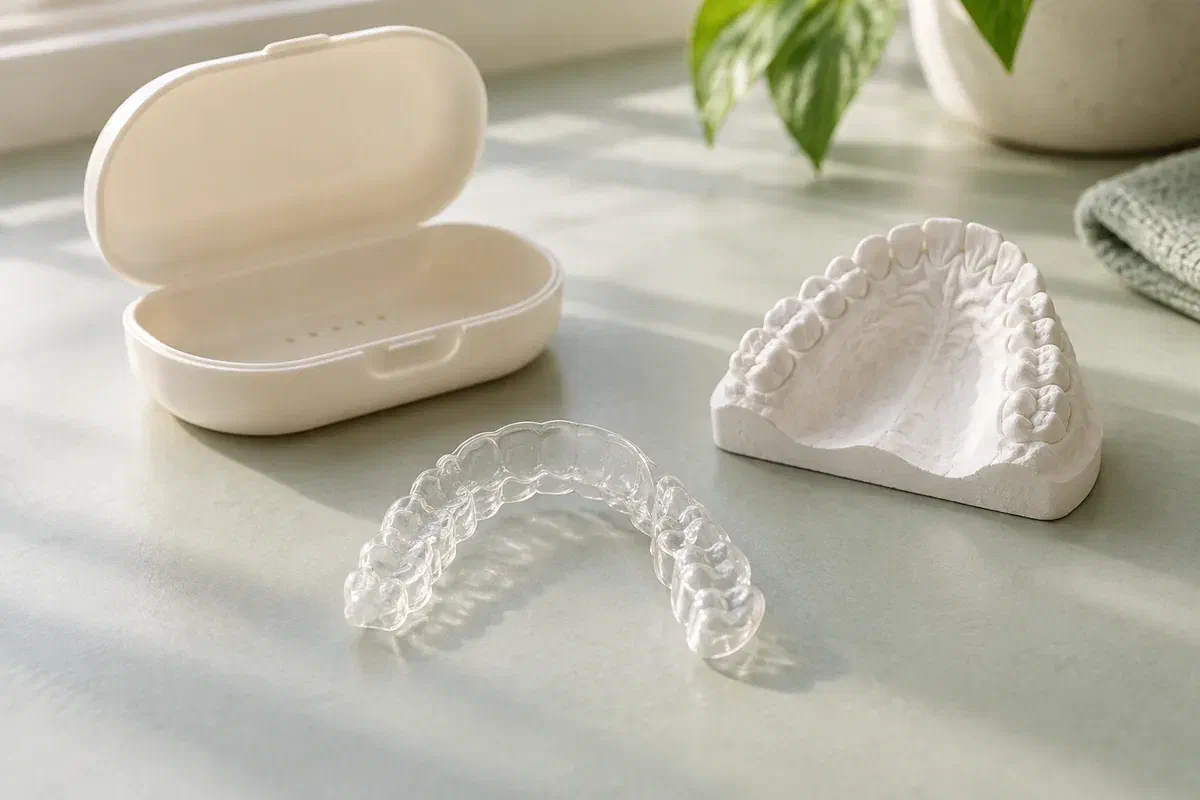
Illustrative clear upper retainer beside a protective case and dental cast
Sorting out the cause

Lost, damaged or misfitting? Start with which one it is.

Let us know which arch is affected and what you've noticed. Mention a bonded wire if you have one, and any fillings, crowns or other dental care since the appliance was made.

No retainer at all

If it's gone, reach out to us or your orthodontic office soon instead of saving it for your next check-up. Ask what to bring and how to look after your alignment while you wait. Supply times vary, so don't plan around same-day delivery.

Warped, split or bent

Heat, chewing or a drop on a hard floor can distort a retainer. Keep it, put it in its case and bring it along. Point to the problem area. Resist reshaping it with hot water, gluing a crack or filing a rough edge.

Tight, loose or uneven

Describe when the change started and whether there was a gap in wear. A retainer that hurts shouldn't be pushed into place. The clinician will look at whether the appliance or the teeth have shifted, since that determines what's recommended.

If a thin wire is bonded behind your front teeth as well, say so. A loose or broken bonded retainer is assessed separately, and a removable replacement doesn't take care of it.

What you gain from the assessment

Clear answers before a new appliance is made

Knowing why the fit changed is half the value. The other half is leaving with a clear sense of what your next retainer should hold, how often to wear it, and who will check it later. Without that, a replacement can end up repeating the same problem.

Talk openly about what got in the way of the old routine. A retainer left behind at the gym, a cleaning method that clouded the plastic, or confusing instructions can all play a part. Together we can look at realistic changes, bearing in mind that every design still needs regular wear and care.

Fit judged against your current teeth

Ask whether earlier scans or models still match your mouth. Mention any restorations since your last appliance. Those details tell the clinician whether new records are needed and how the replacement should be made and checked.

A decision about movement you've noticed

If an alignment change concerns you, bring it up early. Ask what a replacement would maintain and whether an orthodontic opinion might be useful. You can then decide between keeping things as they are and exploring further treatment.

Care steps that make sense to you

Request clear wear hours, cleaning instructions, storage tips and review timing for the chosen design. Explain if your schedule is irregular or you travel for work. You should know how to reach us if the new retainer feels wrong.

Step by step

Understand the fit problem first; then plan the replacement.

How many visits you need depends on your appliance and findings. Ask about the expected appointments, fees, and arrangements for making and fitting the new retainer.

  1. Describe the change

    Bring the retainer, even if it's warped or cracked, plus any orthodontic information you have. If someone else did your original treatment, we can talk about requesting records. Tell us when you noticed the fit change and what you'd like to keep.

  2. Compare appliance and teeth

    The clinician checks your teeth, bite and the retainer itself, and considers whether replacement alone addresses your concern. Raise anything that might change the plan, like a loose bonded wire, recent fillings, gum soreness or interest in realignment.

  3. Agree on design and records

    Discuss the retainer style that suits you and whether the clinician wants fresh moulds or a scan. Older digital files may not reflect your mouth now. Confirm how the process runs and what to do with your teeth in the meantime.

  4. Fit it and walk through the routine

    At fitting, practise inserting and removing the new retainer and mention any pressure or difficulty. Confirm the wear and care plan and your next review. Ask what to do if it doesn't seat at home the way it did in the chair.

Protecting the fit

Heat, storage and check-ins: three things to get right.

Use the instructions that come with your replacement. Each material has its own care needs, and how many hours you wear it is for the clinician overseeing your retention to set.

Keep it cool

Plastic retainers can distort with heat. Avoid hot water, dishwashers, sunny windowsills and car interiors on warm days. If you suspect it's been warped, don't try to bend it back; bring it in so the fit can be checked.

Store it the same way every time

Put it straight into its case when it comes out, not into a pocket or onto a napkin. That habit protects it at meals out, during sports and when you're away. A spare case in your bag can help.

Report fit changes early

When asked, pack the retainer for your visit and let us know if it starts to feel different. If you've gone a while without wearing it, ask how to restart rather than doubling up hours on your own. Upcoming dental work is worth mentioning too.

Patient information: British Orthodontic Society — continuing retention and appliance types

Where the findings may lead

New retainer, assessed retainer or alignment plan

Depending on the cause, we may discuss the current appliance, a replacement, or separate treatment for alignment. Any recommendation should suit your teeth today and what you want from them.

When the current position is the one to keep

A replacement removable retainer

Clear or wire-and-acrylic options may be considered if suitable. Ask why a particular style is proposed, what the fee covers and how follow-up works. The fit of a new appliance should always be confirmed, not taken for granted.

When the problem may be fixable

A professional check of the current appliance

Some fit problems need evaluation before anyone can say whether adjustment, repair or a new retainer is the answer. Ask what's possible for that material. Repair isn't always suitable, and any home attempt to fix it should be mentioned.

When you'd like teeth moved back

A separate plan for tooth movement

If shifting bothers you, an orthodontic opinion may be worth getting first, since a new retainer would be shaped to the present position. Discuss scope, responsibilities and possible referral. Choosing to hold teeth and choosing to move them are different decisions.

Fit and replacement questions

Is it the appliance, the teeth, or both?

The answers depend on your earlier treatment, your current teeth and the records available. Reach out with whatever information you have.

(905) 876-4488
My retainer feels tight after a few missed nights. Should I keep wearing it?
Mild snugness can happen after a short break, but pain or a retainer that won’t seat is a reason to stop and call. Ask the clinician how to proceed rather than forcing it or creating your own catch-up schedule.
Can a retainer warp in a hot car?
Heat can distort some retainer materials. If it was left somewhere warm and now fits differently, bring it in. Don’t try to reshape it, as that can make the fit harder to assess.
How can I tell whether my teeth moved or the retainer changed?
It’s often hard to tell at home. The clinician can compare the appliance with your teeth and look for damage or distortion. Bring the retainer and describe when the change began.
Could a new filling be why my retainer doesn't fit?
It’s possible. Changes to tooth surfaces can affect how an appliance seats. Mention any recent dental work and bring the retainer so the fit can be reviewed.
Is a loose retainer a problem if it still stays in?
Looseness can mean the appliance may not be holding teeth as intended. Bring it to a review so the clinician can check whether it still does its job and whether replacement or adjustment should be discussed.
If I need a new retainer, can the fitting be planned around a school or work schedule?
Mention your availability when booking, including our Monday to Thursday hours. Ask how many visits are likely so you can plan from Oakville. Timing depends on what the assessment shows.
Retainer checks for Oakville

That retainer that won't sit right? Bring it along.

Tight, loose, damaged or missing: any of these is a good reason to get in touch with our Bronte Street practice. Bring it with any treatment information you have so we can focus on fit, alignment and a routine that holds up.

The assessment determines the design, the records required, timing, fees and whether an orthodontist should be involved. Please don't plan on leaving with a new retainer the same day.

Visit Milton Dental Clinic
Unit 1, 342 Bronte St. S, Milton, ON L9T 5B7
Get directions Clinic hours
Monday–Thursday
11am–7pm
Friday–Sunday
By appointment only

Areas we serve

  • Milton
  • Oakville
  • Mississauga
  • Georgetown
  • Halton Hills
  • Acton
  • Campbellville
  • Brampton
  • Burlington
  • Puslinch
  • Rockwood
  • Erin
  • Caledon
  • Etobicoke
  • Old Milton
  • Bronte Meadows
  • Timberlea
  • Dorset Park
  • Dempsey
  • Clarke
  • Beaty
  • Coates
  • Harrison
  • Scott
  • Willmott
  • Ford
  • Bowes
  • Cobden
  • Walker
  • Mountain View
  • Milton Heights
  • Hawthorne Village
  • Valley View
  • Fallingbrook
  • Nassagaweya
  • Trafalgar
  • Esquesing
  • Nelson
  • Brookville
  • Moffat
  • Glen Williams
  • Norval
  • Limehouse
  • Stewarttown
  • Ashgrove
  • Hornby
  • Silver Creek
  • Speyside
  • Scotch Block
  • North Oakville
  • River Oaks
  • Glen Abbey
  • West Oak Trails
  • Palermo
  • Bronte Creek
  • College Park
  • Joshua Creek
  • Uptown Core
  • Preserve
  • Iroquois Ridge
  • Lisgar
  • Meadowvale
  • Meadowvale Village
  • Churchill Meadows
  • Erin Mills
  • Central Erin Mills
  • Streetsville
  • East Credit
  • Creditview
  • Heartland
  • Sheridan
  • Mount Pleasant
  • Credit Valley
  • Huttonville
  • Churchville
  • Springbrook
  • Northwest Brampton
  • Bram West
  • Fletcher's Meadow
  • Fletcher's Creek South
  • Alton Village
  • Orchard
  • Millcroft
  • Headon Forest
  • Tansley
  • Brant Hills
  • Tyandaga
  • Kilbride
  • Lowville
  • Aberfoyle
  • Morriston
  • Arkell
  • Hillsburgh
  • Freelton
  • Carlisle
  • Waterdown
  • Flamborough
  • Mountsberg

How can we help?

Milton Dental Clinic

Have a question about your smile? Choose the option that works best for you.

For urgent dental concerns, please call.
Messages are reviewed during clinic hours.