

Illustrative patient and clinician discussing a removable retainer and its protective case
Cosmetic Dentistry

Replacement Retainers in Old Milton

A retainer that has been in your life for a decade or more eventually shows it: yellowed plastic, a tired wire, a looser grip. From Old Milton, talk with us about whether yours still does its job and what a replacement should hold.

Old Milton, long-term retention

Years of faithful wear can leave a retainer worn thin.

Plenty of adults still wear the retainer they were handed as teenagers. It sits in the bathroom cabinet, goes in at bedtime, and nobody thinks much about it until a crack appears or it starts to feel looser than it used to. Age alone isn't a reason to swap it out, but wear and fit deserve an honest look.

Remember that a retainer maintains; it doesn't correct. A new one is shaped to your teeth as they are now, including any small drift that crept in over the years. Before ordering, consider whether the current position suits you or whether you'd like an assessment of how things have changed since treatment ended.

Our Bronte Street practice is close to Milton's historic downtown, so a review can fit into an ordinary errand. Tell us roughly how old the appliance is and when it last felt right. You don't need the original orthodontist's name or a tidy wear diary for us to help you sort out the options.

Ask us to look at an older retainer
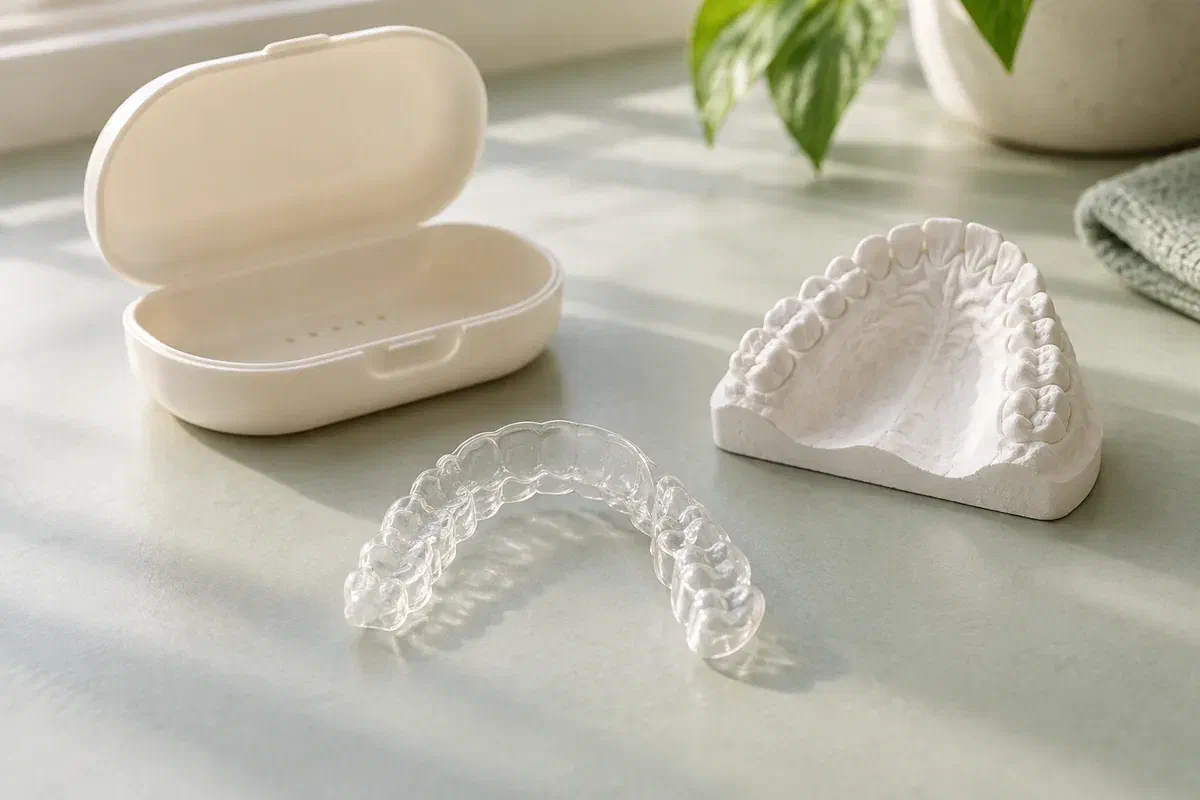
Illustrative clear upper retainer beside a protective case and dental cast
Signs it may be time

Small changes in an older appliance are worth mentioning.

When you get in touch, describe what you've noticed: a missing retainer, visible damage, a different feel, or just a sense that it's overdue for a look. Say which arch it covers and what dental work you've had since it was made.

Misplaced after all these years

Even a well-loved routine can slip during a move, a renovation or a holiday. Call promptly instead of putting it off until your next hygiene visit. Ask what to bring along and how to manage until you're seen, and don't assume a new one can be supplied right away.

Discoloured, cracked or thinning

Older plastic may yellow, cloud or develop fine cracks, and wires can fatigue. Bring the retainer in its case so the wear can be judged directly. Avoid patching it with glue, softening it in hot water or bending the wire back yourself.

Looser, tighter or rocking

A long-standing retainer can stop fitting because the appliance has changed, because the teeth have, or both. Describe when you first noticed it. Don't push it on through discomfort; the clinician needs to sort out which is which before advising you.

Many people treated years ago also have a bonded wire behind the lower or upper front teeth. If that wire feels loose or rough, mention it alongside the removable retainer. It is assessed on its own terms.

Why the review is worthwhile

Today's teeth, today's plan

A decades-old retainer was planned around a mouth that may since have gained crowns, fillings or a missing tooth. A review sets out what the replacement is meant to keep, how often to wear it now, and who to call if it starts to feel wrong. That brings long-term retention up to date.

It's also an opportunity to revisit habits that have quietly changed. Perhaps you wear it less than you used to, or you've switched cleaning products. Talk about what's realistic for you now, keeping in mind that no appliance removes the need for regular wear and care.

Fit planned around later dental work

Bridges, crowns, bonding and large fillings can all alter how a retainer seats. List what you've had done since the original was made. Ask whether new records are needed so the replacement suits the surfaces that are actually there.

An honest look at gradual drift

Teeth can move slowly across many years. If a crowded lower front tooth or a new gap bothers you, say so before a retainer is agreed. Ask whether maintaining things as they are or seeking an orthodontic opinion makes more sense for you.

Instructions refreshed for your life now

Guidance given when you were fourteen may not match the design you receive today. Ask for clear wear hours, cleaning steps and review timing. If you split your time between two homes or travel often, mention that so the routine is workable.

What the appointments involve

Review the history, check the fit, then decide.

The steps vary with the appliance and what the exam turns up. Ask how many visits to expect, what the fees cover, and how the new retainer will be fitted.

  1. Gather what you still have

    Bring the current or broken retainer and any paperwork from earlier orthodontic treatment, however old. If records may still exist at another office, we can talk about requesting them. Share any changes in your smile you've spotted over time.

  2. Examine the teeth and the appliance together

    The clinician compares the retainer with your present teeth and bite and considers whether a replacement alone answers your concern. This is the time to mention a loose bonded wire, new restorations, tenderness, or a wish to reconsider alignment.

  3. Choose the design and take records

    Discuss which retainer type suits your mouth now and whether a scan or new impressions are required. An old model or file may no longer match. Confirm the next steps and any advice for wearing, or not wearing, the old appliance in the interim.

  4. Fit, practise and confirm the routine

    At the fitting, practise placing and removing the retainer and describe any pressure. Go over wear and cleaning instructions and when you'll be seen again. Ask who to contact if it feels different once you're home.

Making the new one last

Old habits, updated for a new appliance.

Follow the care sheet for your particular retainer even if you've worn one for years. Materials differ, and the number of hours you wear it is set by whoever manages your retention now.

Keep a case in reach

Store the retainer in its case whenever it's out of your mouth, not on a tissue or the edge of the sink. A second case in a coat pocket or bag helps on days out, at restaurants and when visiting family.

Revisit how you clean it

A method that suited an older appliance may not suit the new material. Ask which products and water temperatures are safe. Keep it away from heat, and check before using a soak sold for dentures. Report any film, odour or roughness.

Let us check it from time to time

Bring the retainer to appointments when asked and mention changes in fit or appearance. If you've missed a stretch of wear, ask how to resume rather than improvising. Before future dental work, ask whether the retainer will still fit afterward.

Patient information: British Orthodontic Society — continuing retention and appliance types

Weighing the options

Three directions an older retainer can take.

We can talk through keeping the current appliance under review, making a new one, or looking at alignment separately. The right choice depends on your teeth now and what you want from them.

When the aim is to hold things steady

A fresh removable retainer

Depending on suitability, a clear or wire-and-acrylic retainer may be discussed. Ask why one style is preferred, what the fee includes, and how the fit will be followed. A new appliance should be checked in your mouth, however similar it looks to the old one.

When it may still have life left

Assessing the retainer you already wear

An older appliance sometimes needs a professional look before anyone can say whether adjustment, repair or replacement is best. Ask what's possible for that material and that damage. Ageing acrylic and fatigued wire don't always take a repair well, and any patching you've done over the years is worth mentioning.

When years of drift bother you

A separate look at alignment

Wanting to reverse movement is a different goal from holding it, so request an orthodontic assessment while there's still no new retainer shaped to the current position. Discuss the scope of treatment and whether a referral would help. Holding and moving teeth are distinct decisions.

Asked by long-time wearers in Old Milton

What adults with older retainers tend to ask

Answers depend on your original treatment, how your teeth sit today and what records exist. Share what you remember; it's enough to begin.

(905) 876-4488
My retainer is fifteen years old but still fits. Should I replace it anyway?
Not automatically. Bring it in so the clinician can check the material, the fit and your teeth. If it’s sound and seating well, it may be fine to continue. If it’s worn or cracked, ask what replacing it would involve.
Why has my old retainer turned yellow or cloudy?
Over time, plastic can discolour or collect deposits, especially with some cleaning methods or foods. Show it to the clinician, who can say whether it’s a surface issue or a sign the material is breaking down. Ask about cleaning changes for a replacement.
I've had a crown placed since my retainer was made. Will that matter?
It can. Crowns, bridges and larger fillings may change the shape of a tooth surface. Mention the work and bring the retainer. The clinician can check how it seats and whether new records are needed before anything is replaced.
Can teeth still shift in my forties or fifties?
Teeth can change position throughout adult life for various reasons. That’s one reason retention is often long term. Ask the clinician to review your situation and explain what wear schedule makes sense for you now.
The office that did my braces has closed. Where do I start?
Start with us and bring whatever you have, even an old retainer or a photo of your teeth after treatment. We can talk about whether records can be traced and whether taking new ones is simpler.
Is a bonded wire better than a removable retainer for someone my age?
Neither is better for everyone. Each has benefits and responsibilities. Ask the clinician whether a fixed or removable option, or a combination, suits your teeth, gums and routine, and what each would need from you.
Retainer reviews near Old Milton

Bring in the retainer you've worn for years.

Contact our practice on Bronte Street about an older retainer that's lost, worn out or fitting differently. Bring the appliance and any treatment notes you have, and we'll focus on fit, present alignment and a routine you can keep up.

The type of replacement, records, timing, fees and any orthodontic referral depend on assessment. We can't promise same-day supply.

Visit Milton Dental Clinic
Unit 1, 342 Bronte St. S, Milton, ON L9T 5B7
Get directions Clinic hours
Monday–Thursday
11am–7pm
Friday–Sunday
By appointment only

Areas we serve

  • Milton
  • Oakville
  • Mississauga
  • Georgetown
  • Halton Hills
  • Acton
  • Campbellville
  • Brampton
  • Burlington
  • Puslinch
  • Rockwood
  • Erin
  • Caledon
  • Etobicoke
  • Old Milton
  • Bronte Meadows
  • Timberlea
  • Dorset Park
  • Dempsey
  • Clarke
  • Beaty
  • Coates
  • Harrison
  • Scott
  • Willmott
  • Ford
  • Bowes
  • Cobden
  • Walker
  • Mountain View
  • Milton Heights
  • Hawthorne Village
  • Valley View
  • Fallingbrook
  • Nassagaweya
  • Trafalgar
  • Esquesing
  • Nelson
  • Brookville
  • Moffat
  • Glen Williams
  • Norval
  • Limehouse
  • Stewarttown
  • Ashgrove
  • Hornby
  • Silver Creek
  • Speyside
  • Scotch Block
  • North Oakville
  • River Oaks
  • Glen Abbey
  • West Oak Trails
  • Palermo
  • Bronte Creek
  • College Park
  • Joshua Creek
  • Uptown Core
  • Preserve
  • Iroquois Ridge
  • Lisgar
  • Meadowvale
  • Meadowvale Village
  • Churchill Meadows
  • Erin Mills
  • Central Erin Mills
  • Streetsville
  • East Credit
  • Creditview
  • Heartland
  • Sheridan
  • Mount Pleasant
  • Credit Valley
  • Huttonville
  • Churchville
  • Springbrook
  • Northwest Brampton
  • Bram West
  • Fletcher's Meadow
  • Fletcher's Creek South
  • Alton Village
  • Orchard
  • Millcroft
  • Headon Forest
  • Tansley
  • Brant Hills
  • Tyandaga
  • Kilbride
  • Lowville
  • Aberfoyle
  • Morriston
  • Arkell
  • Hillsburgh
  • Freelton
  • Carlisle
  • Waterdown
  • Flamborough
  • Mountsberg

How can we help?

Milton Dental Clinic

Have a question about your smile? Choose the option that works best for you.

For urgent dental concerns, please call.
Messages are reviewed during clinic hours.