

Illustrative patient discussing an enamel colour concern with a dental clinician
Cosmetic Dentistry

Resin Infiltration for White Spots in Burlington

Whitening strips brightened the tooth, yet the chalky patch is still there, perhaps even easier to see. Resin infiltration works differently from bleaching, and an exam can show whether it suits the spot that is bothering you.

When whitening does not solve it

Why didn’t bleaching make the white spot go away?

Bleaching changes the overall shade of a tooth. A white spot, on the other hand, is usually a problem of structure: the enamel in that patch is more porous, so it reflects light in a chalky way. Lightening the tooth around it does not fill those pores, and for some people the mark looks just as obvious afterward.

Infiltration takes the opposite route. A thin resin seeps into the porous zone of a suitable lesion and is hardened in place, which can let light pass through more evenly so the patch blends better. Whether that is realistic depends on the lesion. Marks from braces, from early tooth development and from other causes do not all behave alike.

People from Burlington sometimes book after spending money on several whitening products, so we start by sorting out what the mark actually is. The exam, your history and your goals decide whether infiltration, prevention, another treatment or leaving the tooth alone is the sensible next step. You will also hear how much contrast could linger.

Find out what the spot really is
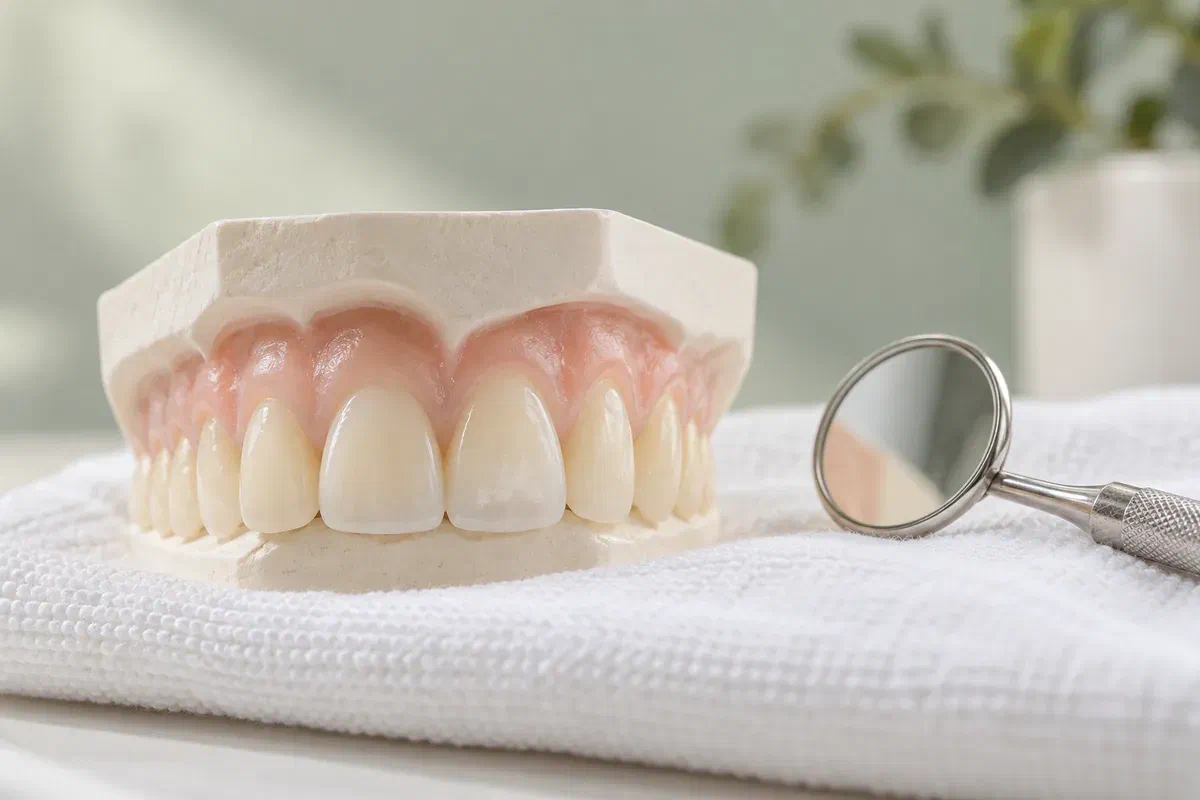
Illustrative dental teaching model with a subtle white enamel patch beside a dental mirror
Three common starting points

Which description sounds like yours?

Before anything cosmetic, tell us when the patch showed up, whether it has shifted or grown, and whether braces, bleaching or sensitivity are part of the story. A photo can show the concern; it cannot diagnose it.

Patches traced around old brace hardware

These outlines often mark enamel that lost mineral while plaque was hard to reach. The first question is whether that process is still going on. Prevention belongs in the conversation from the start, so that improving the look never leaves the health of the surface in doubt.

Spots that came in with the tooth

If the mark has always been there, or similar patches appear on several teeth, mention it. Origin influences what is likely to work. Developmental marks can respond to infiltration quite differently from lesions that formed later, and the plan should reflect that.

A white area that is pitted or sore

Roughness, a small hole or a twinge points to more than colour. Ask what else needs examining and whether a repair should come before appearance. Infiltration is not intended to replace missing or broken enamel.

Suitability is assessed one area at a time. Infiltration is meant for selected lesions whose surface has not broken into a cavity; damaged enamel needs its own restorative plan.

Different from a shade change

Working inside the mark itself

Infiltration addresses the porous lesion directly, which is why it may be worth discussing before a veneer or bonding layer is considered. Bring up the preparation involved, the trade-offs against no treatment and the limits of what the resin can do. A small procedure is still a procedure, and it should be explained in full.

The evidence shows variety. Some lesions mask fully, some improve partway and a few hardly change. Before treatment, describe what a good outcome means to you, agree how it will be assessed and talk through the plan if a visible outline remains.

Patient information: Clinical study — variable masking of developmental and post-orthodontic lesions

A plan built around the specific lesions

Certain marks may suit infiltration while others call for something else. Find out whether your spots share a cause or differ from tooth to tooth. That is usually why treatment is limited to chosen surfaces rather than applied to the whole smile.

Clear words about the probable result

Say what you are hoping for: a softer outline, a more even look in photos, or simply an explanation. Ask what each lesion can reasonably achieve. Other people’s before-and-after pictures are useful for discussion, not as a guarantee.

Every alternative on the table

Ask how infiltration compares for your teeth with whitening, microabrasion, bonding and remineralization. Consider preparation, likely benefit, upkeep and fees together. If you choose not to proceed, nothing commits you to a larger cosmetic plan.

How the visit runs

Diagnosis first, resin only if it fits

The exact steps vary with the findings and the system chosen. Ask what each appointment involves, how your gums are protected during treatment and when the appearance is best evaluated.

  1. Share your whitening history and have the enamel checked

    List the products you have used, any braces and how long the spots have been visible. The clinician looks at the lesions’ condition and likely cause. Ask whether prevention or further assessment needs to happen before an optional cosmetic procedure.

  2. Decide on the teeth and the realistic goal

    Agree which surfaces are included. Review the expected improvement, the possibility of incomplete masking, alternatives, fees and consent. Mention allergies or past reactions to dental materials, and ask how they change the plan.

  3. Treat the chosen surfaces

    If treatment is appropriate, the area is isolated, the surface is prepared and the resin is applied, then cured with a light. Ask for each step and the comfort measures to be explained. This is carried out by a clinician, not bought over the counter like a bleaching kit.

  4. Review the change at a later visit

    Note how the tooth looks immediately and when it will be checked again. Ask how photographs or records will document the difference. If some contrast is left, discuss it before assuming that more preparation or a different procedure is the answer.

Afterward

Healthy habits outlast any cosmetic fix

Follow the guidance for the treatment you received. Improved appearance does not replace checkups, cleanings or the prevention steps that suit your teeth.

Leave with clear instructions

Ask whether there are temporary limits on eating, drinking, brushing or products. If it helps, write the advice down. Do not copy aftercare rules from whitening or bonding, since those procedures are different.

Hold on to the daily prevention

Review toothbrushing, flossing and any fluoride recommendations that apply to you. If the original marks formed when cleaning was difficult, ask for hands-on help. Treating what is there now should go along with protecting against new spots.

Pause the extra whitening products

Check with the clinician before going back to bleaching strips or gels, and report any new roughness, soreness or colour change. Ask when the result should be rechecked and whether polishing could help. Gritty pastes and home scrubbing are not a way to finish the job.

Patient information: Clinical follow-up — reviewing colour after white-spot infiltration

Burlington choices compared

Three directions after the exam

A visible spot is not always a reason to treat. For each route, ask what it aims to accomplish, what it changes in the tooth and what watching the area instead would involve.

When enamel health is the priority

Protecting the enamel and observing

Preventive care with scheduled reviews may come before cosmetic treatment or replace it. Ask what changes the clinician will look for and when the next decision is planned. A healthier surface and a mark that disappears are different results.

When the findings support a focused step

Infiltrating the lesion or using a similar surface method

Ask whether infiltration or another surface technique best suits this lesion. Talk about preparation and the chance of leftover contrast. If several methods might be combined, their sequence and purpose should be explained before any irreversible step.

When the issue goes past suitable porous enamel

Bonding or restoration for a separate problem

Bonding or another restoration may be raised where the tooth’s condition and your goals support it. Compare how much tooth is prepared and the upkeep with the expected benefit. A mark that is just noticeable does not automatically justify a larger restoration.

Burlington questions on white spots

Whitening, infiltration and what to try first

Every lesion’s cause, surface and depth affect the discussion. An exam is needed before a personal plan or likely outcome can be described.

(905) 876-4488
Can whitening make white spots more noticeable?
It can for some people, at least for a while, because bleaching and dehydration can increase the contrast between the spot and the tooth around it. Mention what you used and what you saw. The clinician can explain how that affects your options.
Should I finish whitening before or after infiltration?
That depends on your plan, so discuss it before treatment is booked. Explain past bleaching and the shade you would like. Ask whether whitening is suitable at all and how the steps would be ordered.
Is resin infiltration just a stronger whitening treatment?
No. It works inside suitable porous lesions to change how they look, rather than lightening the whole tooth. Keep overall shade as a separate goal so each treatment has a clear purpose.
Can a hole in the white patch be treated with infiltration?
A surface that has broken down needs an assessment and the care appropriate to that defect. Infiltration for intact lesions should not replace a needed repair. Point out any roughness, food catching or sensitivity.
Do whitening toothpastes help with the spots themselves?
Ask the clinician before relying on them. Some are abrasive, and scrubbing at a lesion is not a way to remove it. Your exam and prevention plan should guide which toothpaste suits your teeth.
Will each white spot end up looking the same after treatment?
Not necessarily. Lesions in one smile can differ in depth and structure. Ask about the range of change expected for each and how uneven results would be handled. A perfectly uniform shade should not be treated as assured.
From Burlington to Bronte Street

Stop guessing with whitening kits

Come in to our Bronte Street practice and have the white spots examined, hear what probably caused them and review the options that suit your teeth. Bring questions about contrast, prevention, preparation and the change that would matter to you.

Suitability and availability require an exam to confirm. Infiltration may not fully mask a mark, and other care may be suggested after assessment.

Visit Milton Dental Clinic
Unit 1, 342 Bronte St. S, Milton, ON L9T 5B7
Get directions Clinic hours
Monday–Thursday
11am–7pm
Friday–Sunday
By appointment only

Areas we serve

  • Milton
  • Oakville
  • Mississauga
  • Georgetown
  • Halton Hills
  • Acton
  • Campbellville
  • Brampton
  • Burlington
  • Puslinch
  • Rockwood
  • Erin
  • Caledon
  • Etobicoke
  • Old Milton
  • Bronte Meadows
  • Timberlea
  • Dorset Park
  • Dempsey
  • Clarke
  • Beaty
  • Coates
  • Harrison
  • Scott
  • Willmott
  • Ford
  • Bowes
  • Cobden
  • Walker
  • Mountain View
  • Milton Heights
  • Hawthorne Village
  • Valley View
  • Fallingbrook
  • Nassagaweya
  • Trafalgar
  • Esquesing
  • Nelson
  • Brookville
  • Moffat
  • Glen Williams
  • Norval
  • Limehouse
  • Stewarttown
  • Ashgrove
  • Hornby
  • Silver Creek
  • Speyside
  • Scotch Block
  • North Oakville
  • River Oaks
  • Glen Abbey
  • West Oak Trails
  • Palermo
  • Bronte Creek
  • College Park
  • Joshua Creek
  • Uptown Core
  • Preserve
  • Iroquois Ridge
  • Lisgar
  • Meadowvale
  • Meadowvale Village
  • Churchill Meadows
  • Erin Mills
  • Central Erin Mills
  • Streetsville
  • East Credit
  • Creditview
  • Heartland
  • Sheridan
  • Mount Pleasant
  • Credit Valley
  • Huttonville
  • Churchville
  • Springbrook
  • Northwest Brampton
  • Bram West
  • Fletcher's Meadow
  • Fletcher's Creek South
  • Alton Village
  • Orchard
  • Millcroft
  • Headon Forest
  • Tansley
  • Brant Hills
  • Tyandaga
  • Kilbride
  • Lowville
  • Aberfoyle
  • Morriston
  • Arkell
  • Hillsburgh
  • Freelton
  • Carlisle
  • Waterdown
  • Flamborough
  • Mountsberg

How can we help?

Milton Dental Clinic

Have a question about your smile? Choose the option that works best for you.

For urgent dental concerns, please call.
Messages are reviewed during clinic hours.