

Illustrative patient discussing an enamel colour concern with a dental clinician
Cosmetic Dentistry

Resin Infiltration for White Spots in Erin

Baking soda, charcoal powder, whitening strips: many people try a few home fixes before asking about white enamel spots. A professional assessment explains why those rarely help and whether resin infiltration suits your marks.

Before the next home remedy

Put down the charcoal and look closer

It is natural to try something at home first. The trouble is that a white spot is usually not a stain sitting on the surface. It is a change inside the enamel, where the structure has become more porous and reflects light differently. Scrubbing with gritty powders cannot fill those pores, and abrasive products can wear away healthy enamel around the mark.

Resin infiltration is designed for exactly that porous zone, in suitable lesions that still have an intact surface. In the clinic, the area is isolated and prepared, then a free-flowing resin is drawn into the enamel and hardened with a light. With the pores filled, the patch may scatter less light and look closer in tone to the rest of the tooth, though the amount of change varies.

For anyone coming from Erin village, Hillsburgh or the surrounding countryside, it is worth bringing a list of what you have tried, since some products affect the plan. We examine the marks, review your history and explain whether infiltration, preventive care, another option or simply monitoring makes sense. We will also tell you plainly how visible the spots may remain.

Ask about white spots, not stains
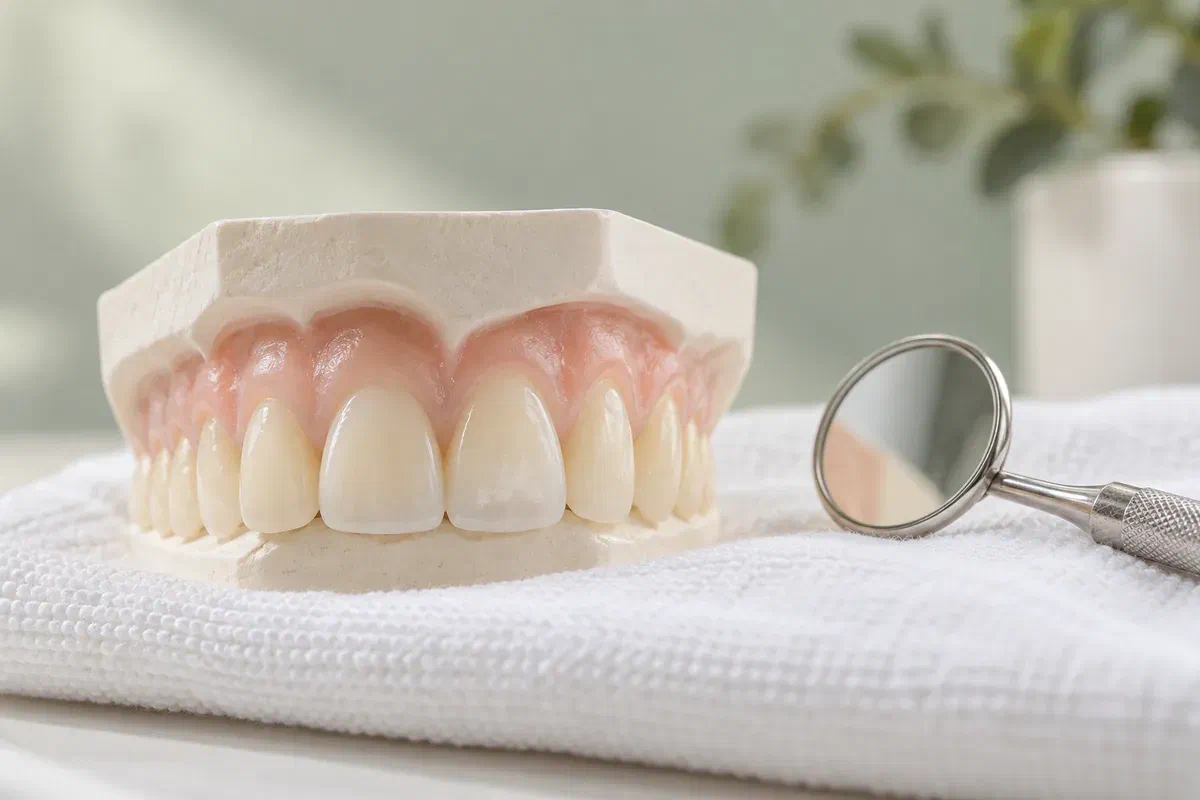
Illustrative dental teaching model with a subtle white enamel patch beside a dental mirror
What is going on in the enamel

Not a stain, but a change in structure

Tell us when you first saw the marks, whether they have shifted in size or colour, and anything relevant such as braces, sensitivity, whitening or home remedies. A photo captures the look; the exam explains it.

Mineral loss where plaque used to sit

Around old brackets or along the gumline, white patches often mark enamel weakened by plaque acids. The clinician will check whether that process has stopped. Good prevention belongs in the plan, so a better appearance never comes at the expense of a healthy surface.

Patches present since the tooth came in

Marks you have always had, or that repeat across several teeth, often trace back to how the enamel formed. That cause influences what can be expected. A treatment that softens one kind of white spot may do less for another.

Areas made rough or sensitive by scrubbing

If abrasive home products have left a tooth feeling rough or more sensitive, mention it. Wear and texture changes need assessing on their own. Infiltration is not a way to restore enamel that has been worn or broken away.

Suitability is checked for each mark. Infiltration is intended for selected lesions that have not formed a cavity; where the surface is broken, restorative care is discussed separately.

Why the professional route differs

Filling the pores instead of scouring the surface

Where a lesion is suitable, infiltration addresses the porous enamel itself, which is something no paste or powder can do. It is usually raised before anything that covers the tooth, like bonding or a veneer. You should still hear how the tooth is prepared, how the option compares with leaving it untreated and where its limits are.

Results differ from lesion to lesion. Studies describe complete masking in some cases and partial or slight change in others. Settle beforehand what result would be worth it to you, when the tooth will be looked at again and what could happen next if the mark is still easy to see.

Patient information: Clinical study — variable masking of developmental and post-orthodontic lesions

Treatment where it can help

Not every mark on your teeth will be a candidate, and they may not all share one cause. That is why a plan may focus on particular surfaces and leave the rest under observation.

Clear talk about the outcome

Explain what you are after, whether a softer outline, a more consistent smile or just understanding the marks. Then ask how close a given lesion is likely to come. Before-and-after images from other patients illustrate the idea without predicting yours.

Safer alternatives compared

Set infiltration alongside microabrasion, bonding, professionally guided whitening and remineralization for your teeth. Consider preparation, likely benefit, maintenance and fees. Declining infiltration leaves you free to stop there.

What happens at the clinic

Assessment, plan, treatment, review

The steps depend on what the exam shows and the resin system used. It is reasonable to ask what each appointment includes, how your gums are kept protected and when the appearance should be judged.

  1. List what you have tried

    Bring the names of any home products, along with how long the marks have been there and whether you had braces. The clinician examines the lesions and their likely cause. Prevention or further assessment may come before anything cosmetic.

  2. Settle the scope and expectations

    Agree which teeth and surfaces are included. Talk through the expected change, the possibility of only partial masking, other choices, fees and consent. If you have had a reaction to a dental material before, raise it here.

  3. Professional treatment of chosen areas

    If suitable, the tooth is isolated and the lesion surface conditioned, after which the resin is given time to soak in and is set with a curing light. Each step and the comfort measures can be explained. This is not something to recreate at home.

  4. A planned second look

    See the immediate result and agree on a review date. Photos from the first visit help make the comparison fair. If some contrast lingers, talk it through rather than assuming extra preparation or another procedure is needed.

Your routine from here

Gentle, steady care beats harsh fixes

The advice that counts is the advice written for your own procedure. An improved appearance is no reason to skip checkups or the preventive routine advised for your teeth.

Ask what to hold off on

Find out whether eating, drinking, brushing or certain products should change for a short time. Writing it down can help. Advice aimed at whitening or bonding procedures may not apply to yours.

Choose products with the clinician’s input

Ask which toothpaste suits you and whether fluoride is recommended. Brush carefully along the gums and clean between teeth daily. When the first marks date back to orthodontic years, a few hands-on cleaning tips can make a real difference.

Retire the abrasive remedies

Charcoal powders, baking soda scrubs and acidic home treatments are not a safe way to deal with a remaining mark. If the tooth feels rough, sore or changes colour in a way that worries you, let us know instead and ask when a review makes sense.

Patient information: Clinical follow-up — reviewing colour after white-spot infiltration

Erin options

Three sensible paths

A visible spot does not always need treatment. For each option, ask what result it is aiming for, how much of the tooth it changes and what simply keeping an eye on the mark would involve.

When the enamel needs looking after first

Prevention and patience

A preventive plan with periodic checks may come before cosmetic work or make it unnecessary. Ask what the clinician will be watching and when you will decide again. Healthier enamel and a mark that is gone are separate goals.

When the lesion suits a focused step

Infiltration or another in-office surface method

The exam shows which lesions suit infiltration and which might do better with a different surface technique. Find out what preparation is needed and how likely a faint outline is to stay. If several steps are planned, know their purpose and order before anything permanent.

When the surface itself has been damaged

Repairing worn or damaged enamel

If scrubbing or another cause has damaged the surface, bonding or a different restoration may come up, depending on your goals. Compare how much tooth would be altered and the long-term upkeep with the benefit. A visible mark alone is no reason for a larger restoration.

Questions from Erin

Home remedies, enamel and infiltration

Each lesion’s history, surface and depth shape the conversation. Nobody can describe your own plan or result without examining the teeth first.

(905) 876-4488
Can baking soda or charcoal remove white spots?
White spots are usually changes within the enamel, not surface stains, so scrubbing does not remove them. Abrasive products can wear healthy enamel instead. Ask the clinician before using them again.
Could lemon juice or vinegar remedies make the spots worse?
Acidic home treatments can soften enamel and are not recommended for white spots. Tell the clinician if you have tried them, so the exam can take any effects into account.
Do over-the-counter whitening strips help with white spots?
They lighten the overall tooth shade rather than fill porous lesions, and some people find the spots look just as obvious afterward. Mention what you have used before any treatment is planned.
Is resin infiltration a type of whitening?
No. It works inside suitable porous lesions to change their appearance. Overall tooth shade is a separate goal, and if it matters to you, the order of treatments should be discussed.
My spot now feels rough after scrubbing. Can it still be infiltrated?
The surface needs examining first. If it has worn or broken down, other care may be needed. Infiltration is meant for intact lesions and should not replace a needed repair.
Can I combine the assessment with my family’s checkups?
Often that works well for households outside town. Mention the white spots when booking so time is set aside to examine them and talk through options.
Booking from Erin

Swap the guesswork for a proper look

Make an appointment at our Bronte Street practice and let us examine the white spots and explain what probably caused them. We will review anything you have tried at home, go over options suited to your teeth and describe how much each mark could change.

Suitability and availability require an examination. Infiltration may leave some contrast, and other care might be advised.

Visit Milton Dental Clinic
Unit 1, 342 Bronte St. S, Milton, ON L9T 5B7
Get directions Clinic hours
Monday–Thursday
11am–7pm
Friday–Sunday
By appointment only

Areas we serve

  • Milton
  • Oakville
  • Mississauga
  • Georgetown
  • Halton Hills
  • Acton
  • Campbellville
  • Brampton
  • Burlington
  • Puslinch
  • Rockwood
  • Erin
  • Caledon
  • Etobicoke
  • Old Milton
  • Bronte Meadows
  • Timberlea
  • Dorset Park
  • Dempsey
  • Clarke
  • Beaty
  • Coates
  • Harrison
  • Scott
  • Willmott
  • Ford
  • Bowes
  • Cobden
  • Walker
  • Mountain View
  • Milton Heights
  • Hawthorne Village
  • Valley View
  • Fallingbrook
  • Nassagaweya
  • Trafalgar
  • Esquesing
  • Nelson
  • Brookville
  • Moffat
  • Glen Williams
  • Norval
  • Limehouse
  • Stewarttown
  • Ashgrove
  • Hornby
  • Silver Creek
  • Speyside
  • Scotch Block
  • North Oakville
  • River Oaks
  • Glen Abbey
  • West Oak Trails
  • Palermo
  • Bronte Creek
  • College Park
  • Joshua Creek
  • Uptown Core
  • Preserve
  • Iroquois Ridge
  • Lisgar
  • Meadowvale
  • Meadowvale Village
  • Churchill Meadows
  • Erin Mills
  • Central Erin Mills
  • Streetsville
  • East Credit
  • Creditview
  • Heartland
  • Sheridan
  • Mount Pleasant
  • Credit Valley
  • Huttonville
  • Churchville
  • Springbrook
  • Northwest Brampton
  • Bram West
  • Fletcher's Meadow
  • Fletcher's Creek South
  • Alton Village
  • Orchard
  • Millcroft
  • Headon Forest
  • Tansley
  • Brant Hills
  • Tyandaga
  • Kilbride
  • Lowville
  • Aberfoyle
  • Morriston
  • Arkell
  • Hillsburgh
  • Freelton
  • Carlisle
  • Waterdown
  • Flamborough
  • Mountsberg

How can we help?

Milton Dental Clinic

Have a question about your smile? Choose the option that works best for you.

For urgent dental concerns, please call.
Messages are reviewed during clinic hours.