

Illustrative patient discussing an enamel colour concern with a dental clinician
Cosmetic Dentistry

Resin Infiltration for White Spots in Oakville

In the mirror they are faint. In a flash photo they glow. If white enamel spots keep catching the camera, an assessment can explain what they are and whether resin infiltration might quiet the contrast without covering the tooth.

Caught on camera

A spot that only seems to appear in pictures

White enamel lesions scatter light differently from the enamel around them, which is why bright light and flash can make them pop. They may also look more obvious when teeth are dry, for instance after a long conversation or first thing in the morning. That optical quality is exactly what resin infiltration tries to change.

During the procedure, a thin, flowing resin is drawn into the tiny pores of a suitable lesion and then hardened. With those spaces filled, the patch can transmit light more like neighbouring enamel, so the outline may fade. The key word is suitable: lesions differ in cause and depth, and only an exam can tell which ones qualify.

Many people who come from Oakville arrive with a few photos on their phone, and those are a fine place to start. We then examine the teeth themselves, ask about braces, sensitivity and past treatment, and talk through whether infiltration, prevention, another option or no treatment makes the most sense. Expect a frank view of how much contrast could remain.

Show us the spots in person
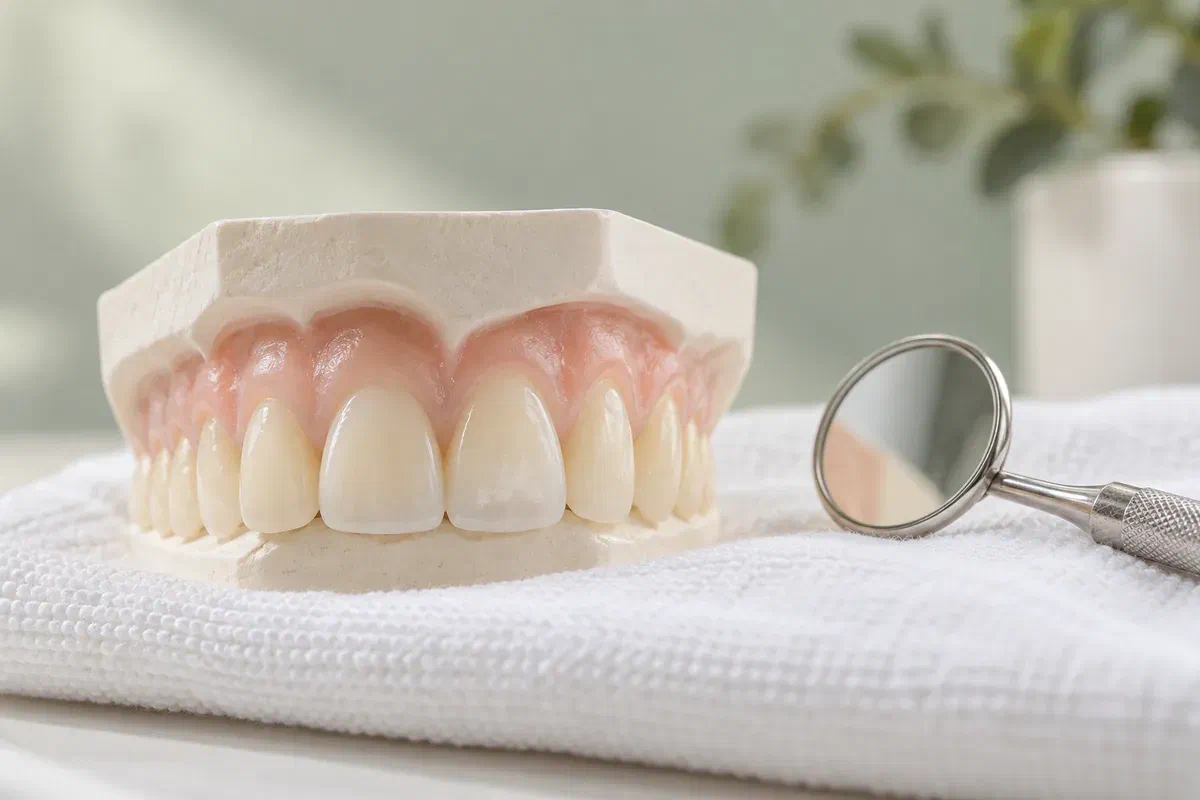
Illustrative dental teaching model with a subtle white enamel patch beside a dental mirror
Before the cosmetic question

What a clinician wants to know first

Mention when the marks appeared, whether they are changing, and anything relevant such as braces, a sensitive tooth or past bleaching. Photographs show what bothers you; the examination shows what the marks are.

Rings or squares left by orthodontic brackets

These often trace places where plaque sat against the enamel for months. Ask whether the lesion is still active and what would stop new ones forming. A plan to make the marks less visible should sit beside a clear answer about the surface’s health.

Cloudy patches that were always there

If the spot has existed as long as the tooth, say so, and mention any similar marks elsewhere in the mouth. Ask how that origin changes the outlook. Infiltration that suits one type of lesion may give a different result on another.

A mark that feels rough or reacts to cold

Texture changes, sensitivity or a visible chip are worth raising separately from colour. Ask whether another kind of care should come first and what extra examination is needed. Infiltration does not repair a tooth that has lost structure.

Each area is assessed before anything is proposed. Infiltration is aimed at selected lesions where the enamel surface is still intact; a cavity or broken surface leads to a separate restorative discussion.

The case for a lighter touch

Change how the spot handles light, not the whole tooth

Because infiltration works inside the lesion, it can be a way to address appearance before discussing anything that sits over the tooth, such as a veneer. It still deserves scrutiny. Ask how the surface is prepared, what you would gain over leaving it as is, and what the procedure cannot do.

Clinical studies describe mixed results: complete masking for some lesions, partial improvement for others and little visible change for a few. Talk about what success would look like in your own photos, how the outcome will be compared and what the options are if a faint mark still shows.

Patient information: Clinical study — variable masking of developmental and post-orthodontic lesions

Targeted at individual lesions

Some marks may be good candidates while others are not. Ask whether all the spots share one diagnosis or several. That usually explains why a plan focuses on particular surfaces instead of treating every tooth that looks uneven.

Expectations you set together

Tell the clinician whether you want the outline softened, a more even look on camera or simply to know what the mark is. Ask what is realistic for each lesion. Showcase images can guide the talk, but they are no promise for your teeth.

A fair comparison with other routes

Ask how infiltration stacks up against microabrasion, bonding, whitening and remineralization for your marks. Compare preparation, benefit, maintenance and fees. If you decide against it, you are under no obligation to move on to a bigger cosmetic job.

In the chair

Four stages, from diagnosis to second look

The specifics depend on what the examination shows and which system is used. Ask what a given appointment includes, how your lips and gums are protected, and when the result can be fairly judged.

  1. Examine the marks and the story behind them

    Explain when you first saw the spots, whether you wore braces and what you have already tried. The clinician assesses each lesion’s condition and probable cause. Ask whether prevention or more investigation should come ahead of an optional cosmetic step.

  2. Confirm the plan and its limits

    Agree on the exact teeth and surfaces involved. Go through the expected benefit, the chance of only partial masking, alternatives, fees and consent. Flag any allergy or past reaction to dental materials and ask how it affects the recommendation.

  3. Isolate, prepare and infiltrate

    When treatment proceeds, the area is kept dry and protected, the surface is prepared, and the resin is placed and set with a curing light. Ask the clinician to walk you through each stage and the comfort options. This is not a kit for home or a whitening product to brush on.

  4. Polish and compare later

    Look at the immediate result and agree when to review it. Ask what photos or notes will be used for the comparison. If some contrast persists, have a proper conversation about it rather than assuming more preparation or a new procedure is automatically next.

The weeks that follow

Keep the enamel well cared for

Stick to the guidance given for your actual procedure. An improved look is no substitute for regular dental visits or the prevention plan recommended for you.

Get the immediate rules straight

Before you leave, ask whether anything is off limits for a while, from certain foods and drinks to particular products or brushing habits. Writing it down can help. Ignore strict diets borrowed from whitening or bonding procedures you may have read about.

Maintain the prevention plan

Your daily routine matters as much as ever: toothbrush technique, flossing or interdental brushes, and fluoride if it has been advised. If your marks developed when cleaning was a struggle, ask for practical help with the routine. Looking after the existing spot should go hand in hand with lowering future risk.

Notice changes without attacking them

Report any new roughness, discomfort or colour change that concerns you. Ask when to reassess the appearance and whether polishing or another step could help. Abrasive pastes and home remedies are not a safe way to rub out a lingering mark.

Patient information: Clinical follow-up — reviewing colour after white-spot infiltration

Options for Oakville smiles

Not every bright mark needs the same answer

Some visible spots are best observed. Ask what each option sets out to achieve, what it alters in the tooth and what keeping an eye on it instead would mean.

When surface health takes priority

A prevention-first approach

Preventive care and review may come before any appearance treatment, or take its place. Ask what the clinician is watching for and when a further decision will be made. Healthier enamel and an invisible mark are separate outcomes, and one does not guarantee the other.

When the lesion suits a focused procedure

Infiltration or a comparable surface technique

Ask whether infiltration or another surface method is right for this lesion. Discuss preparation and how likely some leftover contrast is. If more than one method could be used, their order and purpose should be explained before any step that cannot be reversed.

When the issue goes beyond suitable porous enamel

Covering or rebuilding a different defect

Bonding or another restoration may be discussed when the tooth’s condition and your goals support it. Weigh the preparation and future upkeep against the improvement you expect. A mark that is simply visible should not lead straight to a larger restoration.

Asked by people from Oakville

Light, shade and white-spot treatment

The cause, surface and depth of each lesion shape the conversation. A personal plan or likely result needs an examination first.

(905) 876-4488
Why do my white spots look worse in photos than in the mirror?
Bright light and flash emphasize the way lesion enamel scatters light, and dry teeth can make marks look whiter. That is one reason photos and a live exam both help. Ask the clinician to explain what they see under normal lighting.
Will infiltration lighten my overall tooth shade?
No. It aims to change the appearance of suitable porous lesions rather than bleach the surrounding tooth. If the general shade bothers you too, raise it as its own goal so the order of any treatments is clear.
Can I have infiltration if I plan to whiten my teeth later?
Yes, as long as the plan accounts for it. Mention any whitening you have done or are considering before treatment is booked. Ask whether whitening suits your teeth and how the two would be sequenced. Hold off on a new product until the plan is settled.
Does resin infiltration change the shape or feel of the tooth?
It works within the enamel lesion rather than building a layer on top, so it is not meant to reshape the tooth. Ask how the surface will be finished and what you might notice afterward. Report anything that feels different at your review.
If the treated mark is still faintly visible, what happens next?
The remaining contrast is reviewed together with tooth health and your wishes. Ask about simply observing it and about other conservative options. A veneer or other cosmetic work is a separate decision and should not be assumed.
Do different white spots on the same tooth behave differently?
They can. Even lesions close together may vary in depth and structure. Ask about the expected range of change for each area and how uneven results would be handled, and avoid treating a perfectly uniform shade as a given.
Planning a visit from Oakville

Bring the photos and the questions

Book an assessment at our Bronte Street practice to have the white spots examined, hear what may have caused them and compare the options suited to your teeth. Ask about contrast, prevention, preparation and the change that would feel worthwhile to you.

Suitability and availability can only be confirmed after an exam. Infiltration does not guarantee a spot will vanish, and a different approach may be recommended.

Visit Milton Dental Clinic
Unit 1, 342 Bronte St. S, Milton, ON L9T 5B7
Get directions Clinic hours
Monday–Thursday
11am–7pm
Friday–Sunday
By appointment only

Areas we serve

  • Milton
  • Oakville
  • Mississauga
  • Georgetown
  • Halton Hills
  • Acton
  • Campbellville
  • Brampton
  • Burlington
  • Puslinch
  • Rockwood
  • Erin
  • Caledon
  • Etobicoke
  • Old Milton
  • Bronte Meadows
  • Timberlea
  • Dorset Park
  • Dempsey
  • Clarke
  • Beaty
  • Coates
  • Harrison
  • Scott
  • Willmott
  • Ford
  • Bowes
  • Cobden
  • Walker
  • Mountain View
  • Milton Heights
  • Hawthorne Village
  • Valley View
  • Fallingbrook
  • Nassagaweya
  • Trafalgar
  • Esquesing
  • Nelson
  • Brookville
  • Moffat
  • Glen Williams
  • Norval
  • Limehouse
  • Stewarttown
  • Ashgrove
  • Hornby
  • Silver Creek
  • Speyside
  • Scotch Block
  • North Oakville
  • River Oaks
  • Glen Abbey
  • West Oak Trails
  • Palermo
  • Bronte Creek
  • College Park
  • Joshua Creek
  • Uptown Core
  • Preserve
  • Iroquois Ridge
  • Lisgar
  • Meadowvale
  • Meadowvale Village
  • Churchill Meadows
  • Erin Mills
  • Central Erin Mills
  • Streetsville
  • East Credit
  • Creditview
  • Heartland
  • Sheridan
  • Mount Pleasant
  • Credit Valley
  • Huttonville
  • Churchville
  • Springbrook
  • Northwest Brampton
  • Bram West
  • Fletcher's Meadow
  • Fletcher's Creek South
  • Alton Village
  • Orchard
  • Millcroft
  • Headon Forest
  • Tansley
  • Brant Hills
  • Tyandaga
  • Kilbride
  • Lowville
  • Aberfoyle
  • Morriston
  • Arkell
  • Hillsburgh
  • Freelton
  • Carlisle
  • Waterdown
  • Flamborough
  • Mountsberg

How can we help?

Milton Dental Clinic

Have a question about your smile? Choose the option that works best for you.

For urgent dental concerns, please call.
Messages are reviewed during clinic hours.