

Illustrative patient and clinician discussing smile preferences with a mirror and shade guide
Cosmetic Dentistry

Smile Design in Erin

“It just looks off” is a common way to start, and a fine one. Smile design for people from Erin and Hillsburgh helps turn that feeling into specifics about shade, shape, position and gum health, so you can talk about change in words that mean something.

Finding the words

From a vague feeling to a clear description

Lots of people sense that something about their smile isn't quite right without being able to name it. Is it the colour, the length of the front teeth, a slight tilt, the gumline? Smile design works through those possibilities with you, using a mirror and an exam rather than guesswork.

Once the concern has a name, it can be placed in context. The dentist looks at each tooth's colour, outline and position, any existing restorations, the gums and your bite. It's a planning process, and the eventual suggestion depends on what's found and what you prefer.

Travelling in from Erin, you don't need to prepare a polished explanation or settle on a treatment. A few notes on when you notice the problem are plenty. You might leave considering a small step, a gradual plan, another opinion or simply a better understanding of your smile.

Describe your concern to us
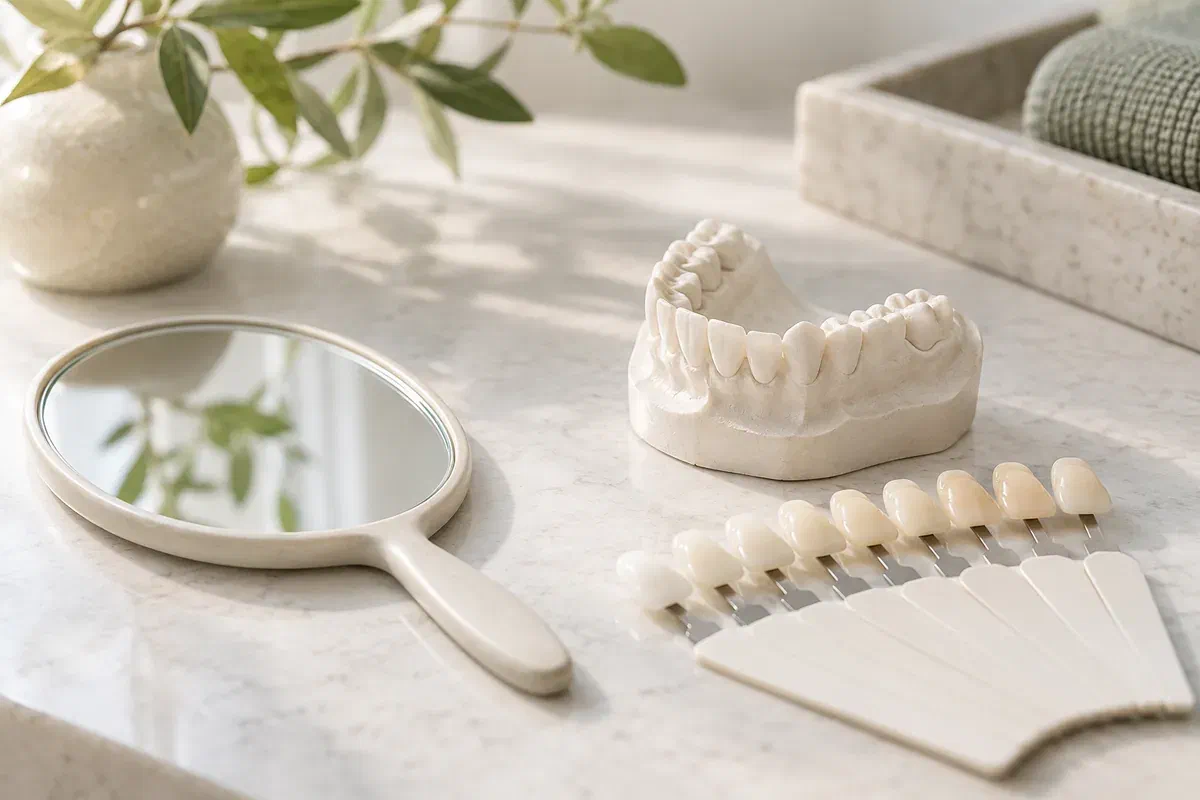
Illustrative consultation mirror, dental study cast, and natural tooth shade samples
Putting it into words

Colour, shape, position or something else?

Try to recall when the feeling comes up, perhaps in a group photo or while talking with someone face to face. Mention whether appearance, comfort, upkeep or an event is behind your visit, even if you're not sure.

Perhaps just one detail

Often the sense that something's off traces back to one feature, like a darker tooth, a chipped corner or a small gap. Once it's spotted, ask whether it can be treated on its own. Finding one detail is no reason to start changing healthy teeth nearby.

Or wear and the bite

Teeth that have worn flatter or shifted slightly can change a smile gradually. Mention any sensitivity, chewing difficulty or a feeling that your bite has changed. These findings affect what's sensible and have to be considered alongside appearance.

Or how it sits with your features

Sometimes the teeth are healthy, but proportion or shade feels out of step with your features. Describe what you like, too. Other smiles can help illustrate a direction, though copying them rarely suits; ask how a plan would work with your own face.

Naming the concern is a starting point, not a decision. Any procedure, from whitening to veneers or orthodontics, would come with its own explanation of what it involves, the risks, other options and fees before you choose.

Why naming it matters

A specific concern gets a specific answer.

With the concern pinned down, each suggested treatment can be linked to it directly. That makes it easier to judge whether a proposal fits. If the recommendation reaches further than the concern you identified together, you can ask the dentist to show what in the exam supports it.

Clarity also helps you see what's involved. Appointments, tooth preparation, cleaning habits, repairs and later replacement differ from one option to the next. Talking them through helps you weigh the change in appearance against the effort and care it would ask of you.

Words you both use

Agreeing on terms like brighter, softer or straighter avoids misunderstandings. Settle what matters most and where your limits are, such as keeping a gap or leaving sound teeth as they are. Shared language helps the dentist explain how options compare.

One step leading to the next

If the concern needs more than one kind of care, ask how the steps connect and why one goes first. Some choices depend on seeing earlier results. That keeps each decision manageable instead of committing to everything at once.

Alternatives in plain terms

Ask for every reasonable option, including no elective work, explained simply. Weigh maintenance and the effect on natural tooth structure alongside the look. A good explanation is also honest about what isn't certain.

How the conversation goes

Notice, name, explore, decide

The visits and records needed vary with your concern and the treatments that come up. It's fine to ask what the first appointment includes and whether further assessment or a referral might follow.

  1. Talk it through with a mirror

    Describe what you see and when it bothers you, along with past dental work. Mention timing and the kinds of treatment you'd be comfortable with. Photos you like can help, with the discussion staying centred on your smile.

  2. Examine teeth, gums and bite

    The dentist checks your teeth, gums, restorations and bite, and may suggest further records. Any health findings are explained on their own, separately from cosmetic ideas, so you're never unsure which is which.

  3. Explore the possible approaches

    Review what could address the concern, how much preparation each option involves, its limits and its upkeep. If a model, photos or a trial are proposed, ask what they show and what they can't. Not every visit uses a preview.

  4. Choose a plan, or choose to wait

    If you go ahead, confirm treatment, consent, fees and appointments first. Where other practitioners are involved, clarify who does what. Ask when you'll review the result and what happens if your preference or the findings change.

Looking after a change

Ask about the home routine before you start.

Smile design is the planning step. Each treatment that follows brings its own aftercare, so ask for specific guidance on every part rather than assuming one routine covers it all.

The routine at home

Ask about cleaning techniques, recall visits and any retainer, guard or product that comes with your treatment. If it sounds hard to fit into your day, mention it before deciding. Daily habits are a big part of whether a plan works.

Reviews and eventual repairs

Find out how often results will be checked and what may need attention in future. Restorations can wear or chip and eventually need replacing. Treat lifespan and costs as estimates rather than guarantees.

Telling us early

A rough edge, a bite that feels different or a spot that's hard to clean are worth a phone call. Keep appearance questions for your review. Please leave any adjusting or smoothing of dental work to the team.

Patient information: British Orthodontic Society — long-term implications of restorative and alignment choices

Erin smile options

Once it has a name, the choices get simpler.

The plan could be one focused step, a set of coordinated treatments, or no elective care. Ask how each option answers the concern you named together.

When one feature is the cause

A focused fix

Whitening, a clean, bonding an edge or another targeted option may be suitable. Ask what difference you'd notice and what wouldn't change. A small, well-chosen step is often all a named concern needs.

When position, shade and restorations interact

A plan with several parts

Sometimes the feeling that something's off comes from several factors at once. Ask whether orthodontic advice would help and how stages would be sequenced. Each part should connect back to the concern you described.

When knowing is enough

Understanding, without treatment

For some people, simply knowing what they were noticing is enough to feel at ease. Ask about routine check-ups and anything to keep an eye on. A consultation without cosmetic work can still settle a long-held question.

Questions from Erin

When you can't quite say what's wrong

Ask how the concern was identified, what treatment would address it and what upkeep would follow.

(905) 876-4488
What if I can't explain what I don't like about my smile?
That’s common. The dentist can go through colour, shape, length, spacing and the gumline with you using a mirror. Often the concern becomes clear once you look at each feature in turn.
Do the gums affect how my teeth look?
Yes. Gum shape, level and health influence how long teeth appear and how even a smile looks. Gum health is checked first, as any problems may need care before cosmetic options are discussed.
What words help describe the look I want?
Terms like brighter, softer edges, more even or less gappy are a good start. Explaining why you like an example smile is often more useful than the photo itself, and the dentist can help refine the language.
Could my smile look off because of my bite?
It’s possible. Teeth that have shifted, tilted or worn can change how a smile looks. The bite is assessed during planning, and any connection to your concern will be explained.
Can I bring someone to help explain what I mean?
You’re welcome to ask when you book. A partner or friend can help describe what they notice, but the plan should centre on what you want, so your own priorities guide the discussion.
How many visits might it take from Erin to finish a plan?
It depends on the concern and the treatment chosen. Some focused changes take a single appointment; others involve several. Ask for an estimate of visits for each option so you can plan your trips.
Smile design for Erin

Bring the feeling. We'll help find the words.

Arrange a consultation at our Bronte Street practice to look closely at the shade, outline, alignment and gums that make up your smile. Together we can name what's catching your eye and talk through the choices that follow.

Recommendations, records, timing and fees depend on what the examination shows. No specific method or cosmetic outcome is promised.

Visit Milton Dental Clinic
Unit 1, 342 Bronte St. S, Milton, ON L9T 5B7
Get directions Clinic hours
Monday–Thursday
11am–7pm
Friday–Sunday
By appointment only

Areas we serve

  • Milton
  • Oakville
  • Mississauga
  • Georgetown
  • Halton Hills
  • Acton
  • Campbellville
  • Brampton
  • Burlington
  • Puslinch
  • Rockwood
  • Erin
  • Caledon
  • Etobicoke
  • Old Milton
  • Bronte Meadows
  • Timberlea
  • Dorset Park
  • Dempsey
  • Clarke
  • Beaty
  • Coates
  • Harrison
  • Scott
  • Willmott
  • Ford
  • Bowes
  • Cobden
  • Walker
  • Mountain View
  • Milton Heights
  • Hawthorne Village
  • Valley View
  • Fallingbrook
  • Nassagaweya
  • Trafalgar
  • Esquesing
  • Nelson
  • Brookville
  • Moffat
  • Glen Williams
  • Norval
  • Limehouse
  • Stewarttown
  • Ashgrove
  • Hornby
  • Silver Creek
  • Speyside
  • Scotch Block
  • North Oakville
  • River Oaks
  • Glen Abbey
  • West Oak Trails
  • Palermo
  • Bronte Creek
  • College Park
  • Joshua Creek
  • Uptown Core
  • Preserve
  • Iroquois Ridge
  • Lisgar
  • Meadowvale
  • Meadowvale Village
  • Churchill Meadows
  • Erin Mills
  • Central Erin Mills
  • Streetsville
  • East Credit
  • Creditview
  • Heartland
  • Sheridan
  • Mount Pleasant
  • Credit Valley
  • Huttonville
  • Churchville
  • Springbrook
  • Northwest Brampton
  • Bram West
  • Fletcher's Meadow
  • Fletcher's Creek South
  • Alton Village
  • Orchard
  • Millcroft
  • Headon Forest
  • Tansley
  • Brant Hills
  • Tyandaga
  • Kilbride
  • Lowville
  • Aberfoyle
  • Morriston
  • Arkell
  • Hillsburgh
  • Freelton
  • Carlisle
  • Waterdown
  • Flamborough
  • Mountsberg

How can we help?

Milton Dental Clinic

Have a question about your smile? Choose the option that works best for you.

For urgent dental concerns, please call.
Messages are reviewed during clinic hours.