

Illustrative patient and clinician discussing smile preferences with a mirror and shade guide
Cosmetic Dentistry

Smile Design in Georgetown

A chipped front tooth, a single dark filling, one tooth turned slightly out of line. Smile design for people from Georgetown takes a small concern seriously, checking shade, shape, bite and gum health so the fix stays in proportion to the problem.

Small concern, careful plan

One tooth can still deserve a proper look.

It's common to feel a little awkward booking a consultation about one tooth. Yet a single chip or shade difference sits in a row of neighbours, and how it's treated affects how they all look together. Smile design applies careful planning to that one detail, without assuming a bigger project is needed.

The dentist still considers the wider picture: the colour and outline of nearby teeth, their positions, existing restorations, gum health and how your teeth meet when you bite. That context is what keeps a small repair looking natural and working well, rather than standing out in a new way.

Coming from Georgetown, you're welcome to arrive with just the one question. There's no expectation that you'll want anything beyond it. You might choose a modest repair, decide to wait, ask for another opinion or simply leave with a better understanding of what you're seeing.

Ask about a single-tooth concern
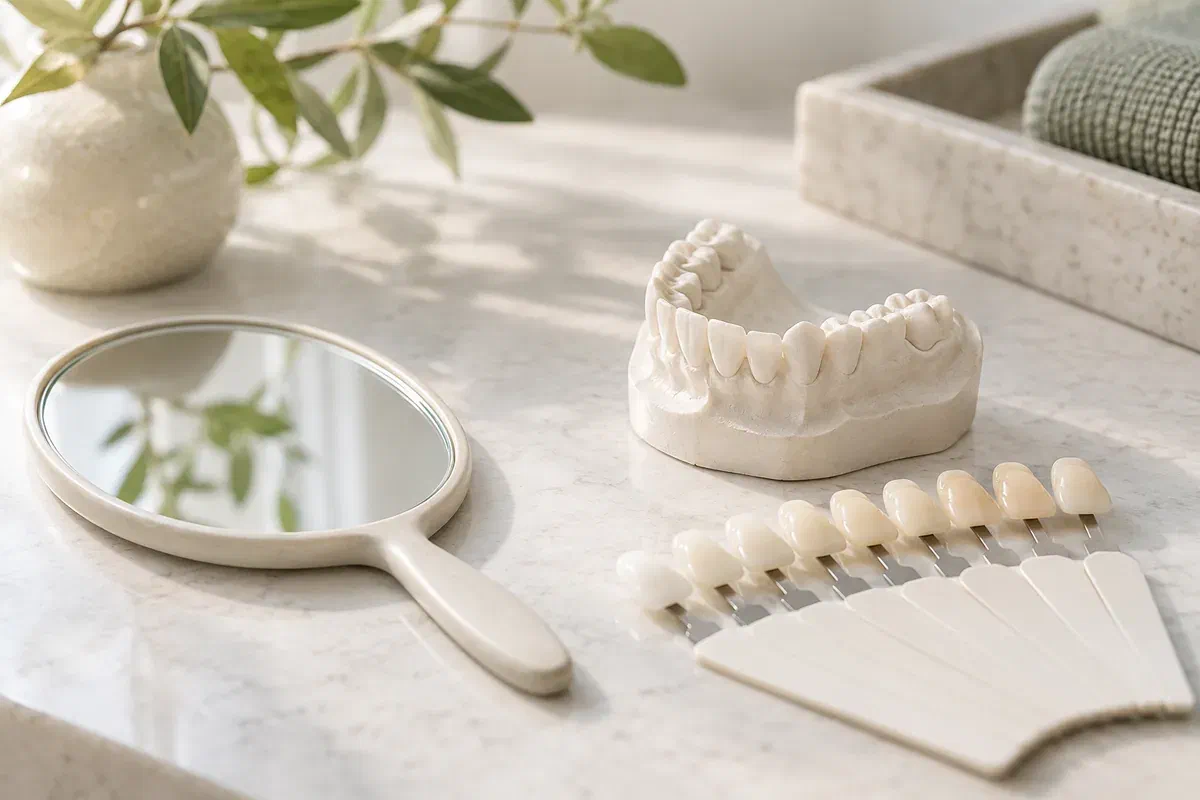
Illustrative consultation mirror, dental study cast, and natural tooth shade samples
What a small concern can involve

Is it the tooth, or what's around it?

Tell us when the tooth catches your eye, such as in a mirror at home or in someone else's photo. Say whether appearance, comfort, cleaning or an upcoming occasion is the reason you're asking now.

The single feature you notice

Show us the chip, darker shade, small gap or visible filling. Ask what options exist for that tooth alone and how each would blend with its neighbours. Fixing one feature well doesn't oblige you to change healthy teeth on either side.

Why the chip happened

A chipped or worn edge can be linked to the bite, grinding or how teeth meet. Mention any clenching, sensitivity or uneven chewing. A repair is more likely to last when the plan considers what caused the damage, not only how the tooth looks.

Keeping the repair invisible

Explain what you like about the teeth around it, from shade to the shape of the edges. Ask how a repair would be matched so it blends in. The aim is usually for nobody to notice the tooth at all, including you.

A planning chat doesn't commit you to bonding, a crown, a veneer or any other treatment. You'll hear what each option involves, its risks, what else could work and the fee before deciding anything.

Why plan for one tooth

A small fix that fits the rest of your smile

Even a one-tooth plan should tie the treatment to the concern and explain what it's meant to change. You'll know why a particular material or method is suggested. If you're offered work on more teeth than the one you asked about, it's reasonable to ask what the exam found.

Planning shows what each choice asks of you over time. Some repairs need little preparation but more upkeep; others last longer but remove more tooth. Hearing about visits, maintenance, possible repairs and future replacement helps you choose the option that suits your life.

A clear goal for the tooth

Agree on what the result should look like and what should stay the same. You might want the chip gone but the shade unchanged, or a better match without whitening other teeth. A defined goal keeps the treatment in proportion.

Health checked alongside looks

If the tooth has decay, a crack or gum concerns, ask how that affects the cosmetic choices and what needs doing first. Some decisions depend on what's found once treatment starts, so it helps to know where the review points are.

The conservative option on the table

Ask about the least invasive approaches as well as the longer-lasting ones, including doing nothing for now. Compare upkeep and how much natural tooth each would affect. A good plan tells you honestly what it can and can't promise.

What happens at the consultation

Short, focused and thorough

For a single-tooth concern, planning is often simpler, though the records and visits still depend on what's found. Ask what the appointment includes and whether anything else might need a closer look.

  1. Point out the tooth and its history

    Tell us what bothers you, how long it's been that way and any previous work on that tooth. Mention timing and any treatments you'd prefer to avoid. A photo from before the chip, if you have one, can be helpful.

  2. Examine the tooth in context

    The dentist checks the tooth, its neighbours, the gums, restorations and bite. An X-ray or other records may be suggested if needed. You'll hear which findings are about health and which choices are purely cosmetic.

  3. Compare suitable repairs

    Review the approaches that could work, how much tooth each involves, how long they tend to last and their upkeep. If shade samples or a trial shape are used, ask how closely they reflect the real result.

  4. Agree on the approach

    Confirm the treatment, consent, fee and appointment before anything begins. Ask when you'll review the colour and fit, and what would happen if the tooth turns out to need more than expected once work starts.

Protecting the repair

Small repairs need everyday care too.

Smile design is the planning step; aftercare depends on what you choose for the tooth. Ask how that particular repair should be looked after, since bonding, crowns and veneers each have their own needs.

Habits that help it last

Ask about brushing, flossing and any guard if you grind or clench. Some materials can stain or chip, so ask what to avoid. If a routine sounds impractical, raise it before you choose, as it may change which option suits you.

Checks and eventual touch-ups

Find out how the tooth will be reviewed at check-ups and what might need attention later. Repairs may need polishing, mending or replacing over the years. Treat expected lifespan and costs as estimates.

Let us know about changes

If the edge feels rough, the bite on that tooth feels high, or the colour seems to shift, contact the team. Raise appearance questions at your review, and avoid trying to file or adjust the repair yourself.

Patient information: British Orthodontic Society — long-term implications of restorative and alignment choices

Georgetown smile options

A single repair is often enough.

Most single-tooth concerns lead to one focused step, though sometimes the findings call for a broader look, or for no treatment at all. Ask how each option answers the concern you came in with.

When the concern is truly local

Repairing the one tooth

Bonding, polishing, a replacement filling or another targeted option may be suitable. Ask what each would change and how it would blend with the teeth beside it. A small, well-matched repair is often the most sensible choice.

When position or bite is involved

Looking at neighbouring teeth as well

If the chip relates to crowding, spacing or how teeth meet, a wider plan might be worth discussing. Ask whether an orthodontist's view would help and how any stages would fit together. You should know the reason for each added step.

When the tooth is healthy and stable

Leaving it and keeping watch

A small chip that's smooth and sound may not need treating. Ask how it will be monitored at check-ups and what change would prompt a rethink. Deciding to leave it is a perfectly good outcome of a consultation.

Questions from Georgetown

Planning around a single tooth

Ask why a particular repair is suggested, how much of the tooth it involves and what upkeep it needs.

(905) 876-4488
Is it worth booking a smile-design visit for just one chipped tooth?
Yes, if it bothers you. Planning a single repair still involves matching colour and shape to the neighbouring teeth and checking the bite, so it looks natural and lasts. The consultation can be short and focused on that one concern.
Will a repaired tooth match the colour of the others?
The dentist aims to match it, often using shade samples in natural light. Ask how close a match is likely and whether whitening first would change the plan, since many repair materials don’t lighten afterward.
Why did my tooth chip in the first place?
Chips can follow a knock, biting something hard, grinding or wear. The dentist can look for signs of what caused it. Knowing the cause helps choose a repair that’s more likely to last.
Do I have to change the teeth beside the chipped one?
Not usually. Often only the affected tooth is treated. If the dentist suggests including others, ask for the specific reason and what would happen if you treated the one tooth alone.
How long does a small cosmetic repair usually last?
It depends on the material, the tooth, your bite and habits. Ask for a realistic range and what maintenance helps. Any estimate is a guide rather than a guarantee, and repairs can usually be touched up.
Can I wait and fix the chip later?
Waiting may be reasonable when the tooth is smooth, sound and comfortable. Ask what signs would make treatment more urgent, such as sharpness, sensitivity or further breakage, and how it’ll be watched in the meantime.
Smile design for Georgetown

Bring the one tooth that bothers you.

Arrange a short consultation with us on Bronte Street to look at the chip, shade or shape that's caught your eye. We'll check the tooth in context and explain the options for a repair that blends in with your smile.

Recommended treatment, records, timing and fees are confirmed after the exam. We can't guarantee a specific material, method or cosmetic outcome.

Visit Milton Dental Clinic
Unit 1, 342 Bronte St. S, Milton, ON L9T 5B7
Get directions Clinic hours
Monday–Thursday
11am–7pm
Friday–Sunday
By appointment only

Areas we serve

  • Milton
  • Oakville
  • Mississauga
  • Georgetown
  • Halton Hills
  • Acton
  • Campbellville
  • Brampton
  • Burlington
  • Puslinch
  • Rockwood
  • Erin
  • Caledon
  • Etobicoke
  • Old Milton
  • Bronte Meadows
  • Timberlea
  • Dorset Park
  • Dempsey
  • Clarke
  • Beaty
  • Coates
  • Harrison
  • Scott
  • Willmott
  • Ford
  • Bowes
  • Cobden
  • Walker
  • Mountain View
  • Milton Heights
  • Hawthorne Village
  • Valley View
  • Fallingbrook
  • Nassagaweya
  • Trafalgar
  • Esquesing
  • Nelson
  • Brookville
  • Moffat
  • Glen Williams
  • Norval
  • Limehouse
  • Stewarttown
  • Ashgrove
  • Hornby
  • Silver Creek
  • Speyside
  • Scotch Block
  • North Oakville
  • River Oaks
  • Glen Abbey
  • West Oak Trails
  • Palermo
  • Bronte Creek
  • College Park
  • Joshua Creek
  • Uptown Core
  • Preserve
  • Iroquois Ridge
  • Lisgar
  • Meadowvale
  • Meadowvale Village
  • Churchill Meadows
  • Erin Mills
  • Central Erin Mills
  • Streetsville
  • East Credit
  • Creditview
  • Heartland
  • Sheridan
  • Mount Pleasant
  • Credit Valley
  • Huttonville
  • Churchville
  • Springbrook
  • Northwest Brampton
  • Bram West
  • Fletcher's Meadow
  • Fletcher's Creek South
  • Alton Village
  • Orchard
  • Millcroft
  • Headon Forest
  • Tansley
  • Brant Hills
  • Tyandaga
  • Kilbride
  • Lowville
  • Aberfoyle
  • Morriston
  • Arkell
  • Hillsburgh
  • Freelton
  • Carlisle
  • Waterdown
  • Flamborough
  • Mountsberg

How can we help?

Milton Dental Clinic

Have a question about your smile? Choose the option that works best for you.

For urgent dental concerns, please call.
Messages are reviewed during clinic hours.