

Illustrative patient and clinician discussing smile preferences with a mirror and shade guide
Cosmetic Dentistry

Smile Design in Halton Hills

Is it a cosmetic wish, a dental problem, or a bit of both? Smile design for households across Halton Hills untangles the two, reviewing gum health, bite and existing work alongside shade, shape and position before any appearance change is discussed.

Health and appearance, side by side

Sound teeth first. Then the look you're after.

A front tooth that looks longer than it used to might be a cosmetic concern, or it might reflect a change in the gums. A dark spot might be a stain, or something that needs a filling. Smile design starts by sorting out which is which, so that health care and cosmetic choices are never blurred.

From there, the conversation widens. The dentist looks at colour, outline and alignment, the condition of crowns and fillings, the gums and your bite. Together, those findings shape what's possible. The planning is personal, and two people asking for the same change may get quite different advice.

Families from Georgetown, Acton, Glen Williams and the smaller hamlets of Halton Hills often fit dental visits around school, work and farm schedules. You can bring your questions without a treatment already in mind. A small step, care spread over time, a second opinion or no change at all are all fair outcomes.

Book a health-first smile consult
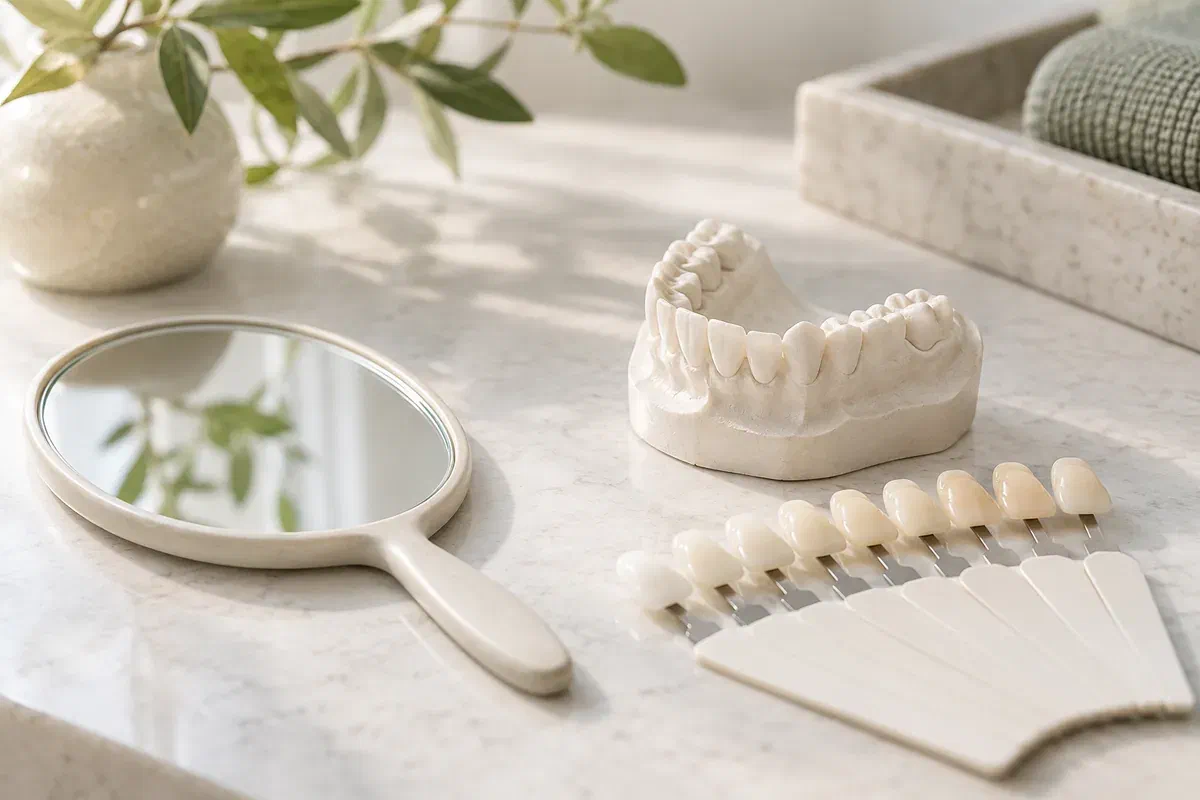
Illustrative consultation mirror, dental study cast, and natural tooth shade samples
Is it cosmetic?

Three kinds of concern we hear most

Explain what you see and when: in daylight, in photos, while eating. Tell us whether looks, comfort, upkeep or a specific occasion is behind the question, and mention anything your hygienist has flagged.

A visible detail that seems minor

A chipped edge, a shade difference, a small space or a filling that shows might be purely cosmetic. Ask whether a targeted step would handle it. A modest concern rarely means several healthy teeth should be changed or a large plan started.

A change that might be a symptom

Teeth that look longer, feel sensitive, have worn flat or no longer meet comfortably can point to something the dentist should assess. Mention these before talking about appearance. Planning has to account for function and health, not just a front view.

Hoping it won't look artificial

Describe what you're fond of in your smile now. Photos can help show a direction, yet someone else's tooth size and colour may not suit you. Ask how any proposal would preserve the features that make your smile feel like yours.

This visit is for understanding your options. Saying yes to any specific treatment, whether whitening, bonding, veneers or orthodontic care, happens only once its risks, alternatives and fees are clearly explained.

Why separating the two matters

When health and cosmetics are clear, so is the decision.

A dependable plan shows which steps are needed for health and which are elective, and why each one is included. That way you can decide on cosmetic care at your own pace, knowing that nothing urgent is being postponed. If a plan feels broader than you expected, ask which findings support the added work.

It also shows the full commitment up front. Visits, tooth preparation, home care, future repairs and replacements differ between options. Discussing them early helps you balance the change in appearance against the time, travel and maintenance it would involve.

Priorities stated clearly

Agree on the features that matter and any lines you don't want crossed. You may want a slight colour change, a familiar gap kept, or healthy teeth left untouched. Stating that early helps the dentist explain which options suit you.

Health care in its proper place

Where treatment for gums, decay or wear is needed, ask how it fits with cosmetic steps and what has to come first. Some appearance choices depend on how health treatment turns out, so review points matter more than a fixed timetable.

Options compared on substance

Request the alternatives, including no elective care, with their practical differences. Weigh maintenance and the amount of natural tooth altered, as well as the look. An honest plan names its limits openly.

How planning proceeds

Check, explain, compare, agree

How many visits and which records you'll need depend on your concerns and the treatments considered. Before booking, it's reasonable to find out what the first appointment covers and whether other assessment or a specialist may be helpful later on.

  1. Hear your concerns in full

    Talk about what you'd change, your dental history and what a worthwhile result would look like. Share any timing and the kinds of care you'd be open to. Photos can help illustrate a preference while the focus stays on your teeth.

  2. Review health before anything elective

    Your teeth, gums, restorations and bite are examined first. Additional records may be suggested if useful. Any health findings are explained separately from cosmetic suggestions, so you always know which is which.

  3. Lay out the possible approaches

    Go over suitable options, how much preparation each involves, its limits and its upkeep. If a model, photographs or mock-up are proposed, ask what they represent and what they can't predict. Previews aren't a standard part of every visit.

  4. Set stages and responsibilities

    Confirm the treatment, consent, fees and schedule before work begins. If another clinician will be involved, be clear on their role. Ask when results will be reviewed and how a change of mind or a new finding would be handled.

Afterwards

Healthy gums keep a new smile looking right.

Planning itself needs no aftercare, but the treatments you choose will. Ask for maintenance guidance for each part instead of assuming all cosmetic work is looked after in the same way.

Routine care that protects the result

Ask about cleaning, recall visits and any guards, retainers or products linked to your treatment. Healthy gums support how restorations look and last. If a routine would be hard to keep up, say so before you commit.

Monitoring over the years

Find out how results are checked and what might need attention as time goes on. Restorations can need repair or replacement eventually. Lifespan and fees are estimates, and it's fair to ask how they were worked out.

Report anything unusual

If an edge feels sharp, your bite changes, or cleaning a new area is awkward, let the team know. Bring appearance concerns to your review. Please don't try to smooth or adjust dental work on your own.

Patient information: British Orthodontic Society — long-term implications of restorative and alignment choices

Halton Hills treatment paths

Three directions a plan can take

Recommendations might be one focused step, several coordinated treatments or none that are elective. Ask how each one addresses the concern you brought in.

When the issue is contained

One targeted improvement

A clean, whitening, edge bonding or another focused option may be considered where appropriate. Ask exactly what it would change and what it would leave alone. A small plan is a sound choice if it fits the findings and your expectations.

When several factors are linked

Health, alignment and restorations together

Gum care, position, spacing, shade and older restorations sometimes have to be planned as one. Ask if referral to an orthodontist or periodontist would add value and how stages would connect. Each intervention should have a clear purpose.

When elective work isn't worth it

Healthy and unchanged

Once health is confirmed, you may decide your smile is fine as it is. Ask what routine care or follow-up makes sense. A consultation that ends without cosmetic work can still give real peace of mind.

Halton Hills questions

Telling cosmetic concerns from dental ones

Ask what's driving each recommendation, how much treatment it involves and what you'd look after afterward.

(905) 876-4488
Why do my teeth look longer than they used to?
It can relate to gum changes, wear or other factors, and the reason matters. It’s worth having the gums and teeth assessed before considering cosmetic changes, as the cause may need treatment first. Once that’s understood, the dentist can explain which appearance options would make sense.
Should gum treatment be finished before cosmetic work begins?
Usually health concerns are addressed first, since gum condition affects both appearance and how restorations fit and last. Ask the dentist how the findings in your case affect timing, and whether any cosmetic step can be planned in the meantime without being started.
Can a dark tooth be whitened, or is something else going on?
A darkened tooth can have several causes, and some need investigation before cosmetic options are discussed. The dentist will assess it and explain whether whitening, another approach or further care is appropriate.
Can we coordinate smile planning with my family's check-ups?
Ask when you book. It may be possible to arrange appointments close together, depending on availability and what each person needs. Mention it early so the team can help plan, particularly if your household travels in together from one of the smaller communities.
If my smile is healthy, do I need to change anything?
No. Many consultations end with reassurance and a plan for routine care. Cosmetic treatment is always a choice, and keeping your natural smile is a valid one. You can return to the conversation later if your priorities change.
How will I know which recommendations are optional?
Ask the dentist to label each suggestion as health-related or elective. A clear plan should make that distinction obvious, along with the alternatives, risks and maintenance for each.
Smile design for Halton Hills

Ask the health question first.

Book time at our Bronte Street practice to discuss your teeth's shade, shape, alignment and overall appearance, with your oral health reviewed at the start. We'll explain what's needed and help you sort elective choices from essential care.

Scope, records, previews, timing and fees all depend on what the assessment shows. We don't promise a set method, device or appearance outcome.

Visit Milton Dental Clinic
Unit 1, 342 Bronte St. S, Milton, ON L9T 5B7
Get directions Clinic hours
Monday–Thursday
11am–7pm
Friday–Sunday
By appointment only

Areas we serve

  • Milton
  • Oakville
  • Mississauga
  • Georgetown
  • Halton Hills
  • Acton
  • Campbellville
  • Brampton
  • Burlington
  • Puslinch
  • Rockwood
  • Erin
  • Caledon
  • Etobicoke
  • Old Milton
  • Bronte Meadows
  • Timberlea
  • Dorset Park
  • Dempsey
  • Clarke
  • Beaty
  • Coates
  • Harrison
  • Scott
  • Willmott
  • Ford
  • Bowes
  • Cobden
  • Walker
  • Mountain View
  • Milton Heights
  • Hawthorne Village
  • Valley View
  • Fallingbrook
  • Nassagaweya
  • Trafalgar
  • Esquesing
  • Nelson
  • Brookville
  • Moffat
  • Glen Williams
  • Norval
  • Limehouse
  • Stewarttown
  • Ashgrove
  • Hornby
  • Silver Creek
  • Speyside
  • Scotch Block
  • North Oakville
  • River Oaks
  • Glen Abbey
  • West Oak Trails
  • Palermo
  • Bronte Creek
  • College Park
  • Joshua Creek
  • Uptown Core
  • Preserve
  • Iroquois Ridge
  • Lisgar
  • Meadowvale
  • Meadowvale Village
  • Churchill Meadows
  • Erin Mills
  • Central Erin Mills
  • Streetsville
  • East Credit
  • Creditview
  • Heartland
  • Sheridan
  • Mount Pleasant
  • Credit Valley
  • Huttonville
  • Churchville
  • Springbrook
  • Northwest Brampton
  • Bram West
  • Fletcher's Meadow
  • Fletcher's Creek South
  • Alton Village
  • Orchard
  • Millcroft
  • Headon Forest
  • Tansley
  • Brant Hills
  • Tyandaga
  • Kilbride
  • Lowville
  • Aberfoyle
  • Morriston
  • Arkell
  • Hillsburgh
  • Freelton
  • Carlisle
  • Waterdown
  • Flamborough
  • Mountsberg

How can we help?

Milton Dental Clinic

Have a question about your smile? Choose the option that works best for you.

For urgent dental concerns, please call.
Messages are reviewed during clinic hours.