

Illustrative patient discussing tooth sensitivity with a clinician before cosmetic treatment
Cosmetic Dentistry

Teeth Whitening for Sensitive Teeth in Erin

A firm toothbrush, a scrubbing habit, a daily glass of something acidic: small routines can leave teeth touchy long before whitening enters the picture. From Erin or Hillsburgh, start with a visit that looks at your everyday care alongside the colour you would like to change.

It starts at the bathroom sink

Everyday habits shape how whitening feels.

Think about the last time your teeth twinged. Was it right after brushing? After lemon water, a sports drink, or a bowl of citrus? Many people are surprised to learn how much daily routine can contribute to sensitivity, from brushing too hard to sipping acidic drinks throughout the day.

Those same habits matter when you consider whitening. Bleaching can cause temporary sensitivity and gum irritation even in comfortable mouths, and teeth with worn enamel or exposed roots may react more. So the first step in whitening sensitive teeth is understanding what is already happening, including what your routine might be adding.

Coming from Erin, it helps to bring your usual toothbrush and toothpaste, along with a rough idea of what you drink in a typical day. Dr. Anjum can look at your teeth and gums, explain what may be causing the sensitivity, and talk through whether adjusting your routine, whitening, or waiting makes the most sense.

Review your routine before whitening
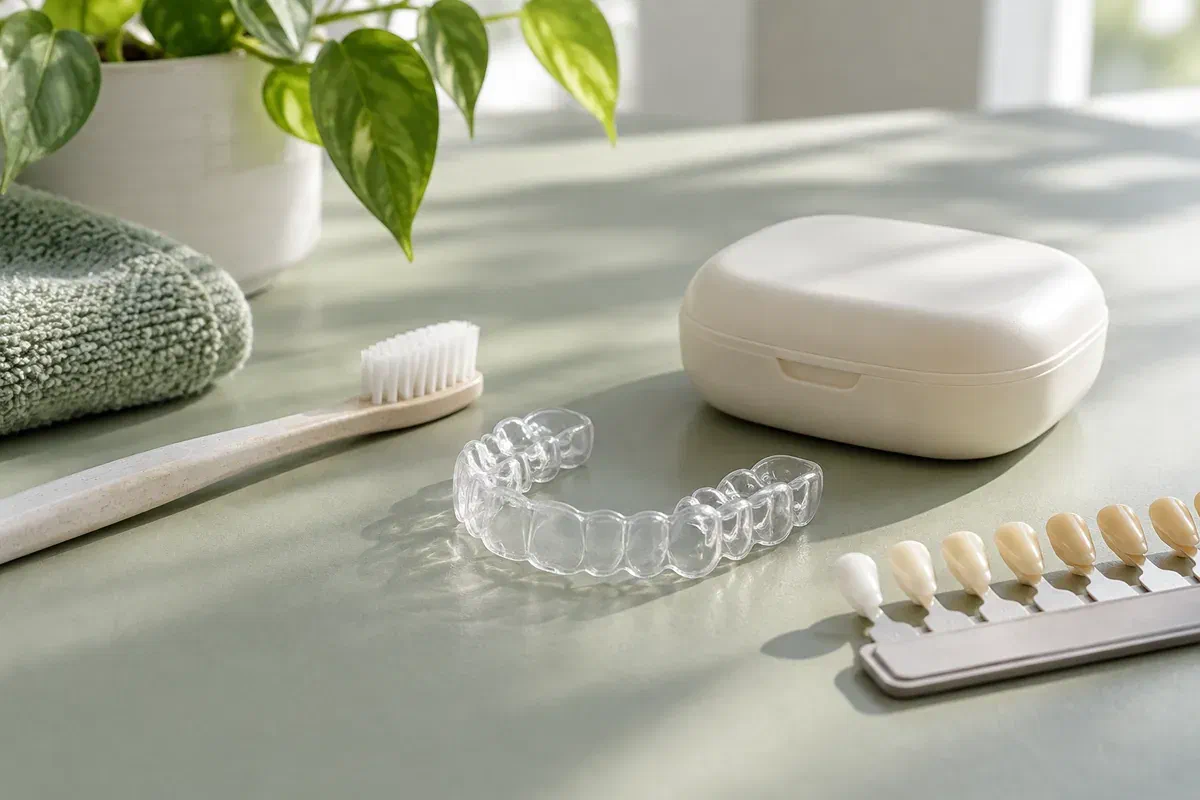
Illustrative soft toothbrush, empty dental tray, protective case, and natural tooth shade samples
What your routine might reveal

Look for the pattern behind the twinge.

Notice when the sensitivity shows up during your day, which teeth feel it, and how long it lasts. The clinician will work out the reasons.

Brushing hurts in one particular spot

If the same tooth or area stings every time the brush passes, or if one tooth aches on biting or looks chipped, mention it. That spot may need its own care, whether from wear, a gum change, or something else. It deserves a look before any whitening plan.

Acidic drinks or cold set off a wave

Describe what you were eating or drinking and how often this happens. Enamel wear, gum recession, decay, and other conditions can all be involved. The cause shapes the advice you receive, and whether bleaching is a sensible next step.

A whitening toothpaste or kit made it worse

Some people find their teeth feel more sensitive after switching products. Share the brand, how long you have used it, and what changed. Bring the tube or a photo if you can. Specifics help the team untangle routine from reaction.

Whitening is entirely your choice. Pain that will not ease, a chipped or broken tooth, or a gum or tooth problem that has gone untreated comes first.

How a routine review pays off

Comfort you can keep, before and after whitening

The exam first works out what you are hoping to change. Is the colour surface stain, the natural shade of your teeth, or something else? A cleaning, bleaching, and sensitivity care each have different aims. Adjusting a habit may also ease some discomfort on its own. Ask what each step is expected to change.

When whitening is a reasonable choice, the plan should name the method, explain how your comfort will be followed, and spell out what to do if your teeth begin to hurt. Fitting it into a gentler daily routine is part of that plan, and more useful than relying on a product's soothing claims.

Patient information: Canadian Dental Association — supervised bleaching and adverse effects

Practical advice for daily care

Your brushing technique, toothbrush, and drink habits can be reviewed alongside your findings. Ask what to change and whether anything should be treated before whitening is considered. Small adjustments sometimes make a noticeable difference to comfort.

A whitening goal that fits your life

Talk about how much change you would like and whether you are prepared to adjust habits to maintain it. Ask how the plan would shift if a course caused discomfort. A small change, a pause, or no whitening can be perfectly sensible.

Steps you can follow confidently at home

If you go ahead, know how to place the product, how long to wear it, how often, and what preparation helps. A demonstration can make it easier. Do not borrow instructions from a different product, even one with a similar look.

What to expect over a few visits

Routine, exam, then decision

No one strength or schedule suits every sensitive mouth. The plan follows the exam, the method chosen, and how your teeth respond as you go.

  1. Walk us through a typical day

    Tell us how and when you brush, what you drink, and when the twinges appear. We also cover past whitening, dental treatment, general health, medications, and allergies. If you are pregnant or breastfeeding, say so, as elective cosmetic care is often postponed.

  2. Check enamel, gums, and fillings

    The clinician looks for wear, recession, decay, and changes around restorations, and may suggest further tests. Ask what is likely causing your sensitivity and what care is recommended. Discuss whether your colour concern would respond to a cleaning, bleaching, or neither.

  3. Agree on habits and, if suitable, a course

    If whitening fits, you will go over the method, possible reactions, what it can achieve, and fees. Ask whether a sensitivity measure or a change in routine is recommended first. Confirm the directions and when to stop and call.

  4. Reassess comfort before more

    Keep track of how your teeth feel and mention it when you come back, or call before then if it worries you. Find out how the colour will be looked at again once the course is done or paused. Any additional whitening should be a conscious choice rather than routine.

Daily care while whitening

Gentle habits make the course easier.

Keep your instructions and our number near the sink. Whitening is cosmetic, so if your teeth react, the right move is a call rather than more effort.

Put the product down if it stings

When sensitivity or gum soreness shows up, stop and phone for guidance. Tell us where, how much, when it began, and when you last used it. Please do not pile on extra desensitizer or reach for a different whitening product.

Brush gently with what you were advised

A soft brush and light pressure are often recommended, but ask what suits your findings. If a sensitivity toothpaste is part of the plan, find out why and for how long. It will not make every bleaching routine acceptable or settle every cause of pain.

Check in before another course

Enamel, gums, and restorations change over time. Ask whether a fresh exam is needed before using stored gel or arranging more whitening. Have your trays and current shade reviewed rather than repeating an old routine on autopilot.

Patient information: NHS — tooth-whitening assessment and side effects

Erin whitening and comfort options

Adjust, whiten, or leave it be

Your options depend on the cause of the sensitivity, the type of discolouration, and your preferences. Ask what each can change and what ongoing care it needs.

When routine or another issue needs attention

Ease the sensitivity and adjust habits first

You may receive treatment, preventive advice, or suggestions about brushing and diet. Ask how improvement will be checked and when whitening could be considered. Feeling comfortable day to day is worth it, whatever you decide about colour.

When your exam supports it

A supervised whitening course

Learn what method is offered, what it will not change, and how to let the team know about symptoms. No in-office or home approach is comfortable for everyone. Ask why the recommendation suits your findings rather than going by speed.

When bleaching is not needed

A cleaning, or no change in shade

If surface stain contributes, a professional cleaning may be enough. You can also keep your natural colour once you know the options. More extensive cosmetic work is not automatically next simply because whitening is not right for you.

Everyday-care questions

How do my habits affect whitening?

Your routine and exam findings tell us more than any gentle-sounding product. These questions can help you prepare.

(905) 876-4488
Can brushing too hard make teeth more sensitive?
Brushing with heavy pressure or a firm brush may contribute to gum recession and wear over time, which can expose sensitive areas. The clinician can look for signs of this and suggest a gentler technique if appropriate.
Do acidic drinks affect how sensitive my teeth are?
Frequent acidic drinks, such as citrus juices, sports drinks, or soda, can contribute to enamel wear for some people. Mention what you drink regularly so the clinician can take it into account.
Should I brush right after an acidic drink or wait a bit?
Advice on timing can vary with your situation. Ask the clinician what they recommend for your teeth, especially if you are planning to whiten. Rinsing with water and following the brushing advice you are given is more useful than a rule picked up online.
Is an electric toothbrush a good idea if my teeth are sensitive?
Many people use one comfortably, and some models have pressure sensors that warn when you press too hard. Ask which brush, head, and settings suit your findings, and bring your current brush if you would like it checked.
Can a sensitive-teeth whitening kit replace a dental check?
No. A kit cannot tell why your teeth hurt or whether bleaching is suitable. Have the cause assessed first, then ask whether any product suits your findings.
How can I plan visits from Erin around a busy week?
Mention your availability when you book. Weekday appointments run into the evening, and Friday to Sunday visits are by appointment. Ask whether the assessment and any follow-up can be scheduled together.
Sensitive-teeth whitening for Erin

Bring your toothbrush to the appointment.

Call our Bronte Street practice and mention your sensitivity, your daily routine, and the colour change you are curious about. We can explain what the visit covers and help you find an approach that keeps your teeth comfortable.

Whitening suitability needs an assessment. Sensitivity can occur with any method, so be ready for your course to be delayed or ended early.

Visit Milton Dental Clinic
Unit 1, 342 Bronte St. S, Milton, ON L9T 5B7
Get directions Clinic hours
Monday–Thursday
11am–7pm
Friday–Sunday
By appointment only

Areas we serve

  • Milton
  • Oakville
  • Mississauga
  • Georgetown
  • Halton Hills
  • Acton
  • Campbellville
  • Brampton
  • Burlington
  • Puslinch
  • Rockwood
  • Erin
  • Caledon
  • Etobicoke
  • Old Milton
  • Bronte Meadows
  • Timberlea
  • Dorset Park
  • Dempsey
  • Clarke
  • Beaty
  • Coates
  • Harrison
  • Scott
  • Willmott
  • Ford
  • Bowes
  • Cobden
  • Walker
  • Mountain View
  • Milton Heights
  • Hawthorne Village
  • Valley View
  • Fallingbrook
  • Nassagaweya
  • Trafalgar
  • Esquesing
  • Nelson
  • Brookville
  • Moffat
  • Glen Williams
  • Norval
  • Limehouse
  • Stewarttown
  • Ashgrove
  • Hornby
  • Silver Creek
  • Speyside
  • Scotch Block
  • North Oakville
  • River Oaks
  • Glen Abbey
  • West Oak Trails
  • Palermo
  • Bronte Creek
  • College Park
  • Joshua Creek
  • Uptown Core
  • Preserve
  • Iroquois Ridge
  • Lisgar
  • Meadowvale
  • Meadowvale Village
  • Churchill Meadows
  • Erin Mills
  • Central Erin Mills
  • Streetsville
  • East Credit
  • Creditview
  • Heartland
  • Sheridan
  • Mount Pleasant
  • Credit Valley
  • Huttonville
  • Churchville
  • Springbrook
  • Northwest Brampton
  • Bram West
  • Fletcher's Meadow
  • Fletcher's Creek South
  • Alton Village
  • Orchard
  • Millcroft
  • Headon Forest
  • Tansley
  • Brant Hills
  • Tyandaga
  • Kilbride
  • Lowville
  • Aberfoyle
  • Morriston
  • Arkell
  • Hillsburgh
  • Freelton
  • Carlisle
  • Waterdown
  • Flamborough
  • Mountsberg

How can we help?

Milton Dental Clinic

Have a question about your smile? Choose the option that works best for you.

For urgent dental concerns, please call.
Messages are reviewed during clinic hours.