

Illustrative patient discussing tooth sensitivity with a clinician before cosmetic treatment
Cosmetic Dentistry

Teeth Whitening for Sensitive Teeth in Etobicoke

Travelling in from Etobicoke means you want each appointment to count. For sensitive teeth, that starts with a thorough first visit to find the cause, then a whitening plan, if one suits you, with fewer trips and a clear idea of what to do if a reaction starts at home.

Planning from a distance

Fewer visits, more thought in each one

The further you travel for dental care, the more you want to know what each visit will achieve. With whitening and sensitive teeth, the answer is that the first appointment does the heavy lifting. It is where the reason for your discomfort is looked into and where the decision about bleaching really gets made.

Sensitivity can come from exposed roots, worn enamel, decay, a crack, or an aging filling, and some of these need care before anything cosmetic. Bleaching can also cause temporary sensitivity and gum irritation in its own right. Much of a supervised course may happen at home, so it matters that you leave knowing exactly how to respond if your teeth react.

Coming from Etobicoke, it helps to bring everything at once: product names, photos of packaging, notes on what you feel and when. Dr. Anjum can then explain the findings, the options, and whether postponing is wiser, so you are not making extra trips to fill in gaps.

Plan an efficient first visit
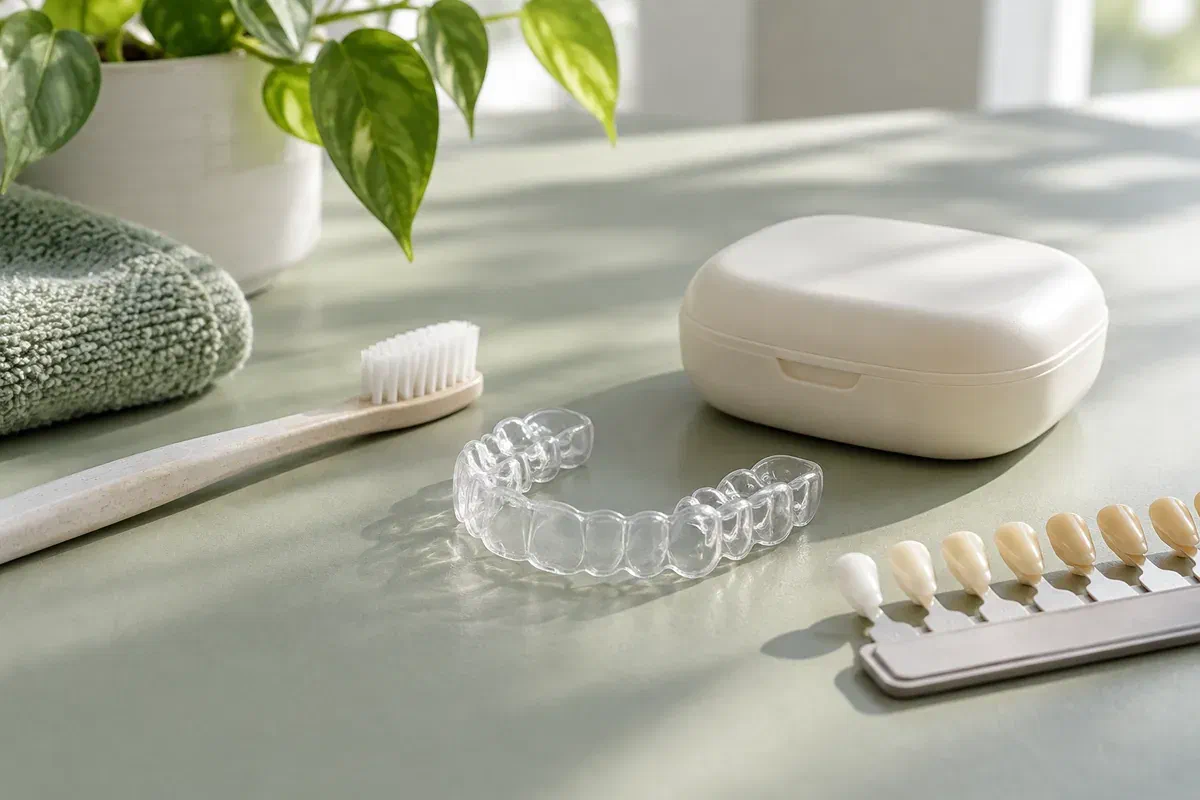
Illustrative soft toothbrush, empty dental tray, protective case, and natural tooth shade samples
Bring these to the first appointment

The more we know up front, the fewer trips you make.

Jot down where the discomfort is, what triggers it, and how long it lasts before you set out. There is no need to guess at the cause.

A tooth that reacts differently

If one tooth is sore on biting, recently repaired, chipped, or discoloured, note it before the visit. It may need investigation that is best done at the same appointment. A localized symptom is a separate question from whether you can whiten.

Daily triggers like cold or brushing

Describe how often they bother you and whether that is changing. Root exposure, enamel wear, decay, and other conditions can all be involved. Identifying the cause comes before planning care for it or discussing an elective whitening course.

A whitening product you stopped using

Record the brand, how you used it, and what happened to your gums or teeth. A photo on your phone is easy to bring along. Precise details save time and make the plan more reliable than a vague memory of discomfort.

Whitening is entirely elective. Pain that lasts, a tooth that has broken, or gums and teeth that still need treatment should be looked after before a cosmetic plan is drawn up.

What a well-planned approach offers

Confidence about what to do between visits

A careful first exam clarifies whether the colour you want to change is surface stain, your natural shade, or something different. That shapes how many visits are likely, since a cleaning, a bleaching course, and sensitivity care each have their own path. Ask what a recommendation would change and what it would not.

If a supervised course suits you, much of the planning is about what happens when you are at home. You should know the method, how your comfort will be checked, how to reach the team, and what to do if pain starts. That plan matters more than any promise of no sensitivity.

Patient information: Canadian Dental Association — supervised bleaching and adverse effects

One thorough assessment

Your past experience and today's findings are reviewed before you buy anything or restart a course. Ask whether something should be treated first and what would mean whitening can be reconsidered. You may leave with a different plan than expected.

A goal that respects distance and comfort

Talk through how much change you want and whether timing matters. Ask how the plan would adjust if you could not tolerate the course. A small lift, a delay, or no whitening can all be reasonable, and none needs extra trips to decide.

Instructions you can rely on alone

Since you will often be applying the product away from the clinic, be sure of each step: how to place it, wear time, frequency, and preparation. Ask for a demonstration and repeat it back. A similar-looking product may follow different rules.

A sequence built around travel

Assess well. Decide clearly. Check in when it counts.

There is no universal strength, schedule, or device for sensitive teeth. The plan follows your exam, the product chosen, and how your teeth respond, with visits arranged to keep trips sensible.

  1. A detailed first conversation

    Explain your triggers, which teeth are affected, and how long reactions last. We go over past whitening, dental work, health history, and allergies. If pregnancy or breastfeeding applies, mention it, because elective care is often deferred during those times.

  2. A complete examination in one sitting

    Teeth, gums, and restorations are checked, and any further tests are considered while you are here. Ask whether a cause for the sensitivity is clear and what care is recommended. Discuss whether cleaning, bleaching, or another approach suits the colour concern.

  3. A plan you can carry out from home

    If whitening is appropriate, review the method, its likely effects, what it can and cannot achieve, and what it costs. Ask whether any sensitivity measures make sense. Confirm the directions and when to stop and phone us.

  4. Follow-up timed to matter

    Keep notes on how your teeth feel and bring them to the planned review, or call sooner if needed. Ask how the result will be assessed at the end or during a pause. Further applications should be a deliberate choice, not an automatic extension.

Whitening away from the clinic

Know your plan before you need it.

Save our number in your phone and keep the instructions with your trays. This is a cosmetic choice, so a reaction means stopping and asking, not pressing on because the trip back is long.

If it flares, stop and call first

Set the product aside if sensitivity or gum soreness develops, then phone for advice before deciding on a visit. Tell us where it hurts, how severe it is, when it began, and your last application. Avoid adding extra desensitizer or a second whitener on your own.

Keep to your home-care instructions

Confirm which toothpaste, brush, and cleaning routine suit your findings. If a sensitivity paste is part of the plan, ask what it is meant to do. Using it does not make any strength or length of bleaching acceptable, and it does not deal with every kind of tooth pain.

Plan any repeat course in advance

Teeth and restorations can change. Ask whether a new exam is needed before using stored gel or arranging another course, and consider pairing it with a routine visit. Have trays and the current shade reviewed rather than repeating an old schedule.

Patient information: NHS — tooth-whitening assessment and side effects

Options for Etobicoke visitors

Pick the path that fits your teeth and your travel.

Choices depend on why your teeth are sensitive, the type of discolouration, and your preferences, including how often you can visit. Ask what each one changes and what follow-up it involves.

When something else needs care first

Settle the sensitivity before whitening

Treatment or prevention advice may be offered for the exam's findings. Ask how progress will be reviewed and whether that can be combined with another visit. Relief from discomfort is worth pursuing even if you decide to keep your shade.

When the findings support it

Whiten with a supervised home course

Discuss which method is available, its limits, and how you will report symptoms between visits. Home and in-office options can both cause discomfort for some people. Ask why the recommendation suits you rather than choosing on speed or convenience alone.

When bleaching would not be worthwhile

A cleaning, or no colour change

Surface deposits may be part of the concern, and a cleaning could address them. You can also choose to keep your shade after hearing the options. Restorations or extensive cosmetic work should not be assumed to follow just because whitening is unsuitable.

Questions about whitening from further away

Making each trip worthwhile

Clear information before you set out helps more than a promise of comfortable whitening. These questions can make the visits efficient and specific.

(905) 876-4488
How many appointments will sensitive-teeth whitening usually take?
It varies with the exam findings and method. Expect an assessment first, and possibly a follow-up to review comfort and colour. Ask during the first visit how the rest can be scheduled to suit your travel.
What should I bring to the first visit to avoid a second trip?
Bring a list of medications and health conditions, details or photos of whitening products you have used, and notes about your symptoms. Information about earlier dental work also helps the clinician assess you fully.
Who should I contact if my teeth hurt late in the evening during a home course?
Stop using the product. Call the clinic and follow the guidance on our urgent care page. If symptoms are severe and you cannot reach us, seek urgent dental or medical care nearby.
Does a gel sold for sensitive teeth mean I can skip the assessment?
No. A label cannot work out why your teeth hurt. The cause should be checked first. Then ask whether that product, or another approach, suits your findings.
Can a review be done by phone instead of in person?
Some questions can be discussed by phone, but assessing your teeth, gums, and shade usually needs a visit. Ask the team which follow-ups need to be in person and which can be handled with a call.
Is the quickest whitening option best when travel is involved?
Speed alone does not make a method suitable. Ask how the product, method, and your findings shape the advice. Fewer trips should not mean continuing a course that is causing symptoms.
Sensitive-teeth whitening for Etobicoke

Make the first visit the one that answers most questions.

Contact our Bronte Street practice before you travel so we can tell you what to bring. We can discuss your sensitivity, past whitening reactions, and the change you would like, then outline an approach that respects your oral health and your time.

Suitability for whitening needs an assessment first. Any method can leave teeth sensitive, and we may advise postponing or ending a course.

Visit Milton Dental Clinic
Unit 1, 342 Bronte St. S, Milton, ON L9T 5B7
Get directions Clinic hours
Monday–Thursday
11am–7pm
Friday–Sunday
By appointment only

Areas we serve

  • Milton
  • Oakville
  • Mississauga
  • Georgetown
  • Halton Hills
  • Acton
  • Campbellville
  • Brampton
  • Burlington
  • Puslinch
  • Rockwood
  • Erin
  • Caledon
  • Etobicoke
  • Old Milton
  • Bronte Meadows
  • Timberlea
  • Dorset Park
  • Dempsey
  • Clarke
  • Beaty
  • Coates
  • Harrison
  • Scott
  • Willmott
  • Ford
  • Bowes
  • Cobden
  • Walker
  • Mountain View
  • Milton Heights
  • Hawthorne Village
  • Valley View
  • Fallingbrook
  • Nassagaweya
  • Trafalgar
  • Esquesing
  • Nelson
  • Brookville
  • Moffat
  • Glen Williams
  • Norval
  • Limehouse
  • Stewarttown
  • Ashgrove
  • Hornby
  • Silver Creek
  • Speyside
  • Scotch Block
  • North Oakville
  • River Oaks
  • Glen Abbey
  • West Oak Trails
  • Palermo
  • Bronte Creek
  • College Park
  • Joshua Creek
  • Uptown Core
  • Preserve
  • Iroquois Ridge
  • Lisgar
  • Meadowvale
  • Meadowvale Village
  • Churchill Meadows
  • Erin Mills
  • Central Erin Mills
  • Streetsville
  • East Credit
  • Creditview
  • Heartland
  • Sheridan
  • Mount Pleasant
  • Credit Valley
  • Huttonville
  • Churchville
  • Springbrook
  • Northwest Brampton
  • Bram West
  • Fletcher's Meadow
  • Fletcher's Creek South
  • Alton Village
  • Orchard
  • Millcroft
  • Headon Forest
  • Tansley
  • Brant Hills
  • Tyandaga
  • Kilbride
  • Lowville
  • Aberfoyle
  • Morriston
  • Arkell
  • Hillsburgh
  • Freelton
  • Carlisle
  • Waterdown
  • Flamborough
  • Mountsberg

How can we help?

Milton Dental Clinic

Have a question about your smile? Choose the option that works best for you.

For urgent dental concerns, please call.
Messages are reviewed during clinic hours.