

Illustrative patient discussing tooth sensitivity with a clinician before cosmetic treatment
Cosmetic Dentistry

Teeth Whitening for Sensitive Teeth in Georgetown

One front tooth looks greyer than the rest, and it is the one that twinges. Before whitening every tooth to hide it, have that tooth examined. From Georgetown, book a visit that separates a single-tooth problem from a general wish for a lighter smile.

The tooth that does not match

A single tooth can change the whole whitening plan.

Most people notice it in photos first: one tooth a shade darker or greyer than its neighbours. Sometimes that same tooth is the one that reacts to cold or feels odd when you bite. The instinct is to whiten everything so it blends in, but that rarely works the way people hope.

A tooth that darkens on its own, especially after a knock or alongside discomfort, may have a problem inside it that bleaching from the outside will not reach. General whitening also brings its own risk of short-term sensitivity and gum irritation. So the plan begins with that tooth, then turns to the rest of your smile.

From Georgetown, it is worth mentioning the darker tooth when you book, so time for a closer look is set aside. Dr. Anjum can explain what the exam and any X-rays show, whether whitening the other teeth would help or widen the mismatch, and when holding off is the sensible choice.

Have the darker tooth checked first
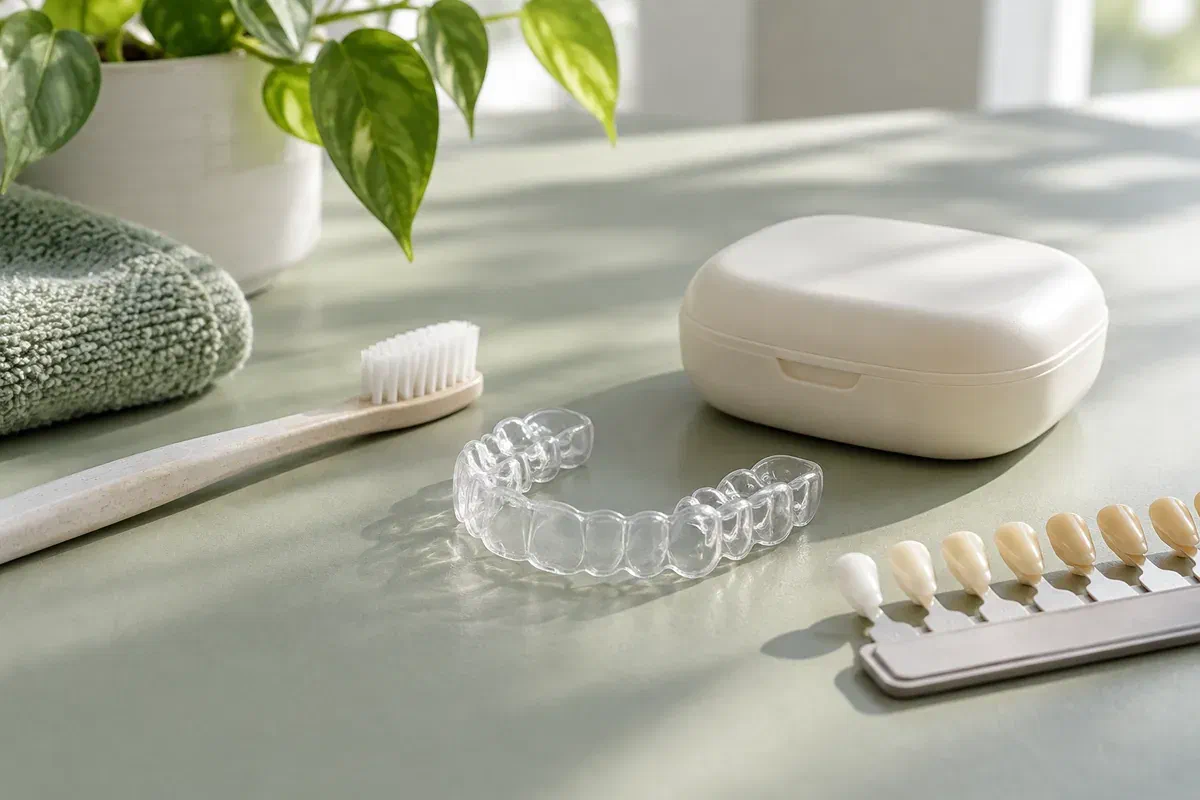
Illustrative soft toothbrush, empty dental tray, protective case, and natural tooth shade samples
What the clinician will want to know

Is it the colour, the comfort, or both?

Tell us which tooth stands out, when it changed, and how it feels. Your observations guide the exam, but the diagnosis is ours to work out.

The tooth changed colour after an injury

A past knock, even years ago, can matter. Mention any pain on biting, tenderness, swelling nearby, or a change in how the tooth feels with heat or cold. That tooth may need investigating before any cosmetic step, and it should not be explained away as normal sensitivity.

Several teeth react to cold or brushing

Beyond the one tooth, a general sting with cold or brushing can come from gum recession, enamel wear, decay, or other conditions. Note how often it happens and whether it is increasing. Those causes are assessed separately from the darker tooth before bleaching is discussed.

You already tried to even out the colour

If you used strips or gel hoping to hide the mismatch, say which product and what happened. Did the other teeth lighten while the dark one stayed put? Did anything become sore? Those details help the clinician plan the next step.

Changing your shade is optional. A tooth that hurts, has darkened without explanation, or has cracked, along with any gum problem left untreated, comes ahead of any decision about cosmetic bleaching.

Why the tooth comes first

A better match, or a clear reason to wait

An exam can tell you whether the overall colour you dislike is surface stain, natural shade, or something else, and whether the darker tooth has a separate cause. Those answers point to different steps. Cleaning, general bleaching, treatment for the one tooth, and sensitivity care each do a distinct job.

When whitening the rest of your teeth is reasonable, the plan should explain the method and how your comfort will be followed. You also need to know how the darker tooth may look afterward, and who to call if symptoms appear. That clarity beats any promise of a perfect match.

Patient information: Canadian Dental Association — supervised bleaching and adverse effects

A diagnosis for the tooth that stands out

The darker tooth is looked at on its own terms, with any X-rays or tests the clinician recommends. Ask what the findings mean for its health and whether it needs care before anything cosmetic. The answer may reshape the whole plan.

A realistic idea of how things will blend

Talk about how much change you would want and how important an even look is to you. Ask what would happen to the mismatch if the other teeth lightened. A careful partial result, waiting, or choosing a different approach can all be sound.

Instructions tailored to your course

If you go ahead, confirm how to place the product, how long to wear it, how often, and any preparation. Ask whether the darker tooth needs special handling. A product you used before to hide the tooth may not suit this plan.

How we work through it

That tooth, then the rest

No single strength or schedule works for every sensitive mouth, and a mismatched tooth adds another layer. Each step follows the exam, the product chosen, and your response.

  1. Tell the story of the darker tooth

    Share when it changed, any injury, and how it feels, along with other triggers in your mouth. We review past whitening, dental work, health history, and allergies. Mention pregnancy or breastfeeding, as elective cosmetic care is usually timed around them.

  2. Examine and test where needed

    The clinician checks the darker tooth, the surrounding gums, and your other teeth and restorations, and may suggest X-rays or other tests. Ask what is causing the colour change and the sensitivity, and what care is advised for each.

  3. Choose the right order of treatment

    If whitening is suitable, discuss the method, likely reactions, limits around the darker tooth, and fees. Ask whether that tooth needs treatment first and whether any sensitivity measure makes sense. Confirm when you should stop and call.

  4. Compare comfort and colour afterward

    Track how your teeth feel and raise it at the follow-up, or sooner. Ask how the darker tooth and the rest will be compared after the course or a pause. More whitening should be a deliberate choice, not an attempt to chase an even match at any cost.

While your other teeth lighten

Watch the darker tooth closely.

Keep your instructions and our number nearby. Whitening is a cosmetic choice, so any new or worsening discomfort, especially in the tooth that stands out, calls for advice.

Stop if any tooth becomes sore

Put the product aside and phone us if sensitivity or gum soreness develops. Tell us whether it is the darker tooth or others, how strong it feels, when it began, and your last application. Please do not add extra desensitizer or another whitener on your own.

Keep to the brushing advice given

Ask which toothpaste and brush suit your findings. If a sensitivity product is suggested, understand why and how long to use it. It does not cancel out an underlying problem in the darker tooth, and it does not make any bleaching schedule safe.

Review before trying to match again

If the mismatch remains after a course, ask before reusing gel or booking more. Teeth and restorations can change, and the darker tooth may need a different approach. Have the current colour and tray fit assessed instead of repeating the same schedule.

Patient information: NHS — tooth-whitening assessment and side effects

Georgetown whitening options

Different fixes for different shades

The best path depends on what is behind the darker tooth, the cause of any sensitivity, the type of discolouration elsewhere, and your preferences. Ask what each route changes and what follow-up it needs.

When that tooth needs attention

Care for the darker or sensitive tooth first

Treatment or monitoring may be recommended based on what the exam finds. Ask how its health will be followed and whether cosmetic options can be revisited later. Looking after the tooth is worthwhile even if you never whiten the rest.

When the exam supports it

Supervised whitening for your other teeth

Discuss the method, what it can and cannot do for the mismatch, and how to report symptoms. Neither in-office nor home approaches suit everyone comfortably. Ask why the recommended choice fits your findings instead of choosing on speed.

When general bleaching is not the answer

A cleaning, or keep your current shade

Surface stain may be part of what you see, and a cleaning could help. You can also leave your colour as it is once you know the options. Crowns, veneers, or other work are not automatically next simply because whitening would not even things out.

Questions about a mismatched tooth

Why does one tooth look different?

The exam and your history tell us more than any whitening product's promise. These questions can help you understand the darker tooth and your options.

(905) 876-4488
Why would one tooth turn darker than the others?
Possible reasons include a past injury, changes inside the tooth, older fillings, or decay. Some causes need treatment for the tooth’s health. An exam, and sometimes X-rays, help identify what is happening.
Will regular whitening lighten a tooth that has darkened from the inside?
Often not as much as the others. Outside bleaching may lighten healthy teeth while the darker tooth changes little, which can make the difference more noticeable. Ask what is likely for your situation.
Is there a separate treatment for one discoloured tooth?
Depending on the cause, options might include treating the tooth first, a different whitening approach for that tooth, or a restoration. The clinician will explain what is suitable after assessing it.
Can a product labelled for sensitive teeth help hide the darker tooth?
A label cannot explain why the tooth changed colour or whether it needs care. Have it assessed first. Using a product to mask a problem could delay treatment the tooth needs.
My darker tooth throbs now and then. Is that related to whitening?
It may not be. Throbbing, tenderness on biting, or swelling around a discoloured tooth should be assessed promptly, whether or not you have been whitening. Stop the product and call.
How should I book from Georgetown if I want the tooth checked first?
Mention the darker tooth when you call so enough time is set aside to examine it. If a whitening discussion can follow in the same visit, the team will let you know.
Sensitive-teeth whitening from Georgetown

Point to the tooth that bothers you.

Call the Bronte Street practice and let us know about the darker tooth, any sensitivity, and what you hope your smile will look like. We can explain the assessment involved and help you choose an approach that protects that tooth and the rest.

Whitening suitability requires an assessment. No method guarantees freedom from sensitivity or a perfect colour match, and treatment may need to be delayed or stopped.

Visit Milton Dental Clinic
Unit 1, 342 Bronte St. S, Milton, ON L9T 5B7
Get directions Clinic hours
Monday–Thursday
11am–7pm
Friday–Sunday
By appointment only

Areas we serve

  • Milton
  • Oakville
  • Mississauga
  • Georgetown
  • Halton Hills
  • Acton
  • Campbellville
  • Brampton
  • Burlington
  • Puslinch
  • Rockwood
  • Erin
  • Caledon
  • Etobicoke
  • Old Milton
  • Bronte Meadows
  • Timberlea
  • Dorset Park
  • Dempsey
  • Clarke
  • Beaty
  • Coates
  • Harrison
  • Scott
  • Willmott
  • Ford
  • Bowes
  • Cobden
  • Walker
  • Mountain View
  • Milton Heights
  • Hawthorne Village
  • Valley View
  • Fallingbrook
  • Nassagaweya
  • Trafalgar
  • Esquesing
  • Nelson
  • Brookville
  • Moffat
  • Glen Williams
  • Norval
  • Limehouse
  • Stewarttown
  • Ashgrove
  • Hornby
  • Silver Creek
  • Speyside
  • Scotch Block
  • North Oakville
  • River Oaks
  • Glen Abbey
  • West Oak Trails
  • Palermo
  • Bronte Creek
  • College Park
  • Joshua Creek
  • Uptown Core
  • Preserve
  • Iroquois Ridge
  • Lisgar
  • Meadowvale
  • Meadowvale Village
  • Churchill Meadows
  • Erin Mills
  • Central Erin Mills
  • Streetsville
  • East Credit
  • Creditview
  • Heartland
  • Sheridan
  • Mount Pleasant
  • Credit Valley
  • Huttonville
  • Churchville
  • Springbrook
  • Northwest Brampton
  • Bram West
  • Fletcher's Meadow
  • Fletcher's Creek South
  • Alton Village
  • Orchard
  • Millcroft
  • Headon Forest
  • Tansley
  • Brant Hills
  • Tyandaga
  • Kilbride
  • Lowville
  • Aberfoyle
  • Morriston
  • Arkell
  • Hillsburgh
  • Freelton
  • Carlisle
  • Waterdown
  • Flamborough
  • Mountsberg

How can we help?

Milton Dental Clinic

Have a question about your smile? Choose the option that works best for you.

For urgent dental concerns, please call.
Messages are reviewed during clinic hours.