

Illustrative patient discussing tooth sensitivity with a clinician before cosmetic treatment
Cosmetic Dentistry

Teeth Whitening for Sensitive Teeth in Milton

A whitening kit that left your teeth zinging does not have to be the end of the idea. Talk with our Milton team about what caused the reaction, whether bleaching suits your teeth now, and how a plan can be built around your comfort.

After a kit that did not agree with you

The sharp twinge tells us something worth knowing.

Many people try a box of strips before they ever ask a dentist about whitening. When the second or third night brings a sharp ache with every sip of water, it is natural to wonder whether brighter teeth are simply off the table. Often the more useful question is why your teeth reacted the way they did.

Whitening for sensitive teeth is not a special product or a promise of a comfortable course. It is a careful conversation about your symptoms, your oral health, and whether bleaching makes sense at all. Peroxide can cause short-lived sensitivity and gum irritation in anyone, so an existing problem deserves a look first.

Living close by in Milton makes it easy to come in while the experience is fresh. Bring the box, the instructions, and a description of what you felt and when. Dr. Anjum can talk through what the examination shows, the options that may fit, and when waiting on whitening is the wiser choice.

Talk about a whitening reaction
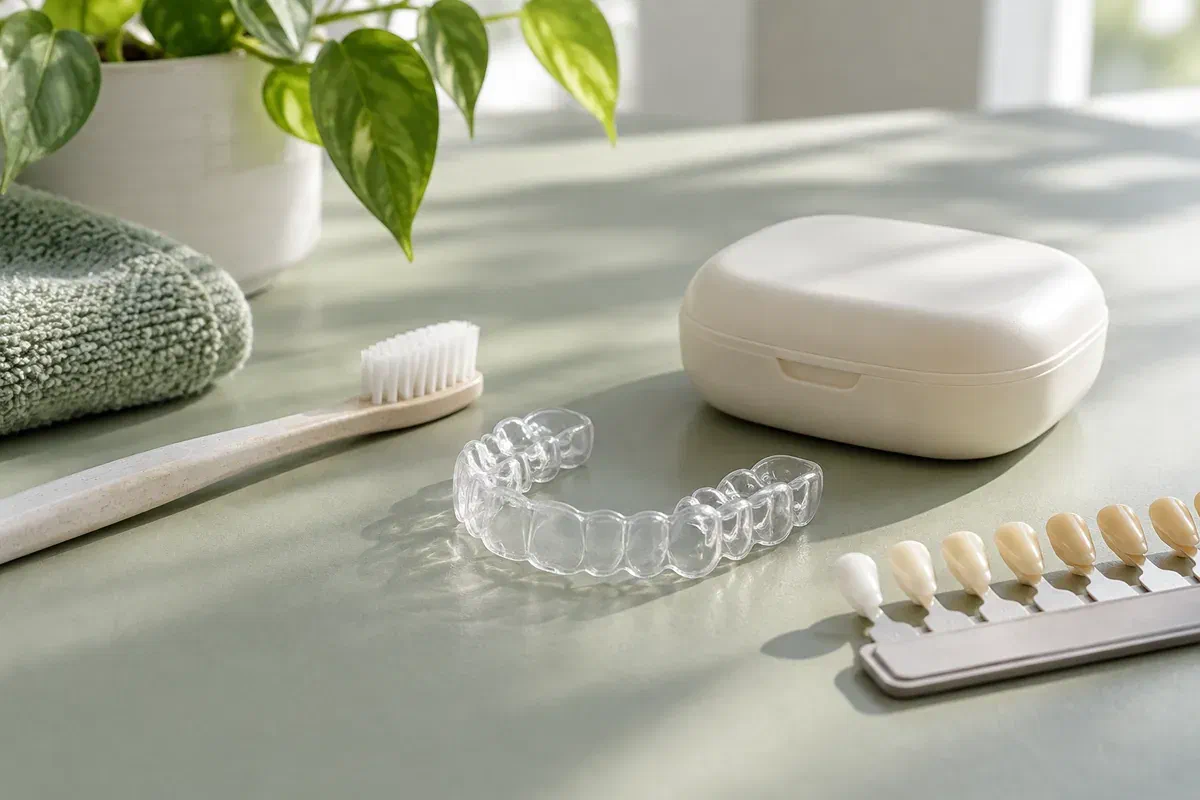
Illustrative soft toothbrush, empty dental tray, protective case, and natural tooth shade samples
Details that help at your visit

Describe the feeling, not just the product.

A rough account of where it hurts, what sets it off, and how long it stays is enough. Working out the cause is our job, not yours.

A single tooth keeps standing out

Show us the tooth and tell us if it aches when you chew, has an older filling, looks cracked, or has darkened. That tooth may need its own examination before whitening the whole smile is discussed. A symptom in one spot is not something to file under general sensitivity.

Cold water, a toothbrush, or sugar sets it off

Let us know how often it happens and whether it is getting more frequent. This kind of reaction can come from exposed roots, worn enamel, decay, or other changes. The cause needs to be assessed before anyone talks about treating it or about cosmetic bleaching.

Strips or trays left your mouth sore

Tell the team the brand, how long you wore it, and whether your gums or teeth were affected. A photo of the box or the leaflet is helpful. Those details give the conversation more to work with than simply saying the kit did not suit you.

Brightening your smile is a choice, not a necessity. Ongoing pain, a broken tooth, or untreated gum or tooth problems come first and should be assessed in their own right.

Why a tailored plan helps

Knowing whether to proceed, and what to do if it stings.

Before choosing anything, it helps to know what is behind the colour you dislike. Surface stain, the natural shade of your teeth, and other dental issues each call for different steps. A cleaning, a bleaching course, and care for sensitivity do not do the same job, so ask what each would change for you.

If bleaching turns out to be reasonable, you should leave knowing which method is planned and how comfort will be checked along the way. You should also know who to call and what to do if a reaction starts. That practical plan is worth more than any claim that a product will never sting.

Patient information: Canadian Dental Association — supervised bleaching and adverse effects

A fresh look before trying again

Go over the earlier reaction and today's findings before you buy another kit or restart one. Ask whether something needs treatment first and what would show that whitening could be revisited. The plan you leave with may not be the one you expected to hear.

A target you can live with

Talk about how much change would feel worthwhile and whether a date is driving the request. Ask what happens if the course becomes uncomfortable partway through. A gentle change, a pause, or deciding against whitening can all be sensible results.

Clear steps for the method chosen

Go over how to apply the product, how long to wear it, how often, and any care beforehand. Ask to see it demonstrated if that helps, and repeat the steps back. A tray that looks like your old one, or a product with a similar name, may come with different directions.

How planning usually unfolds

Cause first. Colour second.

No one strength, schedule, or light works for every sensitive mouth. Each step follows from what the examination finds, the product chosen, and how your teeth respond.

  1. Talk through the reaction and your history

    Describe the triggers, which teeth are involved, how long it lasts, and anything that has changed recently. We review past whitening, dental work, health information, and allergies. Let us know about pregnancy or breastfeeding so the timing of elective care can be discussed first.

  2. Check teeth, gums, and the shade concern

    Dr. Anjum looks at the teeth, gums, and any fillings or crowns, and considers whether more investigation is needed. Ask whether the sensitivity has a clear cause and what care is suggested. Discuss whether the colour is more likely to improve with cleaning, bleaching, or something else.

  3. Decide together whether and how to go ahead

    If whitening fits, go over the method, possible side effects, realistic limits, and fees. Ask whether steps to manage sensitivity make sense for you and what they can do. Be clear on the directions and on the signs that mean you should stop and call.

  4. Check in on comfort before adding more

    Note any reaction and bring it up at the planned review, or sooner if needed. Ask how the colour will be judged once the course ends or is paused. More applications should be a deliberate choice rather than a reflex when the shade changes slowly.

While you are whitening

Comfort outranks the calendar.

Keep the instructions and our phone number somewhere handy. This is a cosmetic choice, so discomfort is a reason to ask for advice, not a reason to finish no matter what.

Pause and call if something flares

If sensitivity or gum irritation shows up, stop using the product and get in touch about what to do next. Mention where it hurts, how strong it is, when it began, and your last application. Please do not double up on a desensitizing product or switch to another whitener to make up for it.

Stick to the home-care advice you were given

Ask which toothpaste, brush, and cleaning routine suit your mouth. If a sensitivity toothpaste is suggested, be clear on why and how to use it. It does not make any strength or length of bleaching acceptable, and it does not address every cause of tooth pain.

Check back before another round

Your teeth and fillings can change between courses. Ask whether you should be seen again before using leftover gel or booking a repeat. Talk about whether your trays still fit and how your teeth look now, rather than simply repeating the old schedule.

Patient information: NHS — tooth-whitening assessment and side effects

Paths you might take

There is more than one way forward.

What makes sense depends on why your teeth are sensitive, what kind of discolouration you have, and what you prefer. Ask what each route can realistically change and what it asks of you afterward.

When something else needs care first

Settle the sensitivity before any whitening

You may be offered treatment or prevention advice for what the examination finds. Ask how improvement will be checked and when whitening could be looked at again. Easing the discomfort is worth doing for its own sake, even if you later decide to keep your current shade.

When the exam supports going ahead

Try a supervised bleaching course

Ask about the method on offer, what it cannot do, and how you will report symptoms. Neither in-office nor take-home whitening is guaranteed to feel comfortable for everyone. Ask why a particular option suits your findings rather than choosing on speed or strength.

When bleaching is not needed or not worth it

Have stains cleaned, or keep your shade

If surface deposits are part of what you see, ask whether a cleaning would be enough. You are also free to choose no colour change once you understand the choices. Veneers, crowns, or larger cosmetic work are not an automatic next step just because whitening is not a fit.

Your questions, answered plainly

What people ask after a whitening kit goes wrong

Your past reaction and today's examination tell us more than any promise of gentle whitening. These questions can help you get specific answers.

(905) 876-4488
My strips made my teeth ache. Does that mean I can never whiten?
Not necessarily. A reaction to one product does not settle the question for good. It does mean the cause of the sensitivity should be looked at before another attempt. The examination may show a reason to wait, a different approach to consider, or a reason to skip whitening.
Do my fillings and crowns lighten along with my teeth?
No. Bleaching works on natural tooth structure, not on fillings, crowns, or veneers. If you have visible dental work near the front, ask how whitening the teeth around it could affect how everything matches, and what your options would be if it no longer blends in.
Is it normal for whitening sensitivity to fade after I stop?
Sensitivity linked to bleaching is often temporary, but that is not a reason to assume. Stop the product and let us know. If the feeling lingers, spreads, or comes with swelling or pain when biting, it needs to be assessed rather than waited out.
Can a sensitivity toothpaste make an over-the-counter kit safe for me?
It cannot make any product safe or comfortable by itself. Depending on the findings, a clinician may suggest one as part of a plan. Ask what it is expected to help with, how long to use it, and what to do if discomfort still appears.
Should I leave the gel on longer because my teeth are not lightening?
No. Wearing a product longer than directed can make irritation more likely without fixing the underlying reason. Ask us to review your progress instead. Some colour simply does not respond much to bleaching, and that is worth knowing before you push further.
How soon can I be seen if I live in town and the kit is still in my drawer?
Call the clinic and mention that you are thinking about whitening after a reaction. Bring the kit with you rather than using it in the meantime. Being nearby can make it simpler to come in for an assessment and a follow-up if one is needed.
Whitening sensitive teeth in Milton

Bring the leftover kit and your questions.

Reach our Bronte Street practice to talk about the discomfort, your earlier whitening attempt, and the change you would like. We can explain what assessment makes sense and help you choose an approach that keeps your oral health in view.

Whitening needs an assessment, and availability varies. No method guarantees that your teeth will not become sensitive, and a course may need to be delayed or stopped.

Visit Milton Dental Clinic
Unit 1, 342 Bronte St. S, Milton, ON L9T 5B7
Get directions Clinic hours
Monday–Thursday
11am–7pm
Friday–Sunday
By appointment only

Areas we serve

  • Milton
  • Oakville
  • Mississauga
  • Georgetown
  • Halton Hills
  • Acton
  • Campbellville
  • Brampton
  • Burlington
  • Puslinch
  • Rockwood
  • Erin
  • Caledon
  • Etobicoke
  • Old Milton
  • Bronte Meadows
  • Timberlea
  • Dorset Park
  • Dempsey
  • Clarke
  • Beaty
  • Coates
  • Harrison
  • Scott
  • Willmott
  • Ford
  • Bowes
  • Cobden
  • Walker
  • Mountain View
  • Milton Heights
  • Hawthorne Village
  • Valley View
  • Fallingbrook
  • Nassagaweya
  • Trafalgar
  • Esquesing
  • Nelson
  • Brookville
  • Moffat
  • Glen Williams
  • Norval
  • Limehouse
  • Stewarttown
  • Ashgrove
  • Hornby
  • Silver Creek
  • Speyside
  • Scotch Block
  • North Oakville
  • River Oaks
  • Glen Abbey
  • West Oak Trails
  • Palermo
  • Bronte Creek
  • College Park
  • Joshua Creek
  • Uptown Core
  • Preserve
  • Iroquois Ridge
  • Lisgar
  • Meadowvale
  • Meadowvale Village
  • Churchill Meadows
  • Erin Mills
  • Central Erin Mills
  • Streetsville
  • East Credit
  • Creditview
  • Heartland
  • Sheridan
  • Mount Pleasant
  • Credit Valley
  • Huttonville
  • Churchville
  • Springbrook
  • Northwest Brampton
  • Bram West
  • Fletcher's Meadow
  • Fletcher's Creek South
  • Alton Village
  • Orchard
  • Millcroft
  • Headon Forest
  • Tansley
  • Brant Hills
  • Tyandaga
  • Kilbride
  • Lowville
  • Aberfoyle
  • Morriston
  • Arkell
  • Hillsburgh
  • Freelton
  • Carlisle
  • Waterdown
  • Flamborough
  • Mountsberg

How can we help?

Milton Dental Clinic

Have a question about your smile? Choose the option that works best for you.

For urgent dental concerns, please call.
Messages are reviewed during clinic hours.