

Illustrative patient discussing tooth sensitivity with a clinician before cosmetic treatment
Cosmetic Dentistry

Teeth Whitening for Sensitive Teeth in Rockwood

Strips, custom trays, or a chairside session: which is kindest to teeth that already ache? None is gentle by default. From Rockwood, visit our Milton practice to compare methods against your own exam findings, so the choice follows the cause of your sensitivity.

Comparing the methods

Strips, trays, or the chair?

Spend ten minutes reading about whitening and you will find confident claims for every method. Strips are convenient, trays are customizable, chairside sessions are quick. For teeth that already react to cold or sweets, what you really want to know is which one is least likely to hurt. The honest answer: that depends on you.

Every peroxide-based method can cause temporary sensitivity and gum irritation, and no format is comfortable for everyone. What changes the odds is understanding why your teeth are sensitive now. Exposed roots, worn enamel, a leaky filling, or decay each affect whether bleaching is sensible and, if it is, which approach the clinician might suggest.

When you come in from Rockwood, bring whatever you have tried and your questions about each format. Dr. Anjum can explain what the exam shows, how the available methods differ in practice, and whether it is wiser to treat the sensitivity first or to skip whitening for now.

Compare whitening methods for your teeth
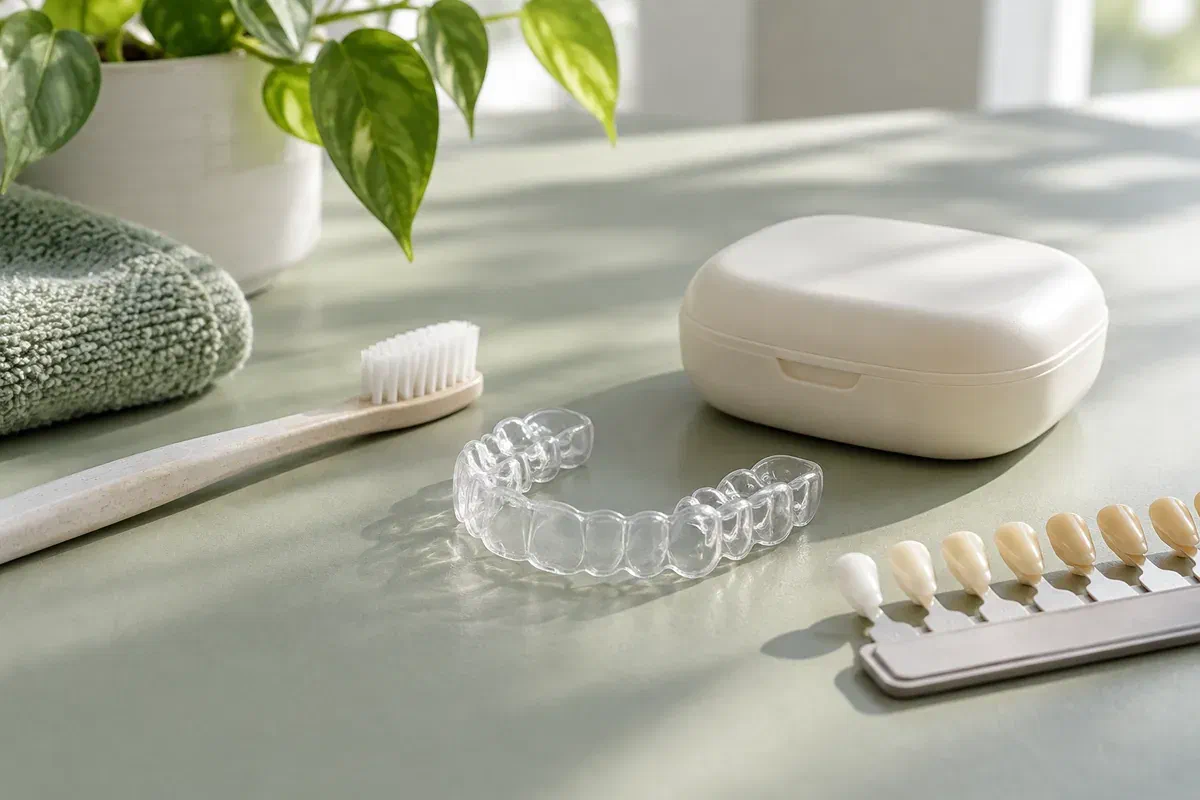
Illustrative soft toothbrush, empty dental tray, protective case, and natural tooth shade samples
Before picking a format

Your symptoms narrow the choice.

Note which teeth react, the triggers, and how long the feeling lingers. The cause is for the clinician to determine.

A tooth that stands apart from the others

Pain on biting, a recent repair, a chip, or a colour change in one tooth should be mentioned first. That tooth may need attention whatever whitening method you favour. Its symptoms should not be lumped in with general sensitivity.

Reactions to cold, brushing, or sweets

Describe how often they happen and whether they are increasing. Root exposure, enamel wear, decay, and other conditions can lie behind them. The source guides both the care you might need and whether any bleaching format is a reasonable idea.

One format already gave you trouble

If strips slipped onto your gums or a tray felt bulky, tell us which product and what you noticed. Bring it along if you can. Knowing how a specific format affected you helps rule options in or out.

Whitening is a cosmetic preference. Persistent aching, a cracked tooth, or untreated gum and tooth issues take priority over choosing any method.

Why compare with a clinician

A method chosen for reasons, not ads

The exam first confirms what you are trying to change: surface stain, natural shade, or something else. If cleaning would solve it, format comparisons are beside the point. If bleaching is relevant, your findings help explain why one approach may suit you better than another, and what each will not do.

Whatever method is chosen, the plan should cover how your comfort is monitored, how to reach the team, and what to do if your teeth begin to hurt. That practical safety net matters more than how a product is marketed. It also means that if the first format does not suit you, there is already an agreed way to pause and rethink, rather than a scramble to find something else online.

Patient information: Canadian Dental Association — supervised bleaching and adverse effects

A side-by-side explanation

Ask how the formats available differ in contact time, control, and the way gel meets your teeth and gums. Ask which would suit your findings and why. You may hear that none is advisable yet.

A pace that suits your comfort

Discuss how much change you want and whether you would rather go slowly. Ask how the plan would change if a method proved uncomfortable. A gradual approach, a pause, or no whitening can all be wise choices.

Precise directions for your format

Trays, strips, and chairside methods each come with their own steps. Confirm placement, wear time, frequency, and preparation for yours. Directions for one format should never be applied to another, even when the packaging looks similar or the brand is the same.

How the decision is made

Findings first, format second

No strength, schedule, or device suits every sensitive mouth. The plan follows the exam, the method chosen, and how your teeth respond.

  1. Talk about symptoms and past products

    Describe the triggers, which teeth, how long they last, and any format you have tried. We cover previous dental work, your general health, medications, and allergies. Let us know about pregnancy or breastfeeding so elective care can be timed sensibly.

  2. Examine and explain the findings

    Your teeth, gums, and restorations are assessed, and further tests are considered where useful. Ask what is likely behind the sensitivity and what treatment is suggested. Then talk about whether your colour concern suits cleaning or bleaching at all.

  3. Weigh the available methods

    If whitening is suitable, compare the options offered, possible reactions, realistic limits, and cost. Ask whether a sensitivity measure would help with your chosen format. Confirm when you should stop and call.

  4. Review how the method worked for you

    Keep notes on comfort and raise them at the follow-up, or sooner. Ask how the result will be compared once the course ends or pauses. Switching formats or adding applications should be agreed with the clinician.

Using your chosen method

If it hurts, the format is not the fix.

Keep the instructions for your specific method and our phone number together. A reaction during cosmetic treatment is a cue to call, not to swap to another product.

Stop and report the reaction

When sensitivity or gum soreness appears, set the product aside and phone. Tell us the area, the strength, when it started, and your last use. Please do not switch formats, layer products, or add extra desensitizer on your own.

Care for teeth between applications

Confirm the toothpaste, brush, and cleaning routine recommended for your findings. If a sensitivity toothpaste is advised, learn what it is meant to do. It does not make longer or stronger bleaching acceptable, and it does not treat every cause of pain.

Ask before trying another format

If one method did not suit you, check with the clinician before buying another. A different format uses the same kind of active ingredient, so it may not solve the problem. Teeth and restorations also change between courses. Have your shade and any trays reviewed rather than experimenting on your own.

Patient information: NHS — tooth-whitening assessment and side effects

Rockwood whitening paths

Pick a direction, then a method.

The right fit depends on the cause of the sensitivity, the type of discolouration, and what matters to you. Ask what each choice changes and what follow-up it involves.

When care is needed first

Address the sensitivity before choosing

Treatment or prevention advice may be offered for the exam's findings. Ask how improvement will be checked and when to revisit whitening. Easing the discomfort is worthwhile on its own, whatever you later decide about colour.

When the findings support bleaching

A supervised format matched to you

Hear which formats are offered, what each can and cannot achieve, and how to report symptoms. In-office and home methods can both cause discomfort for some. Ask why the suggested format suits your teeth rather than picking by speed.

When bleaching would not add much

Cleaning, or keeping your shade

If surface deposits account for some of the colour, a cleaning may be enough. You can also choose to keep your current shade. Veneers or other cosmetic work are not an automatic next step just because no bleaching method suits you.

Method questions

Which whitening format is right for sensitive teeth?

Your exam matters more than any format's reputation. These questions can help you compare sensibly.

(905) 876-4488
Are whitening strips gentler than custom trays for sensitive teeth?
Not necessarily. Each format has trade-offs, and comfort depends on your teeth, the product, and how it is used. Strips can shift toward the gums, while trays depend on a good fit. Ask the clinician which suits your findings, why, and what you would do differently if one caused trouble.
Does a chairside session cause more sensitivity than a home course?
Experiences vary. Some people notice sensitivity with either approach, and a quicker session is not automatically harder or easier on the teeth. Ask how the methods offered differ in practice and which is more suitable given the cause of your sensitivity and your own preferences.
Why do custom trays need to fit well?
A well-fitting tray holds gel where it is meant to be, against the teeth. A poor fit can let gel spread onto the gums and cause irritation, or leave some areas untreated. Ask how your trays would be checked and what to do if they ever feel loose or uncomfortable.
Can I switch from trays to strips if one hurts?
Talk to the clinician before switching. Changing formats without advice can make it hard to tell what is causing the reaction, and the second product may not be any easier on your teeth. Stop, describe what happened, and let the plan be adjusted from there.
Is a gel advertised for sensitive teeth enough without an exam?
No. A label cannot tell why your teeth hurt or whether bleaching is suitable for them. Have the cause checked first, then ask whether that gel, a different format, or no whitening at all would make the most sense for you.
Can my comparison visit from Rockwood include a regular checkup?
Ask when booking. Combining a whitening discussion with a routine exam is often possible and can save a trip. Any bleaching itself would come after the assessment, once a method and a plan for your sensitivity have been agreed.
Comparing whitening options, Rockwood

Let the exam pick the method.

Ring the Bronte Street practice and tell us which formats you are curious about, how your teeth react, and the shade you hope for. We can explain what the assessment covers and help you weigh each approach against your oral health.

Whether whitening suits you, and which method, depends on an assessment. Every format can cause sensitivity, so treatment might be put off or halted partway.

Visit Milton Dental Clinic
Unit 1, 342 Bronte St. S, Milton, ON L9T 5B7
Get directions Clinic hours
Monday–Thursday
11am–7pm
Friday–Sunday
By appointment only

Areas we serve

  • Milton
  • Oakville
  • Mississauga
  • Georgetown
  • Halton Hills
  • Acton
  • Campbellville
  • Brampton
  • Burlington
  • Puslinch
  • Rockwood
  • Erin
  • Caledon
  • Etobicoke
  • Old Milton
  • Bronte Meadows
  • Timberlea
  • Dorset Park
  • Dempsey
  • Clarke
  • Beaty
  • Coates
  • Harrison
  • Scott
  • Willmott
  • Ford
  • Bowes
  • Cobden
  • Walker
  • Mountain View
  • Milton Heights
  • Hawthorne Village
  • Valley View
  • Fallingbrook
  • Nassagaweya
  • Trafalgar
  • Esquesing
  • Nelson
  • Brookville
  • Moffat
  • Glen Williams
  • Norval
  • Limehouse
  • Stewarttown
  • Ashgrove
  • Hornby
  • Silver Creek
  • Speyside
  • Scotch Block
  • North Oakville
  • River Oaks
  • Glen Abbey
  • West Oak Trails
  • Palermo
  • Bronte Creek
  • College Park
  • Joshua Creek
  • Uptown Core
  • Preserve
  • Iroquois Ridge
  • Lisgar
  • Meadowvale
  • Meadowvale Village
  • Churchill Meadows
  • Erin Mills
  • Central Erin Mills
  • Streetsville
  • East Credit
  • Creditview
  • Heartland
  • Sheridan
  • Mount Pleasant
  • Credit Valley
  • Huttonville
  • Churchville
  • Springbrook
  • Northwest Brampton
  • Bram West
  • Fletcher's Meadow
  • Fletcher's Creek South
  • Alton Village
  • Orchard
  • Millcroft
  • Headon Forest
  • Tansley
  • Brant Hills
  • Tyandaga
  • Kilbride
  • Lowville
  • Aberfoyle
  • Morriston
  • Arkell
  • Hillsburgh
  • Freelton
  • Carlisle
  • Waterdown
  • Flamborough
  • Mountsberg

How can we help?

Milton Dental Clinic

Have a question about your smile? Choose the option that works best for you.

For urgent dental concerns, please call.
Messages are reviewed during clinic hours.