

Illustrative patient and clinician discussing tooth contours using a dental model
Cosmetic Dentistry

Tooth Reshaping in Burlington

Some shape concerns are felt before they are seen: a sharp corner your tongue keeps finding, or an edge that nicks your lip. Coming from Burlington, you can have that tooth examined to see whether a small enamel adjustment is sensible, what it would permanently remove, and what else might help.

From Burlington: edges you can feel

Your tongue noticed it first.

A rough corner can be surprisingly distracting. It may scrape the inside of your lip when you talk, or feel jagged every time you run your tongue across your front teeth. Tooth reshaping, sometimes called enameloplasty, smooths or refines that kind of edge by removing a small, deliberate amount of enamel. It cannot replace missing tooth or change where a tooth sits.

Since enamel cannot regrow, the starting point is understanding why the edge feels the way it does. A clinician checks the tooth's health, how thick its enamel is, and how it lines up with the teeth it meets. A sharp spot might be a natural feature, a fresh chip, or the leading edge of a crack, and those are handled very differently.

For anyone travelling over from Burlington, one well-planned visit can answer most of the first questions. Tell us when the edge started bothering you, what makes it worse, and whether it also looks uneven. We will explain the examination, what a limited adjustment could do, and the point at which it would stop.

Have a rough edge checked
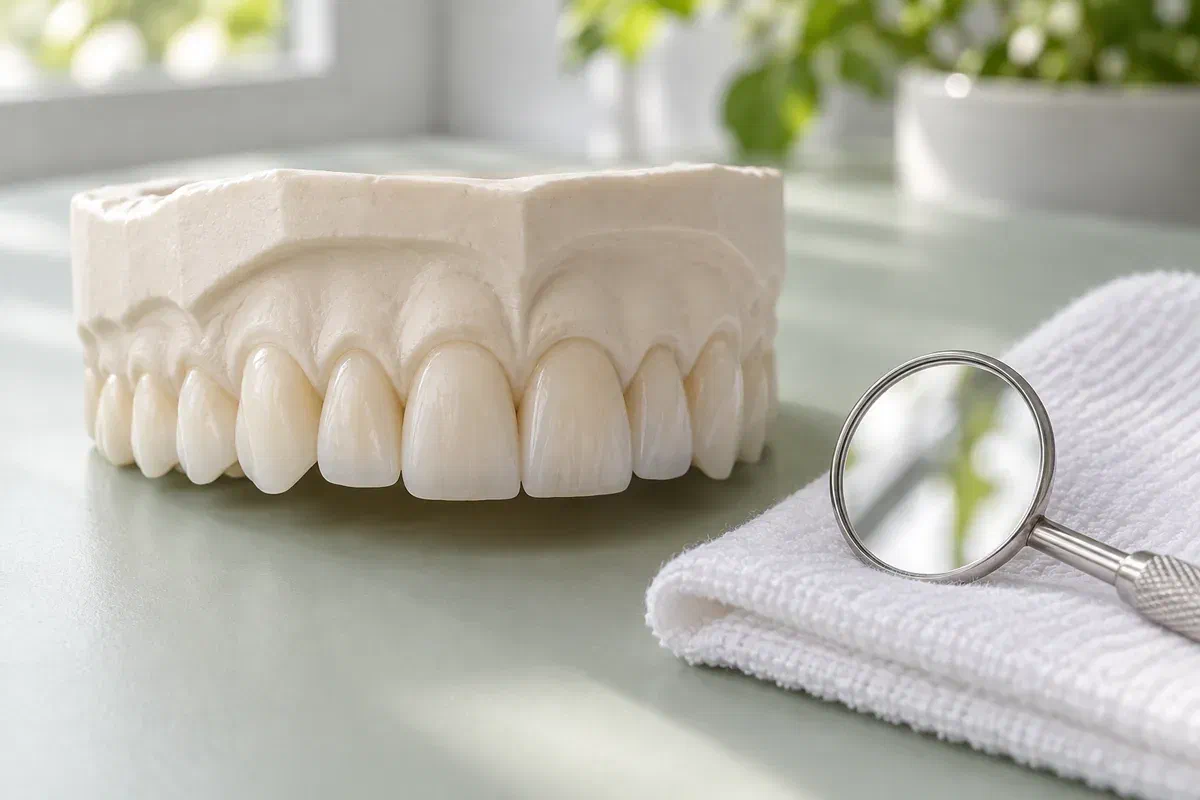
Illustrative dental teaching model with natural incisor edges beside a dental mirror
Sharp, rough, or uneven?

What a catching edge might be telling you

An edge that has always felt pointed is a different matter from one that turned sharp last week. Note when you first noticed it and whether it seems to be changing.

A tip that has always felt pointed

Some canines and incisors simply formed with a sharper outline. Describe where it rubs and what change would feel better. Ask whether a conservative softening would do the job, and what would happen if the clinician advised leaving most of the natural shape intact.

A rough patch that appeared suddenly

Explain any knock, crunch on something hard, or recent treatment nearby. A new sharp spot can mean a chip, a lifted filling edge, or a crack that needs repair rather than polishing. Have it looked at before deciding it is only cosmetic.

Edges that feel thinner or keep chipping

Mention grinding, clenching, jaw tenderness, or a bite that feels different. Thin, worn edges can chip repeatedly. The cause matters more than the outline, since smoothing a tooth that keeps wearing will not stop the wear itself.

Resist the urge to smooth a sharp edge with a nail file or sandpaper. Home filing can remove enamel unevenly and hide a problem that a professional exam would catch.

Comfort and appearance, considered together

Fixing the snag without overcorrecting the tooth

When a suitable tooth has a small sharp feature, contouring may make it comfortable again without covering it with a restoration. The trade-off is that some enamel is gone for good. Ask how that balance applies to your tooth and how it compares with bonding the area or leaving it as it is.

An exam can also reveal whether the edge is the real issue at all. A tooth that juts slightly may be positioned forward, and a missing corner may need rebuilding. Getting that right early avoids treating a comfort or appearance goal with a change that cannot solve it.

A specific spot and a set limit

Ask the clinician to touch or point to the exact area involved and describe how much would be smoothed. Confirm whether the plan is to take off a sharp point, round a corner, or adjust an outline. A focused aim keeps the change proportionate.

A clear comparison with repair options

Discuss whether bonding or polishing an existing restoration would solve the problem differently. Ask about maintenance, how many visits each route needs, and how the tooth will look afterwards. Comfort and appearance may point to different answers, and that is worth hearing.

Space to say no to elective change

You can accept part of a plan, take time to decide, or choose not to proceed. Raise any worry about losing length or character before treatment. Agreement should cover the exact adjustment described rather than a general idea of tidying things up.

The steps, start to finish

Feel, examine, agree, and review

The length of each visit depends on the tooth and whether other care is involved. Ask what is included and whether you can decide on contouring at a later appointment.

  1. Locate the edge and explain the problem

    Show where the tooth catches and describe how it bothers you. Share any history of fillings, orthodontics, sensitivity, injuries, or wear. The clinician needs to know whether the sharp area is natural enamel, part of a restoration, or newly broken.

  2. Examine and look at every option

    The tooth's condition and its relationship to your bite are assessed, with extra imaging or tests arranged when needed. Ask whether removing enamel is right for this tooth, what risks apply, and whether repair or monitoring would make more sense.

  3. Agree on precisely what will change

    Before anything starts, confirm the tooth, the area, and the expected result. Ask about comfort measures and mention any nervousness. Work should stay within the agreed scope, and any further adjustment needs a separate conversation.

  4. Smooth, polish, and check the feel

    After the planned contour, the surface is polished and you are asked how it feels. Run your tongue over it and say if anything seems off. Before leaving, check the aftercare advice and which signs, such as lingering sensitivity or teeth meeting oddly, mean you should phone.

Living with the adjusted edge

Everyday care, and a phone call if the snag comes back

Use the instructions for the treatment you actually received, especially if contouring was paired with bonding or a filling repair. Aftercare is not identical across cosmetic visits.

Ask what to expect in the first days

Find out how to clean the smoothed area and which sensations deserve a call. Stay with the brushing and flossing routine recommended for you. If a sensitivity toothpaste is suggested, ask how long to use it and when to update the team.

Report an edge that still catches

If roughness remains, your bite feels new, or soreness lingers, let us know. Describe what happens when you eat or speak. A short review is far better than trying an abrasive paste or requesting more removal without reassessment.

Look for the reason if chipping recurs

A tooth that chips again may be under strain. Ask what could be causing it and whether a night guard or habit change is relevant. Smoothing the same tooth repeatedly does not address a recurring underlying cause.

Choosing how to deal with the edge

Smooth it, rebuild it, or address its position

Each route targets a different cause. Compare the tooth's condition, the preparation each would involve, and the long-term upkeep rather than deciding on how the tooth looks alone.

When a small sharp feature can safely be reduced

Minor enamel smoothing

Contouring may be suggested for a suitable point or rough edge after an exam. Ask how far a conservative adjustment would go toward the comfort you want. The change should stay proportionate, keeping in mind that enamel removal is irreversible.

When the sharpness comes from missing structure

Bonding or repairing a restoration

If part of the tooth or an old filling has broken away, adding or repairing material may be the better approach. Ask about maintenance and what the repair commits you to later. Existing restorations are assessed separately from natural enamel.

When alignment or personal preference shapes the decision

A position review, or no change at all

If a tooth catches because it sits forward, ask whether orthodontic advice is worth considering. You may also decide the feature is not worth altering. Understand both before treating reshaping as a fix for a position issue.

Patient information: British Orthodontic Society — comparing alignment and restorative changes

Burlington questions about sharp edges

Common questions about rough and catching teeth

These answers cover comfort-driven reshaping, possible causes, and when a sharp edge needs more than smoothing. Bring your own questions, including what would happen if you left the tooth as it is.

(905) 876-4488
Why does one tooth suddenly feel sharp when it never did before?
A small chip, a worn edge, or a lifted filling margin are common reasons. Occasionally a crack is involved. Because the cause changes the treatment, a new sharp spot should be examined before anyone decides to smooth it.
Is it safe to leave a slightly sharp edge alone?
Often a stable, natural point is harmless, but an edge that is cutting your lip or tongue, or one that appeared recently, is worth checking. The clinician can tell you whether monitoring is reasonable or whether treatment is advisable.
Can smoothing a sharp spot be done during a regular checkup?
Sometimes a very minor adjustment can be discussed at a routine visit once the tooth has been assessed, but it depends on the findings and the schedule. Ask when you book so the right amount of time is set aside.
Can a sharp edge on a crown or veneer be reshaped?
Restorations need their own assessment. Some materials can be polished, while others may need repair or replacement. Tell the clinician what the tooth has had done so the plan matches the material involved.
Will smoothing the edge affect how I speak?
A small change near the biting edge rarely needs to be large, but front teeth do play a part in some sounds. Mention any concern about speech during planning, and report anything that feels different after the visit.
If I'm coming from Burlington, what should I bring to the first visit?
A list of past dental work on that tooth, any photos showing when the edge changed, and your questions about alternatives. That helps the first appointment cover as much ground as possible and reduces the need for an extra trip.

Patient information: British Orthodontic Society — interproximal reduction as a planned orthodontic procedure

Burlington to Bronte Street

Let's find out what that sharp corner actually is.

Book a visit at our Bronte Street practice to have a rough edge, pointed tip, or catching tooth examined. We will explain the assessment and help you compare a minor smoothing with repair or simply keeping an eye on it.

Reshaping removes enamel permanently and is offered only after assessment. Scope, comfort, appointment time, and fees are discussed individually.

Visit Milton Dental Clinic
Unit 1, 342 Bronte St. S, Milton, ON L9T 5B7
Get directions Clinic hours
Monday–Thursday
11am–7pm
Friday–Sunday
By appointment only

Areas we serve

  • Milton
  • Oakville
  • Mississauga
  • Georgetown
  • Halton Hills
  • Acton
  • Campbellville
  • Brampton
  • Burlington
  • Puslinch
  • Rockwood
  • Erin
  • Caledon
  • Etobicoke
  • Old Milton
  • Bronte Meadows
  • Timberlea
  • Dorset Park
  • Dempsey
  • Clarke
  • Beaty
  • Coates
  • Harrison
  • Scott
  • Willmott
  • Ford
  • Bowes
  • Cobden
  • Walker
  • Mountain View
  • Milton Heights
  • Hawthorne Village
  • Valley View
  • Fallingbrook
  • Nassagaweya
  • Trafalgar
  • Esquesing
  • Nelson
  • Brookville
  • Moffat
  • Glen Williams
  • Norval
  • Limehouse
  • Stewarttown
  • Ashgrove
  • Hornby
  • Silver Creek
  • Speyside
  • Scotch Block
  • North Oakville
  • River Oaks
  • Glen Abbey
  • West Oak Trails
  • Palermo
  • Bronte Creek
  • College Park
  • Joshua Creek
  • Uptown Core
  • Preserve
  • Iroquois Ridge
  • Lisgar
  • Meadowvale
  • Meadowvale Village
  • Churchill Meadows
  • Erin Mills
  • Central Erin Mills
  • Streetsville
  • East Credit
  • Creditview
  • Heartland
  • Sheridan
  • Mount Pleasant
  • Credit Valley
  • Huttonville
  • Churchville
  • Springbrook
  • Northwest Brampton
  • Bram West
  • Fletcher's Meadow
  • Fletcher's Creek South
  • Alton Village
  • Orchard
  • Millcroft
  • Headon Forest
  • Tansley
  • Brant Hills
  • Tyandaga
  • Kilbride
  • Lowville
  • Aberfoyle
  • Morriston
  • Arkell
  • Hillsburgh
  • Freelton
  • Carlisle
  • Waterdown
  • Flamborough
  • Mountsberg

How can we help?

Milton Dental Clinic

Have a question about your smile? Choose the option that works best for you.

For urgent dental concerns, please call.
Messages are reviewed during clinic hours.