

Illustrative patient and clinician discussing tooth contours using a dental model
Cosmetic Dentistry

Tooth Reshaping in Halton Hills

Sometimes the most useful thing an assessment can tell you is that a tooth is fine as it is. From Halton Hills, book a visit to look at an uneven edge or pointed tip together, understand whether a slight enamel contour is appropriate, and weigh that permanent step against leaving it.

Halton Hills · weighing a small change

Is it worth changing at all?

Plenty of people live happily with a slightly pointed canine or one incisor that is a touch longer. Others find the same detail bothers them every time they smile. Enamel contouring sits between those positions: a minor procedure that removes a small amount of enamel to refine an outline or smooth a rough edge. It cannot build a tooth up or move it.

The question of whether to go ahead matters because enamel, once removed, stays gone. A clinician considers the tooth's health, how much enamel it has, and how it meets its neighbours and opposite teeth. Part of a good assessment is hearing honestly when the change you have in mind is not a good trade.

Households across Halton Hills, from Georgetown and Acton to Glen Williams, often fit dental visits around busy weeks. A single assessment can tell you whether contouring is worth planning for. Tell us what draws your attention to the tooth and how much it bothers you. We will explain the realistic change and its limits.

Get an honest opinion on a tooth
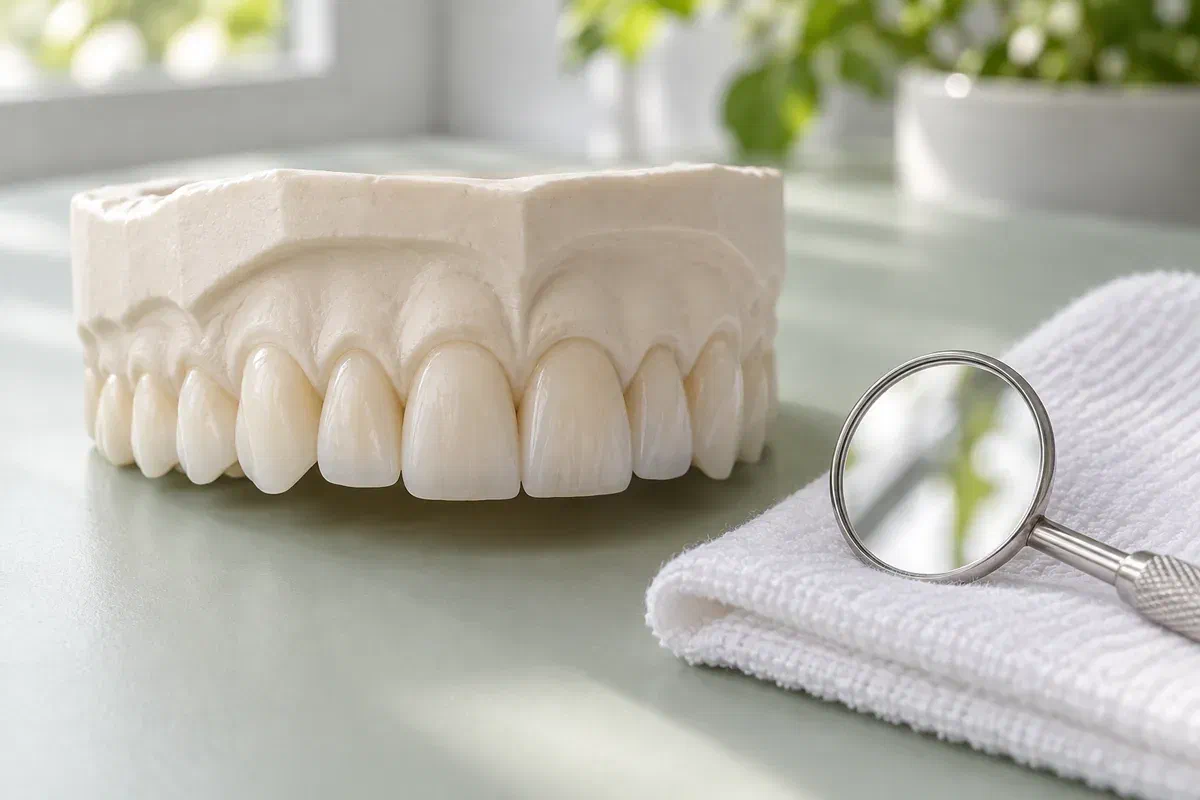
Illustrative dental teaching model with natural incisor edges beside a dental mirror
Understanding the feature first

Natural, damaged, or worn: the answer changes the advice.

Before deciding whether to change a tooth, it helps to know how it came to look this way. Share whether the feature is old, new, or changing.

A natural quirk you have always had

Long-standing features are often stable and healthy. Describe what you would change if you could. Ask whether a conservative adjustment would get close, or whether the amount of enamel involved makes leaving it the better option.

A chip or roughness that is recent

If something changed after a knock, hard food, or dental work, it should be examined before it is considered cosmetic. A new defect may need repair, and smoothing it could hide a problem that needs attention.

Wear that seems to be progressing

Tell us if you clench or grind, if your jaw feels tender, or if your teeth seem to meet differently lately. If edges are still changing, contouring may chase a moving target. Understanding the cause is usually more valuable than evening out the result.

Please don't experiment with files or abrasives at home. Whether any enamel should be removed, and how that would affect the tooth and bite, is something only an examination can determine.

What an assessment is good for

A clear yes, a clear no, or a better idea

If the tooth is suitable and the concern is minor, contouring may offer a modest change while leaving the tooth uncovered by any restoration. If it is not suitable, knowing that is just as useful. Ask where your tooth falls, and how contouring compares with bonding or with simply keeping an eye on things.

The visit also helps you see whether shape is the real issue. A tooth may look long because it sits slightly forward or lower, and a short corner may need building up. Knowing this protects you from removing healthy enamel in pursuit of something that a different approach would handle better.

A defined area, or a reason to leave it

Ask the clinician to show exactly what would change and how much. If the honest answer is that the gain would be small, hear that too. A specific, proportionate aim is far better than a vague instruction to tidy things up.

A fair look at the alternatives

Discuss how bonding or an orthodontic opinion would address the same concern. Compare upkeep, the number of visits, and the end result. The quickest or smallest-sounding option is not automatically the right one.

No pressure to proceed

You can take the explanation home, discuss it with family, and decide later, or decide not to proceed. Mention concerns about losing length or character up front. Your agreement should match the specific change described.

How the decision is made

Look, assess, agree, then review

Appointment length depends on the tooth and any other care involved. Ask whether the assessment can be a visit on its own, so you can decide without feeling rushed.

  1. Explain what you notice and why it bothers you

    Point out the tooth and describe how it affects you. Share past fillings, orthodontics, sensitivity, injuries, and wear. Knowing whether the edge is natural enamel, a restoration, or newly damaged shapes every recommendation that follows.

  2. Assess the tooth and discuss every path

    The exam looks at the tooth's condition and how it fits your bite, with further assessment arranged if indicated. Ask whether contouring suits this tooth, what risks are relevant, and whether bonding, alignment advice, or monitoring would be wiser.

  3. Agree on the change, or agree to wait

    If you decide to proceed, confirm the tooth, the contour, and the intended result. Ask about comfort and mention any nervousness. If you would rather wait, that is a perfectly sound outcome of the visit.

  4. Check the result and how teeth meet

    After any adjustment, the surface is polished and reviewed with you. Look at it closely and raise anything unexpected. Confirm the aftercare and what signs, such as sensitivity or an odd bite, mean you should call.

After a small adjustment

Mostly business as usual

Follow the advice for the treatment you actually had, especially if it was combined with bonding. Aftercare is not the same for every cosmetic appointment.

Ask about cleaning and comfort

Find out how to look after the treated area and what sensations should prompt a call. Brushing and flossing carry on as before unless you are told otherwise. Should a toothpaste for sensitive teeth be advised, confirm how to use it and for how long.

Report edges that still catch

Let us know if roughness persists, your bite feels different, or discomfort continues. Note what you feel while eating and speaking. Booking a review is wiser than reaching for an abrasive product or requesting more removal.

Ask questions if the shape changes again

New wear or another chip may point to a habit or bite issue worth discussing. Ask whether a night guard or other advice applies. Repeated contouring should not take the place of understanding the cause.

All the choices on the table

Including the choice to change nothing

Each option addresses something different. Compare the tooth's condition, the preparation involved, and future care rather than deciding on appearance alone.

When a minor feature can be reduced safely

A slight enamel contour

Contouring may be considered for a suitable edge or tip after an exam. Ask how much of your goal a careful, limited adjustment would achieve. Keep the change in proportion, remembering that enamel does not return.

When the tooth needs building up

Bonding or a repair

Tooth-coloured material may suit a short or chipped tooth. Ask how it is maintained and what it commits you to later. Existing restorations are reviewed on their own, separately from the natural tooth.

When position or personal preference leads

Alignment advice, or keeping it natural

If where the tooth sits creates the look, ask whether orthodontic input is worthwhile. Keeping a healthy natural contour is a legitimate decision. Weigh both before using contouring as a shortcut.

Patient information: British Orthodontic Society — comparing alignment and restorative changes

Halton Hills questions

Deciding whether to reshape

These questions focus on whether contouring is worthwhile and what happens if you hold off. Add your own, including anything about leaving the tooth exactly as it is.

(905) 876-4488
Is there any harm in leaving a pointed or uneven tooth alone?
A stable, healthy natural feature usually does not need treatment for its own sake. If it is changing, catching, or uncomfortable, an exam is worthwhile. The clinician can tell you whether monitoring is reasonable and what changes would be worth reporting before your next checkup.
How small a change is too small to be worth doing?
That is a personal judgement, but the clinician can help by describing what would actually change. If the difference would be hard to notice, you may prefer to keep your enamel. Ask for a frank view.
Can I decide later if I don't feel ready at the first appointment?
Yes. An assessment can stand on its own. Many people go home, think it over, and come back when they are sure. There is no obligation to book treatment at the same visit.
Would contouring be covered differently from other dental work?
Coverage varies by plan and by the reason for treatment, and we cannot predict it in advance. Ask the team for the treatment details you need to check with your insurer before deciding.
Will other people notice the change?
Contouring is usually subtle, and many changes are noticed mainly by the person themselves. Ask the clinician to describe the expected difference so your expectations match what is achievable.
Can family members from Halton Hills book assessments on the same day?
Ask when you call. Grouping appointments can sometimes be arranged, which may suit households that would rather make one trip. Each person’s assessment is still separate and focuses on their own teeth, history, and goals.

Patient information: British Orthodontic Society — interproximal reduction as a planned orthodontic procedure

Halton Hills to Bronte Street

Come for an opinion, not a commitment.

Set aside time at our Bronte Street practice to show us the edge or tooth shape that keeps bothering you. We will explain the exam involved and help you decide between a limited contour, another option, or leaving the tooth as it is.

Reshaping is permanent and only suitable after assessment. Scope of change, appointment length, comfort measures, and fees are discussed with each person.

Visit Milton Dental Clinic
Unit 1, 342 Bronte St. S, Milton, ON L9T 5B7
Get directions Clinic hours
Monday–Thursday
11am–7pm
Friday–Sunday
By appointment only

Areas we serve

  • Milton
  • Oakville
  • Mississauga
  • Georgetown
  • Halton Hills
  • Acton
  • Campbellville
  • Brampton
  • Burlington
  • Puslinch
  • Rockwood
  • Erin
  • Caledon
  • Etobicoke
  • Old Milton
  • Bronte Meadows
  • Timberlea
  • Dorset Park
  • Dempsey
  • Clarke
  • Beaty
  • Coates
  • Harrison
  • Scott
  • Willmott
  • Ford
  • Bowes
  • Cobden
  • Walker
  • Mountain View
  • Milton Heights
  • Hawthorne Village
  • Valley View
  • Fallingbrook
  • Nassagaweya
  • Trafalgar
  • Esquesing
  • Nelson
  • Brookville
  • Moffat
  • Glen Williams
  • Norval
  • Limehouse
  • Stewarttown
  • Ashgrove
  • Hornby
  • Silver Creek
  • Speyside
  • Scotch Block
  • North Oakville
  • River Oaks
  • Glen Abbey
  • West Oak Trails
  • Palermo
  • Bronte Creek
  • College Park
  • Joshua Creek
  • Uptown Core
  • Preserve
  • Iroquois Ridge
  • Lisgar
  • Meadowvale
  • Meadowvale Village
  • Churchill Meadows
  • Erin Mills
  • Central Erin Mills
  • Streetsville
  • East Credit
  • Creditview
  • Heartland
  • Sheridan
  • Mount Pleasant
  • Credit Valley
  • Huttonville
  • Churchville
  • Springbrook
  • Northwest Brampton
  • Bram West
  • Fletcher's Meadow
  • Fletcher's Creek South
  • Alton Village
  • Orchard
  • Millcroft
  • Headon Forest
  • Tansley
  • Brant Hills
  • Tyandaga
  • Kilbride
  • Lowville
  • Aberfoyle
  • Morriston
  • Arkell
  • Hillsburgh
  • Freelton
  • Carlisle
  • Waterdown
  • Flamborough
  • Mountsberg

How can we help?

Milton Dental Clinic

Have a question about your smile? Choose the option that works best for you.

For urgent dental concerns, please call.
Messages are reviewed during clinic hours.