

Illustrative patient and clinician discussing tooth contours using a dental model
Cosmetic Dentistry

Tooth Reshaping in Puslinch

A new crown or veneer can make the natural tooth beside it look slightly out of step. From Puslinch, plan an assessment to see whether a conservative enamel contour on the natural tooth could help them blend, what that permanently removes, and whether adjusting the restoration makes more sense.

Blending edges · Puslinch

Helping a natural tooth sit comfortably beside dental work

Sometimes the tooth that bothers you is not the one that was treated. After a crown, veneer, or larger filling goes in next door, a natural edge can suddenly look a little long, pointed, or uneven by comparison. Enamel contouring may refine that natural outline by removing a small amount of its outer layer. It does not add structure or shift the tooth.

Before touching healthy enamel, it is worth asking which tooth should change. Natural enamel, once removed, does not return, while some restorations can be adjusted or remade. A clinician weighs the health of the natural tooth, the enamel available, how both teeth meet the opposite arch, and what material the neighbouring restoration is made from.

Coming from Puslinch, you may prefer to settle the question in as few visits as you can. Bring any details you have about the neighbouring crown or veneer, such as when it was placed and by whom. Show us the edges that look mismatched, and we will explain whether a small adjustment, a change to the restoration, or no treatment fits best.

Ask about mismatched edges
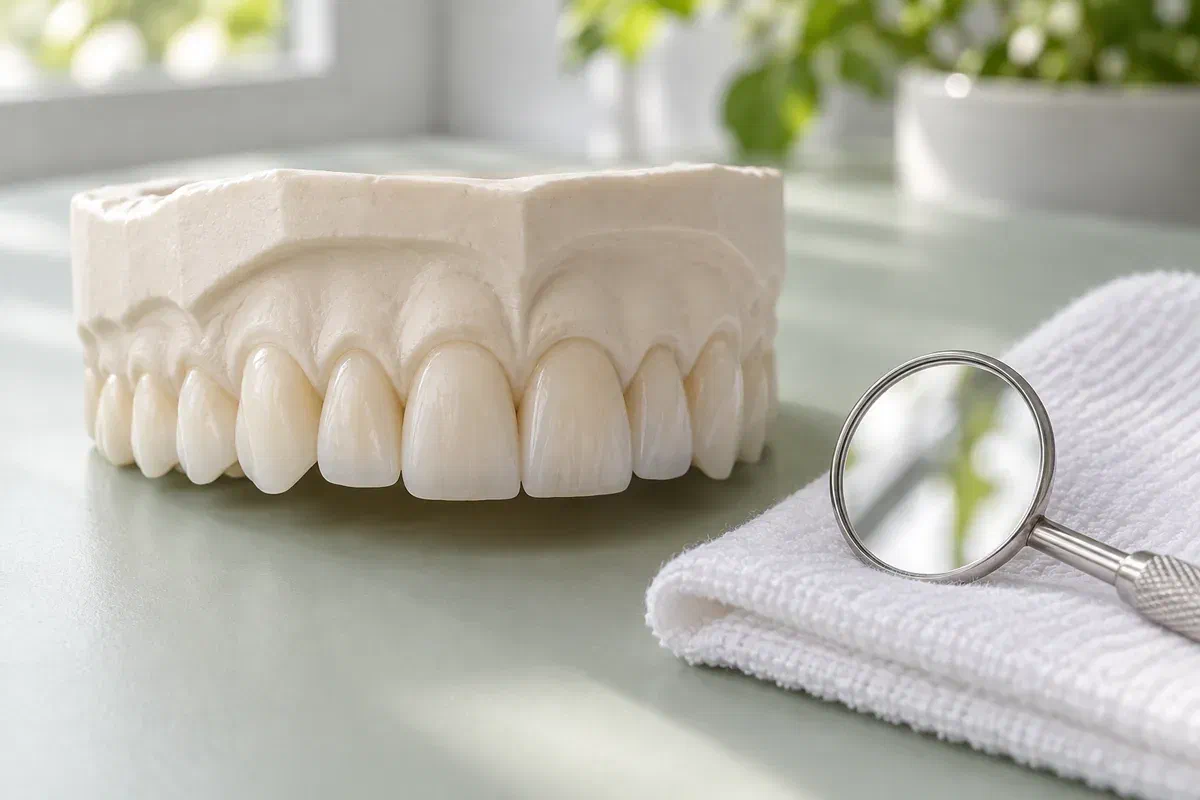
Illustrative dental teaching model with natural incisor edges beside a dental mirror
Working out why they don't match

Is it the natural tooth, the restoration, or both?

A mismatch can come from the natural tooth's shape, from how the restoration was made, or from wear on one side but not the other. Describing when you first noticed it helps.

A natural edge that now looks longer or sharper

Next to a smooth restoration, a slightly pointed natural tooth can stand out more than it did before. Show the area and describe the look you want. Ask how much enamel a gentle softening would involve, and whether leaving the natural tooth as it is would be wiser.

A restoration with a rough or bulky edge

Sometimes the restoration itself is the feature that looks or feels wrong. Mention when it was placed and whether it has chipped, loosened, or changed. A restoration may need polishing, repair, or replacement rather than reducing the natural tooth to match.

Wear affecting one tooth more than its neighbour

Natural enamel and restorative materials can wear at different rates. Share any grinding, clenching, or bite changes. Trimming the natural tooth to keep pace with a difference in wear may not solve the underlying mismatch.

Please don't try to file either a natural tooth or a restoration at home. An examination is needed to decide which surface, if any, should be adjusted and how that would affect both teeth and your bite.

Why it helps to look at both teeth

Choosing the right tooth to change

If the natural tooth is suitable and the difference is small, contouring may bring the two edges closer together with no new covering on the natural tooth. That only makes sense when the natural edge is genuinely the outlier. Ask how your situation looks and how contouring would compare with adjusting the restoration or accepting a slight difference.

An assessment also checks whether position is playing a part. The natural tooth may sit slightly forward or lower, or the restoration may have been shaped to fit a bite that has since shifted. Understanding which factor is at work keeps you from removing healthy enamel to correct a problem that lies elsewhere.

A clear decision about which surface to adjust

Ask the clinician to explain whether the natural tooth, the restoration, or neither should change, and why. If contouring is proposed, confirm the exact area and how far it would go. A defined plan protects healthy enamel.

Options for the restoration side

Discuss whether polishing, reshaping, or replacing the restoration might create a better match. Ask about maintenance, visits, and how each choice affects the final appearance. Sometimes the least invasive change is to the material rather than the enamel.

Time to consider the trade-offs

You can take the explanation home, check details of the original restoration, and decide later. Mention any worry about losing length or natural character on the healthy tooth. Agreement should cover the exact adjustment proposed.

How the comparison is made

Two teeth, one plan

Appointment time depends on the teeth involved and whether the restoration also needs attention. Ask what the visit covers and whether a decision can be made at a later appointment.

  1. Share the history of both teeth

    Explain when the neighbouring restoration was placed and what you have noticed since. Mention past fillings, orthodontics, sensitivity, injuries, and wear. Knowing which surfaces are enamel and which are restorative material guides the whole assessment.

  2. Examine the teeth, the materials, and your bite

    The clinician assesses the condition of each tooth and how they meet the opposite arch, arranging further assessment if indicated. Ask whether the natural tooth suits contouring, whether the restoration could be adjusted instead, and what risks apply.

  3. Agree on which tooth changes, and by how much

    Before work begins, confirm the tooth, the area, and the intended result. Ask how comfort will be managed and mention any nervousness. The adjustment should stay within the plan, with any change to the restoration discussed separately.

  4. Compare the edges and check contacts

    After the planned change, the surface is polished and the two teeth reviewed together with you. Look at them side by side and mention anything unexpected. Confirm what follow-up is needed and which signs, such as sensitivity or an odd bite, mean you should call.

Caring for both teeth afterwards

Treat the natural tooth and the restoration as a pair.

Follow the guidance for the work actually done on each tooth, especially if a restoration was polished or adjusted at the same visit. Aftercare differs between natural enamel and restorative materials.

Ask how to clean around the restoration

Find out whether anything changes in how you brush or floss between the two teeth. Keep to your usual routine unless told otherwise. If a sensitivity toothpaste is advised for the natural tooth, ask how long to use it.

Mention any catching or bite changes

Tell the team if either edge catches, your bite feels different, or discomfort continues. Describe what you notice while chewing. Booking a review is better than trying an abrasive product or asking for more removal without reassessment.

Watch how the pair wears over time

Over the years, enamel and restorations can age differently. If the mismatch returns, ask why and whether a protective appliance or bite adjustment is relevant. Repeated smoothing of the natural tooth should not become the default solution.

Ways to bring two edges together

Adjust the enamel, adjust the material, or move the tooth

Ask which part of the mismatch each option would address. Compare the condition of both teeth, the preparation involved, and future care rather than judging on appearance alone.

When the natural edge is the outlier and can be reduced

A gentle contour on the natural tooth

Contouring may be considered for a suitable natural edge after examination. Ask how much closer a conservative reduction would bring the two teeth. Keep the change proportionate, as enamel cannot be replaced.

When the dental work is what looks out of place

Polishing, repairing, or replacing the restoration

Restorations can sometimes be refined or remade to suit the natural tooth better. Ask what that involves, how it affects maintenance, and how long the material is expected to serve. The restoration is assessed separately from the natural enamel.

When position or preference is the deciding factor

Alignment advice, or accepting a slight difference

If a tooth sits out of line, ask whether orthodontic advice is worth seeking. Many people are comfortable with a small, natural variation. Consider both before treating contouring as the fix.

Patient information: British Orthodontic Society — comparing alignment and restorative changes

Puslinch questions about matching teeth

Natural teeth beside dental work

These answers cover blending a natural tooth with a crown, veneer, or filling, and when to adjust each. Ask about anything else that matters to you, including keeping both teeth exactly as they are.

(905) 876-4488
Why does my natural tooth look longer since my neighbouring crown was placed?
A new restoration may have a slightly different edge, shape, or surface finish, which can make the natural tooth look different by comparison. An exam can show whether the natural tooth, the crown, or simply the contrast explains it.
Is it better to reshape the natural tooth or adjust the crown?
It depends on which surface is out of step and what each can safely tolerate. Preserving healthy enamel is often a priority where both routes are possible, but the right answer depends on your teeth. Ask for the reasons behind the recommendation.
Can a veneer edge be reshaped to match my natural teeth?
Some veneer materials can be adjusted or polished, while others need more careful handling. Tell the clinician what you know about the veneer so the approach suits the material.
Will contouring my natural tooth affect the crown beside it?
Contact between the teeth is checked during planning and after any change. Mention if flossing between the two teeth already feels tight or loose, as that is useful information.
Should the dentist who placed the restoration be involved?
If the restoration is recent, it can help to share the details or discuss the concern with the dentist who placed it. Ask whether that information would be useful for your plan.
Can I bring details of my crown or veneer from Puslinch to save a visit?
Yes. Any records you have, such as when the restoration was placed and what material was used, can make the first assessment more productive and reduce the need for an extra trip.

Patient information: British Orthodontic Society — interproximal reduction as a planned orthodontic procedure

Planning from Puslinch

Two edges that don't quite match? Let's work out why.

Arrange time with our Bronte Street team to discuss a natural tooth that looks uneven beside a crown, veneer, or filling. You will hear what the assessment involves, then we can weigh a gentle contour, a change to the restoration, or leaving both teeth alone.

Contouring natural enamel is permanent and only offered after assessment. Which tooth is adjusted, the scope, comfort options, appointment length, and fees are discussed individually.

Visit Milton Dental Clinic
Unit 1, 342 Bronte St. S, Milton, ON L9T 5B7
Get directions Clinic hours
Monday–Thursday
11am–7pm
Friday–Sunday
By appointment only

Areas we serve

  • Milton
  • Oakville
  • Mississauga
  • Georgetown
  • Halton Hills
  • Acton
  • Campbellville
  • Brampton
  • Burlington
  • Puslinch
  • Rockwood
  • Erin
  • Caledon
  • Etobicoke
  • Old Milton
  • Bronte Meadows
  • Timberlea
  • Dorset Park
  • Dempsey
  • Clarke
  • Beaty
  • Coates
  • Harrison
  • Scott
  • Willmott
  • Ford
  • Bowes
  • Cobden
  • Walker
  • Mountain View
  • Milton Heights
  • Hawthorne Village
  • Valley View
  • Fallingbrook
  • Nassagaweya
  • Trafalgar
  • Esquesing
  • Nelson
  • Brookville
  • Moffat
  • Glen Williams
  • Norval
  • Limehouse
  • Stewarttown
  • Ashgrove
  • Hornby
  • Silver Creek
  • Speyside
  • Scotch Block
  • North Oakville
  • River Oaks
  • Glen Abbey
  • West Oak Trails
  • Palermo
  • Bronte Creek
  • College Park
  • Joshua Creek
  • Uptown Core
  • Preserve
  • Iroquois Ridge
  • Lisgar
  • Meadowvale
  • Meadowvale Village
  • Churchill Meadows
  • Erin Mills
  • Central Erin Mills
  • Streetsville
  • East Credit
  • Creditview
  • Heartland
  • Sheridan
  • Mount Pleasant
  • Credit Valley
  • Huttonville
  • Churchville
  • Springbrook
  • Northwest Brampton
  • Bram West
  • Fletcher's Meadow
  • Fletcher's Creek South
  • Alton Village
  • Orchard
  • Millcroft
  • Headon Forest
  • Tansley
  • Brant Hills
  • Tyandaga
  • Kilbride
  • Lowville
  • Aberfoyle
  • Morriston
  • Arkell
  • Hillsburgh
  • Freelton
  • Carlisle
  • Waterdown
  • Flamborough
  • Mountsberg

How can we help?

Milton Dental Clinic

Have a question about your smile? Choose the option that works best for you.

For urgent dental concerns, please call.
Messages are reviewed during clinic hours.