

Illustrative patient and clinician discussing smile alignment at a consultation desk
Cosmetic Dentistry

Treatment for Crooked Teeth

A tilted or rotated tooth can be an appearance concern, a bite question, or both. Discuss treatment for crooked teeth in Milton to understand the positions you want to change, the health of the supporting tissues, and a plan suited to your whole smile.

A closer look at crooked teeth

Look beyond the angle of one tooth to understand the right next step.

Crooked teeth is an everyday description rather than a single diagnosis. You may be noticing a rotation, a tooth leaning inward, an edge that sits forward, or an uneven line across the smile. An assessment identifies which positions have changed and how those teeth relate to the rest of the mouth.

The number of teeth that look out of line does not by itself determine how simple treatment will be. Moving one visible tooth can involve space, neighbouring contacts, and the opposing teeth. The discussion should explain the intended movement and any wider changes needed to support it.

At Milton Dental Clinic, tell us what catches your attention and what you would prefer to keep. We can discuss the examination and records needed to understand the concern, along with any role for orthodontic referral. You do not have to arrive already committed to braces, aligners, or cosmetic restorations.

Discuss the tooth positions you notice
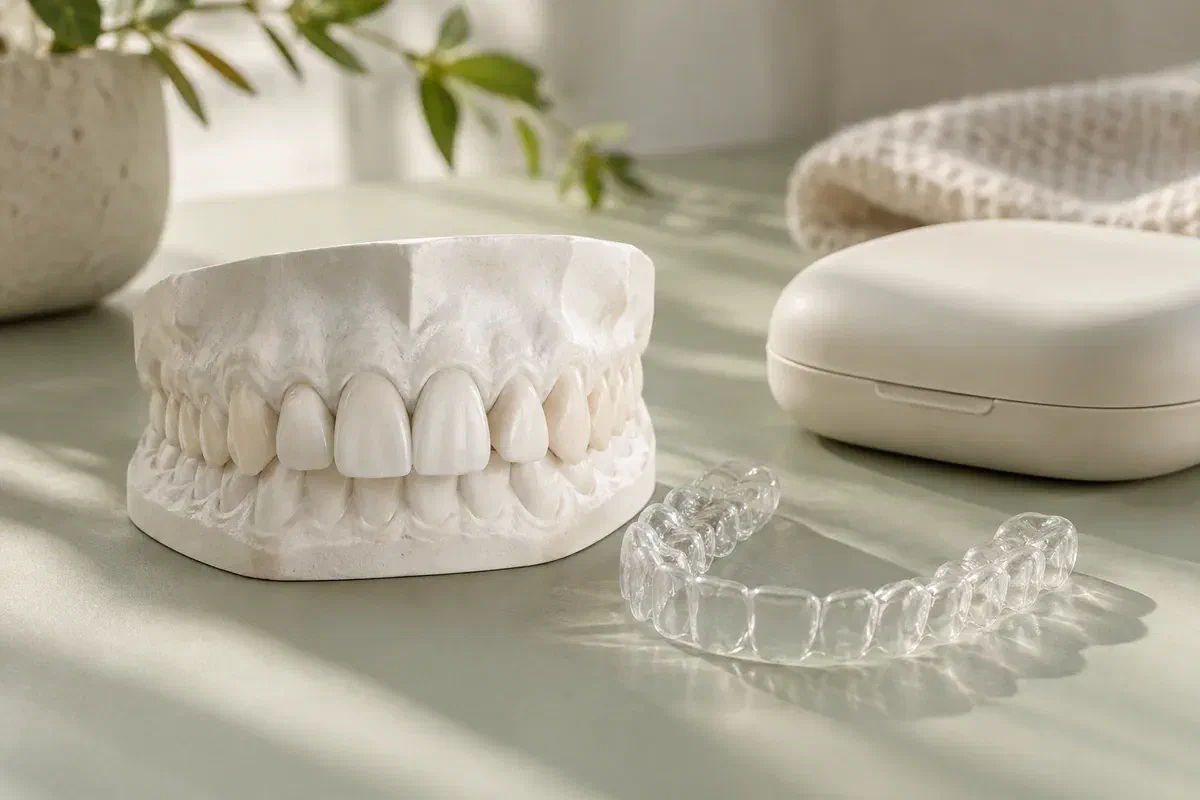
Illustrative dental study cast with a subtly rotated front tooth beside a clear appliance and case
Understanding the visible difference

Separate a tooth's position from its shape, shade, and condition.

Point out the feature in a mirror and explain when you first noticed it. The answer may involve alignment, another dental issue, or a natural variation that you choose to leave alone.

A rotated or tilted tooth in the smile

Describe the angle or edge you would like changed. Ask whether the appearance comes mainly from tooth position or from the tooth's shape. Understanding that distinction helps compare actual movement with treatments that alter only the visible surface.

An uneven smile after earlier treatment

Explain when orthodontic care ended, which retainers were supplied, and what has changed since. Bring the appliances if you still have them. The clinician can discuss whether reassessment of alignment is appropriate and what a renewed retention plan would mean.

A new change alongside other symptoms

Mention looseness, bleeding, discomfort, or a tooth that has recently started leaning. Ask whether oral-health concerns require attention before movement is considered. A newly crooked appearance should not automatically be approached as a cosmetic problem.

A straight-looking front surface does not tell the whole story about the roots, supporting tissues, or bite. An in-person assessment and appropriate records are important before a tooth-movement plan is selected.

What an alignment discussion helps you decide

Connect the appearance goal with the movement and commitment behind it.

The benefit of planning is a clear explanation of what treatment is intended to change. Ask which teeth would move, whether the bite is part of the goal, and what limitations may remain. A proposed result should be described in terms you can compare with the concern that brought you in.

It is equally useful to understand what treatment will ask of you. Different approaches involve different routines, appointments, and maintenance. A plan should account for your ability to follow those requirements and leave time to consider whether the expected benefit is worthwhile.

Patient information: British Orthodontic Society — defining limited treatment goals and responsibilities

A distinction between limited and wider treatment

Ask whether the proposal focuses on the visible teeth or addresses a broader bite relationship. Discuss any compromises of a smaller plan and why a larger plan may be suggested. You should know the scope before comparing duration or fees.

An informed choice about appliance preferences

Explain your preferences about appearance, removability, work, and social routines. Ask how those preferences fit the movements needed. An appliance should be recommended because it is suitable for the plan, with practical expectations that you can realistically meet.

Coordination with other dental work

Mention planned bonding, crowns, implants, or replacement restorations before deciding on alignment. Ask whether moving teeth would affect the order or design of that care. A shared sequence can clarify which decisions should wait until positions have been assessed or changed.

From the visible concern to a treatment plan

Agree on the destination before choosing the route.

The assessment may lead to active treatment, more information, specialist advice, or monitoring. Ask what the first visit includes and which decisions will need a later discussion.

  1. Describe the change you would like

    Explain which positions bother you and whether the concern is longstanding or recent. Review earlier orthodontics, injuries, restorations, and retainer use. Mention any deadline, but also discuss what you would consider a worthwhile improvement without relying on a fixed completion promise.

  2. Examine the teeth, tissues, and bite

    The clinician reviews the mouth and considers appropriate records to understand the alignment. Ask about any finding that affects suitability for movement. If gum health or another dental issue needs care first, clarify that priority and how progress will be reassessed.

  3. Compare the proposed scope and methods

    Discuss the movements, appliance options, expected responsibilities, risks, and alternatives. Ask what the plan leaves unchanged and whether a referral would help. If a preview is used, clarify that it supports planning rather than guaranteeing the exact final position or timetable.

  4. Review movement and transition to retention

    During treatment, progress is checked against the agreed aims and the plan may need adjustment. Keep the treating team informed about wear, comfort, and appliance problems. At completion, confirm the retainer routine and how future changes will be reviewed.

Caring for teeth as their positions change

Keep the routine consistent and the questions easy to raise.

The instructions should match the appliance and stage of care. Ask for help with any part of the routine that is difficult rather than quietly adapting the treatment yourself.

Follow the plan for wear and appointments

Confirm what to do with removable appliances, elastics, or other prescribed parts of treatment. If you cannot follow the schedule, tell the clinician before moving to another stage. Missed wear or a lost appliance needs specific advice rather than an improvised catch-up plan.

Keep routine dental care alongside alignment reviews

Ask how to clean around the appliance and between teeth as contacts change. Continue the recommended examinations and preventive care. An orthodontic progress visit does not automatically replace every part of routine dental care, so clarify who is checking what.

Treat retention as continuing care

Use retainers according to your individual instructions and arrange review if the fit changes. Keep them protected when removed and bring them to appointments when requested. A tooth that starts looking rotated again is a reason to seek advice before trying an old appliance.

Patient information: British Orthodontic Society — ongoing retention responsibilities

Choosing how to address crooked teeth

Moving a tooth and changing its visible surface are different decisions.

Ask how each option responds to the underlying position and your appearance goal. Compare the preparation, time, upkeep, and limits before choosing a route.

When changing tooth positions is the intended solution

An orthodontic movement plan

Suitable aligners, fixed appliances, or other orthodontic care may be discussed after assessment. Ask what movements are included and how the bite is considered. The plan may involve more teeth than the one you initially noticed, with that scope explained before starting.

When shape contributes to the visual concern

A limited cosmetic change in a suitable situation

Bonding or contouring may sometimes address a feature without changing the tooth's position. Ask what the approach can and cannot achieve and whether it alters healthy structure. Covering a tooth does not automatically correct the underlying alignment or bite relationship.

When more information or observation is appropriate

Further assessment or no elective change

A specialist opinion may help clarify a complex plan, or you may decide the current appearance is acceptable. Ask what should be monitored and how to maintain oral health. Keeping a natural variation can be a considered choice after the findings are understood.

Crooked-teeth treatment questions

Ask about the position you want changed and the plan around it.

The apparent size of a cosmetic concern does not establish the treatment scope. These questions help connect the visible detail with the clinical assessment.

(905) 876-4488
If just one tooth looks crooked, will only that tooth need treatment?
Not necessarily. Its position relates to neighbouring teeth, available space, and the opposing bite. Ask which teeth would be involved and why. A focused concern can still require a broader plan, or an explanation of the limits of a smaller approach.
Can bonding straighten a rotated tooth in the same way as orthodontics?
Bonding changes the visible shape by adding material; it does not move the tooth and root into a new position. Ask whether a cosmetic surface change is suitable and what it would leave unchanged. Compare it with movement before choosing.
Why might a crooked-tooth consultation include a gum assessment?
The health of the supporting tissues matters when planning movement. Ask whether any gum problem needs treatment or monitoring first. A cosmetic goal should be considered alongside oral health rather than used to bypass an examination of the tissues around the teeth.
Can I keep a slightly irregular tooth while straightening the ones beside it?
Explain that preference during planning. The clinician can discuss whether the desired arrangement is compatible with space, contacts, and the bite. Treatment goals should reflect your priorities while making any practical limits or compromises clear.
Will straightening crooked teeth necessarily change their uneven edge shapes?
Movement changes position, but it does not automatically rebuild worn or chipped edges. Ask how tooth shape may look after alignment and whether a separate decision would be needed later. Do not assume every uneven edge requires a cosmetic addition or removal.
What if my teeth look straighter before the planned treatment is finished?
Discuss progress with the treating clinician before stopping. The remaining stages may relate to contacts, bite, or other agreed aims that are not obvious in a front view. Ask what remains, why it matters, and when retention should begin.
Treatment for crooked teeth in Milton

Bring the feature you notice and explore the choices behind changing it.

Arrange an assessment at our Bronte Street practice to discuss tilted, rotated, or unevenly positioned teeth. We can review the information needed to compare suitable care, clarify the scope, and consider specialist input where appropriate.

Treatment suitability, appliance choice, scope, timing, and fees depend on examination. A limited concern does not guarantee a limited treatment plan.

Visit Milton Dental Clinic
Unit 1, 342 Bronte St. S, Milton, ON L9T 5B7
Get directions Clinic hours
Monday–Thursday
11am–7pm
Friday–Sunday
By appointment only

How can we help?

Milton Dental Clinic

Have a question about your smile? Choose the option that works best for you.

For urgent dental concerns, please call.
Messages are reviewed during clinic hours.