

Illustrative patient and clinician discussing smile alignment at a consultation desk
Cosmetic Dentistry

Treatment for Crooked Teeth in Burlington

Run your tongue along your front teeth and you may feel the one that sits out of line before you ever see it. For Burlington adults, treatment for crooked teeth starts with how that tooth meets the others, whether the gums are healthy, and what plan suits your whole smile.

Burlington · smile and bite

A crooked tooth is part of a bite, not a single piece.

Look at a crooked tooth from the side, not just straight on, and the picture often changes. An edge that seems slightly forward may also be the one your lower teeth hit first. A tooth turned on its axis may be crowding a neighbour. An assessment pins down which positions are different and what part each plays when you bite and chew.

That’s why the number of visibly crooked teeth says little about the size of the job. Repositioning one tooth can mean creating space, changing how it contacts the teeth beside it, and checking where it lands against the opposite arch. You should hear the intended movement described, along with any knock-on changes it would need.

Tell us what you’d like to change and what you’d rather leave untouched. For someone booking from Burlington, a first visit can cover the examination, which records would be useful, and whether an orthodontist’s opinion would help. There’s no expectation that you have already chosen between aligners, fixed braces and cosmetic work.

Ask how your bite fits the picture
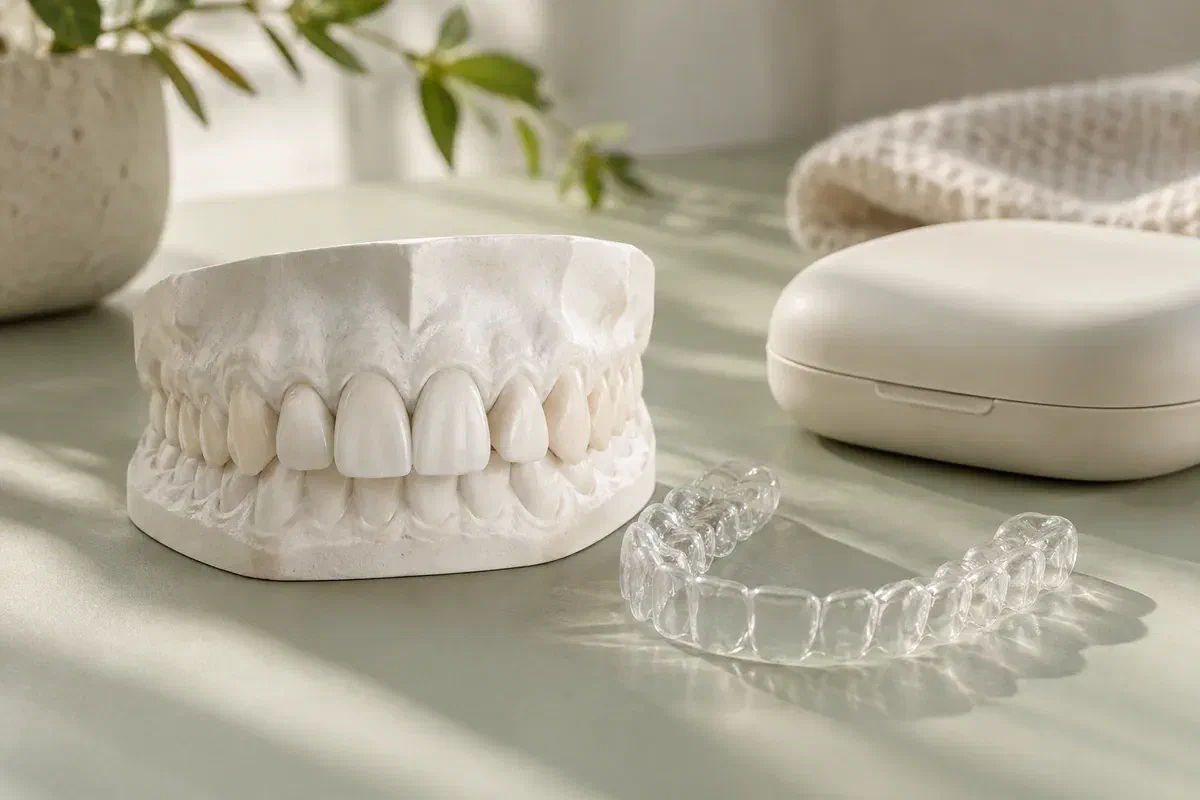
Illustrative dental study cast with a subtly rotated front tooth beside a clear appliance and case
Telling causes apart

Position, shape, or health?

Show us the detail in a mirror and tell us when it started bothering you. It could reflect alignment, a separate dental problem, or a natural variation you might choose to live with.

One tooth that sits forward or turns

Pick out the angle or edge you’d most like to see change. A good question to ask is how much of the effect is position and how much is the tooth’s own shape. That split determines whether genuine movement is being discussed or a treatment that alters only the outside.

Alignment that slipped after earlier care

Say when your braces or aligners finished, what retainers came with them and what has crept back since. Bring any appliances you still have. The clinician can then explain whether reassessment makes sense and what a new retention plan would ask of you.

Movement paired with tenderness or bleeding

Flag any tooth that feels loose, gums that bleed, ongoing discomfort, or a tooth that has only recently started to lean. Ask if those need care before alignment is considered. A newly crooked tooth calls for an oral-health check first, rather than a cosmetic plan.

A straight front view doesn’t show what is happening with the roots, the gums and bone, or the bite as a whole. That takes an in-person assessment and appropriate records before any plan to move teeth.

Planning that looks at function too

See what moves, what stays, and what you’ll need to do.

Planning earns its place by explaining exactly what treatment is meant to change. Ask which teeth would shift, whether the way your upper and lower teeth meet is part of the target, and what may stay imperfect. A result described in clear terms can be measured against the reason you came in.

The second thing to understand is your side of the bargain. Approaches differ in how much daily effort they take, how many visits they involve and what kind of maintenance follows. A plan should reflect what you can really sustain, and you should have time to think about whether the benefit is worth it.

Patient information: British Orthodontic Society — defining limited treatment goals and responsibilities

Cosmetic-only or bite-inclusive

Ask whether the plan concentrates on the teeth in your smile line or takes on the wider bite relationship. Discuss what a smaller plan might compromise and why a broader one might be preferred. That scope should be clear before you compare length of treatment or fees.

Choosing an appliance you’ll actually wear

Be honest about how you feel about visible hardware, removable trays, extra effort and social situations. Ask how your preferences fit the movements needed. The appliance should be suggested because it suits the plan, with expectations you can comfortably meet.

Sequencing with fillings, crowns or implants

Mention any planned restorations before alignment is decided. Moving teeth may change the design or order of that work. A shared timeline shows which decisions are better left until the teeth have been assessed or moved into place.

What happens, and when

Begin with the bite you want, then choose how to get there.

Assessment might lead to active treatment, more records, a specialist opinion, or simply monitoring. Ask what your first appointment covers and which decisions belong to a later visit.

  1. What you’d like changed

    Explain the positions that bother you and whether they’re longstanding or new. Run through any earlier orthodontics, injuries, restorations and retainer use. A target date is worth mentioning, but also talk about what you’d consider a meaningful improvement, without counting on a guaranteed finish.

  2. Teeth, tissues and bite examined

    The clinician looks at your teeth and gums, checks how they meet, and considers which records would help. Ask about anything that might affect whether movement is suitable. If another issue needs care first, find out how it will be dealt with and when the plan will be reviewed.

  3. Scope, methods and trade-offs

    Talk over the movements, appliance options, what you’d need to do, risks and alternatives. Ask what the plan doesn’t change and whether a referral would be useful. A preview, if one is used, helps planning; it doesn’t promise a precise end position or timetable.

  4. Progress checks and retention

    Along the way, progress is compared with the aims you agreed, and adjustments can be made. Keep the team informed about wear, comfort and any appliance trouble. When treatment finishes, confirm your retainer routine and how later changes will be looked at.

Living with an appliance

Consistency matters more than perfection.

Instructions should suit the appliance and where you are in treatment. If something is difficult to manage, raise it rather than quietly adjusting things yourself.

Keep to wear time and visits

Check what’s expected for removable aligners, elastics or other parts of the plan. If you can’t keep to the schedule, talk to the clinician before you go on to the next stage. A lost tray or several missed days needs individual advice, not guesswork about how to catch up.

Brush, floss and keep checkups

Ask which cleaning aids work best with your appliance as the teeth change position. Continue with regular examinations and preventive care. Alignment reviews and routine dental visits check different things, so be clear about who is watching what.

Retention doesn’t end on a date

Wear your retainer as instructed and book a review if it starts to feel loose or tight. Protect it in a case when it’s out and bring it to appointments when asked. If a tooth begins to turn again, seek advice before trying an old appliance.

Patient information: British Orthodontic Society — ongoing retention responsibilities

Options to discuss

Is the answer to move it, reshape it, or watch it?

Ask how each option handles both the position underneath and the appearance you want. Weigh preparation, time, upkeep and limits before you choose.

When tooth positions need to change

Orthodontic care

Aligners, fixed appliances or other orthodontic approaches may be discussed after the assessment. Ask what will move and how your bite is accounted for. More teeth than the one you noticed may be involved, and that should be explained up front.

When the outline is part of the issue

Bonding or contouring for shape

In the right case, adding or smoothing material may improve a feature with no movement at all. Ask what this can and can’t do and whether sound tooth structure would be changed. A covered tooth still sits in the same position within the bite.

When more information or time is the right call

Opinion, observation or acceptance

A specialist may help clarify a complicated case, or you may feel the tooth is fine as it is. Ask what should be monitored and how to keep your gums and teeth healthy. Keeping a natural irregularity can be a sound choice once the findings are explained.

Bite and alignment questions

What people ask before moving a tooth

A concern that looks minor doesn’t automatically mean minor treatment. These answers link what you see with what the examination has to consider.

(905) 876-4488
Can a crooked tooth affect the way my teeth meet?
It can, which is why the bite is part of the assessment. A tooth that sits forward or turned may contact the opposing teeth differently from its neighbours. Ask what the examination shows about your bite and whether it would form part of any plan.
Are crooked teeth harder to keep clean?
Overlapping teeth can make brushing and flossing trickier in some areas. Ask which spots need extra attention and which cleaning aids may help. Good home care matters whether or not you decide to go ahead with straightening.
Could I straighten some teeth and leave a favourite quirk alone?
Say so during planning. The clinician can explain whether that arrangement works with the space, contacts and bite you have. Your priorities should shape the goals, with any practical limits or trade-offs made clear before you commit.
Will moving my teeth be uncomfortable?
Some people notice pressure or tenderness for a few days after starting or changing an appliance. Ask what to expect with the option you’re considering and how to manage it. Significant pain or an injury should be reported rather than put up with.
My teeth look straight already. Why keep going?
Talk to the treating clinician before you stop. Remaining stages may be working on contacts, the bite or other aims that aren’t visible from the front. Ask what’s left, why it matters, and when retention is due to begin.
Is it practical to book alignment visits from Burlington?
Ask how many appointments your plan is likely to need and roughly how far apart they would be. Our hours are Monday to Thursday, 11am to 7pm, and Friday to Sunday by appointment only, so you can plan around work and other commitments.
Burlington alignment assessments

Talk through the bite behind your smile.

Book a visit at our Bronte Street practice to discuss teeth that sit tilted, turned or unevenly. We’ll look at what information is needed to compare suitable care, explain the likely scope, and bring in specialist advice where appropriate.

Suitability, appliance type, scope, timing and fees are decided after an examination. A small concern does not guarantee a small plan.

Visit Milton Dental Clinic
Unit 1, 342 Bronte St. S, Milton, ON L9T 5B7
Get directions Clinic hours
Monday–Thursday
11am–7pm
Friday–Sunday
By appointment only

Areas we serve

  • Milton
  • Oakville
  • Mississauga
  • Georgetown
  • Halton Hills
  • Acton
  • Campbellville
  • Brampton
  • Burlington
  • Puslinch
  • Rockwood
  • Erin
  • Caledon
  • Etobicoke
  • Old Milton
  • Bronte Meadows
  • Timberlea
  • Dorset Park
  • Dempsey
  • Clarke
  • Beaty
  • Coates
  • Harrison
  • Scott
  • Willmott
  • Ford
  • Bowes
  • Cobden
  • Walker
  • Mountain View
  • Milton Heights
  • Hawthorne Village
  • Valley View
  • Fallingbrook
  • Nassagaweya
  • Trafalgar
  • Esquesing
  • Nelson
  • Brookville
  • Moffat
  • Glen Williams
  • Norval
  • Limehouse
  • Stewarttown
  • Ashgrove
  • Hornby
  • Silver Creek
  • Speyside
  • Scotch Block
  • North Oakville
  • River Oaks
  • Glen Abbey
  • West Oak Trails
  • Palermo
  • Bronte Creek
  • College Park
  • Joshua Creek
  • Uptown Core
  • Preserve
  • Iroquois Ridge
  • Lisgar
  • Meadowvale
  • Meadowvale Village
  • Churchill Meadows
  • Erin Mills
  • Central Erin Mills
  • Streetsville
  • East Credit
  • Creditview
  • Heartland
  • Sheridan
  • Mount Pleasant
  • Credit Valley
  • Huttonville
  • Churchville
  • Springbrook
  • Northwest Brampton
  • Bram West
  • Fletcher's Meadow
  • Fletcher's Creek South
  • Alton Village
  • Orchard
  • Millcroft
  • Headon Forest
  • Tansley
  • Brant Hills
  • Tyandaga
  • Kilbride
  • Lowville
  • Aberfoyle
  • Morriston
  • Arkell
  • Hillsburgh
  • Freelton
  • Carlisle
  • Waterdown
  • Flamborough
  • Mountsberg

How can we help?

Milton Dental Clinic

Have a question about your smile? Choose the option that works best for you.

For urgent dental concerns, please call.
Messages are reviewed during clinic hours.