

Illustrative patient and clinician discussing smile alignment at a consultation desk
Cosmetic Dentistry

Treatment for Crooked Teeth in Erin

Most of the work of straightening happens at home, between appointments, in small daily habits. Treatment for crooked teeth in Erin starts with which teeth you’d like changed and a check of your gums and bite, then builds a plan for your whole smile around a routine you can genuinely keep.

Erin and Hillsburgh · care that fits home life

Most of straightening happens between visits.

Before choosing anything, picture an ordinary weekday with treatment in it: meals, coffee, a long drive, a child’s practice, a late shift. That’s where an appliance has to work. The first step is still clinical, though. It means identifying whether you’re seeing a rotated tooth, one tipped inward, an edge set forward or a general unevenness, and how those teeth relate to the rest.

The size of the job isn’t obvious from the mirror. One tooth that’s out of line can still depend on room being made, on how it touches the teeth either side and on how it meets the opposite row. Once that movement is explained, you can judge honestly how much daily effort it will take.

From Erin village, Hillsburgh or the farms between, tell us how your days actually run as well as what you’d change. We’ll discuss the examination, any records and whether an orthodontist should be involved. You don’t need to have settled on aligners, braces or cosmetic bonding first.

Talk about a routine that would work for you
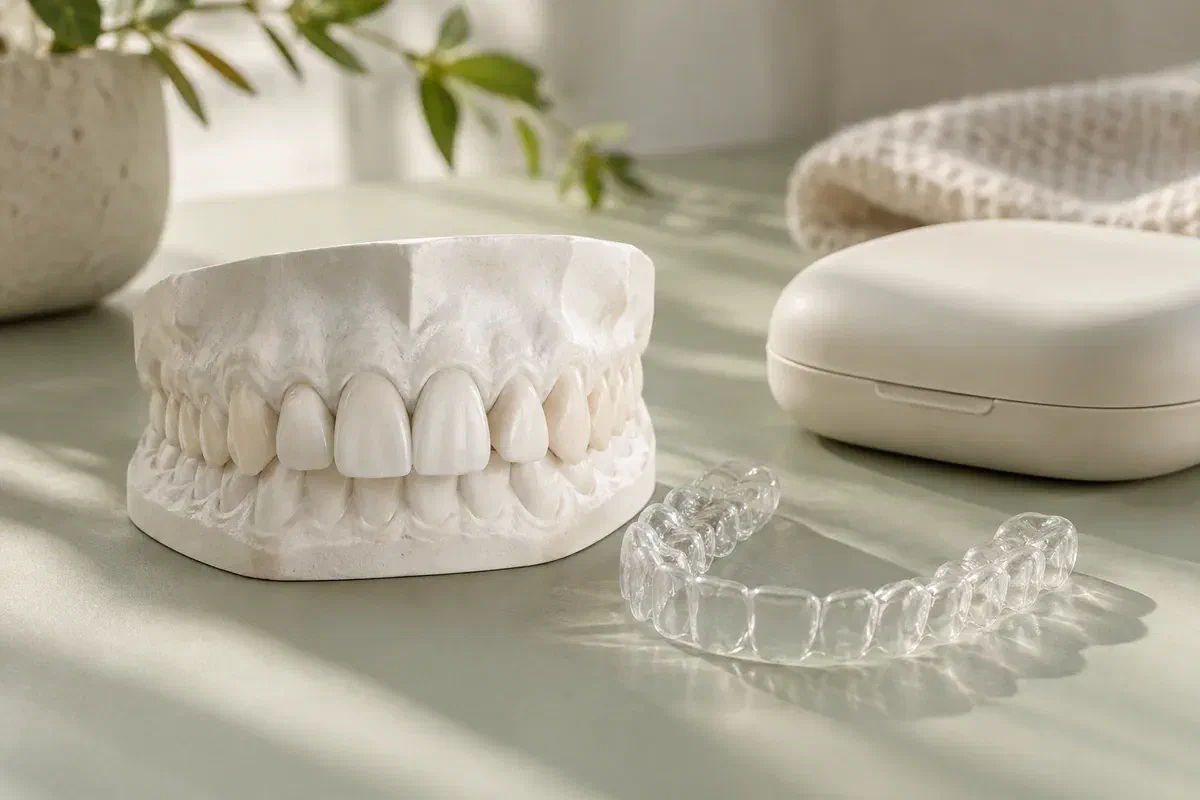
Illustrative dental study cast with a subtly rotated front tooth beside a clear appliance and case
What you’ve noticed

Three questions to answer before talking routine

Show us the detail and when you first saw it. It might be alignment, a different dental issue, or simply a natural variation you’d rather keep.

Is it the tooth’s position or its outline?

Pick out the angle or edge you’d like different. Whether the effect comes from where the tooth sits or from its shape decides a lot, including whether you’d need an appliance at all or whether a surface treatment might be considered instead.

Has it moved since earlier braces?

Tell us roughly when treatment ended and what retention followed, and be honest about how often the retainer was worn. Bring it if you still have it. The clinician can then discuss whether reassessment makes sense and what a manageable retention routine would look like now.

Is something else going on?

Mention a tooth that has recently started to tip, especially alongside looseness, bleeding gums or soreness. Those may need care before any thought of alignment. A tooth that has newly moved deserves a health check, not just a cosmetic answer.

The front view doesn’t show the roots, the gum and bone holding them, or how your teeth meet. Those are checked face to face, with suitable records, before deciding to move anything.

Why the plan should fit your days

A result worth having, at an effort you can manage

A clear plan names the change being aimed for. Ask how many teeth are expected to move, whether the bite is involved, and what may stay slightly uneven. With that in plain words, you can compare the proposal with what originally bothered you and decide whether it answers it.

Then comes the practical side. Removable aligners depend on consistent wear, fixed braces need careful cleaning, and both involve review visits and retention afterwards. A good plan is honest about which suits your household and leaves time to decide whether the improvement is worth it.

Patient information: British Orthodontic Society — defining limited treatment goals and responsibilities

Just the smile, or the bite as well

Ask whether treatment would focus on the teeth that show or address how your upper and lower teeth fit together. Talk through what a smaller plan might give up and why a fuller one could be suggested. Settle scope first, then compare length or fees.

Removable or fixed, honestly considered

Removable trays offer flexibility but rely on you putting them back in. Fixed appliances stay put but need more care when cleaning. Ask how each fits the movements needed and your real routine, and choose the one you can keep up.

Other dental work in the queue

Mention bonding, crowns, implants or fillings you may need. Ask whether moving teeth would change their order or design. Planning the sequence together avoids extra trips and makes clear what can wait until positions are settled.

How treatment is planned

Find the goal, then build the routine around it.

An assessment might lead to treatment, more information, a specialist referral or monitoring. Ask what to expect at the first visit and what will be decided later.

  1. Explain what you’d change

    Point out the positions that bother you and whether the concern is old or new. Include past braces, any injuries, restorations and retainer habits. If you’re working to a date, mention it, while focusing on what would be a worthwhile improvement rather than a guaranteed end point.

  2. Assessment of teeth, gums and bite

    The clinician examines your mouth and selects records that help explain the alignment. If a finding affects whether movement is suitable, you’ll hear why. When gum care or another treatment needs to happen first, ask how long that might take and when the plan will be reviewed.

  3. Agree on method and routine

    Discuss the planned movements, appliance options, what you’d do each day at home, risks and alternatives. Ask what the plan won’t change and whether it’s worth bringing in an orthodontist. Any preview is there to guide planning, not to guarantee positions or timing.

  4. Reviews and retention

    Progress is compared with the goals you set, and the plan may change. Let the team know as soon as wear slips, something feels uncomfortable or an appliance breaks. At the end, agree on a retainer routine you can follow and how future changes will be checked.

The daily side of treatment

Habits that make the appointments worthwhile

Advice is tailored to your appliance and where you are in treatment. If a step doesn’t fit your days, talk to us before changing it yourself.

Wear time you can count on

Know exactly how long aligners or elastics should be worn each day and what to do at meals. If a busy season makes that hard, say so before moving on. A lost tray or a run of missed days needs specific advice, not an attempt to catch up on your own.

Cleaning that keeps pace

Ask what to use for brushing and flossing with your appliance, and how to clean the appliance itself. Keep up regular checkups and preventive visits. Alignment reviews look at movement, so confirm who is checking your teeth and gums otherwise.

A retainer routine that sticks

Wear your retainer as advised and link it to a daily habit, such as bedtime, so it isn’t forgotten. Keep it in a case, bring it when asked and arrange a check if the fit changes. If a tooth starts shifting, ask before trying an old appliance.

Patient information: British Orthodontic Society — ongoing retention responsibilities

Options to compare

Which choice suits your everyday life?

Ask how each route handles the underlying position and the result you want. Compare preparation, time, daily upkeep and limits before choosing.

When the teeth themselves need to move

Orthodontic appliances

Clear aligners, fixed braces or other appliances may be discussed after assessment. Ask which movements are needed, how the bite is considered and what daily care each would involve. Plans sometimes include teeth other than the one you noticed, and that should be explained up front.

When shape is part of what you see

Bonding or contouring in suitable cases

Sometimes a small cosmetic change can improve a feature with no appliance at all. Ask what it can and can’t do and whether healthy structure would be affected. Changing the surface leaves the alignment and bite underneath as they are.

When more information or watching is best

A specialist view, or leaving things be

A complex case might benefit from an orthodontist’s opinion, or you might decide your smile is fine as it is. It’s worth knowing which signs would justify another visit. Choosing not to treat a natural variation is a reasonable decision.

Questions about daily life with treatment

Meals, cleaning and remembering the retainer

How small a concern looks doesn’t settle how much treatment it needs. These answers tie the visible detail to the examination and to the routine you’d follow.

(905) 876-4488
Can I drink coffee or tea with aligners in?
Ask your clinician for specific advice. In general, drinks other than water can stain aligners or get trapped under them, so many people remove them first. Your instructions will depend on the appliance you use.
What should I do if I forget to wear my aligners for a day?
Put them back in and contact your treating clinician for advice on whether to stay on the current tray for longer. Don’t skip ahead or double up without guidance.
Are there foods to avoid with fixed braces?
Hard, sticky or very chewy foods can damage brackets or wires. Ask for a list that suits your appliance and what to do if something comes loose.
Is it worth fixing my gums before thinking about straightening?
Healthy gums and bone matter when teeth are moved, so any gum problem may need treatment or monitoring first. Ask what the examination found and how readiness for movement would be checked.
Could a plan straighten my front teeth but leave a small overlap I like?
Raise it during planning. The clinician can explain whether that arrangement works with the space, contacts and bite involved. Goals should reflect what matters to you, with limits explained honestly.
How can I make fewer trips in from Erin during treatment?
Ask about the expected number of visits and whether any steps can be combined. Let us know about your travel when booking, and phone first if you’re unsure whether a problem needs an in-person visit.
Booking from Erin

A plan built around your real week

Reserve time at our Bronte Street practice and tell us about the teeth that tilt, turn or overlap. We’ll go over the information needed to compare suitable care, explain what each option would ask of you at home, and suggest specialist input where it would help.

Your suitability, the right appliance, the scope, the time involved and the fees are confirmed after examination. A small concern can still need a broader plan, and daily routines vary by appliance.

Visit Milton Dental Clinic
Unit 1, 342 Bronte St. S, Milton, ON L9T 5B7
Get directions Clinic hours
Monday–Thursday
11am–7pm
Friday–Sunday
By appointment only

Areas we serve

  • Milton
  • Oakville
  • Mississauga
  • Georgetown
  • Halton Hills
  • Acton
  • Campbellville
  • Brampton
  • Burlington
  • Puslinch
  • Rockwood
  • Erin
  • Caledon
  • Etobicoke
  • Old Milton
  • Bronte Meadows
  • Timberlea
  • Dorset Park
  • Dempsey
  • Clarke
  • Beaty
  • Coates
  • Harrison
  • Scott
  • Willmott
  • Ford
  • Bowes
  • Cobden
  • Walker
  • Mountain View
  • Milton Heights
  • Hawthorne Village
  • Valley View
  • Fallingbrook
  • Nassagaweya
  • Trafalgar
  • Esquesing
  • Nelson
  • Brookville
  • Moffat
  • Glen Williams
  • Norval
  • Limehouse
  • Stewarttown
  • Ashgrove
  • Hornby
  • Silver Creek
  • Speyside
  • Scotch Block
  • North Oakville
  • River Oaks
  • Glen Abbey
  • West Oak Trails
  • Palermo
  • Bronte Creek
  • College Park
  • Joshua Creek
  • Uptown Core
  • Preserve
  • Iroquois Ridge
  • Lisgar
  • Meadowvale
  • Meadowvale Village
  • Churchill Meadows
  • Erin Mills
  • Central Erin Mills
  • Streetsville
  • East Credit
  • Creditview
  • Heartland
  • Sheridan
  • Mount Pleasant
  • Credit Valley
  • Huttonville
  • Churchville
  • Springbrook
  • Northwest Brampton
  • Bram West
  • Fletcher's Meadow
  • Fletcher's Creek South
  • Alton Village
  • Orchard
  • Millcroft
  • Headon Forest
  • Tansley
  • Brant Hills
  • Tyandaga
  • Kilbride
  • Lowville
  • Aberfoyle
  • Morriston
  • Arkell
  • Hillsburgh
  • Freelton
  • Carlisle
  • Waterdown
  • Flamborough
  • Mountsberg

How can we help?

Milton Dental Clinic

Have a question about your smile? Choose the option that works best for you.

For urgent dental concerns, please call.
Messages are reviewed during clinic hours.