
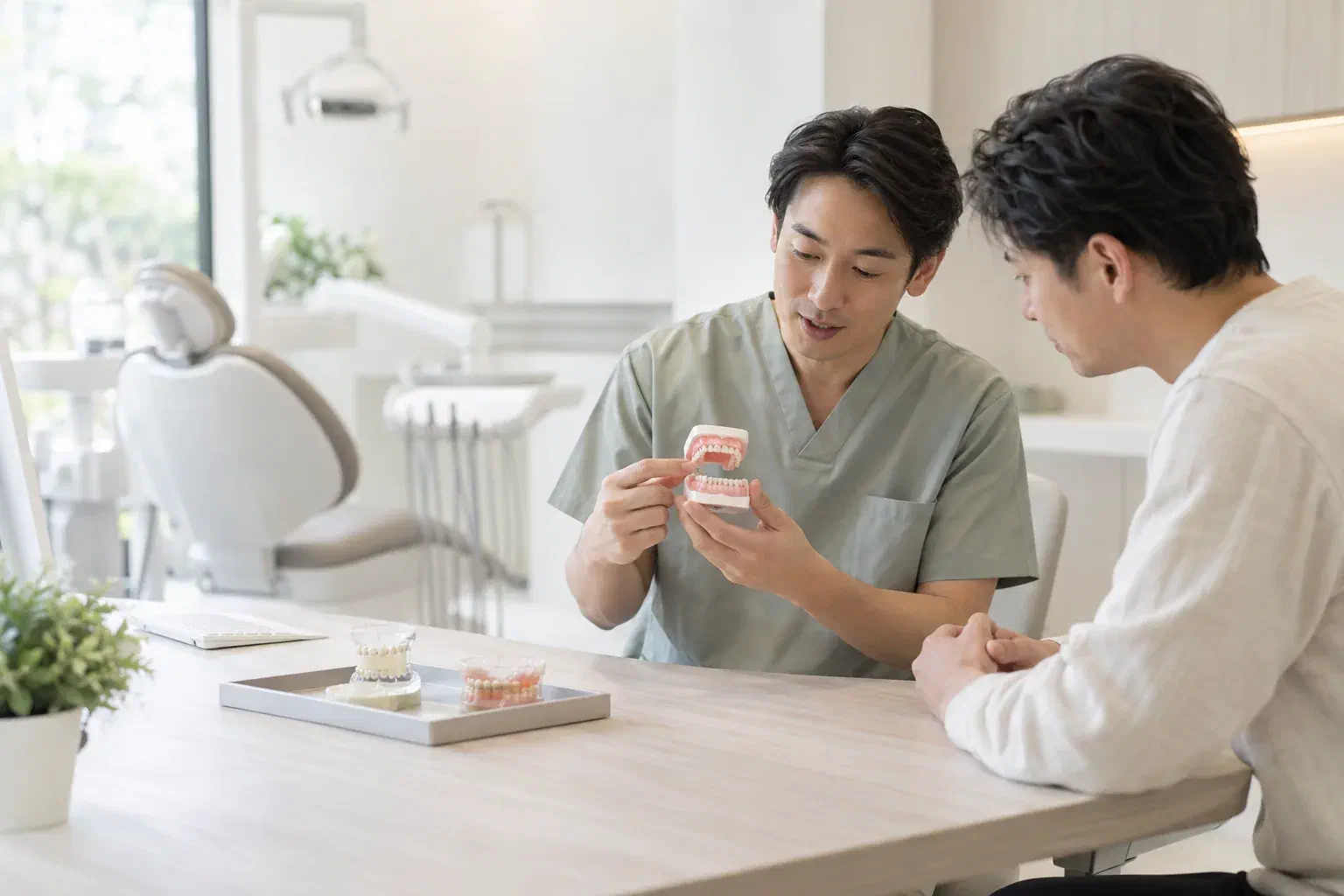
Illustrative patient and clinician discussing the relationship of upper and lower teeth with a model
Cosmetic Dentistry

Treatment for Crossbite in Etobicoke

Crossbite care can involve several stages, so planning matters when you are coming from Etobicoke. We assess how the teeth meet, map out which visits are needed and talk through alignment, referral and what to do if a problem comes up between appointments.

Planning ahead

Fewer trips, better organised

Treatment for a bite problem rarely happens in one sitting, and that shapes how you plan it. The problem itself is straightforward to describe: in a crossbite, one or more upper teeth close inside the lower teeth rather than over them. It may involve the front, the back, a single side or several teeth.

How much care is involved depends on the cause. Teeth that have drifted out of position are a different matter from a mismatch in the jaws, and many bites combine both. We also check for a shift as the jaw closes, because that affects both timing and the kind of help that makes sense.

From Etobicoke, the longer trip is a good reason to make each appointment count. Tell us when you book what you have noticed and what records you already have. At the first visit we can explain the findings, outline how many appointments a plan might need and discuss whether an orthodontist should be involved.

Plan a crossbite assessment
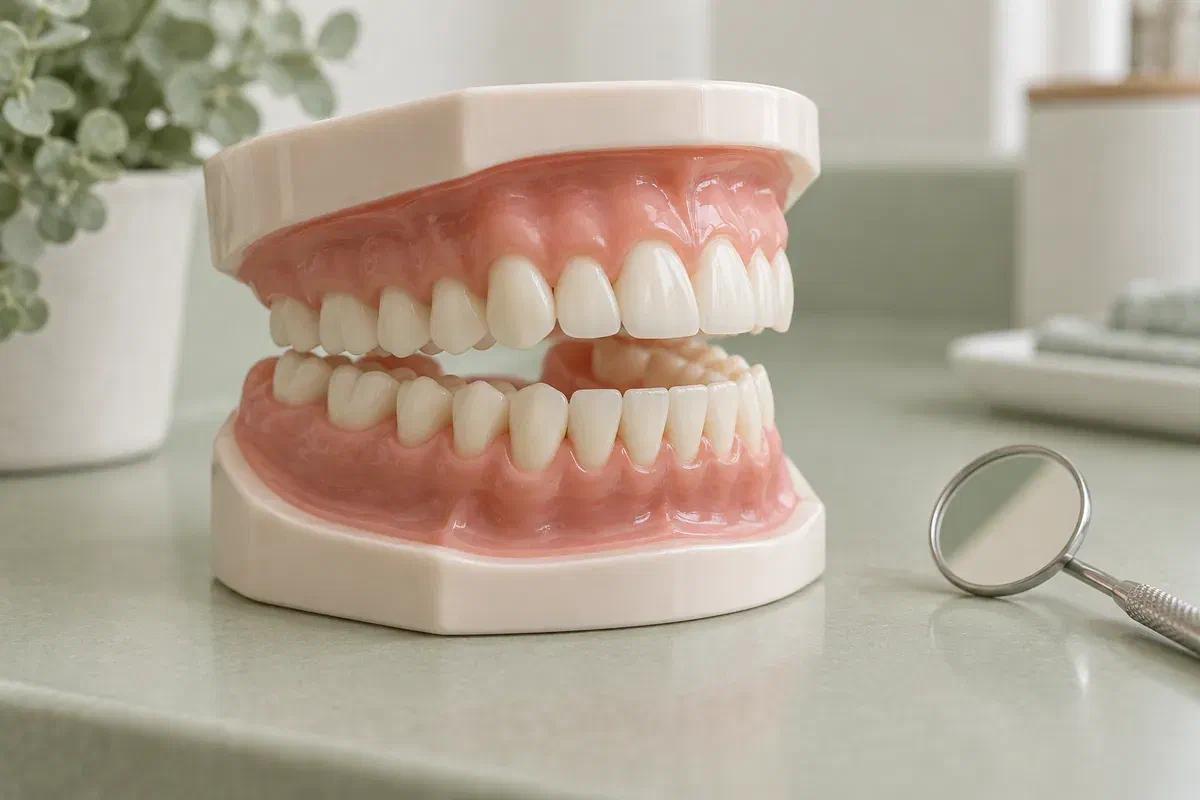
Illustrative paired upper and lower dental teaching model shown from an oblique side view
Worth noting before you come

Jot these down so the first visit covers more

Naming the type of crossbite is our job. Bring a short list of what you have noticed, including any changes in comfort, contact or how your jaw moves.

A front tooth that closes behind

Note which tooth, when you first noticed it and whether it has changed since. A photo from a few years ago can help. In the chair, we look at how that tooth relates to everything around it rather than judging it alone.

A slide or lopsided bite at the back

If your jaw seems to move into place or one side feels heavier, write that down. Mention any habit of chewing mostly on one side. Those observations help us sort out whether the cause is in the teeth, the jaws or both.

A child whose bite seems off

For a child, there is no need to hold off until every adult tooth is through. Bring it up at their visit, so development can be assessed. We can then say whether watching is enough or an early orthodontic opinion would be useful.

Diagnosis and timing are separate decisions. Ask what kind of crossbite is present, whether the jaw shifts on closing and why the suggested timeline fits your situation.

What a well-planned assessment offers

Know the goal, and the number of steps it takes to get there

By the time you leave, you should understand which teeth are involved and what a change in their relationship is meant to achieve. Moving a tooth, widening an arch and looking further at the jaws each bring their own appointment patterns. Knowing which is likely helps you plan time away from work or school.

Symptoms deserve their own discussion. If you have jaw ache, worn teeth or chewing trouble, describe them and ask how each will be evaluated. Correcting a crossbite is not a promise that every jaw-related complaint will go away, and no plan should suggest otherwise.

Clear reasons, whatever the advice

Ask what was found and what change is being suggested. If the recommendation is to monitor, find out how often reviews would happen and whether some could line up with your regular checkups. Leaving without an appliance can still be the right result.

Timing that is explained, not assumed

A growing child may have options that an adult does not. Ask which factors apply to you or your family. A good explanation does not rely on the idea that a single early phase means no further care later.

A team that communicates

If a specialist is involved, ask who examines the bite, who fits and adjusts the appliance and who handles your regular dental care. Ask how records and updates will be shared so you are not repeating steps unnecessarily.

The sequence of visits

What each appointment is for

We choose appliances only once the diagnosis and goals are clear. When booking, ask which records may be taken so you can set aside enough time for that visit.

  1. Share the history up front

    Tell us what you notice when closing and chewing, any discomfort and previous orthodontic care. Send or bring existing records if you have them. For a child, mention how teeth have come in. Habits and old injuries are helpful context, not assumed causes.

  2. Examine and record in one visit where possible

    We assess both arches, the contacts between them and the supporting tissues, and may suggest images or scans. Ask whether records can be done at the same appointment. Ask too whether a shift is present and how it changes the plan.

  3. Map out the options and the calendar

    We discuss the intended correction, appliance choices, risks, alternatives and how many visits each might involve. Jaw-related patterns may need specialist planning. Ask what the approach should achieve and whether later stages are likely.

  4. Schedule reviews with purpose

    Once treatment starts, book reviews ahead and mention anything that has changed with fit, soreness or how the teeth meet. Ask how progress will be measured. Before active care finishes, confirm retention and your ongoing checkup plan.

Managing care from a distance

Handle the small things at home and know when to call

Care steps depend on the appliance and the phase of treatment. Since visits take more planning, ask for a full demonstration of home tasks before you leave.

Follow the plan exactly

Use any wear schedule or activation only as the treating clinician directed. If you miss a step, phone before trying to catch up rather than guessing. Elastic changes or adjustments to the appliance should never be made at home.

Keep cleaning simple and consistent

Ask how to clean around fixed parts and how to care for removable ones. Mention any hard-to-reach spot. Keep up regular exams and hygiene visits, and ask whether they can be scheduled near your alignment reviews to save a trip.

Call before you drive in

A loose part, a new injury, ongoing tenderness or a contact that feels wrong should be reported by phone first. We can tell you whether it can wait for your next review. When active care ends, confirm the retention and monitoring plan.

Approaches we may discuss

The method follows the cause

Ask which part of the bite a method targets and why it suits you. No single appliance works for every crossbite or every stage of development.

When individual teeth are the issue

Correcting tooth position

Fixed or removable appliances may be considered, depending on the movement needed and the overall bite. Ask whether space must be created or extra phases added. Both arches still need examining, even if only a couple of teeth are affected.

When arch width and growth play a role

Expansion during development

Some cases may suit expansion after a full assessment. Ask what it is meant to change, how growth affects suitability and who will monitor progress. An approach designed for a growing child may not have the same role for an adult.

When the skeletal relationship needs more planning

Specialist input on jaw position

Some bites need a broader orthodontic opinion, and a marked jaw discrepancy may lead to a surgical consultation. This is not the norm. Ask about available approaches, their limits and what extra information is needed first.

Patient information: American Association of Orthodontists — when skeletal problems require surgical orthodontic assessment

Planning questions

Practical answers for a longer trip

Every crossbite differs in the teeth involved and the reason behind it. These answers help you plan, and the exam fills in the specifics.

(905) 876-4488
How can I keep the number of trips from Etobicoke down?
Mention the distance when you book. We can try to combine the assessment with records where appropriate, line up reviews with routine visits and give clear instructions so minor issues can be handled by phone. The plan itself still sets how many visits are needed.
What should I bring to the first appointment?
Bring a list of what you have noticed, any previous orthodontic records or X-rays and a list of medications or health conditions. For a child, note when teeth came in. That helps us use the first visit fully.
What if an appliance comes loose on a day the clinic is closed?
Call and leave a message, and follow any instructions you were given for that appliance. If there is pain, swelling or an injury, seek urgent dental care closer to home rather than waiting. Do not try to glue, bend or remove a fixed appliance yourself.
Can some follow-up be done closer to home?
Ask about this during planning. Routine dental care can sometimes stay with your regular dentist while the bite is managed elsewhere. What matters is that everyone involved knows their role and shares information.
Can a crossbite be at the back even though my front teeth look even?
Yes. A back-teeth crossbite often goes unnoticed in the mirror. Checking how each tooth meets its partner on both sides is the only way to know.
Is crossbite treatment possible for adults, or mainly for children?
Adults can be assessed and treated, though the options differ from some growth-based approaches used in children. Ask what correction is realistic for you and whether a specialist should weigh in.
Etobicoke crossbite planning

Make the first visit the one that sets the whole plan

Book time at our Bronte Street practice to review a suspected crossbite, uneven contact or a shift when you close. We will explain the findings, the likely number of visits and any orthodontic referral that might make sense.

Diagnosis, timing, appliance suitability, referral and fees require individual assessment. No particular expansion method or result can be guaranteed.

Visit Milton Dental Clinic
Unit 1, 342 Bronte St. S, Milton, ON L9T 5B7
Get directions Clinic hours
Monday–Thursday
11am–7pm
Friday–Sunday
By appointment only

Areas we serve

  • Milton
  • Oakville
  • Mississauga
  • Georgetown
  • Halton Hills
  • Acton
  • Campbellville
  • Brampton
  • Burlington
  • Puslinch
  • Rockwood
  • Erin
  • Caledon
  • Etobicoke
  • Old Milton
  • Bronte Meadows
  • Timberlea
  • Dorset Park
  • Dempsey
  • Clarke
  • Beaty
  • Coates
  • Harrison
  • Scott
  • Willmott
  • Ford
  • Bowes
  • Cobden
  • Walker
  • Mountain View
  • Milton Heights
  • Hawthorne Village
  • Valley View
  • Fallingbrook
  • Nassagaweya
  • Trafalgar
  • Esquesing
  • Nelson
  • Brookville
  • Moffat
  • Glen Williams
  • Norval
  • Limehouse
  • Stewarttown
  • Ashgrove
  • Hornby
  • Silver Creek
  • Speyside
  • Scotch Block
  • North Oakville
  • River Oaks
  • Glen Abbey
  • West Oak Trails
  • Palermo
  • Bronte Creek
  • College Park
  • Joshua Creek
  • Uptown Core
  • Preserve
  • Iroquois Ridge
  • Lisgar
  • Meadowvale
  • Meadowvale Village
  • Churchill Meadows
  • Erin Mills
  • Central Erin Mills
  • Streetsville
  • East Credit
  • Creditview
  • Heartland
  • Sheridan
  • Mount Pleasant
  • Credit Valley
  • Huttonville
  • Churchville
  • Springbrook
  • Northwest Brampton
  • Bram West
  • Fletcher's Meadow
  • Fletcher's Creek South
  • Alton Village
  • Orchard
  • Millcroft
  • Headon Forest
  • Tansley
  • Brant Hills
  • Tyandaga
  • Kilbride
  • Lowville
  • Aberfoyle
  • Morriston
  • Arkell
  • Hillsburgh
  • Freelton
  • Carlisle
  • Waterdown
  • Flamborough
  • Mountsberg

How can we help?

Milton Dental Clinic

Have a question about your smile? Choose the option that works best for you.

For urgent dental concerns, please call.
Messages are reviewed during clinic hours.