

Illustrative patient discussing tooth crowding with a clinician and dental study model
Cosmetic Dentistry

Treatment for Crowded Teeth in Puslinch

Long days, irregular meals and a schedule that rarely sits still can make any appliance feel like a big ask. For people in Puslinch, crowding care starts by checking what your teeth need, then asking honestly which routine you could keep up for months.

Crowding and real routines in Puslinch

A plan only works if you can live with it.

Removable aligners must be worn for most of the day and taken out to eat. Fixed braces stay put but ask for careful cleaning and some food caution. Neither is a small commitment, and the right one depends first on your teeth: how far short of room the arch is, which teeth twist or overlap, and how the upper and lower rows meet.

Only after that picture is clear does the lifestyle question become useful. The clinician can tell you which approaches are clinically suitable, and you can tell us which of those you could realistically follow. Gum and bone health, existing dental work and the source of extra space all shape the shortlist.

Explain what you are hoping for, whether a neater smile, easier cleaning, a more comfortable bite or a fix for crowding that returned after braces, and be candid about your working week. We can outline the assessment, flag when an orthodontist should be consulted, and show the full scope before anything starts.

Talk about a workable plan
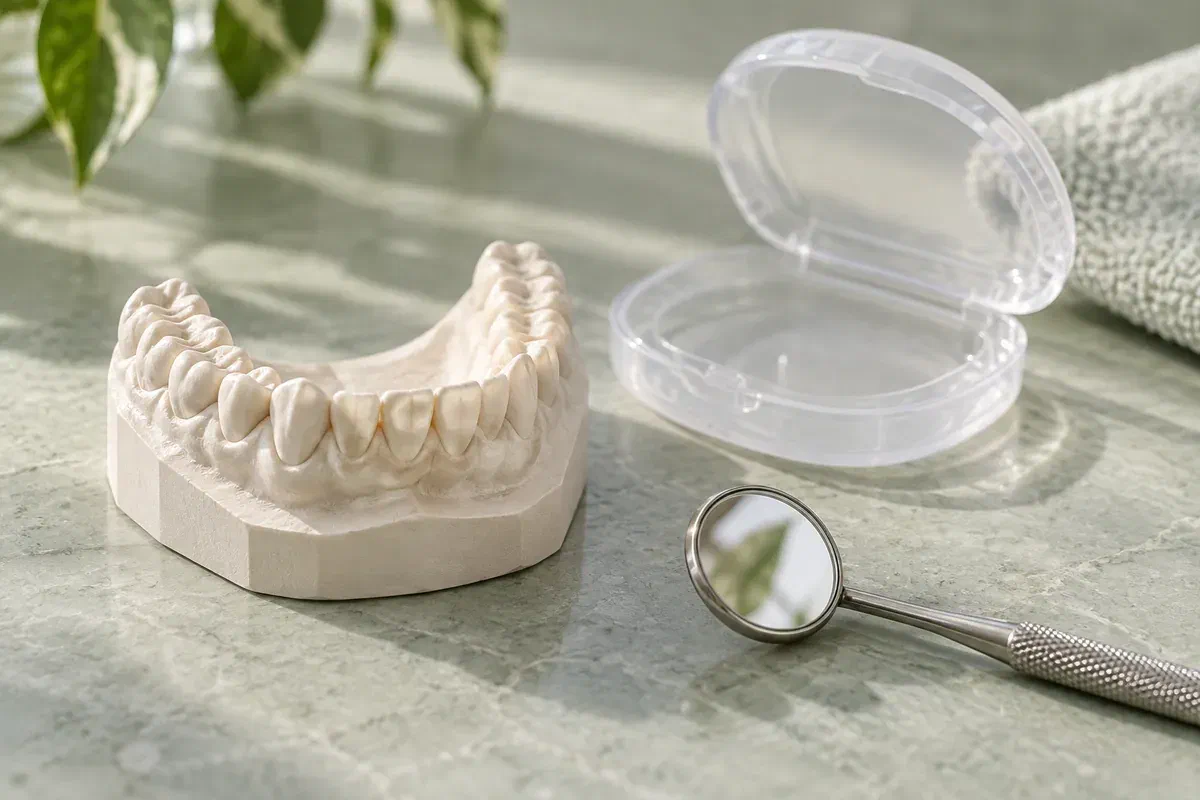
Illustrative lower dental study cast with mild front-tooth overlap beside a case and mirror
Why the question comes up

Overlap that has started to get in the way.

Share what you have noticed and what you would like to change. Two people with similar-looking crowding can have quite different underlying space and bite situations.

Food that lodges between the same teeth

Point to the gaps that catch fibres or resist floss. Simple changes to tools and technique may help today, regardless of any decision about straightening. Inflamed gums or decay are always treated before appliances enter the discussion.

One tooth that breaks the row

Say whether it has always looked that way or shifted recently. We study how it sits beside its neighbours and opposite its partner in the other arch. Room for that tooth is the real planning problem; its appearance follows.

Old orthodontics wearing off

Bring the retainers you have and tell us how much they were used. We can look at the movement since then and whether you would rather keep things stable or correct them. Steadying and straightening are separate goals with different demands.

Please mention a loose-feeling tooth, pain, gums that bleed easily, a newly opened gap or overlap that seems to be getting worse fast when you book. Such signs need to be checked rather than put down to crowding.

Matching treatment to your week

Clinical fit and daily fit, considered together.

The assessment should first make the clinical side clear: the approximate amount of movement, the teeth involved and the improvement intended. A method chosen from your examination is far more dependable than a promise that one appliance can manage every crowded arch.

Then comes the practical side. Wear time, cleaning around appliances, review visits and retainers all have to fit into your days, and for households in Puslinch, grouped appointments may help. A plan that you can sustain beats one that looks perfect and slips within weeks.

A clear idea of where room comes from

Ask how space would be gained or used, and why that approach suits your teeth and bite. If shaving enamel, removing a tooth, widening the arch or something else is part of it, ask for that step to be explained in its own right, with alternatives.

Results judged on function too

Find out how the intended positions would change the way teeth touch, how easily they clean and how the back teeth fit in. Whether the plan is targeted or full-arch changes what is left untouched, so ask which it is.

Retainers built into the routine

Before starting, ask about the retainer you would wear afterwards, how long, how it is kept clean, how often it is checked and how replacements work. It keeps the result, so include it when deciding which routine suits you.

The route through planning

Examine. Shortlist. Choose what you can sustain. Review.

What records are needed, how many visits are involved and which options are realistic hinge on the crowding and our findings. Find out who designs, delivers and checks each stage.

  1. Start with your goal and your schedule

    Describe the overlap, how it has changed and the outcome you want, along with the hours and habits that might affect wear. Mention earlier orthodontics, missing teeth, restorations and planned dental work, and bring records if we ask.

  2. Check both arches, the bite and the gums

    Upper and lower teeth are examined with the tissues that hold them. Photos, scans or X-rays may be recommended to map space. Ask why each is needed and whether gum or restorative care should be completed first.

  3. Narrow the options to what fits

    Look at the clinically suitable appliances, how space would be managed, the risks, the alternatives and what each would demand of you. Ask how things change if you turn down one step. If referral is advised, confirm who coordinates related care.

  4. Keep to reviews, then retain

    Attend the planned check-ins and report problems with wear or cleaning honestly. Ask how progress is tracked and what could stretch the timeline. Near the end, settle the retainer arrangements, including what happens if yours is misplaced or no longer seats.

Keeping it going

Habits beat good intentions.

Stick to the directions written for your appliance and plan. A friend’s wear routine, or an old appliance pulled out to make up for missed days, is not a safe stand-in.

A cleaning kit you actually carry

Ask us to show you how to clean between overlapping teeth and around attachments, and what to keep with you for meals away from home. Routine checkups continue alongside orthodontic reviews. If gums bleed or feel sore, say so early.

Honesty about missed wear

Busy weeks happen. If wear has slipped, an aligner no longer seats or an attachment has come off, tell the treating clinician and ask what to do. Skipping ahead or going back on your own can make the next review harder.

A retainer habit for the years ahead

When movement is complete, use and clean your retainer as advised and keep the scheduled checks. If it cracks, goes missing or starts to hurt, let whoever made it know. Fresh crowding calls for advice, not for jamming in an older appliance.

Patient information: British Orthodontic Society — retainers and maintaining tooth positions

Choices to talk through

Removable, fixed or neither for now?

It is fair to ask what makes a recommendation right for your crowding and what it trades away. Weigh the complete plan, including its daily demands, rather than only how much the appliance shows.

If moving teeth is both suitable and sustainable

Clear aligners or fixed braces

Which appliance is offered depends on the movement involved and clinical suitability. Aligners rely on you wearing them most of the day; braces rely on careful cleaning. Tell us which sounds manageable, knowing preference alone does not decide what is suitable.

When straightening depends on extra space

A step to make room

Some crowding cannot be aligned without first freeing room. If a measure is proposed, learn what it involves, whether it is permanent and how the other route compares. Enamel reduction or extraction should be consented to as part of the complete plan, not as a separate quick job.

When timing, complexity or your situation suggests waiting

Monitoring, or a specialist opinion

Leaving teeth as they are and reviewing them at checkups can be reasonable, as can gathering more information first. For children, growth and eruption also play a part. Ask what to watch for and when another look would be useful.

Patient information: British Orthodontic Society — planned interproximal reduction

Everyday questions

Living with treatment for crowded teeth.

These replies are general. Your examination, the space available, your bite and your oral health shape the specific advice, and overlap alone cannot decide it.

(905) 876-4488
How many hours a day do aligners need to be worn?
Aligners are generally designed to be worn for most of the day and night, with breaks for eating and cleaning. Your clinician will set the exact schedule for your plan. Ask what happens to progress if wear time falls short.
Do fixed braces limit what I can eat?
Some hard or sticky foods can damage brackets or wires, so you will usually be given guidance. Ask for a list that applies to your appliance and how to manage meals while keeping it clean.
What if my job makes regular aligner wear difficult?
Say so during the assessment. The clinician can discuss whether a fixed appliance, a different approach or waiting might suit you better. Choosing an option you can keep up is part of a sensible plan.
Will my retainer be a daytime thing or only for nights?
Retainer schedules vary between people and plans. Ask what wear pattern is recommended for you, and whether a bonded or removable retainer would fit your routine better.
Is mild crowding always worth treating?
Not necessarily. Some people keep it and focus on good cleaning. Ask what the examination shows, what should be monitored and which changes would make treatment more worthwhile.
Can review visits from Puslinch be kept to a minimum?
The number of reviews depends on the plan and appliance. Ask for an outline at the start, whether some questions can be handled by phone, and whether household appointments can be grouped.
Crowding assessments for Puslinch

Find the option your teeth need and your days allow.

Book time with our team on Bronte Street to discuss crowding, cleaning trouble and the kind of routine you could realistically keep. We will explain what information helps weigh up suitable options and whether an orthodontist should be involved.

Only an individual examination can establish appliance suitability, the space approach, treatment scope, timing and fees. A given system, or treatment without extraction, cannot be promised.

Visit Milton Dental Clinic
Unit 1, 342 Bronte St. S, Milton, ON L9T 5B7
Get directions Clinic hours
Monday–Thursday
11am–7pm
Friday–Sunday
By appointment only

Areas we serve

  • Milton
  • Oakville
  • Mississauga
  • Georgetown
  • Halton Hills
  • Acton
  • Campbellville
  • Brampton
  • Burlington
  • Puslinch
  • Rockwood
  • Erin
  • Caledon
  • Etobicoke
  • Old Milton
  • Bronte Meadows
  • Timberlea
  • Dorset Park
  • Dempsey
  • Clarke
  • Beaty
  • Coates
  • Harrison
  • Scott
  • Willmott
  • Ford
  • Bowes
  • Cobden
  • Walker
  • Mountain View
  • Milton Heights
  • Hawthorne Village
  • Valley View
  • Fallingbrook
  • Nassagaweya
  • Trafalgar
  • Esquesing
  • Nelson
  • Brookville
  • Moffat
  • Glen Williams
  • Norval
  • Limehouse
  • Stewarttown
  • Ashgrove
  • Hornby
  • Silver Creek
  • Speyside
  • Scotch Block
  • North Oakville
  • River Oaks
  • Glen Abbey
  • West Oak Trails
  • Palermo
  • Bronte Creek
  • College Park
  • Joshua Creek
  • Uptown Core
  • Preserve
  • Iroquois Ridge
  • Lisgar
  • Meadowvale
  • Meadowvale Village
  • Churchill Meadows
  • Erin Mills
  • Central Erin Mills
  • Streetsville
  • East Credit
  • Creditview
  • Heartland
  • Sheridan
  • Mount Pleasant
  • Credit Valley
  • Huttonville
  • Churchville
  • Springbrook
  • Northwest Brampton
  • Bram West
  • Fletcher's Meadow
  • Fletcher's Creek South
  • Alton Village
  • Orchard
  • Millcroft
  • Headon Forest
  • Tansley
  • Brant Hills
  • Tyandaga
  • Kilbride
  • Lowville
  • Aberfoyle
  • Morriston
  • Arkell
  • Hillsburgh
  • Freelton
  • Carlisle
  • Waterdown
  • Flamborough
  • Mountsberg

How can we help?

Milton Dental Clinic

Have a question about your smile? Choose the option that works best for you.

For urgent dental concerns, please call.
Messages are reviewed during clinic hours.