

Illustrative patient and clinician discussing tooth spacing with a dental study model
Cosmetic Dentistry

Treatment for Gapped Teeth in Burlington

Not everyone wants a gap gone. Some people simply want it a little narrower, or less noticeable next to the teeth around it. For Burlington adults, treatment for gapped teeth can start with that middle ground: understanding the space, the tooth proportions, and how much change is enough.

A Burlington view on spacing

Smaller can be the goal.

A front-tooth gap often becomes a question of degree. You might like the character it gives your smile but feel it has become wider than you would choose, or more prominent in photographs than in the mirror. Planning a partial change is just as legitimate as planning complete closure, and it is worth saying so at the outset.

The space itself, called a diastema, is not necessarily a sign of trouble. What matters first is whether it is healthy and steady or linked to something that has shifted. After that, the conversation turns to method: moving teeth slightly, adding a small amount of material, or using both, each with its own effect on width, contacts, and the bite.

When you visit from Burlington, describe the amount of change you have in mind, even if it is only a rough idea. We will explain what the examination shows, what a narrower space might look like on your teeth, and whether leaving the gap exactly as it is remains a sensible choice.

Discuss narrowing a gap
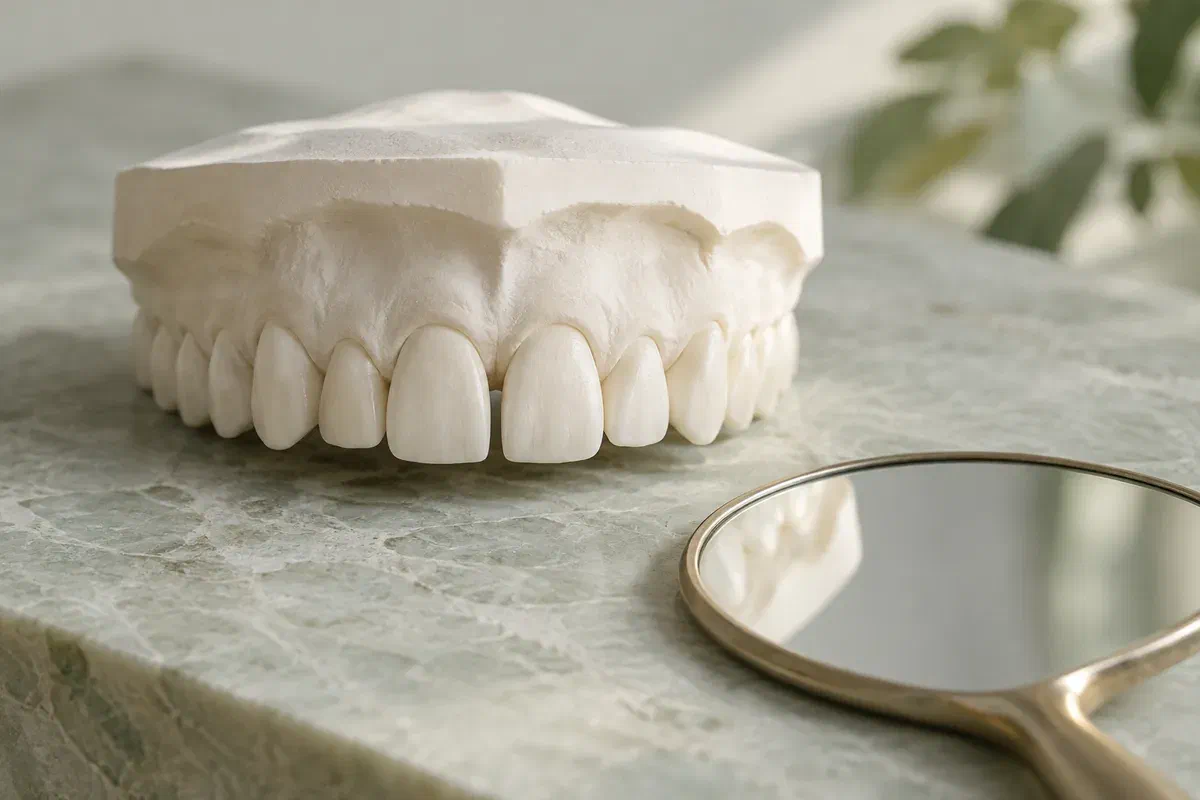
Illustrative upper dental cast with a small space between the central incisors beside a mirror
Questions of size and change

How wide, how long, and how stable?

Share whether one space or several concern you, whether they have changed, and any symptoms. The width you see is a starting point, not a diagnosis.

A familiar gap that feels too wide

Picture the result you would be happy with: a hairline space, half the current width, or a more even spread across several teeth. Ask how each target would alter the shape of the teeth beside it. Small adjustments can make a visible difference.

A gap that has widened recently

If the space has grown, mention bleeding, a tooth that feels mobile, soreness, or changes elsewhere in your bite. The gums and supporting structures need checking before any narrowing is planned. Growth is a reason to investigate, not just to adjust.

Width affected by a tooth's size or absence

A narrow lateral tooth or a missing one can make a central gap look larger than it is. Planning may need to include that tooth, not just the space. Ask how room would be balanced so no single tooth ends up oversized.

Spaces in children's mouths often change as adult teeth come in. Ask whether a child's gap needs only monitoring and when it is worth reviewing again.

What careful planning adds

A change measured against your own sense of proportion

Narrowing a gap sounds simple, but every millimetre has to go somewhere. If material is added, the teeth become wider; if the teeth move, the space shifts or closes. A careful discussion links your preferred result to a method that keeps the front teeth looking balanced, and makes the trade-offs visible before anything is done.

It also helps to look beyond the front pair. Moving or widening two teeth affects their neighbours, how the teeth meet, and how easy they are to clean. Seeing those connections early means a modest change stays modest rather than leading to a chain of adjustments.

Knowing whether the space is stable

Ask whether the gap appears to be a steady feature or one tied to a condition that needs care. Clarify which findings are clear and which need more information. That distinction tells you whether to focus on health or appearance first.

Seeing partial and full results compared

Ask how a reduced gap and a closed gap would each look on your teeth, and whether moving space to another area would help. You should understand what is planned for each stage and the width the teeth would end up.

Understanding what you would maintain

A partial result still needs care. Ask about retainers after movement, repair or replacement of added material, routine reviews, and fees. Ongoing upkeep belongs in the decision from the start.

Planning a measured change

Agree on how much, then on how.

Visit numbers depend on the findings and the method you choose. Ask whether your first appointment is an assessment only and whether further records or another clinician's input may be needed.

  1. Describe the change you have in mind

    Point out the gap and explain how much narrower you would like it, or whether you are undecided. Mention past braces, bonding, extractions, or retainers. Tell us what you want to keep about your smile so the plan respects it.

  2. Assess the teeth, gums, and contacts

    The clinician checks tooth health, gum condition, position, and the bite. Records such as photographs or models may help picture a partial change. Ask whether any other treatment should come first and how it affects timing.

  3. Compare how each method reaches your target

    Discuss the preparation, risks, maintenance, fees, and limits of each suitable approach. Ask how each would alter the width and position of the visible teeth. If more than one clinician is involved, clarify who plans the final result.

  4. Check the outcome and set up continuing care

    During and after treatment, review appearance, comfort, cleaning, and contacts. Confirm retention if teeth moved and a review routine for any bonding. If the space changes again, ask for reassessment before adding more treatment.

After a gap is narrowed

Small changes still need steady care.

Aftercare depends on whether teeth were moved, built up, or kept under observation. Ask for advice that matches the treatment you actually received.

Clean the reshaped space properly

A narrower gap can trap food differently from a wide one. Ask whether floss, a small brush, or another tool suits it best. Mention areas that catch food or a contact that feels tight or awkward, because daily comfort matters.

Hold moved teeth with a retainer

Follow the retainer instructions and ask about cleaning, checks, and replacement. If it is lost, damaged, or fits poorly, contact the provider promptly. Avoid any home method, such as bands, to push teeth together.

Notice wear or renewed spacing

Bonded material may wear, chip, or stain over time. Ask which signs should bring you back. If the gap widens again or a new one appears, the cause should be looked at before deciding on more material or movement.

Patient information: British Orthodontic Society — maintaining positions with retainers

Ways to reduce a gap

Pick the method after picking the target.

Ask what each route would change about tooth position, shape, and later care. A visible gap does not automatically call for veneers or orthodontics.

When shifting teeth slightly fits

Limited tooth movement

Small movements can reduce or redistribute a space, or prepare room for a future restoration. Your bite, the appliance, and how the new position would be retained all deserve discussion. Consider the whole arch so a narrower front gap does not create spacing elsewhere.

When modest additions suit the teeth

A little added width with bonding

Adding small amounts of material may narrow some gaps. Compare the resulting width, cleaning access, preparation, and upkeep. If veneers are recommended, ask why more coverage is needed and what a lighter addition might achieve instead.

When gum health or preference decides

Health care first, or no change

Gum treatment or assessment of a missing tooth may need to come first. You may also decide the current gap is fine. Ask what monitoring is advised and which changes would mean booking another look.

Burlington questions about narrowing gaps

Asked about partial closure

Spacing discussions cover preferences, proportions, oral health, and maintenance. There is no need to settle on a treatment before you come in.

(905) 876-4488
Is it unusual to want a gap only partly closed?
Not at all. Many people like a hint of spacing. Say so at the start so the plan aims for that target rather than full closure, and ask how a partial result would be kept stable.
Can I see what a narrower gap might look like before committing?
Ask whether photographs, a model, or a trial mock-up could help you picture the change. The clinician can explain which preview options suit the approach being considered.
Does a wider gap always need orthodontics rather than bonding?
Not always, but larger spaces filled only with material can make teeth look broad. Ask how much width would be added and whether moving teeth first would keep better proportions.
My gap is wider than it was five years ago. Should that concern me?
Growth over time is worth having checked. Mention bleeding, looseness, or discomfort. Assessing the teeth and gums helps decide whether health care comes before any change to appearance.
Will a partly closed gap still need a retainer?
If teeth were moved, retention is usually needed to hold the new position, even for a small change. Ask how long and how often it would be worn, and how it is checked.
Is the small tissue under my upper lip part of the problem?
It may or may not be. Its role needs assessment rather than assumption. Ask why any tissue procedure is being suggested, whether it is needed, and how it would fit into the overall plan.
Spacing care for Burlington

Tell us how much change would feel right.

Book an assessment at our Bronte Street practice to talk about the gap, the proportions of your teeth, and whether narrowing, closing, or keeping the space appeals to you. We will explain the findings and compare movement, bonding, or monitoring options.

The cause of a gap, oral health, suitability, timing, and fees need individual assessment. Leaving a healthy gap as it is remains a valid choice.

Visit Milton Dental Clinic
Unit 1, 342 Bronte St. S, Milton, ON L9T 5B7
Get directions Clinic hours
Monday–Thursday
11am–7pm
Friday–Sunday
By appointment only

Areas we serve

  • Milton
  • Oakville
  • Mississauga
  • Georgetown
  • Halton Hills
  • Acton
  • Campbellville
  • Brampton
  • Burlington
  • Puslinch
  • Rockwood
  • Erin
  • Caledon
  • Etobicoke
  • Old Milton
  • Bronte Meadows
  • Timberlea
  • Dorset Park
  • Dempsey
  • Clarke
  • Beaty
  • Coates
  • Harrison
  • Scott
  • Willmott
  • Ford
  • Bowes
  • Cobden
  • Walker
  • Mountain View
  • Milton Heights
  • Hawthorne Village
  • Valley View
  • Fallingbrook
  • Nassagaweya
  • Trafalgar
  • Esquesing
  • Nelson
  • Brookville
  • Moffat
  • Glen Williams
  • Norval
  • Limehouse
  • Stewarttown
  • Ashgrove
  • Hornby
  • Silver Creek
  • Speyside
  • Scotch Block
  • North Oakville
  • River Oaks
  • Glen Abbey
  • West Oak Trails
  • Palermo
  • Bronte Creek
  • College Park
  • Joshua Creek
  • Uptown Core
  • Preserve
  • Iroquois Ridge
  • Lisgar
  • Meadowvale
  • Meadowvale Village
  • Churchill Meadows
  • Erin Mills
  • Central Erin Mills
  • Streetsville
  • East Credit
  • Creditview
  • Heartland
  • Sheridan
  • Mount Pleasant
  • Credit Valley
  • Huttonville
  • Churchville
  • Springbrook
  • Northwest Brampton
  • Bram West
  • Fletcher's Meadow
  • Fletcher's Creek South
  • Alton Village
  • Orchard
  • Millcroft
  • Headon Forest
  • Tansley
  • Brant Hills
  • Tyandaga
  • Kilbride
  • Lowville
  • Aberfoyle
  • Morriston
  • Arkell
  • Hillsburgh
  • Freelton
  • Carlisle
  • Waterdown
  • Flamborough
  • Mountsberg

How can we help?

Milton Dental Clinic

Have a question about your smile? Choose the option that works best for you.

For urgent dental concerns, please call.
Messages are reviewed during clinic hours.